Municipal
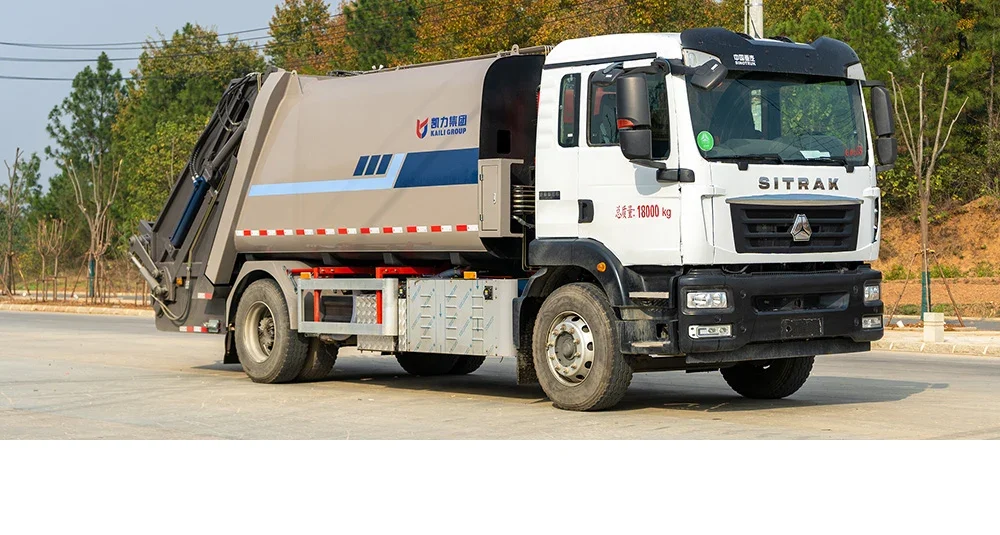
KAILI SINOTRUK ELECTRIC GARBAGE COMPACTOR
An 18,000 kg gross-mass electric compactor reference for municipal collection.
 1 / 2
Vehicle range: Kaili
Manufacturer photos · request the exact quoted build
Your work.
Your specification.
The Sinotruk electric reference combines a 14 m³ body with a published 210.56 kWh battery. Its capacity makes loaded-mass and route-energy checks essential. Request a traceable chassis code, completed-vehicle weights and bin-lifter specification for the quoted build rather than ordering from body volume alone.
- Battery-electric chassis reference
- Separate driving and body-work energy review
- Depot charging interface to be confirmed
Configuration overview.
Photographs show vehicles from the manufacturer’s range. Confirm the exact chassis, model code, capacity and operating limits for the vehicle quoted to you.
- Manufacturer reference
- Sinotruk electric Garbage Compactor
- Published gross vehicle mass
- 18000 kg
- Wheelbase
- 4500 mm
- Battery capacity
- 210.56 kWh
- Published body or tank volume
- 14 m³
- Hopper volume
- 800 L
- Leachate tank
- 780 L
- Battery chemistry
- Lithium iron phosphate
- Battery chemistry and supplier
- CATL lithium iron phosphate
- Body control system
- Manual, electric and remote controls
- Published operating cycle
- 12~25 s
Route and equipment review
The Sinotruk electric reference lists 18000 kg gross mass, a 14 m³ body and a 210.56 kWh battery. Ask for completed empty axle weights to establish a working-load basis. The 800 L hopper and 780 L leachate tank need an agreed collection and cleaning procedure. The source omits an exact announcement code; obtain it for the quotation.
Electric propulsion and body controls
The chassis uses direct electric drive, with electric power also used for the working equipment. The source describes CAN bus control and regenerative braking. Battery energy is a capacity reference; the travel distance and work completed per charge depend on the route and body duty.
Rear loading arrangements
The compactor range describes four rear loading arrangements: a bin-lifting plate, triangular hopper, swing-arm loader and ground-level hopper. They are alternatives for different collection methods, rather than four mechanisms supplied together.
Before you enquire.
What should I include in an enquiry for this vehicle?
Waste type, bin or container drawings, daily collection quantity, route distance, disposal site, crew requirements and destination. Request the exact model codes and equipment list, with inspection, spare-parts and shipping scope itemised.
Should I choose a compactor or a hook loader?
Use the collection workflow as the starting point. A compactor can suit repeated bin collection; a hook loader may suit exchanging containers at collection points. Compare transfer cycles, container ownership, site access, legal payload and unloading arrangements rather than body volume alone.
How do I confirm the exact vehicle?
Request the chassis and complete vehicle model codes, specification sheet, current photographs and written equipment list. Listing images do not confirm stock or approval for your destination country.
Does the configurator show this exact vehicle?
The configurator is a separate three-view concept preview. It does not reproduce every manufacturer vehicle. Use this gallery and the specification supplied with your quotation to review the actual build.
What about warranty, spare parts and delivery?
Confirm chassis and body warranty separately, including exclusions and the responsible service provider. Request a spare-parts list, operating manual, inspection plan and shipping scope. Delivery dates and support terms are agreed in the written quotation.
Does the estimate include every cost?
The separate configurator uses illustrative USD amounts, not prices for this listing. Request a written quotation specifying equipment, taxes and delivery costs.
Explore more vehicles.
All vehicles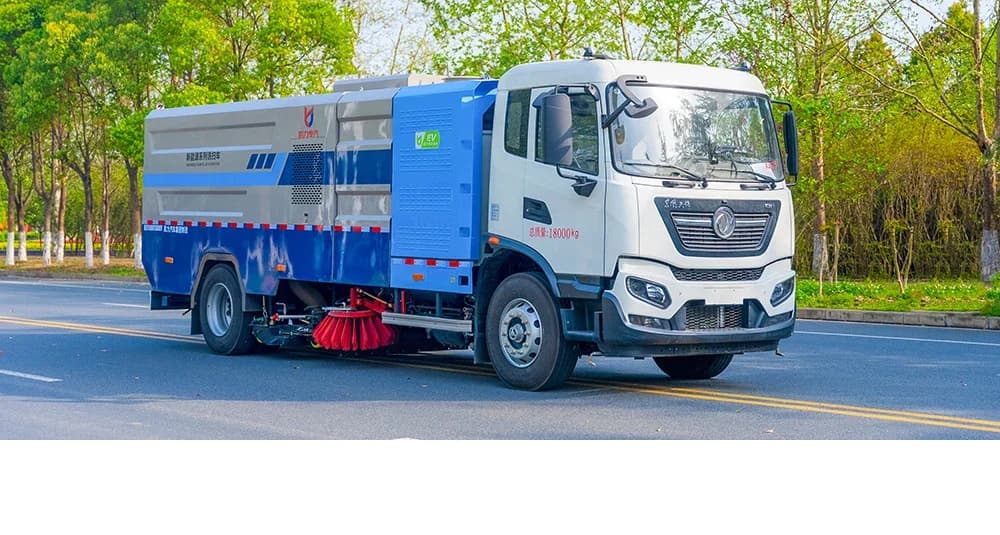
Kaili Dongfeng Tianjin Electric Washing Sweeper
An 18-tonne gross-mass electric sweeper with 8 m³ water and waste compartments.
View vehicle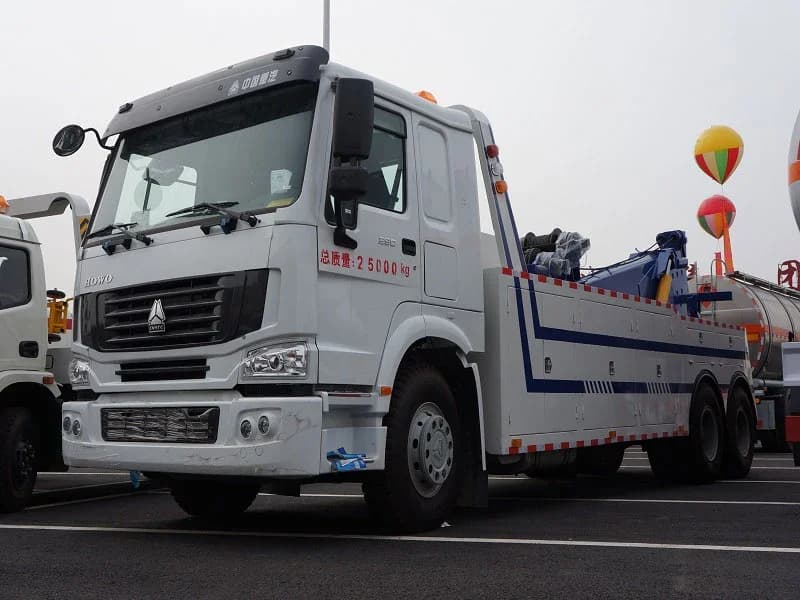
CLW HOWO Heavy Tow Truck
Heavy towing and recovery equipment on a HOWO 6×4 reference.
View vehicle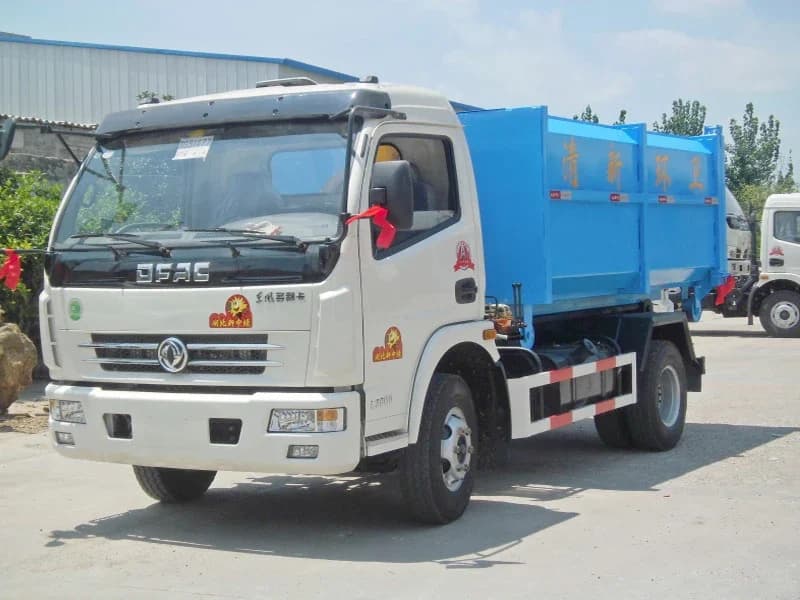
CLW Dongfeng 5 m³ Hook Loader
Container exchange with a hydraulic hook arm.
View vehicle