Arrival is a coordination event, not the end of the shipment
An imported truck can wait at the destination while documents, release arrangements or receiving transport are being organized. Ask the forwarder and broker to plan those tasks before the vessel arrives. Identify the carrier, terminal, customs and onward-transport contacts and give each a defined responsibility. The goal is to reduce avoidable delays, not to promise immediate clearance. Authorities and carriers can still require checks or change operational arrangements. A plan that ends with estimated vessel arrival overlooks the work required to release, inspect and move the actual vehicle to its intended receiving location.
Ask which charges and clocks apply
Demurrage, detention, storage and other handling charges depend on the carrier, equipment and local arrangement. Maersk's published terms explain that the applicable charging structure must be checked for the shipment. Do not assume container-related rules apply unchanged to a RoRo truck or every special-cargo arrangement. Request the relevant tariff or quotation, any free-time conditions, when charging starts and stops, and who will be invoiced. Put the response in the landed-cost worksheet. A general statement that there are several free days is not enough without the service and conditions it refers to.
Keep a separate row for each provider and charging basis. Record the triggering event, stopping event, source document and any accepted extension. If the carrier grants an equipment extension, ask whether terminal storage remains unchanged. A written extension for one charge should not be copied into another provider’s row. The example identifies a check to make; it does not assume any particular tariff applies to your vehicle or transport method.
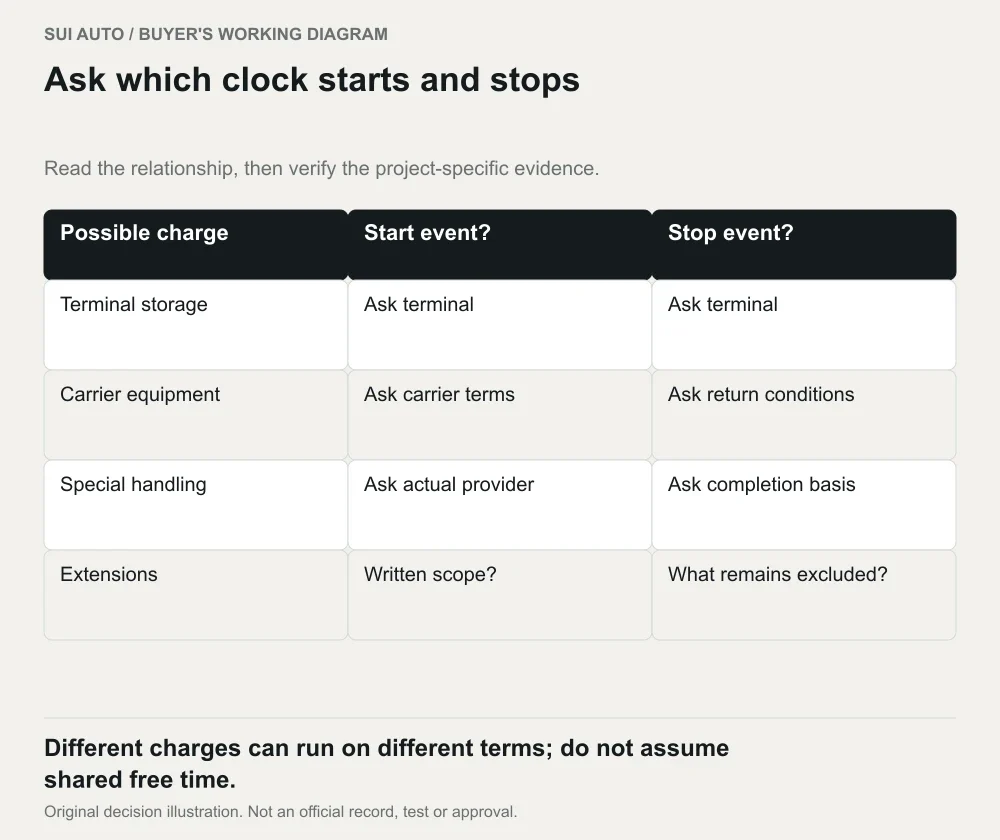
Buyer illustration: charge-review questions only; no tariff, free period or universal equipment rule is stated.
Review the release file before departure
Ask the broker which documents and information it can check early, which final records are still needed and who will supply them. Reconcile the actual vehicle identifiers, cargo description and consignee details before approving draft shipment records. Record how document release will be handled under the transaction. If an outstanding document depends on final inspection or payment, make that dependency visible in the schedule. Do not wait until the arrival notice to identify who owns the missing record. Early review can expose a correctable inconsistency while the issuer still has time to resolve it.
Arrange lawful and practical onward movement
Confirm whether the truck may be driven after release or needs a transporter, other handling equipment or local authorization. Review the receiving location's access and unloading needs with the transport provider. If parts or equipment were removed for shipping, identify who will restore the approved operating configuration and where that work can happen. Do not assume a truck that started at the factory is ready to leave the arrival terminal under its own power. Keep the accepted receiving arrangement aligned with the actual carrier service and cargo configuration.
An illustrative delayed collection
Suppose a flat-rack truck shipment arrives, but the buyer has not arranged the required receiving transport or clarified the equipment-return process. The shipment remains under the applicable carrier and terminal conditions while those tasks are organized. The buyer's original budget included only ocean freight and therefore missed the potential extra exposure. This is a hypothetical planning example, not a stated charge rate or a claim that every flat-rack import incurs detention. The practical lesson is to identify collection, handling and equipment obligations while the booking is being agreed.
Use an arrival-readiness register
Track documents reviewed, final records received, release instructions understood, charges and free-time terms identified, receiving inspection planned and onward transport confirmed. Give each item an owner and a date for the next update. Share changes in arrival timing with the receiving and broker teams promptly. If a delay occurs, record its cause and the provider's explanation of affected charges. This evidence helps the parties discuss the actual issue without assuming one organization controls every stage. A readiness register also shows which tasks your team can improve on a later shipment.
Can I negotiate free time after the truck arrives?
Ask the provider what is possible, but do not budget on an unconfirmed extension. Review the relevant conditions before booking and understand what an extension would and would not cover. Terminal storage and other charges may have separate arrangements.
Will accurate documents guarantee no port delay?
No. They address one source of avoidable delay, while inspection, terminal operations, carrier release and onward logistics remain separate factors. Use current information from the actual parties and keep a clear escalation route for unresolved release or collection issues. Before booking, ask the receiving provider to explain what happens if the truck arrives outside normal collection hours or while a required document remains unresolved. Retain that response with the shipment plan.
References and related reading
Planning a purchase? Follow the overseas buyer guide for specification, payment, shipping and import preparation.