Ask for records tied to identified joints
A useful welding file links the relevant joints to the applicable fabrication procedure, personnel record and inspection result. For a custom truck body, agree which welds need that level of control before fabrication starts. A bundle of qualification certificates without a weld map can be difficult to use. The buyer needs to know which record applies to which part of the vehicle. Focus the documentation on the governing design and inspection requirements, then preserve the same identity when a joint is repaired or retested.
Start with the governing technical basis
Ask the body builder's technical authority to identify the applicable welding specification and acceptance requirements. Different structures, materials and service conditions can need different approaches. TWI describes procedure development under several major welding standards, which illustrates why selecting a standard is an engineering decision. A buyer should avoid requesting every available code or assuming one applies to all vehicle welds. The project file should identify the chosen basis, relevant procedure revision and inspection scope. Any destination or tender requirement must be reviewed against the actual construction and order.
Make the weld map practical
Use an approved drawing or marked assembly view to identify controlled joints. Each joint reference should connect to its location, material combination and relevant record. The map can be simple when the assembly is simple. It becomes more detailed where joints are concealed, carry significant loads or need specific inspection. Ask how workshop personnel record the work as it happens. TWI's traceability tools illustrate connections among weld identifiers, procedure records, personnel and testing. The procurement goal is that a reviewer can follow those connections for the supplied body.
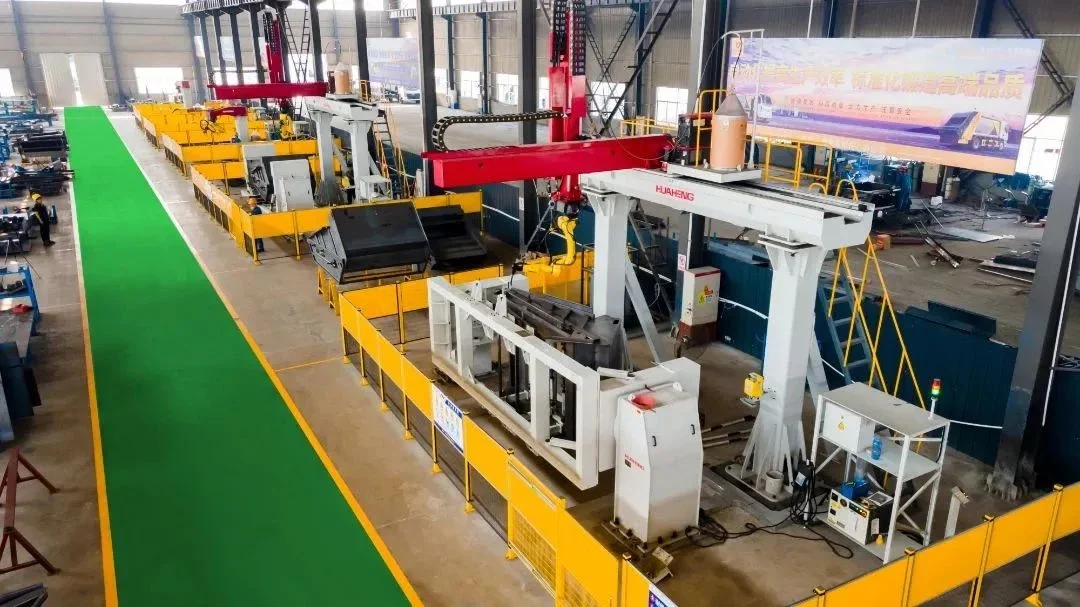
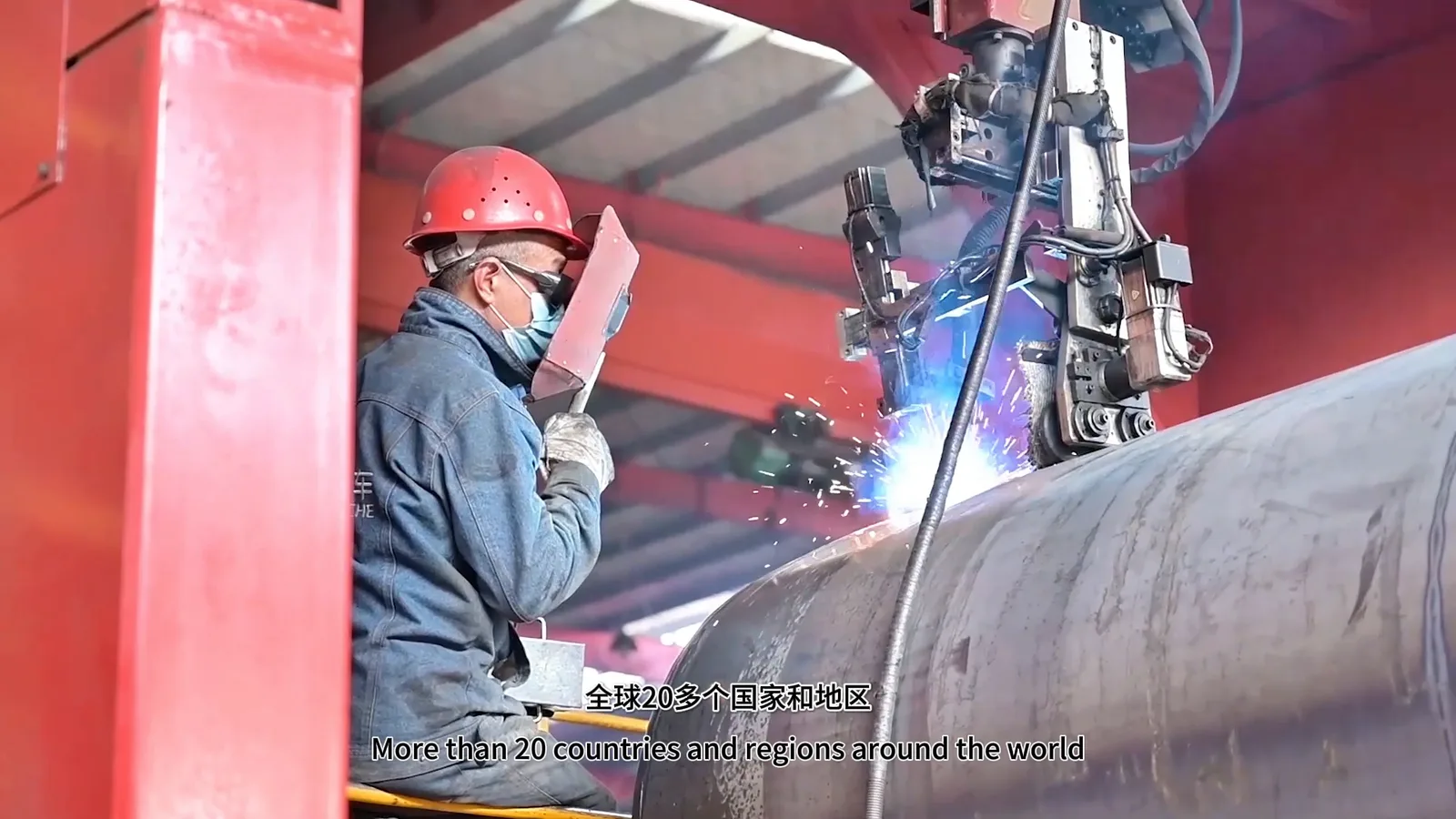
Kaili's fabrication line shows separate robot cells and body assemblies. A weld map must identify the particular joint being reviewed; the existence of automated equipment does not establish weld acceptance.
Separate visual review from other examinations
A surface photograph can support visual review but cannot establish every internal condition. The inspection plan should state which examinations are required, who performs them and how results are recorded. Let qualified technical parties choose methods and coverage for the design. Ask whether the report states the examined location, method, relevant criteria and result. A vague statement that all welding is checked leaves the buyer unable to judge the agreed scope. Clarify any limitations before painting or closing the assembly makes further access expensive.
A hypothetical repair record
Assume illustrative joint W-12 has an unacceptable indication under the agreed inspection procedure. The manufacturer records the finding, obtains a repair instruction, identifies the repaired area and repeats the required examination. The final file references the original finding and the accepted recheck. These identifiers describe an invented workflow, not a SUI AUTO case. The original report should remain available alongside the closure evidence. A polished photograph after grinding would show appearance, but the record chain explains what was repaired and how conformity was reassessed.
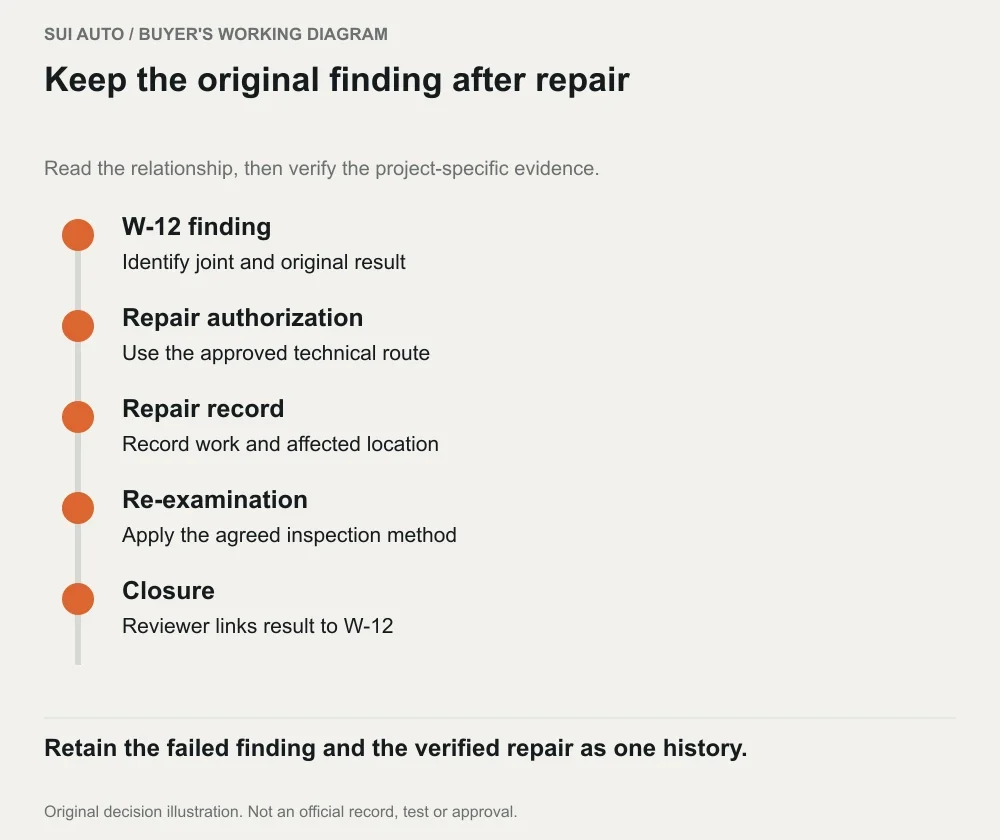
Buyer illustration: hypothetical weld-finding workflow, not an actual weld map or qualification record.
Include repairs in the same control system
Ask who may authorize a repair and whether the procedure requires specialist review or additional qualification. TWI explains that repair development depends on the defect, material and practical constraints. Do not instruct a factory to grind or reweld a critical area through an informal buyer message. Route the issue to the responsible engineer. Record the repair method, affected location, date and required follow-up checks. If a repair changes an approved detail, reconcile the drawing and as-built record as well as the inspection result.
Check the fabrication handover package
Review the controlled drawing, weld identifiers, applicable procedures, personnel records where required, inspection reports, unresolved findings and repair closures. Confirm that the body serial number matches the supplied vehicle. Ask for an index rather than an unlabelled folder of PDFs. Identify confidential records and agree what can be shared with the buyer or independent inspector. A complete documentation package should fit the order's actual requirements. More pages do not help if the critical joint or repaired location cannot be found in the record.
Do all truck bodies require the same weld documentation?
The scope depends on the design, service, applicable requirements and procurement agreement. A simple nonstructural bracket and a critical tank or lifting structure may need different controls. Ask the responsible technical parties to classify the relevant joints and justify the proposed inspection coverage. The buyer can then agree proportionate evidence. A generic demand for extensive testing can add cost without resolving the important design questions, while an undefined promise of factory quality can leave critical evidence missing.
Does a welder certificate prove every weld is acceptable?
A qualification record addresses the personnel's qualification within its scope. The supplied assembly still needs the agreed fabrication and inspection controls. Check that the applicable procedure and inspection records connect to the actual work. If the document's scope or validity is unclear, ask the responsible welding authority to interpret it. Keep personnel information appropriately protected. The buyer's practical decision should rely on the complete relevant record chain rather than one certificate taken out of context.
What if a repaired weld was painted before the required reinspection?
Identify the joint, original finding and inspection step that was missed. Ask the responsible welding and inspection authorities what access and examination are now needed to resolve the requirement. Coating may need local removal, but the method and scope should come from that review. Preserve the repair history and obtain the required follow-up result before closing the finding. A photograph of the finished paint cannot establish the concealed joint condition. Record any authorized alternative method and its limitations, then reconcile the final coating repair as well.
References and further reading
Planning a purchase? Follow the overseas buyer guide for specification, payment, shipping and import preparation.