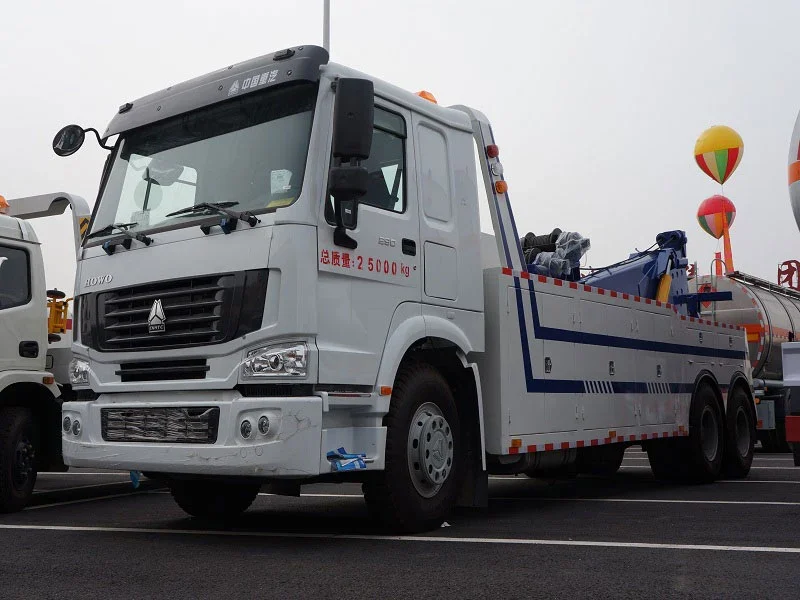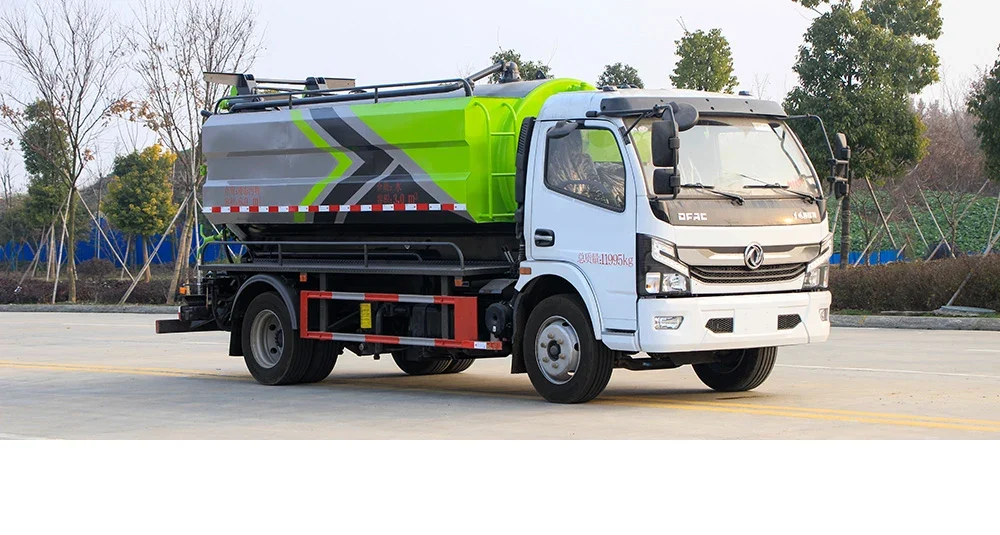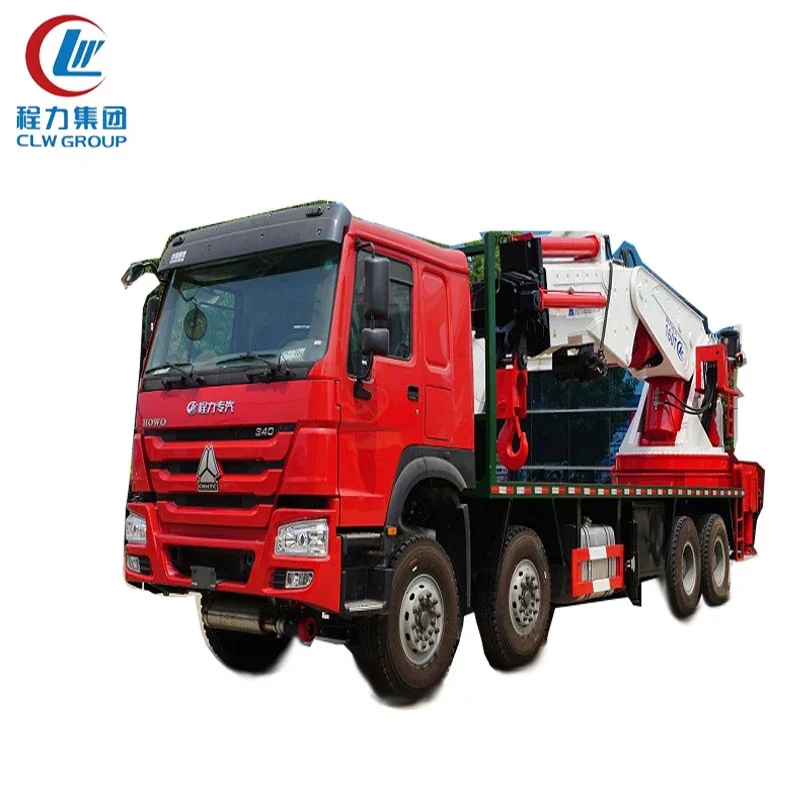
Quote the complete transport configuration
A forwarder needs the actual shipping envelope and weight of the complete truck, not only the bare chassis specification. Mounted booms, hose reels, ladders, mirrors and roof equipment can affect transport dimensions. Send the proposed origin and destination, expected readiness date, vehicle condition and any loose items. State whether dimensions are measured, drawing-based or still provisional. Request confirmation of the information needed for carrier acceptance. A useful freight quotation identifies what cargo arrangement it covers and which changes would require requoting, so a later equipment addition does not quietly invalidate the price or booking.
Measure the stowed envelope with the supplier
Ask the supplier to define the approved transport position for movable equipment and show it in photographs or drawings. Obtain overall length, width and height for that arrangement, including protruding items. Record the method and revision associated with the measurements. Do not decide independently that a component can be folded, removed or transported in a different position. Manufacturer-approved preparation may be necessary, and the forwarder still needs the final envelope. Maersk's guidance treats out-of-gauge cargo through specific acceptance requirements; a container's nominal designation does not by itself confirm that the truck is acceptable.
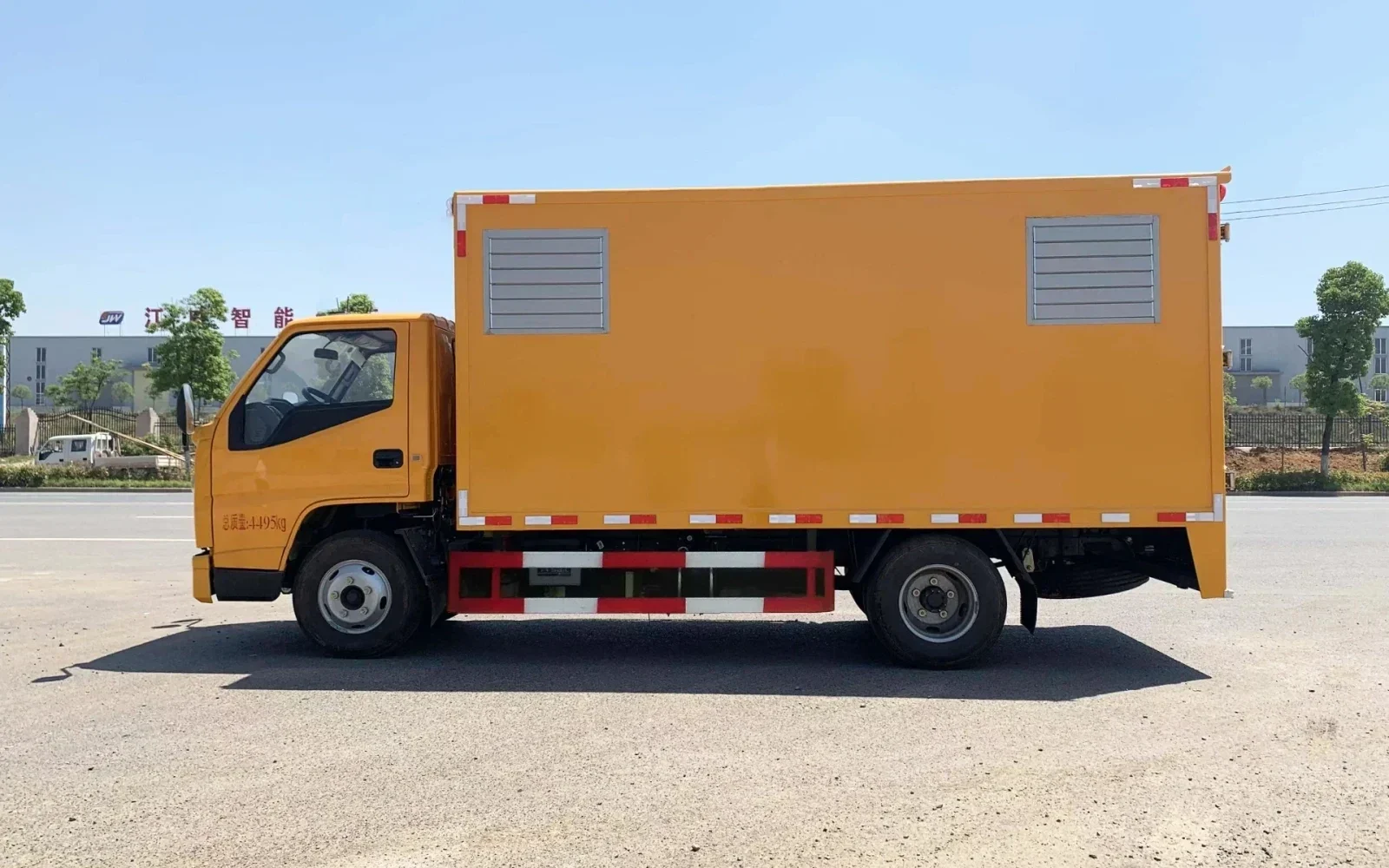
Hongyu's power-truck side view shows that the body and installed equipment define the shipping envelope. It is a useful view to annotate during measurement, but contains no certified dimensions or shipping weight.
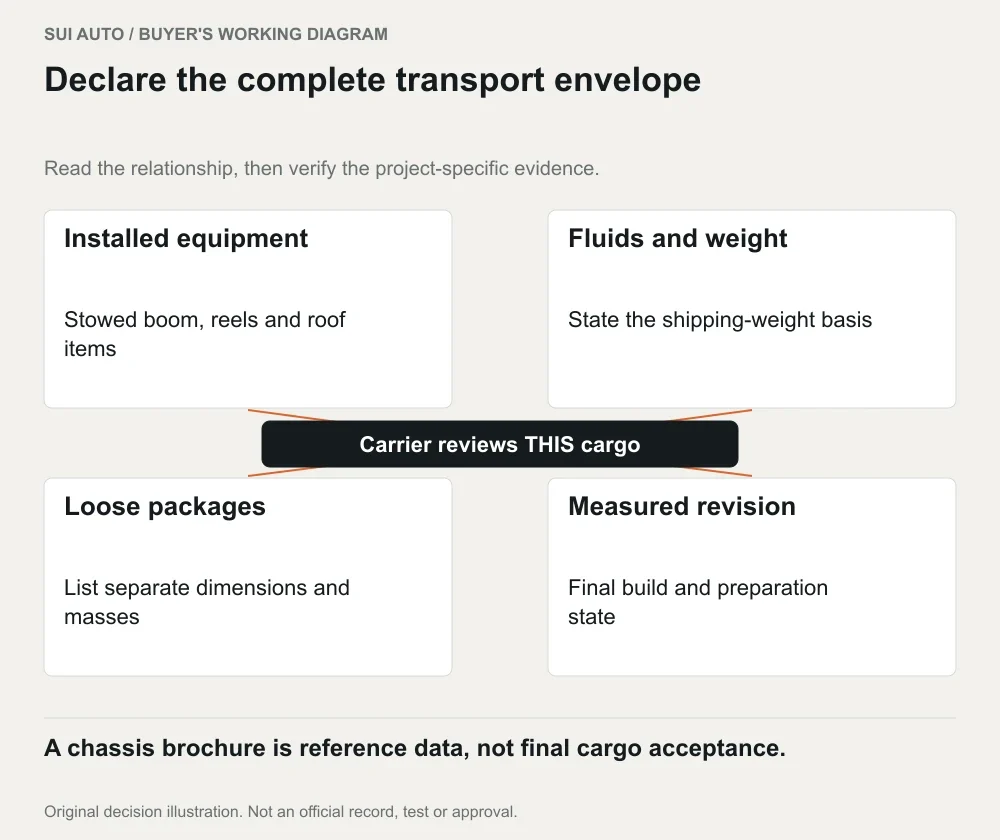
Buyer illustration: transport-data relationship diagram; no actual cargo measurements or carrier approval is represented.
Explain the stated weight
Clarify whether the quoted figure refers to a bare chassis, empty complete vehicle, permitted gross mass or actual shipping weight. Those values serve different purposes. Ask what fluids, accessories or separately packed items are included in the transport figure. If the actual weight is not yet available, mark it as provisional and agree when it will be confirmed. The transport contractor needs reliable weight information for its own equipment and handling review. Do not use a catalogue payload figure as the cargo weight or assume a nominal tank capacity represents the mass that will travel.
Declare loose cargo and special conditions
List crates, hoses, tools, spare parts and equipment removed for transport separately from the vehicle. Give package dimensions and weights where required. Tell the forwarder about batteries, residual materials or other conditions that may affect acceptance; follow the carrier's instructions and applicable requirements rather than assuming they are irrelevant. Ask whether loose items may travel with the vehicle under the selected service. A truck body is not automatically approved as storage for unrelated cargo. Proper declaration lets the carrier assess the actual shipment and gives the receiving team a clear inventory to check.
An illustrative quotation revision
Suppose a crane truck's preliminary freight enquiry uses chassis dimensions. After the body is completed, the approved stowed boom and equipment compartments extend the shipping envelope. The forwarder must reassess handling and acceptance, and the original freight figure may no longer apply. This hypothetical situation can be avoided by stating provisional information clearly and confirming final dimensions before booking. It does not prove that a particular catalogue crane fits any shipping equipment. The buyer should retain both the preliminary quote and the accepted final configuration so any price change has an identifiable reason.
Review the freight offer line by line
Check cargo description, accepted dimensions and weight, route, service type, validity, origin and destination scope, special handling, exclusions and charges payable outside the quoted total. Ask what evidence establishes the booking and what happens if cargo readiness changes. Identify the party responsible for loading preparation and destination collection. If two quotations use different cargo assumptions, ask for aligned revisions before comparing prices. Keep the forwarder's response with the supplier's final transport measurements and the import file. This makes the price useful for a real decision instead of an attractive number based on an incomplete truck description.
Can I send only the product URL?
Use it as a reference, but also send the proposed build and transport data. The product page may show a published model rather than your selected equipment or shipping arrangement. Carrier acceptance should be based on the actual configuration and required documentation.
What if the truck is still being built?
Request a provisional offer that explicitly identifies its assumptions. Agree on when measured dimensions and weight will be provided and how the quote will be updated. Avoid treating a drawing-based estimate as an accepted final booking for special cargo. Tell the forwarder promptly if the approved equipment layout changes.
References and related reading
Planning a purchase? Follow the overseas buyer guide for specification, payment, shipping and import preparation.