Record the chassis baseline before body installation
Ask the body builder to record the chassis identity, configuration, received condition and unresolved discrepancies when it arrives. This baseline helps separate pre-existing conditions from later installation or transport damage. A notification that the chassis has arrived should include enough evidence to confirm that it is the chassis selected for the project. The intake record should name the receiver, date and location. Link it to the order and retain the photographs before fabrication or installation changes access to the frame, wiring and cab.
Reconcile identity with the approved annex
Compare the VIN, chassis model, steering position and selected powertrain against the accepted specification. Record identifiable component references where they form part of the order. A chassis badge or cab appearance may be insufficient to distinguish variants. Ask the manufacturer which records support the configuration match and whether any items remain subject to confirmation. If the physical vehicle differs from the annex, hold the affected integration decision and request a disposition. Avoid treating a visually similar replacement as an approved substitute simply because it fits the workshop schedule.
Record condition in a repeatable way
Request overall views of the cab, frame, rear equipment area and accessible underbody, followed by close-ups of any damage or unusual condition. Include mileage or operating-hours evidence where available and relevant to the purchase. Ask the receiving team to record supplied keys, loose items and documents. State the limits of the check, such as areas inaccessible without lifting or a road test that was not performed. The intake record should describe what was observed. A blanket phrase that the chassis is perfect gives later reviewers little useful information.

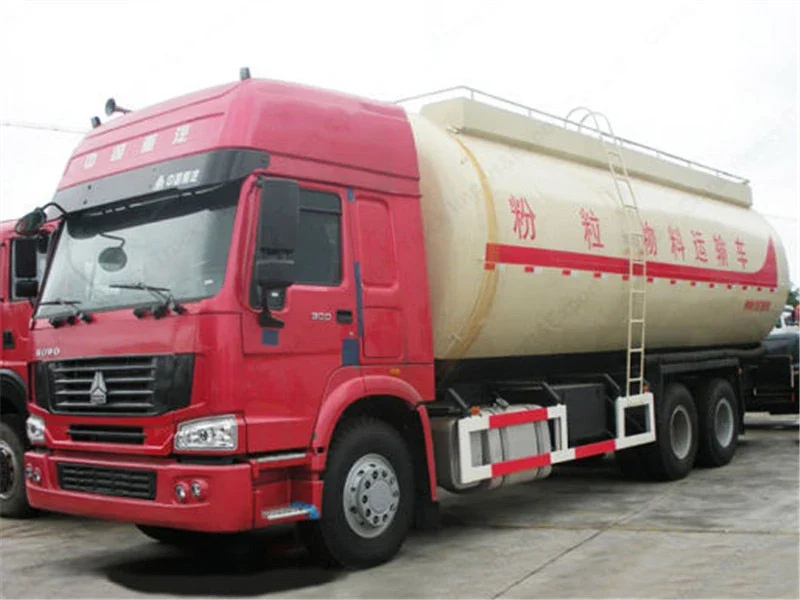
Rows of cabs in Chengli's published yard photograph show why receiving photographs need consistent front, side and rear coverage. A distant row cannot establish the VIN, hidden condition or installation status of an ordered chassis.
Check readiness for the planned installation
The body builder should confirm the interfaces needed for the approved design. These may include the selected PTO provision, available frame space, electrical interfaces and installation clearances. Ask for the relevant manufacturer instructions and integration review. The receiving check can identify whether expected provisions are present; it does not replace the engineering approval for mounting the body. If a required interface is unavailable, record the issue before fabrication proceeds around an assumption. Any proposed modification should follow the responsible technical parties' review and the agreed approval process.
A hypothetical intake discrepancy
Assume illustrative chassis VIN ending 742 arrives with a different transmission variant from the accepted annex. The outer cab matches the reference photos, but the planned PTO arrangement needs review. The body builder records the mismatch, identifies affected work and requests a decision. These identifiers and conditions are invented examples. The buyer asks for a configuration comparison and manufacturer confirmation before authorizing integration. This avoids discovering the interface problem after the body and auxiliary equipment are installed, when the correction may be more disruptive.
Assign responsibility for open intake items
Give each discrepancy an identifier, photograph or document reference, owner and next action. Distinguish transport condition, configuration mismatch, missing documents and a routine receiving observation. Ask who contacts the chassis supplier and who may approve the resolution. If the body builder proceeds with unaffected work, describe that scope and preserve the open issue. Keep commercial and technical decisions aligned. A receiving record is most useful when it triggers a controlled response, rather than becoming a photo folder that nobody reviews until final inspection.
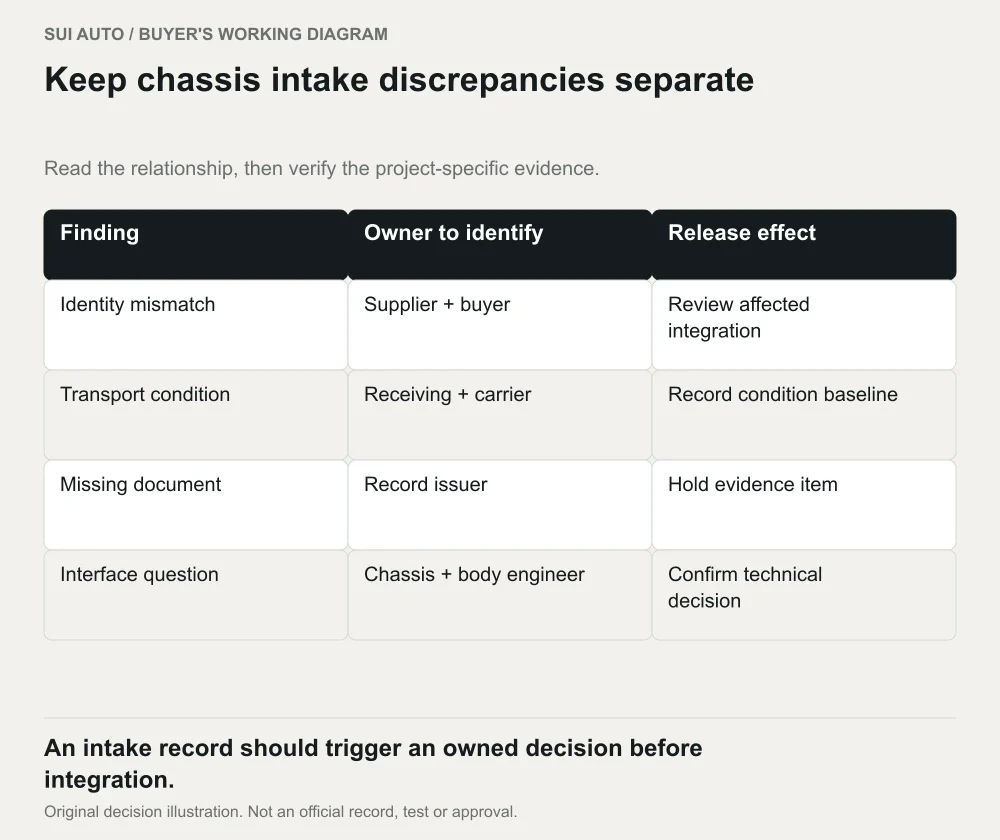
Buyer illustration: responsibility prompts for receiving a chassis; the actual agreement assigns the roles.
Release the chassis with a signed baseline
Before integration, confirm the selected configuration, received-condition report, loose-item inventory, relevant interface checks and disposition of open issues. Record who released the chassis and which work package is authorized. Preserve the baseline with the completed vehicle file so a final inspector can compare condition and identity. If the chassis moves between sites, record the transfer and receiving condition at the next location. A concise baseline protects communication between buyer, chassis supplier, body manufacturer and any party arranging local transport.
Does chassis arrival mean the complete truck is nearly ready?
Arrival establishes one dependency. The body, bought-in equipment, integration work and testing may still be incomplete. Ask for the production milestone register and the remaining sequence. The body builder should explain whether arrival was on the planned date and what work can now proceed. This gives a better readiness forecast than judging the project by a photograph of the chassis parked beside a finished-looking body. Keep the final test and documentation stages visible in the schedule.
Should the buyer witness every receiving check?
Witnessing can be proportionate to the project and the evidence available. For a higher-consequence configuration question, the buyer may request an independent check or targeted live review. Routine intake records may be adequate for other items when the process and responsibilities are agreed. Define the scope in advance and identify what cannot be established remotely. An inspector or buyer representative needs the accepted annex to assess configuration; a visit without the current requirements can produce a detailed but unhelpful report.
What if the chassis VIN or transmission differs from the approved annex?
Record the observed identity and compare the actual configuration with the accepted requirement. Ask which body interfaces, operating duties and documents are affected. Hold the affected integration work until the designated technical and commercial parties approve a resolution. A similar cab or engine rating does not establish an equivalent chassis package. If a replacement is accepted, update the annex, installation references and receiving baseline before release. Keep the original discrepancy and decision in the vehicle file so final inspection checks the approved replacement rather than the superseded proposal.
References and further reading
Planning a purchase? Follow the overseas buyer guide for specification, payment, shipping and import preparation.