The direct answer
A concrete mixer transports and agitates concrete; a concrete pump conveys suitable concrete to a placement location through its approved pumping system. One does not simply replace the other. A buyer planning a pour should first separate delivery from placement, then determine where each vehicle can stand and how concrete moves between them. The SUI AUTO catalog includes a Dongfeng mixer and a Dongfeng pump reference, but their presence does not prove they are a matched package. Compatibility requires the exact equipment documents, concrete specification and an assessed jobsite arrangement.
Use a realistic planning scenario
Assume a building project receives ready mix from an external plant while the placing area is separated from the access road. The example illustrates a procurement discussion, not a completed project. A mixer may reach the pump's receiving point but cannot reach the final placing position. The project team needs an agreed delivery sequence, receiving arrangement, suitable standing area and placement method. If a chute can safely serve a small accessible pour, hiring or buying a pump may be unnecessary. If placement access is restricted, a mixer alone leaves an essential part of the process unresolved.
Compare the bottlenecks separately
For transport, review batch timing, journey variability, permitted payload and unloading access. For pumping, review the concrete requirements, proposed delivery route through the equipment, placing demand and equipment setup envelope. Published reach does not equal useful reach at every elevation or position. Request the manufacturer's working diagram and a specialist review of the proposed setup rather than estimating from boom length. A balanced system also considers supply interruptions: a pump selected for a high nominal rate cannot create concrete that the plant and delivery fleet fail to supply consistently.
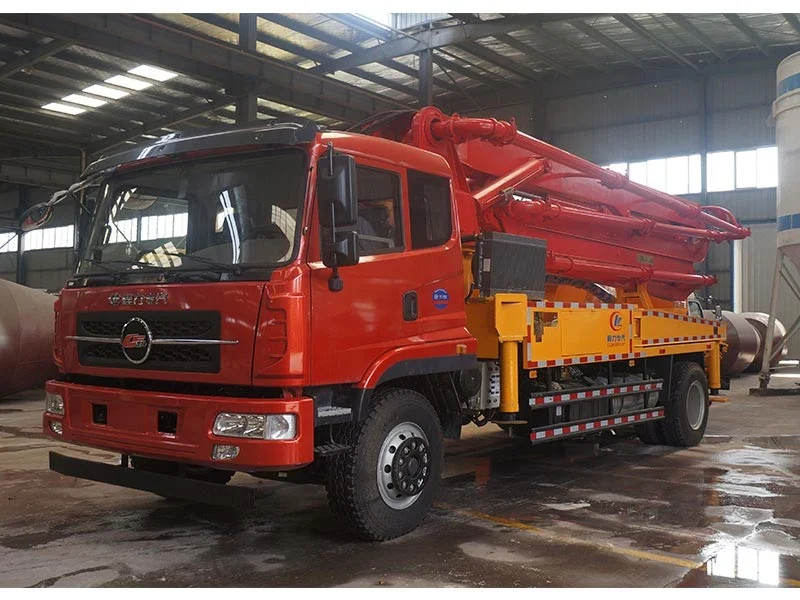
Manufacturer reference photograph. The pump truck carries a separate folded placing boom; its setup envelope needs a working diagram.
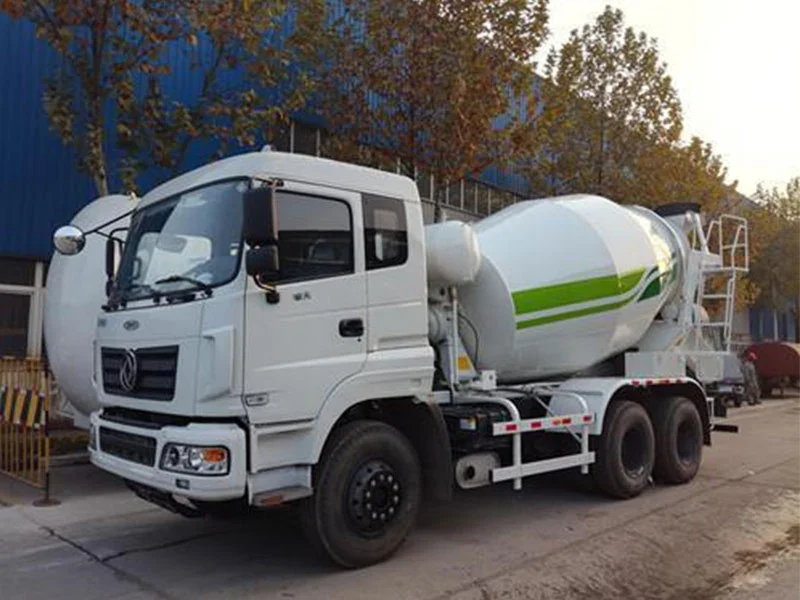
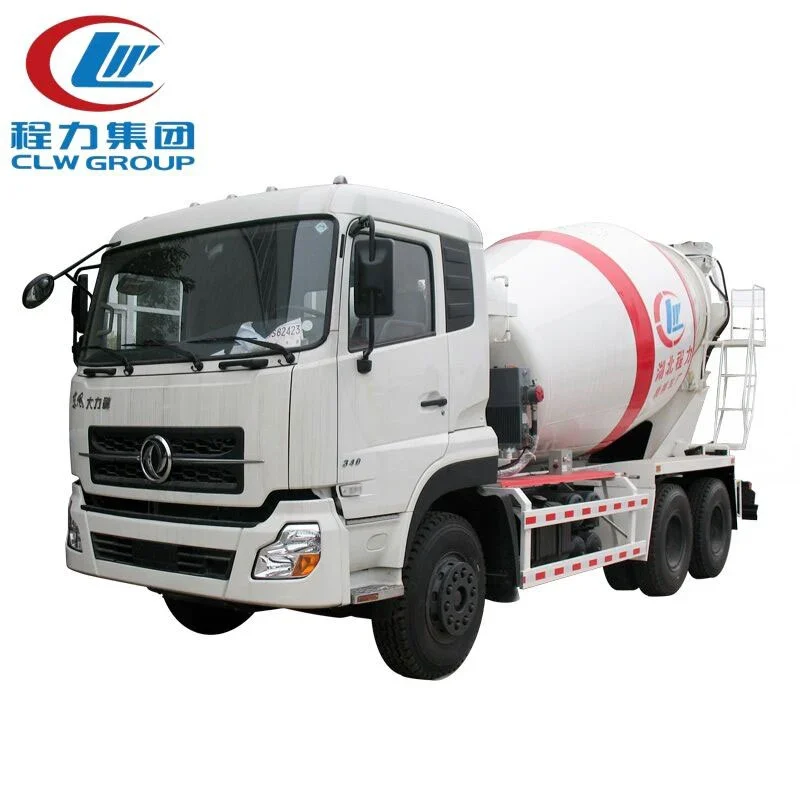
Manufacturer reference photograph. The mixer drum and discharge chute belong to transport and delivery of concrete.
Create two capacity questions: can the delivery process supply the required concrete when needed, and can the placing system serve the approved positions with that concrete? Record the receiving interface separately. An unanswered item in either column remains a process gap even if the other truck has a higher nominal rating.
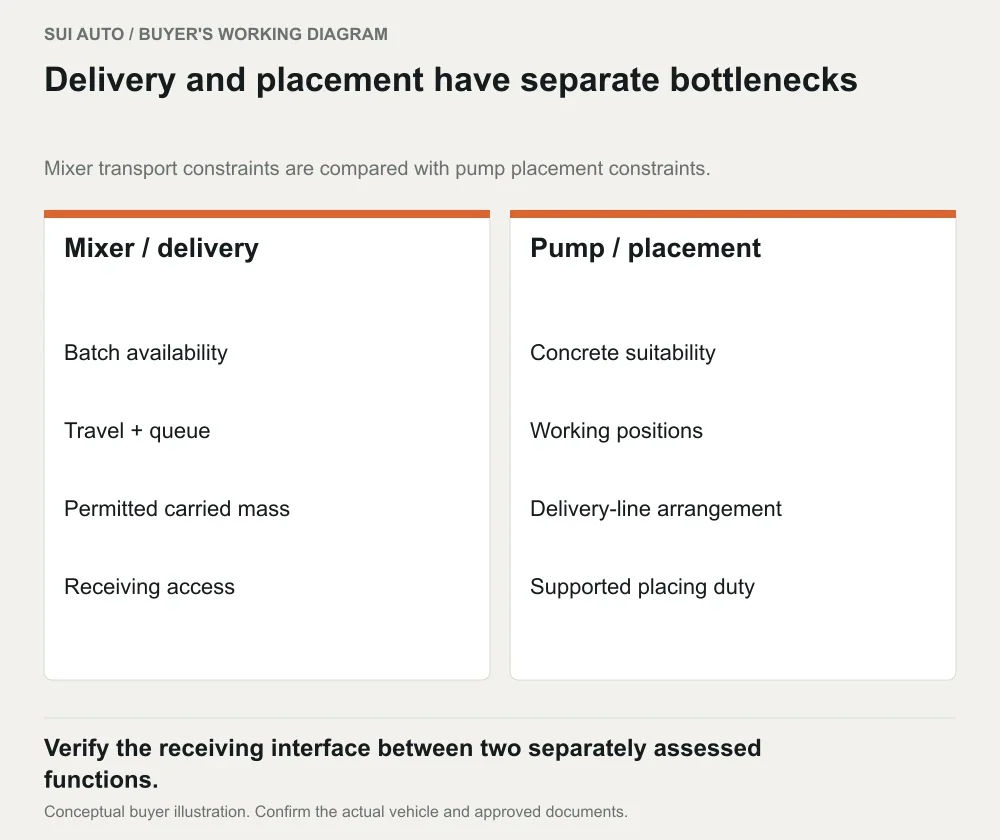
Conceptual illustration. Mixer transport constraints are compared with pump placement constraints. Verify the receiving interface between two separately assessed functions.
The interfaces deserve written attention
Specify the receiving hopper arrangement, truck approach, communication responsibilities and designated areas for equipment and personnel. Confirm the pump supplier's requirements for concrete suitability through the responsible concrete producer and placing contractor. Do not use a generic website description to decide aggregate compatibility, line suitability or allowable pressure. Ask for the actual component identification and manufacturer guidance. The quotation should identify who supplies any delivery pipe, hoses, supports and accessories. A complete pump purchase can still be operationally incomplete when these interfaces remain outside every supplier's stated scope.
Safety is a separate planning workstream
For applicable United States construction activities, OSHA 1926.702 contains requirements concerning concrete pumping equipment and maintenance isolation. The reference is jurisdiction specific and is not an operating procedure for this vehicle. Other destinations require their own regulatory assessment. Ground support, overhead hazards, exclusion areas and trained personnel must be reviewed by qualified site and equipment specialists. Do not infer that guidance for a crane applies unchanged to a concrete placing boom. A procurement article should identify these responsibilities without giving field instructions for pressure release, blockage clearing or boom deployment.
What to send with an enquiry
Provide a site drawing, access description, placing locations, anticipated concrete supply pattern, project duration and the responsible contact for concrete design. Ask the mixer supplier for its exact build and weight information. Ask the pump supplier for configuration, working envelope, concrete compatibility requirements, accessories, manuals and authorized service support. List what is supplied, hired or provided by the site. Keep commercial comparisons separate for delivery and placement so a cheaper incomplete combination is not mistaken for a better solution. Agree which assumptions must be resolved before an equipment order becomes firm.
Coordinate acceptance rather than staging a spectacle
Inspect both vehicles against their own configuration schedules and check that the agreed interface items are present. A controlled demonstration should follow manufacturer instructions and an approved plan, using qualified people and suitable materials. Record the conditions and limitations instead of treating one successful demonstration as proof for every pour. Establish communication, documentation and escalation contacts across the batching plant, transport team and placing team. Obtain a clear handover of service and inspection responsibilities. Equipment procurement is successful when the process is workable and accountable, not merely when two impressive trucks arrive together.
Frequently asked questions
Can a pump truck transport the concrete order? Do not assume that a pumping vehicle has the transport function of a mixer; review the actual model and intended use. Does greater boom reach always solve access? No; usable positions, support conditions, obstacles and manufacturer limits still govern suitability. Should both vehicles be purchased together? Only if your business model supports owning both functions. A contractor may instead combine purchased transport equipment with a specialist placement service, provided compatibility and responsibility are clearly agreed.
References and related reading
Planning a purchase? Follow the overseas buyer guide for specification, payment, shipping and import preparation.