Treat an approved specification as a controlled document
Once a custom truck specification is accepted, a request to add equipment should become a written change proposal. The proposal needs to identify the original requirement, the replacement or addition, the reason and the expected effects. Do not rely on a revised chat photograph as approval. Even a seemingly small storage or pump change can affect layout, service access, weight or the electrical system. A specification freeze creates a common reference for the buyer, body builder and inspector. It is not a claim that no changes are possible; it means changes are reviewed against the build that was actually agreed.
Separate a cosmetic request from a functional change
Changing a paint instruction is different from replacing a pump, enlarging a tank or adding a generator. Cosmetic changes may still affect timing or marking requirements, but functional changes need a technical review. Describe the required outcome rather than instructing the supplier to fit an unverified part. Ask whether the proposed item changes mounting points, center of gravity, axle loading, cooling, wiring, PTO demand or maintenance access. The supplier must identify which checks are applicable. A website preview or three-dimensional model can illustrate an idea, but it does not establish that the revised vehicle remains suitable or approved.
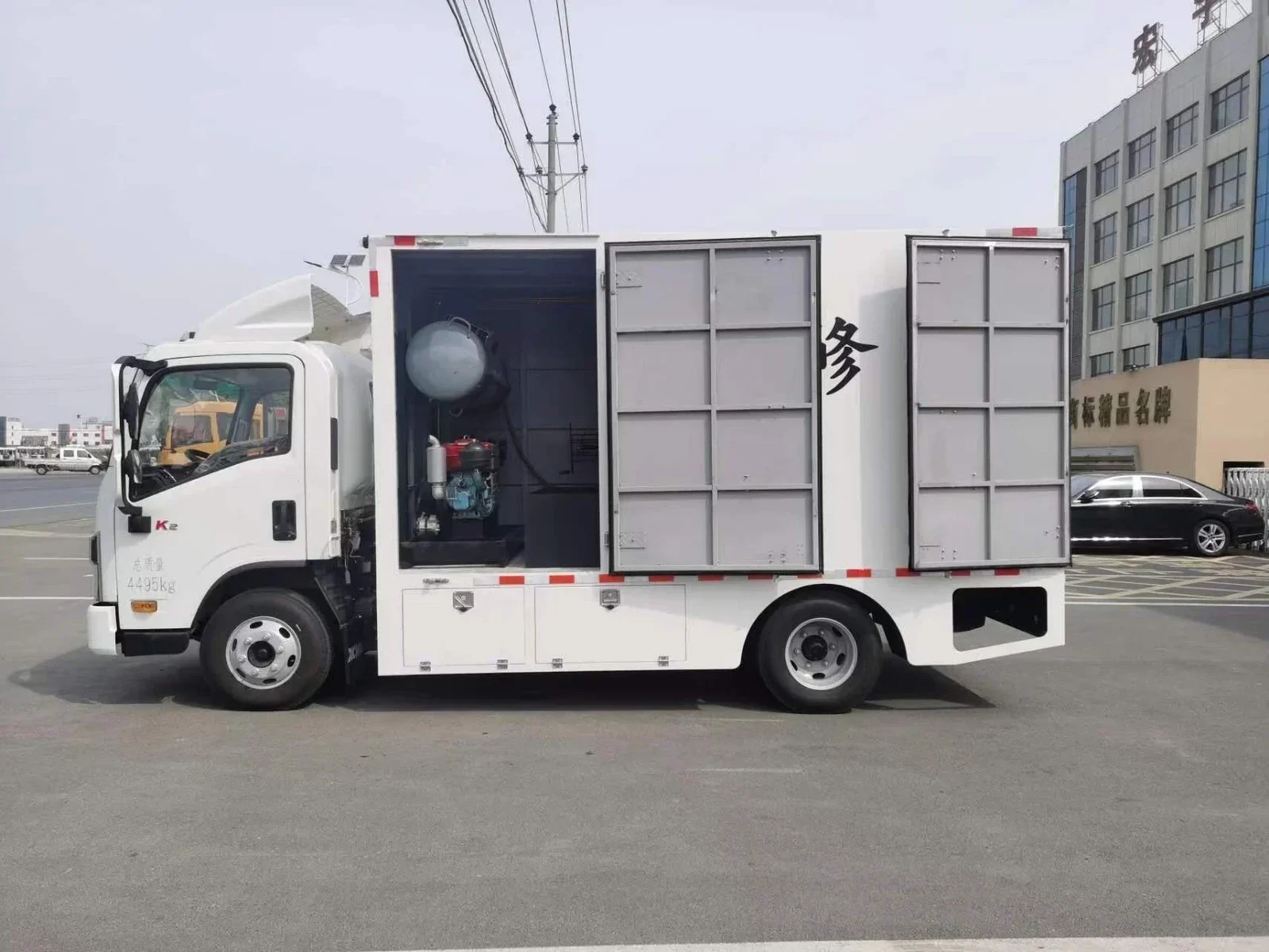
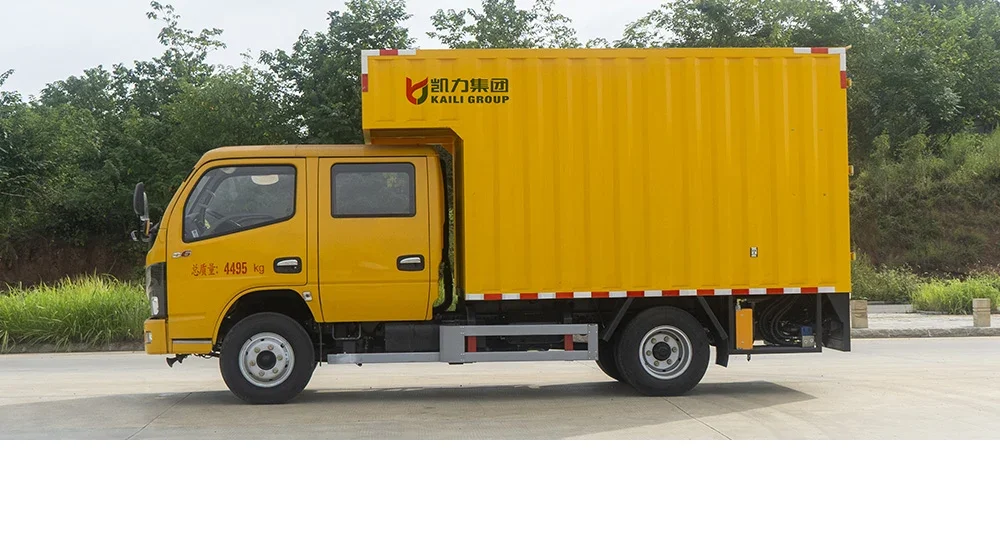
The installed machinery and access opening on this Hongyu workshop are functional interfaces. Changing them can affect space, servicing and power requirements even if the exterior body shape remains similar.
Require a cost and schedule response
For each change, request the additional or reduced price, items already ordered, possible rework, revised completion date and any effect on inspection or shipment booking. Separate a confirmed cost from an estimate awaiting engineering review. Ask how canceled components and nonreturnable purchases are handled under the contract. Do not approve a technical change while leaving its commercial implications unresolved. A supplier may need time to review a proposal, but that review should have an owner and a response date. Avoid combining several unrelated requests into one unexplained lump-sum adjustment that makes later acceptance difficult.
An illustrative service-truck change
Suppose a buyer approves a service vehicle with tools stored in side compartments and later requests an additional compressor. The question is not only whether the compressor fits. The team needs to check power demand, ventilation, securing arrangements, hose storage, noise considerations, operating access and the remaining load allowance. If the addition requires a different power source or moves another item, the drawing and component list need revision. This hypothetical example does not establish a suitable compressor size. It shows why a purchase request should lead to a coordinated technical and commercial response rather than an informal yes.
Keep one revision register
Use a register with change number, request date, description, documents affected, technical reviewer, commercial effect, approval status and implementation evidence. The buyer's authorized approver should sign or otherwise formally accept the final proposal. Replace superseded drawings in the inspection pack, but preserve the history so that disagreements can be traced. Tell the inspector which revision to use and identify any approved deviation. If a change is rejected or postponed, record that outcome explicitly. Otherwise an old request can be mistaken for an instruction and appear unexpectedly in the finished vehicle.
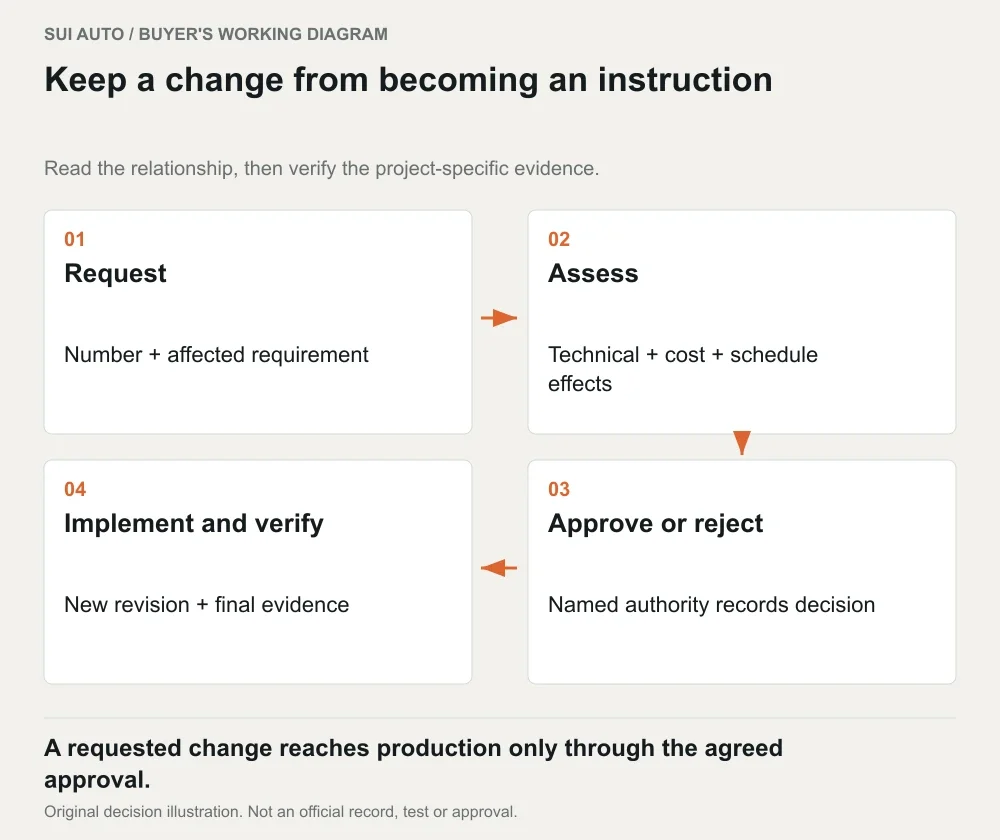
Buyer illustration: original change-control diagram with no assumed free changes or standard commercial terms.
Check documents as well as hardware
The final component list, operating manuals, spares list, vehicle description and shipping dimensions should match the revised build. Ask the importer or broker whether a changed body or equipment description affects destination documentation. A new mounted item may alter the transport envelope or require different handling arrangements. Review the inspection checklist before completion so it tests the revised functions and verifies the new identities. Keep photographs of the final layout together with the accepted revision. Configuration control is only complete when the physical vehicle and its supporting records describe the same accepted scope.
Can I still change the truck during production?
Possibly, subject to supplier review and the contract. Ask what has already been procured or fabricated and what can be altered without creating disproportionate rework. Do not assume a request is free because the vehicle has not yet shipped. Request the technical, price and timing effects before approving it.
Who should approve an equivalent component?
The person named in the purchase agreement should approve it after receiving the proposed identity, technical evidence and support implications. A replacement with a similar appearance is not automatically equivalent. Confirm manuals, repair parts and inspection requirements for the substitute, and retain the approval with the final specification.
References and related reading
Planning a purchase? Follow the overseas buyer guide for specification, payment, shipping and import preparation.