A trade term needs a named place and an agreed edition
When a quotation says FOB or CIF without a named port, ask for clarification before comparing it with another offer. Record the term, exact place and agreed Incoterms edition in the contract. The choice should reflect the actual transport and delivery arrangement. The ICC checklist distinguishes maritime FOB and CIF from FCA arrangements used for carrier or terminal delivery. This article summarizes buyer questions rather than reproducing the rules. Use the relevant ICC materials and transaction advisers for the complete responsibilities. A shorthand price label cannot by itself establish who performs every handling task or pays every destination charge.
Map the proposed handover
Ask where the seller proposes to hand the truck over and what must be completed at that point. Is the vehicle delivered at a factory location, a terminal or aboard the carrying vessel? Does the proposed arrangement involve a container, flat rack, RoRo service or another method? Identify who engages the main carrier and who coordinates cargo acceptance. The ICC checklist favors FCA for container or multimodal delivery and FOB for appropriate onboard maritime delivery. Ask your forwarder and contract adviser to review the choice for your particular shipment rather than adopting a familiar abbreviation regardless of the logistics.
Separate freight payment from risk transfer
A seller paying a freight charge does not automatically mean that risk stays with the seller until the truck reaches your operating site. Ask your adviser to explain the selected rule's delivery and risk point, and show that point on the shipment plan. Keep insurance and claims arrangements consistent with that understanding. Do not describe a CIF quotation as a complete door-to-door package without reviewing its actual scope. Also distinguish the supplier's product warranty from the transport arrangement. These different responsibilities may involve different parties, documents and evidence if a problem occurs during the journey.
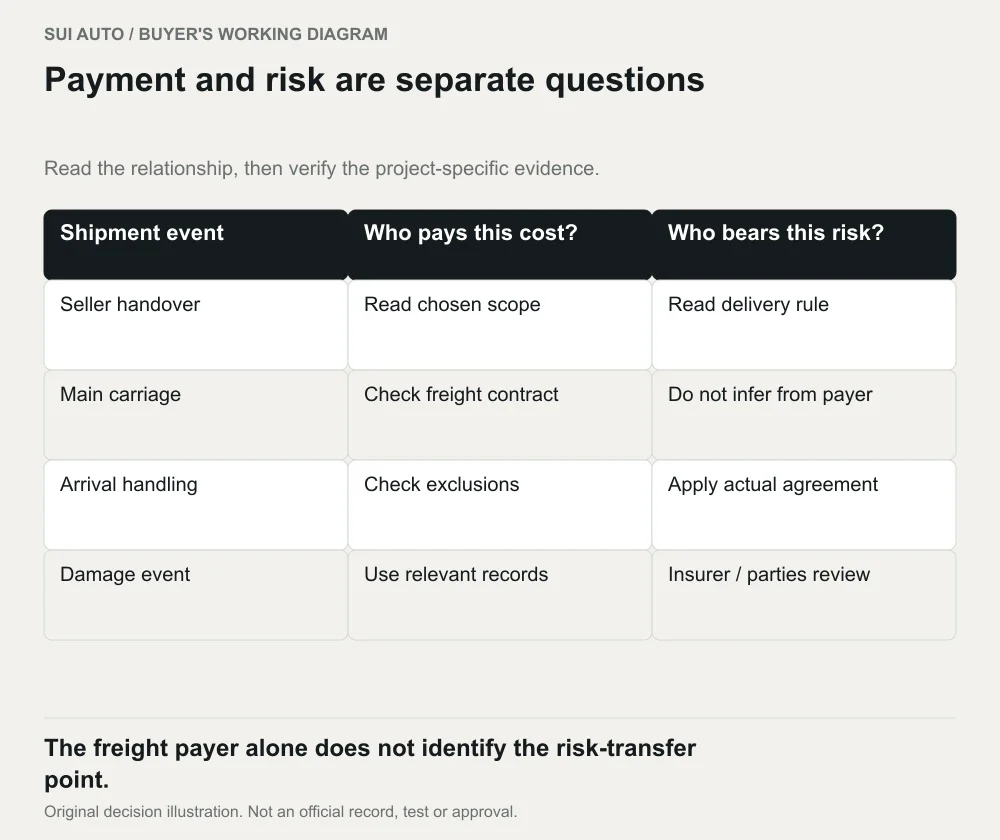
Buyer illustration: original Incoterms review aid; it does not reproduce the rules or allocate transaction liability.
List costs outside the headline quotation
Ask the seller and forwarder to mark origin transport, loading, port handling, main freight, insurance, destination handling, clearance and final delivery as included, excluded or unresolved. Record whether each amount is fixed or estimated and who invoices it. Some tasks may depend on the accepted cargo dimensions or booking. Avoid adding the same charge twice when preparing the budget. If the quotation includes insurance, request the policy scope rather than assuming the coverage is adequate. The selected Incoterm helps allocate obligations, but your purchase file still needs a clear description of the actual services being quoted.
An illustrative containerized purchase discussion
Suppose a buyer requests a FOB quotation by habit, while the accepted plan delivers the prepared cargo to a container terminal before vessel loading. The forwarder asks the parties to review whether FCA better matches that handover. The buyer then requests revised cost and responsibility information instead of changing only three letters in the invoice. This is a hypothetical procurement discussion. It does not determine the correct rule for every flat-rack shipment or establish that the pictured truck can be containerized. The purpose is to align the commercial term with a documented transport process.
Resolve contractual topics outside the term
Incoterms should not be used as a substitute for clauses covering specifications, payment, title, inspection, defects, support or dispute resolution. Ask the contracting parties and advisers to address those subjects separately. Link the chosen trade term to the accepted technical revision, final cargo description and shipment arrangement so the records agree. If the route or handover changes, review the commercial consequences before booking. SUI AUTO can help coordinate the information needed for the comparison, while the final allocation of obligations belongs in the actual sale and logistics agreements.
Is CIF always a better choice for a first-time buyer?
Not automatically. It may reduce some carriage coordination, but the buyer still needs to understand destination costs, risk and insurance. Compare a clear CIF scope with a clear alternative scope and involve a competent forwarder or adviser. Familiar wording is not the same as a complete buying arrangement.
Can I choose the rule after the truck is finished?
It is better to agree the delivery arrangement before ordering because it affects pricing, preparation and responsibilities. If a later change is necessary, have the parties revise the quotation and contract deliberately. Update the logistics and document file rather than silently changing an invoice label.
References and related reading
Planning a purchase? Follow the overseas buyer guide for specification, payment, shipping and import preparation.