Compare an identified construction and inspection basis
Request the drum and spiral material specifications, fabrication evidence and manufacturer-approved wear-assessment basis. Steel grade or nominal thickness alone cannot establish the service life of a completed mixer drum. The useful comparison connects the selected construction to the actual concrete duty and documents how its condition will be assessed over time.
This is a body-wear procurement question. It differs from choosing mixing capacity or identifying the hydraulic drive components. A buyer needs evidence for the wearing structure and its support, rather than a promise that one familiar material name guarantees a fixed number of years or delivered loads.
Separate the drum shell from internal components
Ask the manufacturer to identify the shell, spirals and other relevant wearing parts separately. Request the specified materials and nominal dimensions by component or region. A quotation that says wear-resistant steel may refer to only part of the assembly.
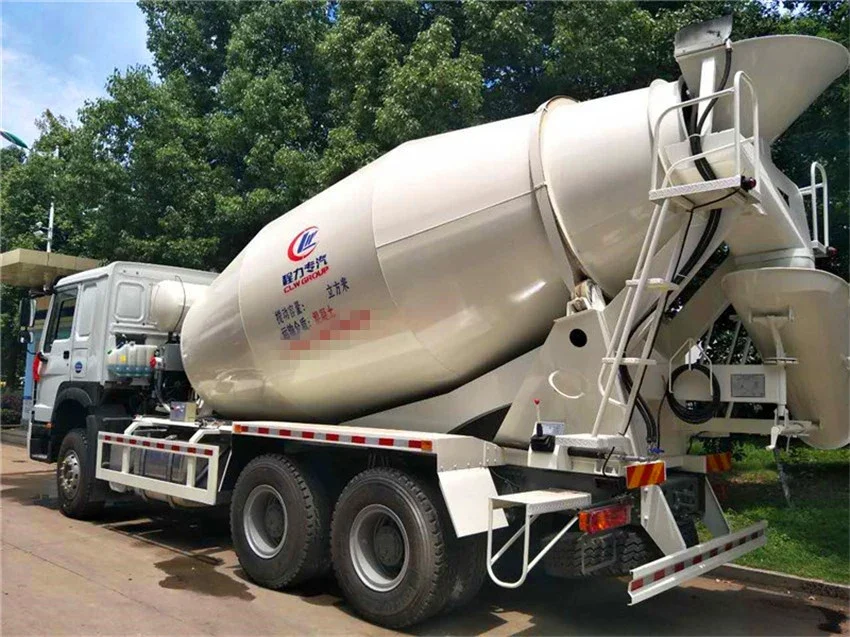
Manufacturer reference photograph. The mixer drum shell, rear support and discharge assembly are visible; internal spirals and material grades require separate records.
Use a drawing or component schedule to understand the scope. Ask where the supplier expects wear assessment and how those locations are identified in its documentation. Do not create a universal thickness requirement for every area. The drum design and its approved inspection criteria belong to the responsible equipment manufacturer.
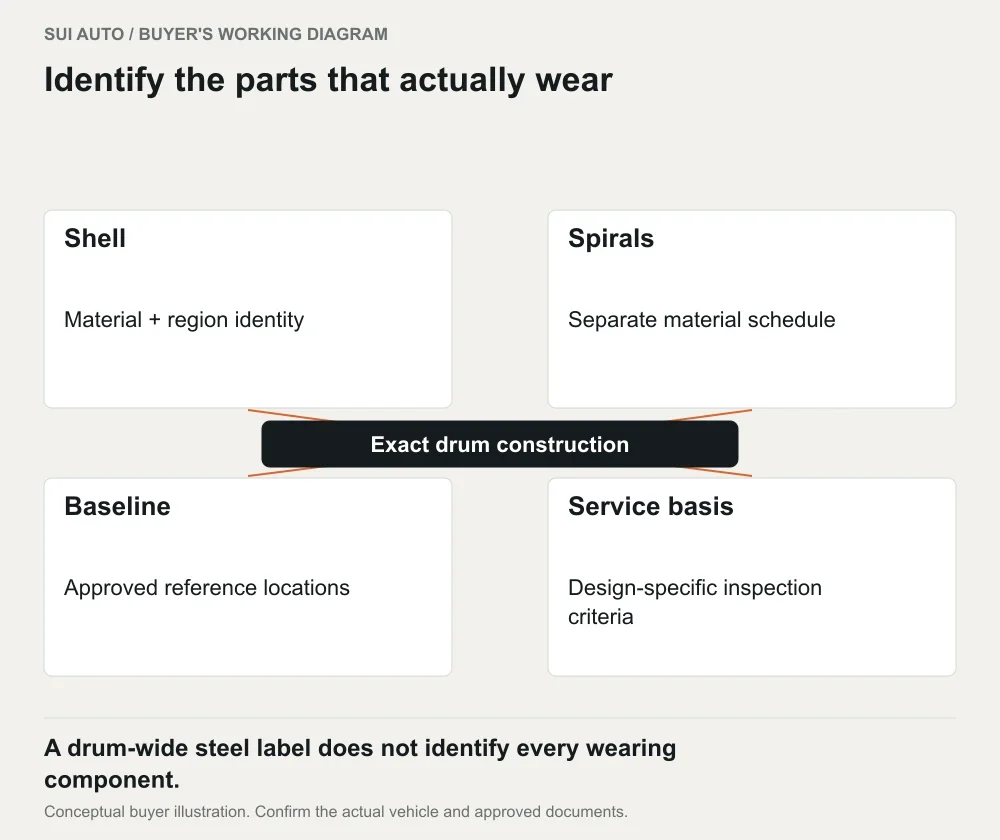
Conceptual illustration. Four linked records distinguish drum shell spirals baseline and inspection basis. A drum-wide steel label does not identify every wearing component.
Understand what a material study can establish
SSAB has published a mixer-drum development study involving wear-resistant steel and a particular test program. It demonstrates that material selection and structural design can be considered together. Its test results should not be converted into a guaranteed service-life multiplier for an unrelated finished truck.
Ask a supplier claiming similar benefits for the evidence supporting its own design and duty. Separate laboratory comparison, conceptual design work and documented field experience. Each can be useful within its stated scope. None should be described as proof that a named drum will last the same period in every concrete mix, route and maintenance environment.
Describe the concrete duty in the enquiry
Provide the concrete supplier's available information about aggregate and intended mixes, plus the expected work pattern. Identify unusual materials or frequent changes in service. The manufacturer should explain which duty assumptions support its recommended drum construction and any application limitations.
Do not select solely by the hardest named steel. Fabrication, geometry, structural requirements and support arrangements also need the manufacturer's assessment. The buyer should ask for a supported recommendation and the documents necessary to identify what is supplied. A material substitution should receive review before construction rather than appearing only in the delivery file.
Request a baseline that can be used later
Agree which manufacturing and initial-condition records will accompany the drum. Ask the supplier to define the relevant inspection method and reference locations for its design. A useful baseline connects the actual drum identity and component schedule to the approved inspection guidance.
The owner should not have to reconstruct original dimensions from a worn part. Ask how service personnel identify the correct criteria and who is qualified to assess the drum. Internal inspections and maintenance require approved procedures and competent personnel. Procurement records should support that work without becoming an improvised instruction to enter or work inside equipment.
A hypothetical abrasive-mix comparison
Assume a ready-mix operator is comparing a heavier conventional drum with a lighter construction using a named wear-resistant material. One supplier promises a longer life but provides no duty assumptions. The buyer requests component material schedules, design identification and the basis for the claimed benefit from both suppliers.
The decision may favor a supported lighter design, a different construction or an offer with stronger local repair support. The answer depends on the actual evidence and business duty. This hypothetical example does not assign a life expectancy or weight saving to the linked trucks, whose final build specifications require written confirmation.
Compare lifecycle support without inventing a lifespan
Ask which parts can be replaced or repaired through the manufacturer's approved service route and what evidence is needed to decide. Identify specialist availability, transport implications and compatible replacement references. These practical questions help estimate support exposure without pretending that wear can be predicted from a brochure alone.
Keep any supplier life estimate tied to its stated conditions and evidence. Ask how a changed concrete duty affects that estimate. Where the supplier cannot support a numerical prediction, compare documented construction, inspection access and service arrangements instead. An honest limitation is more useful than an unsupported fixed-life promise.
Acceptance and RFQ checklist
Request shell and spiral material specifications, nominal dimensions by relevant region, traceability evidence, approved drawing identification and the manufacturer's inspection guidance. Ask for the documented basis of any wear-life or weight claim. State which concrete-duty information forms the application brief.
At acceptance, match the supplied drum identity and material records to the agreed schedule. Review approved substitutions and outstanding inspection items. Keep the initial records with the truck's service file so later condition reports have a consistent reference. A clean exterior and fresh paint are appearance evidence; they do not verify every hidden construction detail.
FAQ: Does higher hardness guarantee a longer drum life?
It does not establish the finished design's service life on its own. Request the manufacturer's application assessment and evidence for the actual construction and concrete duty.
FAQ: Can a thin wear-resistant drum be rejected purely on thickness?
Compare the approved design, material and supported performance basis. Nominal thickness alone does not establish equivalence or inadequacy across different constructions.
FAQ: Should every fleet use the same wear limit?
Use the criteria for each actual drum design and component. The responsible manufacturer and qualified inspection should establish the applicable assessment and replacement basis.
References and further reading
Planning a purchase? Follow the overseas buyer guide for specification, payment, shipping and import preparation.