Decide whether the material must be removed
A water sprinkler suits tasks centred on distributing water or wetting a surface. A washing sweeper is the more relevant starting point when the contract requires collecting road debris as part of cleaning. Water application alone does not prove that grit, litter or sediment has been removed. Conversely, buying a collection system for a job that mainly needs controlled watering may add equipment and maintenance without answering the service brief. Define the required result at the curb and at the end of the route. The vehicle should be chosen around that result, the material present and the approved way to handle water and collected waste.
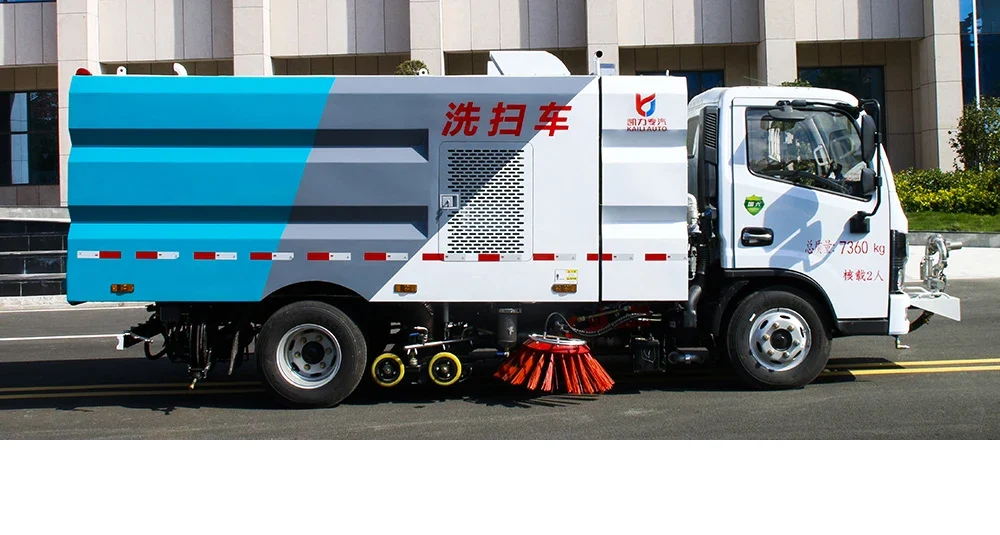
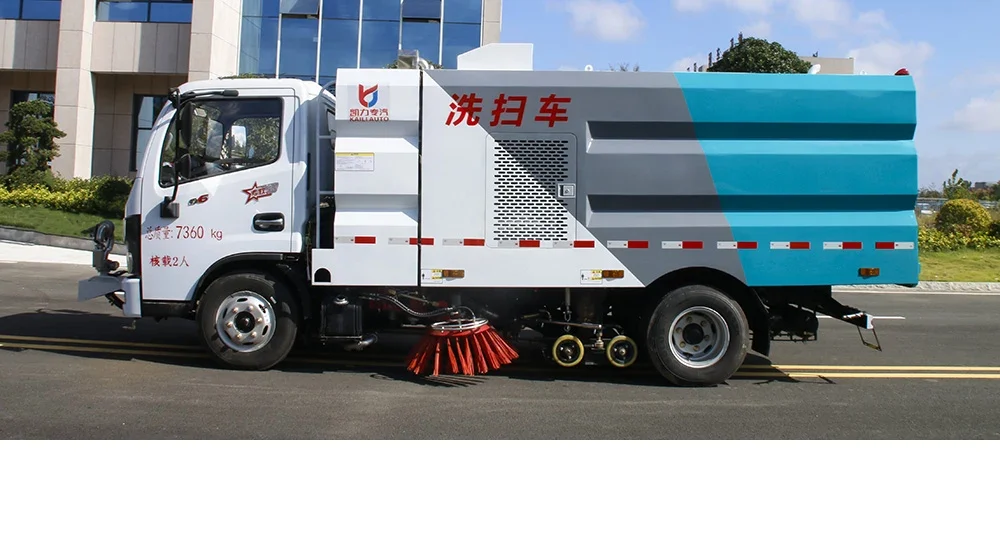
Manufacturer reference photograph. The washing sweeper includes underbody brushes and a collection body.
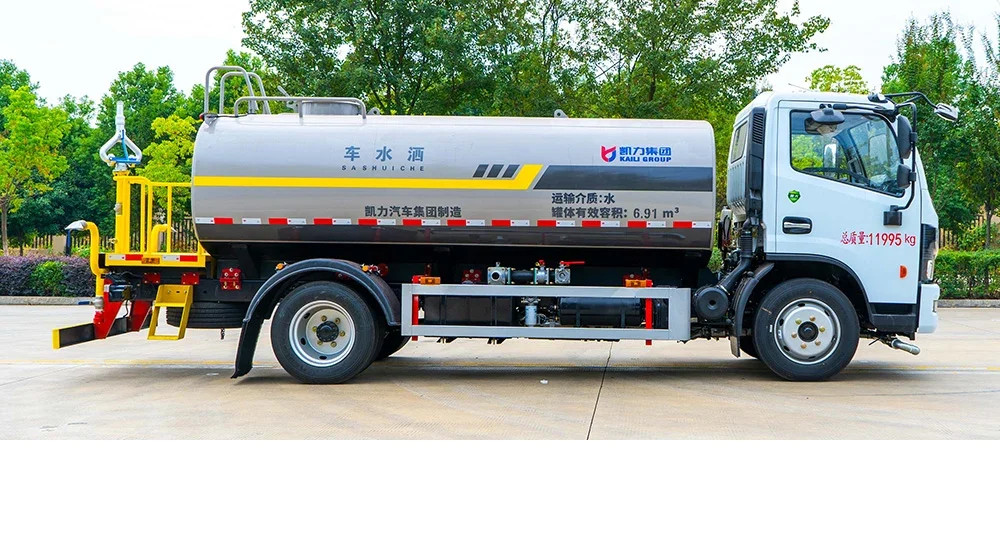
Manufacturer reference photograph. The sprinkler shows a water tank and rear service platform.
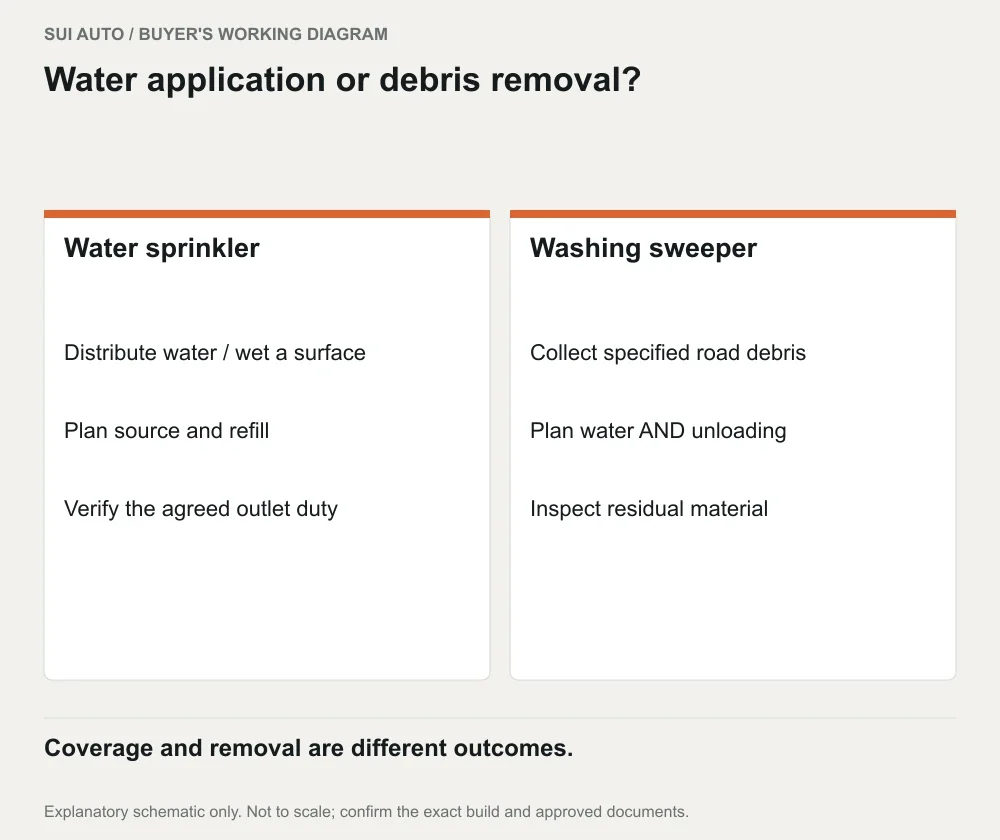
Coverage and removal are different outcomes. Explanatory schematic.
Separate coverage from cleaning evidence
Spray width describes an application envelope under stated conditions, while sweeping width concerns another working mechanism. They should not be compared as if both measured the same cleaning result. The reviewed Kaili sprinkler listing gives a maximum tank volume of 9.3 m³. The compact washing sweeper lists a 3 m³ clean-water tank and a 2.5 m³ debris hopper. Those figures identify different storage functions; they do not establish daily productivity. Route speed, road condition, parked vehicles, refill queues and hopper unloading can dominate the shift. Ask for an equipment explanation and a demonstration that matches the proposed debris and acceptance criteria rather than accepting a broad claim of multifunctional performance.
An assumed mixed industrial route
Assume a contractor maintains paved streets near an industrial estate. Light dust appears on some sections, while junctions accumulate grit and packaging litter. This hypothetical route may justify separate watering and collection passes, or a washing sweeper whose specified equipment can handle the mixed surface. Before deciding, inspect how much material is present after representative dry and wet periods. Check whether the same vehicle can reach curb edges around parked trucks. If the client requires debris removal, define how the completed route will be inspected. If the requirement is temporary dust control, specify the water source and avoid promising a lasting reduction without site-specific measurement.
Check water and waste logistics
Refilling must be included in the buying decision. Establish access to an authorised source, its practical flow and whether filling can occur within the planned shift. For a sweeper, identify where debris and dirty water may be received, because the route is interrupted when storage reaches its allowed condition. Clean-water capacity and hopper capacity cannot simply be added together as productive load. Review how their changing contents affect permitted mass and axle distribution. The manufacturer should explain level indications and operational limits for the quoted build. A larger tank may extend a watering pass but also change access requirements, loading and the chassis choice. Evaluate these tradeoffs with the actual route.
Request a task-specific quotation and trial
Provide road photographs, the target outcome, working hours, access widths, typical materials and refill and disposal locations. Request the exact nozzle, brush, suction and collection equipment included, as applicable, together with wear-part references and service access information. A purchasing trial should record the starting road condition, the authorised working setup, observed result and water or hopper conditions. Agree how to assess missed edges and residual debris before the test. Keep traffic management and operator training within the buyer's safety arrangements. Do not instruct crews to improvise cleaning settings around pedestrians. Confirm manuals, markings and maintenance provisions, and keep a record of any function that was described but not demonstrated.
Define what the client will inspect
Agree the meaning of a completed cleaning task in language the client can verify. For example, an assumed service brief may require removal of visible loose grit from defined curb sections, while another only requests controlled wetting at stated locations. These are illustrative requirements that must be adopted or revised by the buyer. Record the starting condition and any inaccessible area. A result inspected at one time cannot establish how long a surface will remain clean. This distinction helps the quotation cover the actual task and prevents an equipment demonstration from becoming an unsupported performance guarantee.
Practical answers before ordering
Will a sprinkler remove all road dust? Water distribution alone cannot establish complete removal, and the result depends on the surface and the required cleaning standard. Can the sweeper's listed water tank be treated as its payload? No; it is one storage specification, while payload and axle limits require the exact vehicle's mass information. Is one multifunction vehicle always cheaper? Compare staffing, downtime, wear parts, refill and unloading time, and the work that each configuration actually covers. A lower purchase price may leave a separate collection task unresolved. Ask SUI AUTO to compare written equipment scopes against the same route brief so that differences remain visible rather than hidden behind similar product names.
References and related reading
Planning a purchase? Follow the overseas buyer guide for specification, payment, shipping and import preparation.