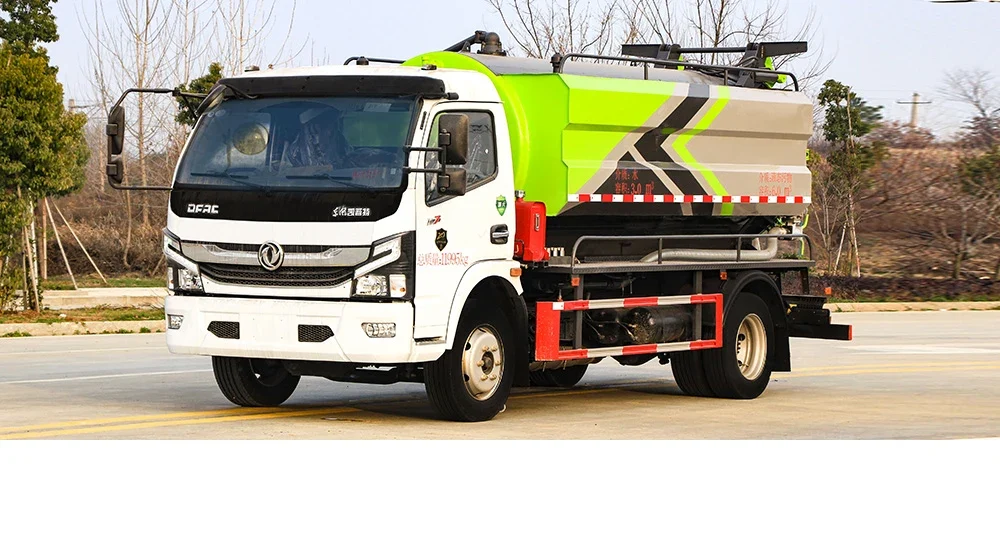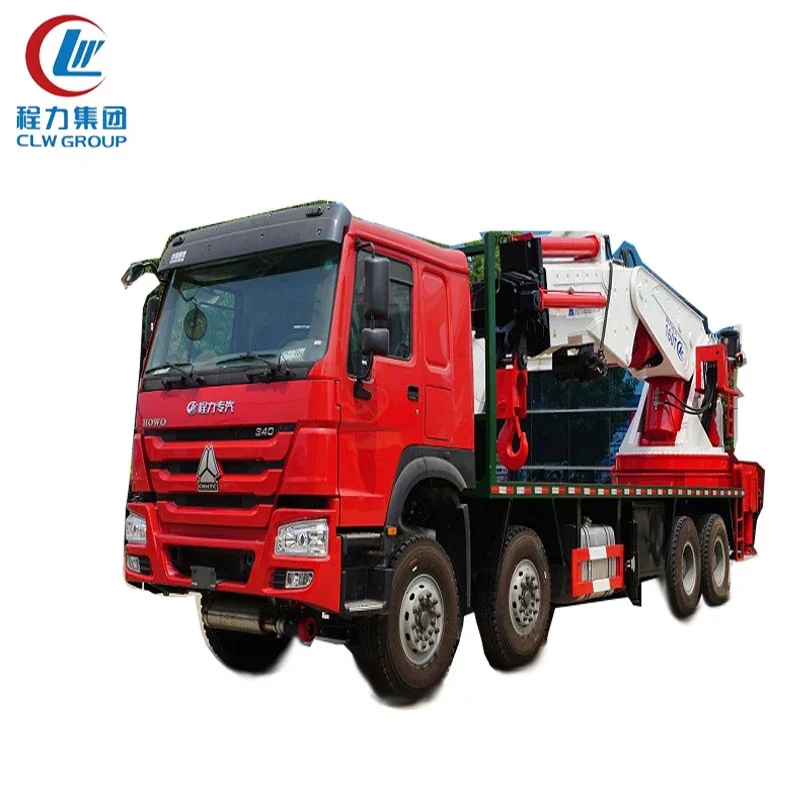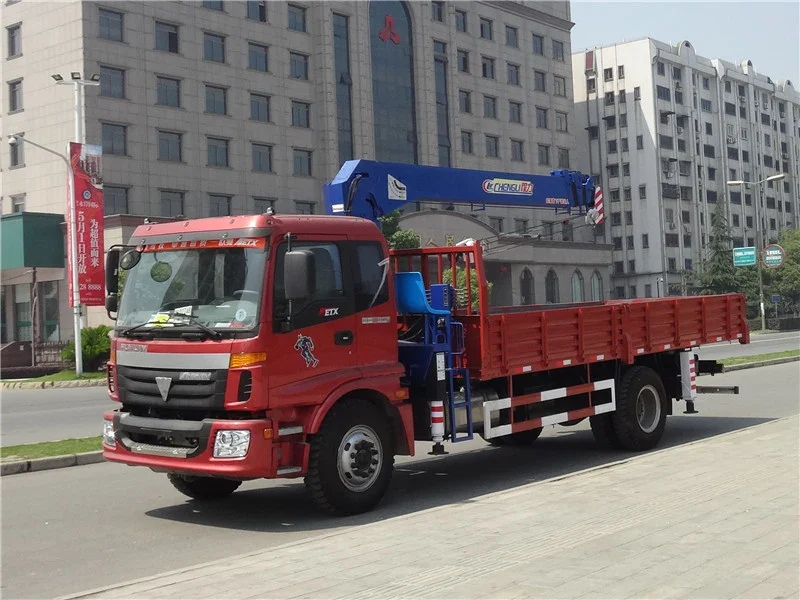
The chart matters more than the label
Choose a truck mounted crane by the required load at its intended working radius and setup, rather than the largest capacity label in a product name. A crane's usable capability depends on its approved load chart and conditions. Transport payload also needs separate assessment after the crane and body are installed. The Foton XCMG and Isuzu XCMG catalog references offer different vehicles to investigate, but this guide does not assign either one to an unverified lifting task. Obtain the exact chart and a qualified lifting review before making a purchase decision.
Describe a representative delivery
Assume a distributor delivers packaged building materials to sites where unloading points vary. This hypothetical buyer must identify load mass, dimensions, lifting points and the planned placement location. The distance from the crane to that location can change with a fence, parked vehicle or site boundary. A truck that performs an easy close lift may not serve a more distant placement. Record ordinary jobs and difficult exceptions separately. Determine whether occasional exceptional lifts should be contracted to a specialist rather than defining the entire fleet around them. Never treat an unverified customer estimate as a confirmed lifting load.
Ask for a configuration specific chart
The chart should match the crane model, installed arrangement and permitted setup. Ask the manufacturer to identify limitations related to boom configuration, lifting accessories and support conditions. Give a qualified planner the actual load information rather than deciding that a nominal capacity minus a guessed margin is safe. Do not interpolate undocumented values or copy a chart from another vehicle. If a quotation changes the crane model or mounting arrangement, require a fresh compatibility review. Written identification prevents two visually similar offers from being compared as if their lifting capabilities were identical.
Transport and lifting have different limits
Adding a crane consumes chassis capacity and affects weight distribution, body space and access. Request completed vehicle weight data, axle information and a drawing showing the cargo area and crane location. Assess road permissions and intended cargo restraint arrangements with responsible local professionals. A truck's ability to lift a load is not proof that it can legally transport that load, and the reverse is also true. Ask how the supplier validates the completed installation. Include crew, fuel, tools and accessories in the proposed transport configuration so payload discussions do not rely on a bare chassis figure.
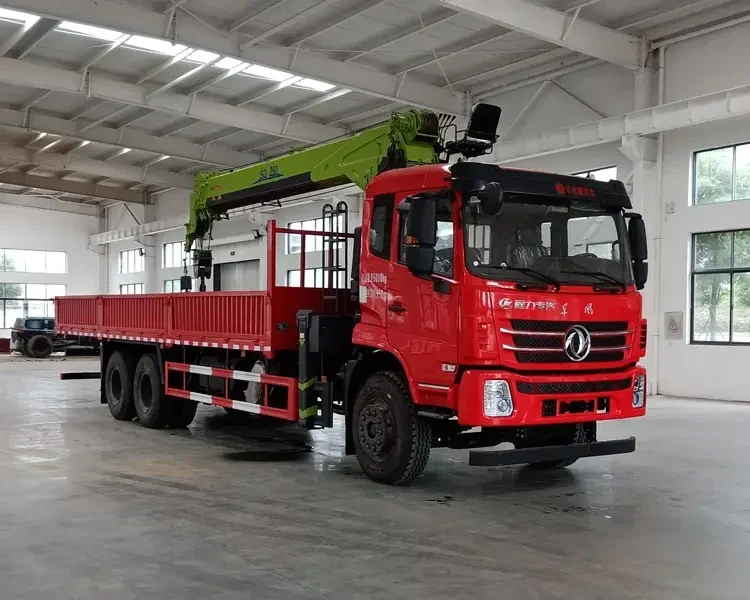
Manufacturer reference photograph. The crane base and cargo body share the chassis; crane installation consumes space and changes the carrying arrangement.
Give each offer two separate result fields: lifting task supported by the identified chart, and transport load supported by the completed-vehicle assessment. Do not copy the result from one field into the other. If the crane or mounting changes, ask whether both assessments need to be revised.
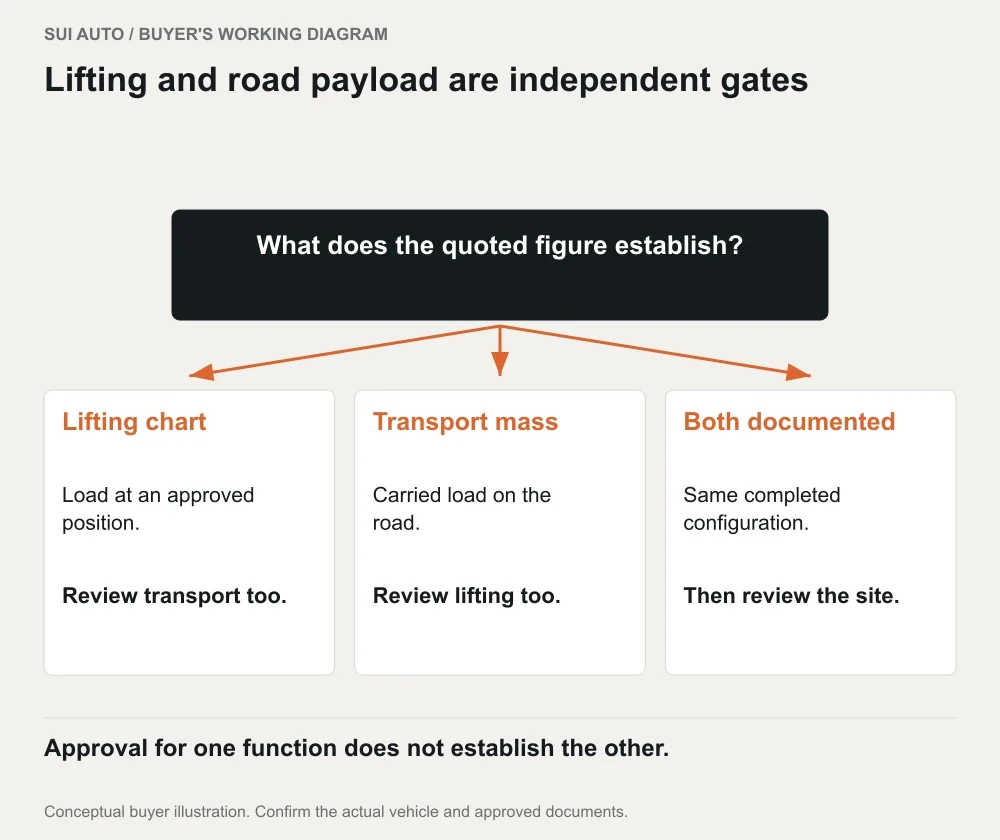
Conceptual illustration. Crane procurement separates load-chart lifting and completed-vehicle road carrying checks. Approval for one function does not establish the other.
Support and site hazards remain essential
For applicable United States construction activities, OSHA 1926.1402 addresses crane ground support; its requirements are not a blanket international approval. A competent site assessment must cover the actual supporting area, known underlying hazards and manufacturer conditions. Overhead electrical hazards require a separate authoritative review. Procurement should secure the necessary equipment information and training, not replace a lift plan. This article does not prescribe outrigger deployment, mat dimensions or clearances. Ask the appropriate specialists to establish those arrangements for each site and keep their responsibility distinct from the vehicle supplier's product description.
Quotation checklist for a useful comparison
Request exact chassis and crane identification, load charts, installed dimensions, weight evidence, cargo body details, support equipment scope, control arrangement, manuals and service contacts. State the expected loads and placement scenarios with reliable supporting information. Ask whether accessories, training and commissioning are included. Identify any proposed substitutions and how they will be approved. When one quotation has a higher capacity label, ask where its documented advantage applies in your actual jobs. This method exposes useful differences while preventing an attractive headline from concealing reduced cargo space or unsupported operating assumptions.
Acceptance should protect traceability
At inspection, match identification and installed equipment to the signed schedule. Obtain the final chart, commissioning and inspection records, manuals and accessory inventory. Any demonstration must follow an approved plan with qualified personnel and documented conditions; an improvised heavy lift is not an acceptance shortcut. Record deviations and require resolution before service. Retain equipment identification for future part ordering and chart reference. Review the handover of operator training and local obligations. SUI AUTO can coordinate documentary questions and inspection scope, while competent local parties establish whether a particular delivery or lifting activity is permitted and suitable.
Frequently asked questions
Does a higher advertised tonnage mean better reach? Not necessarily; compare the applicable charts at the actual required positions. Can I use the cargo payload figure as the crane load? No; they concern separate functions and limits. Can a crane truck carry out any building material delivery without construction crane requirements? Do not assume an exemption. Applicable rules depend on the jurisdiction and activity, so obtain a competent local determination before relying on a delivery description. A manufacturer's reference photo cannot settle regulatory scope.
References and related reading
Planning a purchase? Follow the overseas buyer guide for specification, payment, shipping and import preparation.