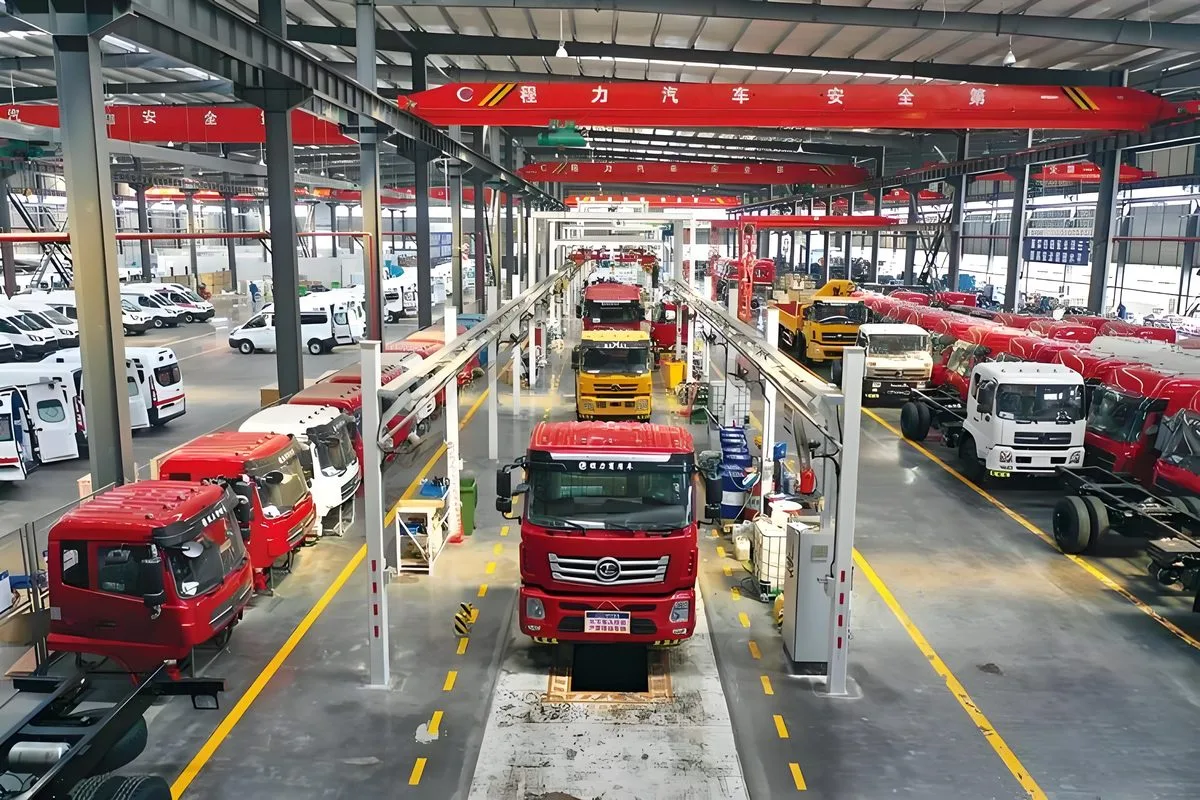
Distinguish stationary use from travelling use
An emergency accommodation truck should be selected by a stationary welfare brief and a separate approved travel arrangement. A sleeping-capacity figure must never be assumed to be the number of people permitted to travel in the vehicle. The XDR reference describes an accommodation layout, but the buyer must confirm the exact seating, restraints and legal travel capacity for the selected build. This guide is about procurement of crew welfare facilities, not evacuation or medical care. The responsible organisation should define occupancy and safeguarding requirements with its professional advisers and destination authorities.
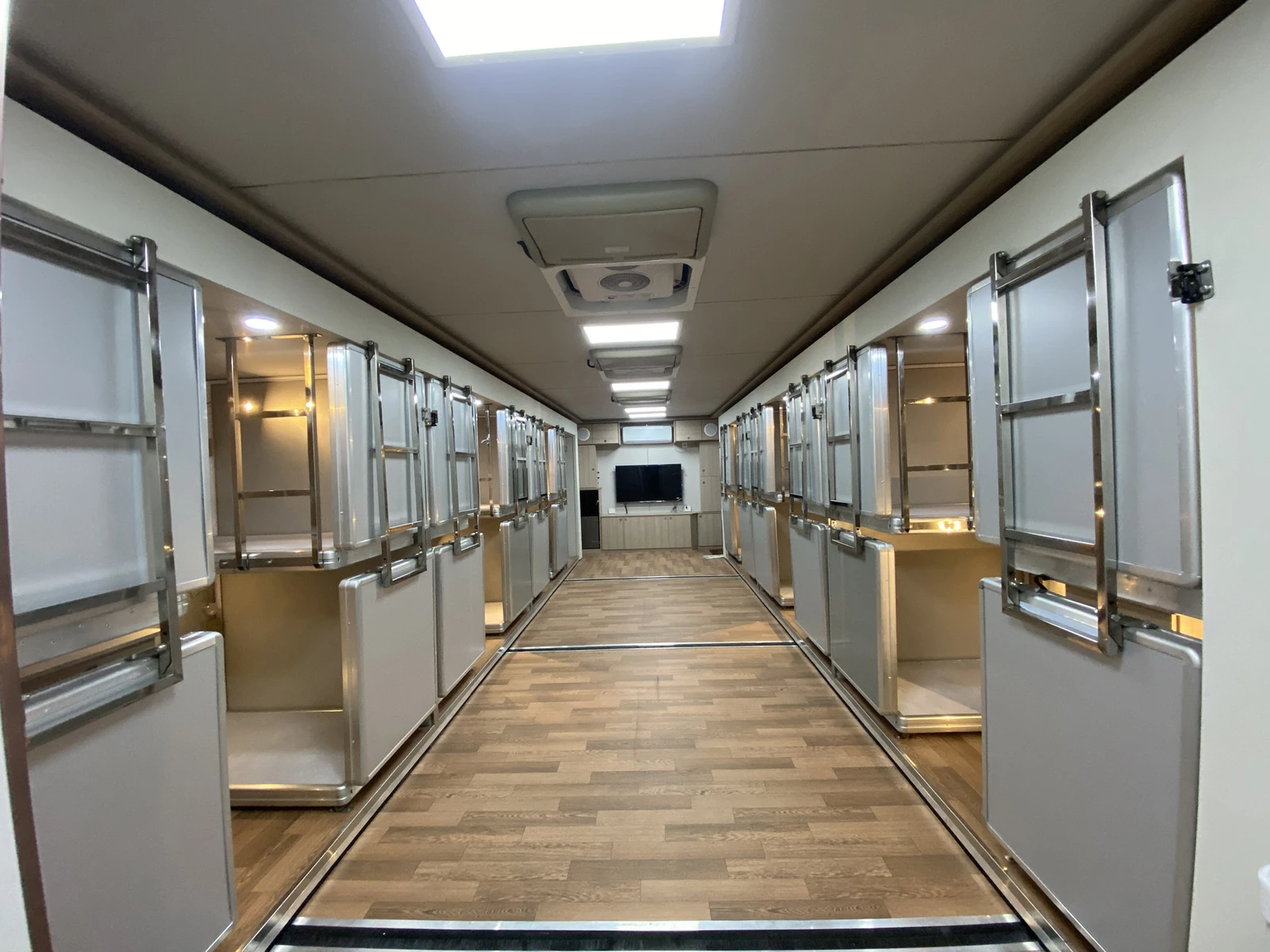
Manufacturer reference photograph. The accommodation interior shows the aisle and sleeping layout; these berths do not establish approved travelling seats.
Maintain two capacity fields in the enquiry: stationary welfare use and approved travelling occupancy. Record their separate evidence. A berth shown on the layout can inform the first field but must not automatically populate the second; ask for the road-seating and restraint basis for the exact supplied build.
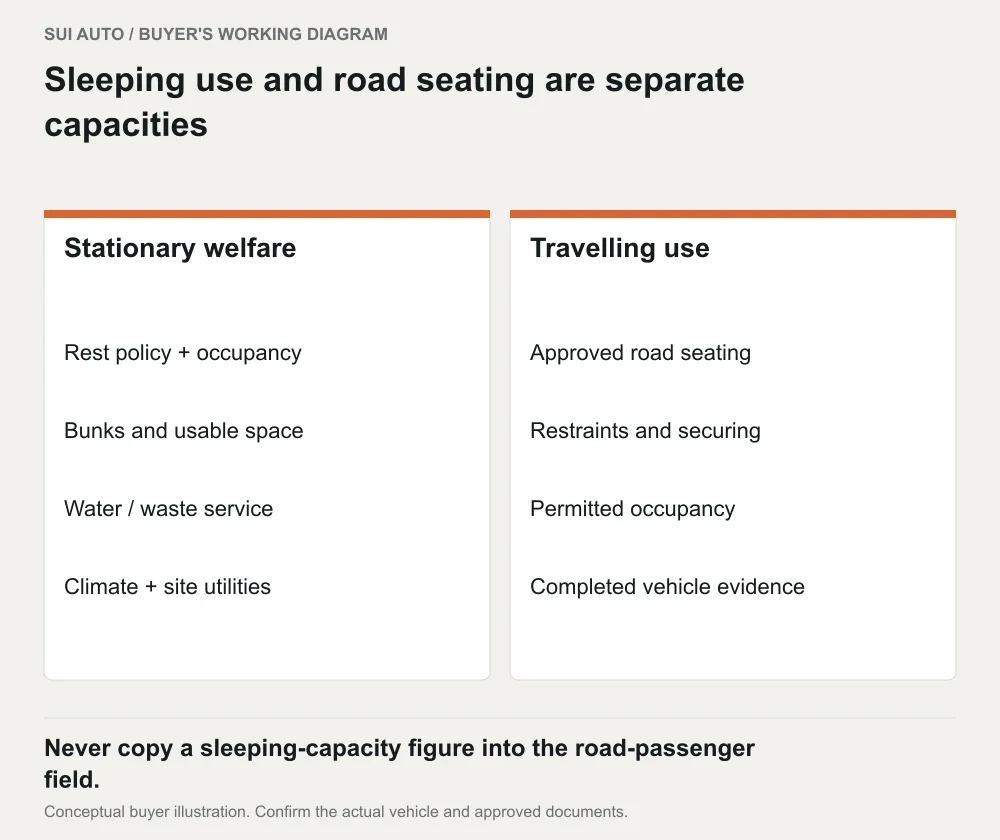
Conceptual illustration. Accommodation comparison separates stationary rest facilities and approved travelling seats. Never copy a sleeping-capacity figure into the road-passenger field.
Plan an explicit illustrative base
Assume a response organisation wants a temporary rest facility at an established support site. It has another approved means of moving personnel and will replenish water and remove waste through a planned service arrangement. These assumptions matter: a vehicle intended as a stationary rest resource faces different requirements from one expected to transport a crew between incidents. State occupancy periods, rest arrangements, climate conditions and available external services. Avoid using the catalogue's maximum sleeping figure as a complete welfare plan. Privacy, cleaning, access and the organisation's own crew policies also affect practical suitability.
Map space to actual welfare needs
Ask for an internal layout drawing showing beds or bunks, access routes, storage, sanitary areas and service equipment. Have the organisation's welfare and safety advisers review the arrangement for the intended occupants. Consider whether users can store personal equipment and whether cleaning can be performed without dismantling unrelated fittings. Specify accessibility needs rather than assuming a reference layout addresses them. Photographs can help explain the design, but only dimensioned drawings and an agreed equipment schedule establish what will be supplied. Review travel restraints and furniture securing separately from the stationary layout.
Water and waste require an operating plan
The published reference identifies fresh and wastewater tanks, but tank volume alone does not establish how long a welfare base can operate. Ask the responsible planner to estimate demand for the intended occupancy and facilities, then agree refill and disposal arrangements. Confirm the tank materials, cleaning access, level monitoring and maintenance instructions with the supplier. Any claim of drinking-water suitability requires appropriate evidence and local review. Do not assume an onboard tank makes water potable. Keeping welfare services functioning depends on the site plan and responsible service providers as much as the truck's equipment.
Define climate and power assumptions
Describe expected ambient conditions and whether site electricity is available. Ask the supplier for the proposed heating, cooling and auxiliary-power arrangement with its rating basis and limitations. Have appropriate professionals review ventilation, electrical safety and any fuel-burning equipment. Include service access and maintenance requirements, since a compact layout can make routine work difficult. Where external supply is unavailable, request a documented endurance assessment rather than an unqualified promise of self-sufficiency. The vehicle's permitted stationary arrangement, deployment needs and readiness checks should be clear in the manufacturer's instructions.
An acceptance checklist for a usable welfare unit
Inspect the exact layout, equipment identities, plumbing and electrical documentation, travel seating approval, restraints and delivered mass evidence. Have qualified personnel conduct the agreed functional and safety tests. Check cleaning access, labels, manuals, spare consumables and operator training. Record which site services remain the buyer's responsibility and how unresolved defects are handled before use. Inspect the finished vehicle with the team that will manage it, rather than reviewing only exterior photographs. The practical outcome is a documented welfare resource whose limits and support needs are known to the organisation.
A welfare decision is more than berth count
Compare proposed accommodation layouts against the organisation's actual rest policy and support arrangements. The layout with the most berths may offer less privacy, storage or service access than another option. Those trade-offs should be reviewed by the people responsible for crew welfare rather than treated as a purely dimensional choice. Keep any accessibility or safeguarding requirements in the approved brief. If occupancy assumptions change, ask the supplier and advisers to review the effects. Recording the intended stationary use prevents a future team from interpreting the catalogue capacity as permission for a different travel or welfare arrangement.
Questions about capacity and scope
Can the published sleeping figure be used as passenger capacity? No; road seating and travel approval are separate. Does a fresh-water tank prove potable-water provision? No; supply quality, system evidence and appropriate testing matter. Can the unit function without any site support? Only within a specifically assessed and documented operating arrangement. SUI AUTO can help prepare a supplier brief and coordinate the evidence, but it cannot replace the organisation's welfare planning or destination approvals. Reference photographs describe a catalogue vehicle and do not prove the final accommodation specification.
References and related reading
Planning a purchase? Follow the overseas buyer guide for specification, payment, shipping and import preparation.