Select the cleaning system before ranking the chassis
Choose between JAC and Dongfeng proposals by comparing a complete cleaning cycle, including water refill, working speed, access and service downtime. A chassis engine rating by itself does not establish cleaning output. The installed pump, nozzles, controls and water supply determine how the vehicle performs the specified task.
The Hongyu JAC and Dongfeng Tianjin road-cleaning references are a useful starting pair because the manufacturer publishes similar cleaning-system fields for both. They still require a current, exact build specification. Their historical reference data should not be treated as proof of current stock or a destination-ready configuration.
What the published pair actually shows
Hongyu lists the JAC reference HYS5181GQXH5 and Dongfeng reference HYS5182GQXE5 with 8.75 m³ water tanks. Both reference tables give a 5–15 km/h working-speed range, 2.5–3.5 m cleaning width, at least 170 L/min high-pressure pump flow and a 10 MPa maximum cleaning-pressure field.
Those matching values focus attention on the rest of the vehicle. JAC lists several wheelbases, while the Dongfeng reference lists 4700 mm. Ask which actual chassis version is being quoted. The matching pump and width figures do not prove equal water consumption, cleaning quality or daily productivity. Those outcomes depend on settings, contamination, travel, refilling and the acceptance method.
Compare the operating cycle in separate stages
Use a five-stage comparison:
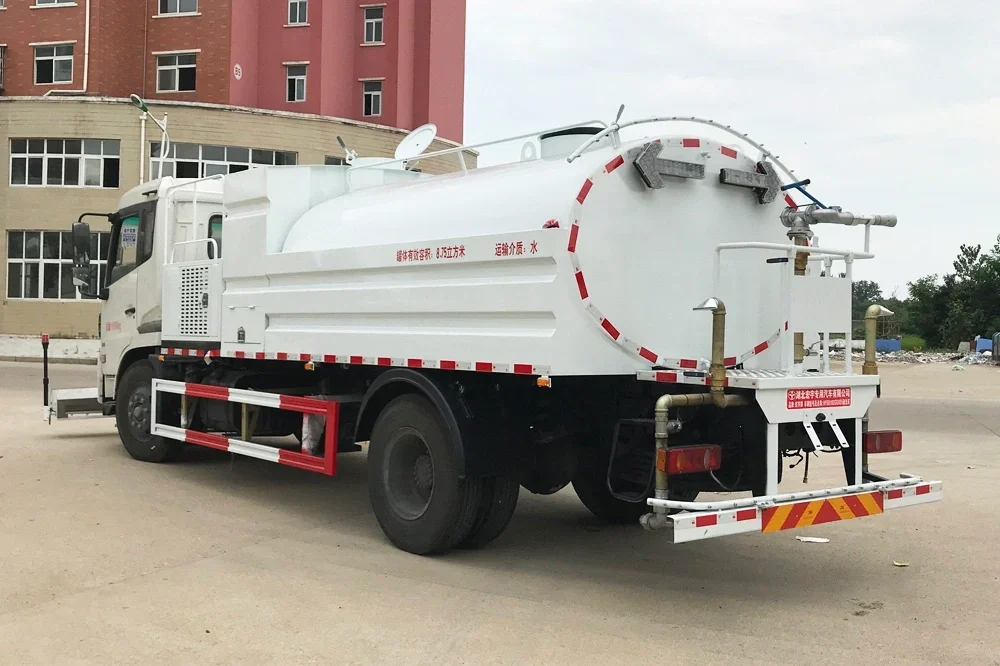
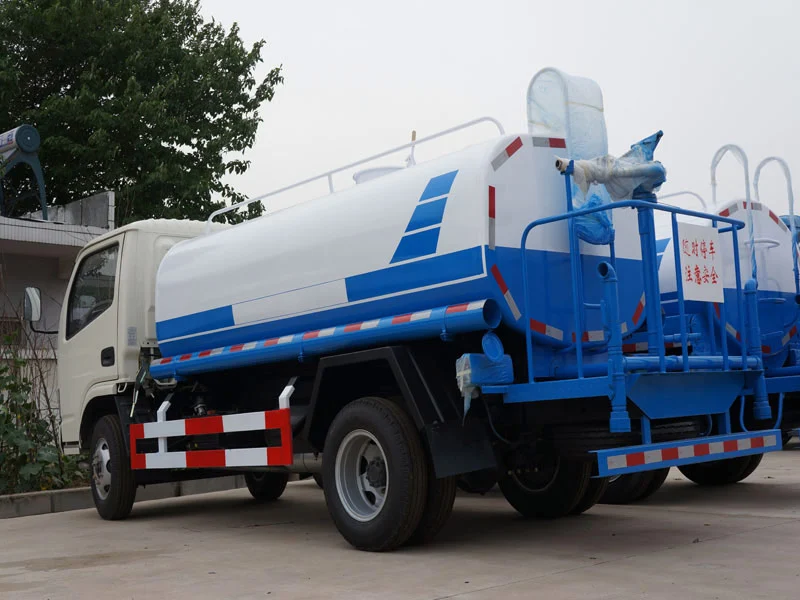
Manufacturer reference photograph. The Dongfeng cleaner rear and side view shows its water body and equipment package to review through the cleaning cycle.
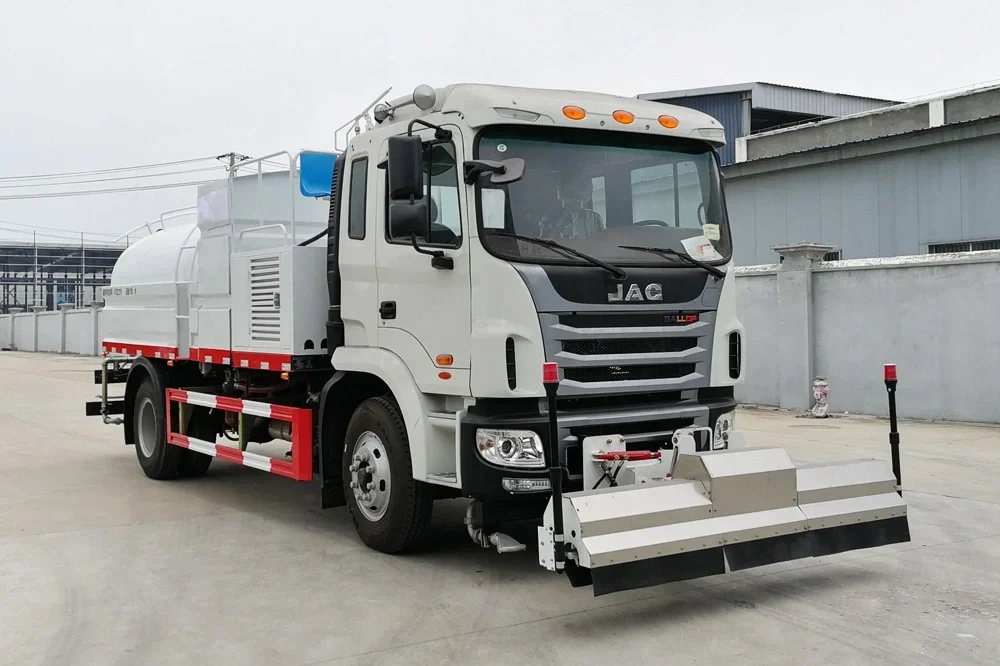
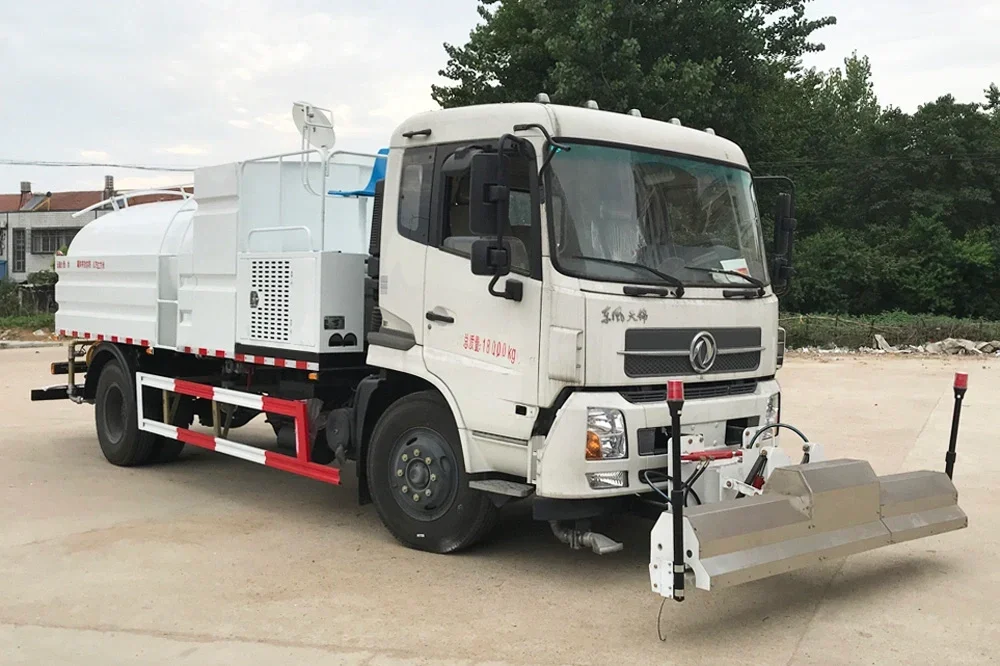
Manufacturer reference photograph. The JAC cleaning truck shows its front-mounted cleaning arrangement.
1. Travel from depot: road distance, gradients, traffic and loaded condition. 2. Positioning: curb access, turning, visibility and control reach. 3. Cleaning: agreed contamination, nozzle setting, speed and water use. 4. Refill: connection type, supply rate, queueing and travel distance. 5. Return and cleaning: flush-down, drainage, inspection and service access.
Record time and water use separately. If one proposal completes a test faster, establish whether it used a different cleaning width, pressure setting or quality target. A shorter demonstration can otherwise hide a lighter task. Agree the visible acceptance standard before running either vehicle.
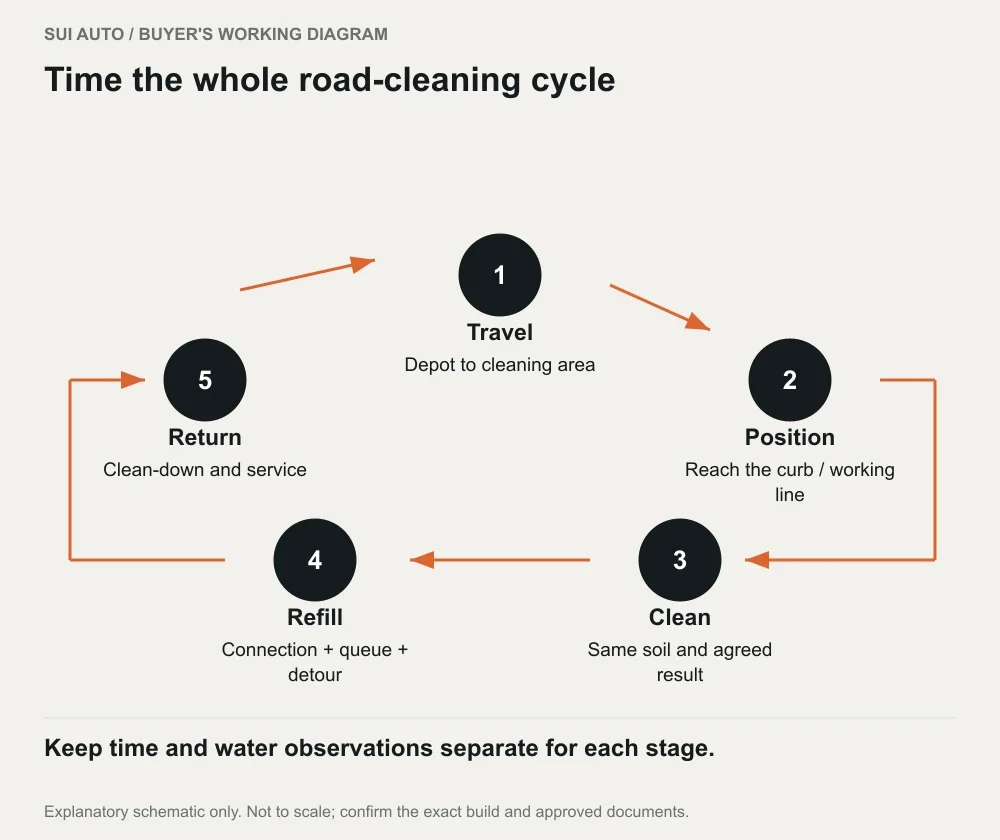
Keep time and water observations separate for each stage. Explanatory schematic.
A hypothetical comparison that produces a useful decision
Assume a municipality has a 30 km road segment and two refill locations. One location adds a detour but offers faster filling. These are hypothetical route assumptions. The procurement team should map both refill strategies and ask each supplier to explain the expected work sequence.
The most useful trial is a representative section with the same soil condition and agreed result. Record the water consumed, distance cleaned and total elapsed time, including refill. Then repeat or adjust the test if weather or contamination changes. Do not multiply a maximum brochure cleaning width by maximum road speed and call it achievable daily output.
If the chassis choice changes route access, test that explicitly. Measure the narrowest turn and confirm that the finished vehicle can reach both refill points without damaging equipment or blocking essential service access.
Look beyond the common engine-service claim
Ask which local workshop supports the exact JAC or Dongfeng engine, transmission and brake configuration. Request the installed component list and diagnostics requirements. Chassis support and cleaning-system support can come from different organisations; the contract should identify who coordinates a fault that affects both.
Inspect daily access to filters, fluid checks, nozzle cleaning, strainers and water-system drains. A clean installation drawing should show how the cab tilts and how heavy service components are removed. Maintenance time matters particularly where one truck must return to the same route every day.
For spare parts, prioritise identified wear items and failure-sensitive components. Order by installed part number and drawing revision. A generic pump brand or nozzle description is insufficient for a dependable replenishment list.
Enquiry and handover checklist
Send a route map, road contamination description, available refill connections and normal working hours. Ask for the exact chassis code, wheelbase, completed dimensions, empty axle weights and selected pump/nozzle arrangement. Define the functional trial, water measurement and cleaning-quality record in the purchase documents.
At handover, match the chassis and cleaning component plates to the specification. Check control labels, interlocks, service access and water-system flushing procedures with the operator. Retain actual test settings and results, rather than accepting an unlabelled promotional video as the performance record.
Record cleaning quality in a repeatable way
Before the trial, photograph the road surface and agree what the inspector will assess after cleaning. Record lane edges, accumulated deposits and any inaccessible sections separately. Choose a representative area rather than the cleanest section available. If the test result is acceptable, retain the nozzle settings and operating conditions with the vehicle file. A later operator can then understand how the result was achieved. This also separates an access limitation from a cleaning-system limitation when reviewing competing chassis proposals. Repeating the same task definition is more informative than comparing two unrelated demonstration videos.
Keep refill time in the same record as cleaning time. A vehicle that appears faster during the cleaning pass can complete fewer useful kilometres if its normal water connection is slower or farther away. Confirm the connection used in the trial matches the planned route infrastructure.
Do identical pump ratings mean identical cleaning performance?
They provide a comparison point, but nozzle layout, working settings, water supply and contamination still affect the result.
Which chassis is easier to maintain?
Check the exact installed components, local diagnostic support and finished-body access. Brand familiarity alone cannot resolve the question.
Can the quoted wheelbase change without affecting the cleaning body?
Any change should trigger a review of packaging, axle distribution, access and completed dimensions before approval.
References and further reading
- Hongyu JAC road cleaning reference
- Hongyu Dongfeng road cleaning reference
- Isuzu official body builder guide access
- Daimler Truck official commercial-vehicle body builder information
- Kaili Dongfeng Compact Washing Sweeper manufacturer reference
- Hongyu JAC Gallop Road Cleaning Truck
- Hongyu Dongfeng Tianjin Road Cleaning Truck
- Kaili Dongfeng Compact Washing Sweeper
- Overseas buyer guide
Planning a purchase? Follow the overseas buyer guide for specification, payment, shipping and import preparation.