Follow the material from receipt to the installed body
Ask for a traceability chain connecting the specified steel, the received plate, the fabricated part and the final vehicle. A mill certificate in an email proves little about a body unless the manufacturer can show where the covered material was used. Start with the components that matter to your project, such as tank shell plates, wear surfaces or structural members. Agree the required material identity, certificate type and transfer records with the responsible engineer. The scope should be proportionate to the design and the consequence of a material mismatch.
Define which parts need traceability
A truck contains many materials, and a demand for complete traceability without a parts list can create confusion. Mark the controlled parts on the drawing or bill of materials. For each one, identify the specified grade, relevant product form, nominal thickness and required documentation. Separate a corrosion-resistant tank requirement from a wear-resistant floor requirement; they address different service conditions. Let the technical specification establish suitability. A familiar trade name or a thicker plate does not independently establish that a substitution meets the original design and fabrication requirements.
Check the receiving evidence
Request the supplier delivery record, plate identification and corresponding inspection certificate for the controlled material. Compare grade, heat or batch reference, dimensions and quantity. Ask how unidentified material is segregated and resolved before use. SSAB's product information describes identification and traceability practices for its products; that supports asking for a clear material chain, not claiming that every manufacturer uses the same marking method. If the proposed steel comes from another mill, obtain that mill's identification practice and verify the record against the actual purchase.
Preserve identity when plate is cut
The original plate marking may disappear during cutting, blasting or painting. Ask how the manufacturer transfers identity to cut parts and records offcuts. A practical system can link a nesting plan or cutting record to part numbers and the assembly drawing. The factory should explain how the link survives subsequent fabrication. Photographs help demonstrate the process but should reference the relevant record. For critical parts, agree a hold point before markings are removed or access is lost. Confirm how rework or replacement material will enter the same chain.
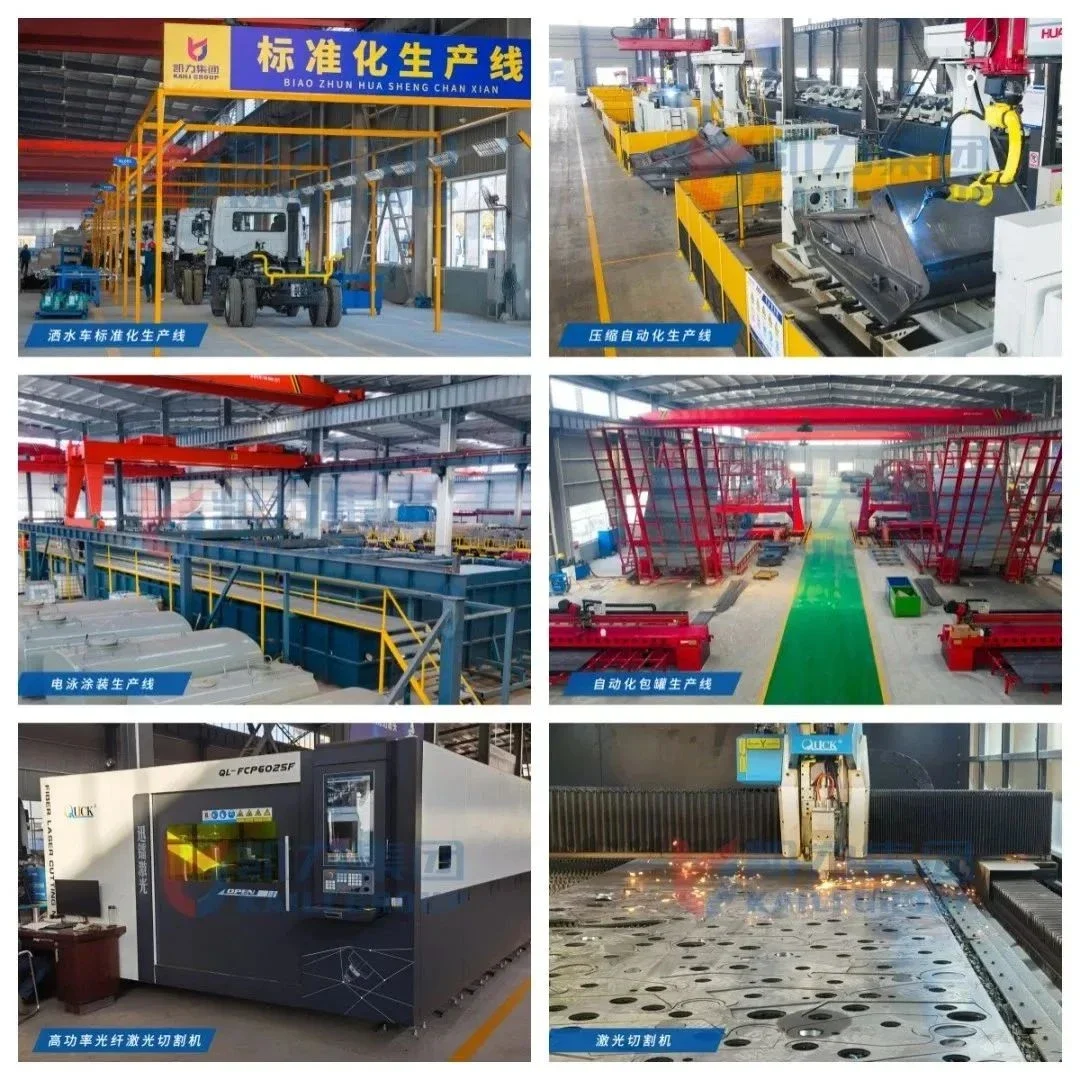
Kaili's manufacturing montage includes plate cutting at lower right. Once a plate becomes multiple cut parts, the material identity needs to follow those parts; the photograph itself contains no heat-number traceability record.
A hypothetical plate reconciliation
Assume illustrative Tank T-07 uses shell parts P-01 to P-06. The receiving log identifies heat H-204, while the cutting record maps those six parts to that receipt. The assembly traveller then links the parts to body serial B-07 and the final VIN. The identifiers are invented examples, not real SUI AUTO records. If P-04 is replaced, the file needs the replacement material identity and an updated mapping. Attaching the original certificate alone would leave the replacement part unexplained, even if the finished tank looks identical.
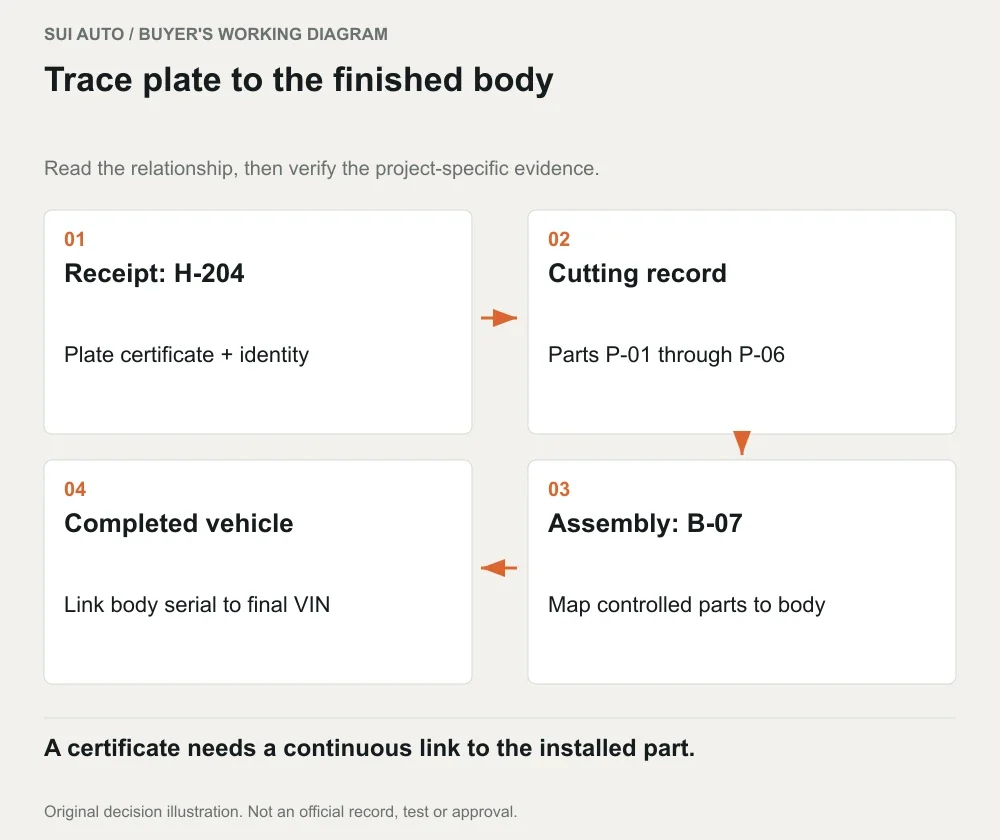
Illustrative identifiers from the article; these are not genuine mill or vehicle records.
Review substitutions with the fabricator
When a specified grade is unavailable, request the proposed replacement's identity, properties, fabrication implications and technical approval. Welding procedures, forming and coating can depend on the selected material. The buyer should route the comparison to the responsible technical authority rather than approving on thickness or price alone. Record the decision in the controlled equipment and material schedule. If a substitute is accepted only for certain parts, list those parts explicitly. A limited approval should not silently expand to other structural members or future vehicles in the order.
Use a material evidence checklist
Before concealed assembly, check the approved material list, receiving records, certificate-to-plate match, cut-part identification, assembly mapping and substitution status. At handover, verify the final body identity and retain the agreed certificate index. Record gaps precisely: unreadable marking, missing certificate, unmapped part or unresolved grade. Give each gap an owner and disposition. Where traceability cannot be reconstructed, seek an engineering decision on the appropriate next step. The buyer should avoid treating an attractive final photograph as a substitute for an agreed material-control requirement.
Does a certificate establish actual wall thickness?
A certificate relates to the material it covers. To confirm the installed thickness, agree measurement locations, method, accessibility and acceptance criteria with the technical parties. Account for the material's specified tolerances and the manufacturing process. Measurements taken over coating or at an edge may need interpretation. The purpose of the check is to answer a defined design requirement. Do not invent one universal minimum thickness for all water tanks, compactor bodies or rescue structures.
Can I accept a different material certificate format?
Ask what information changed and whether the document still meets the agreed requirement. Confirm the issuer, covered material and the connection to receiving records. A different layout can contain adequate information; a familiar-looking PDF can still lack the necessary identity link. If a particular certificate type was specified, obtain the authorized technical decision before accepting an alternative. Keep the reason for acceptance visible in the handover index so later maintenance or repair teams understand the material record.
What if a plate certificate exists but the cut-part identity was lost?
Record the traceability gap against the affected part and ask the fabricator how the material chain can be reconstructed from receiving, cutting and assembly records. Preserve the available evidence and identify which link is missing. The responsible technical authority should decide whether further examination or another disposition is appropriate. A new certificate for similar material does not reconnect the installed part. Keep the gap open until the agreed requirement has a documented resolution, including any accepted limitation and the authority who accepted it.
References and further reading
Planning a purchase? Follow the overseas buyer guide for specification, payment, shipping and import preparation.