Define completion evidence for every production stage
Track a custom truck through agreed stages with a named output for each stage. A percentage-complete message is useful only when the buyer knows what has actually been completed. Start with design release, long-lead equipment receipt, chassis arrival, body fabrication, coating, integration and testing. Adapt those stages to the actual manufacturing sequence. For every stage, record the planned date, entry conditions, completion evidence and next dependency. The buyer can then identify a delay early enough to make a practical decision about it.
Separate physical progress from procurement progress
A body can look almost finished while a critical pump or control unit remains unavailable. Maintain separate lines for bought-in components and workshop activities. A purchase-order placement is different from supplier confirmation, dispatch and physical receipt. Ask for the status that matters to the next operation. Similarly, a chassis allocation is different from a chassis available at the body builder. Keep component identities and order references in the status register, with commercially sensitive details shared only as needed. This makes progress reports more informative without demanding constant factory filming.
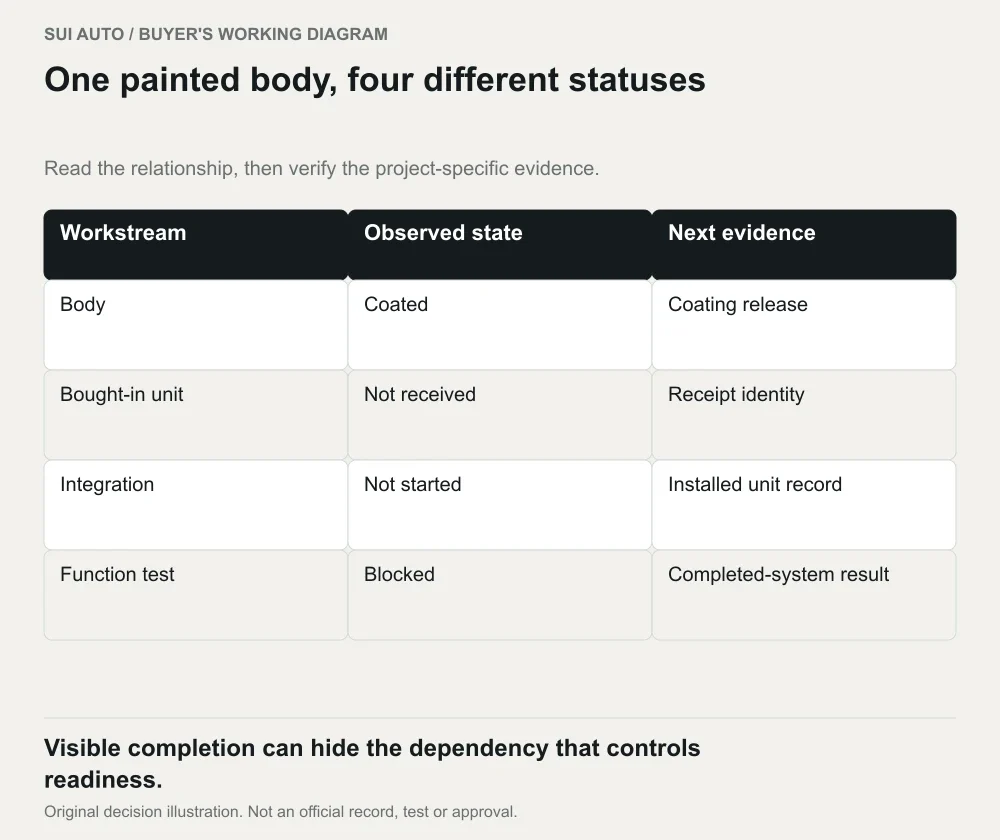
Buyer illustration: hypothetical progress example separating appearance from actual readiness.
Build the sequence with the manufacturer
Request a short production walkthrough before setting reporting dates. Identify operations that conceal earlier work, such as closing a tank or coating a welded assembly. Those are sensible points to discuss evidence or inspection before access is lost. SGS describes checks at several production stages; a custom truck programme needs its own agreed scope rather than a generic consumer-goods sampling calendar. Ask the manufacturer which activities can run in parallel and which need an approved predecessor. Use that sequence to distinguish a genuine schedule risk from a normal overlap in production.
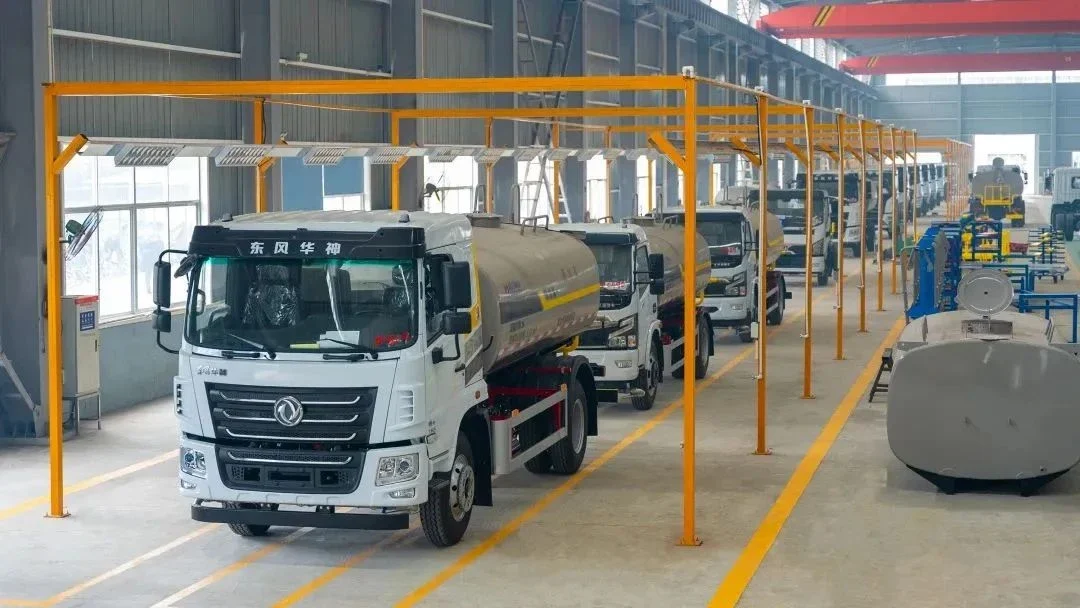
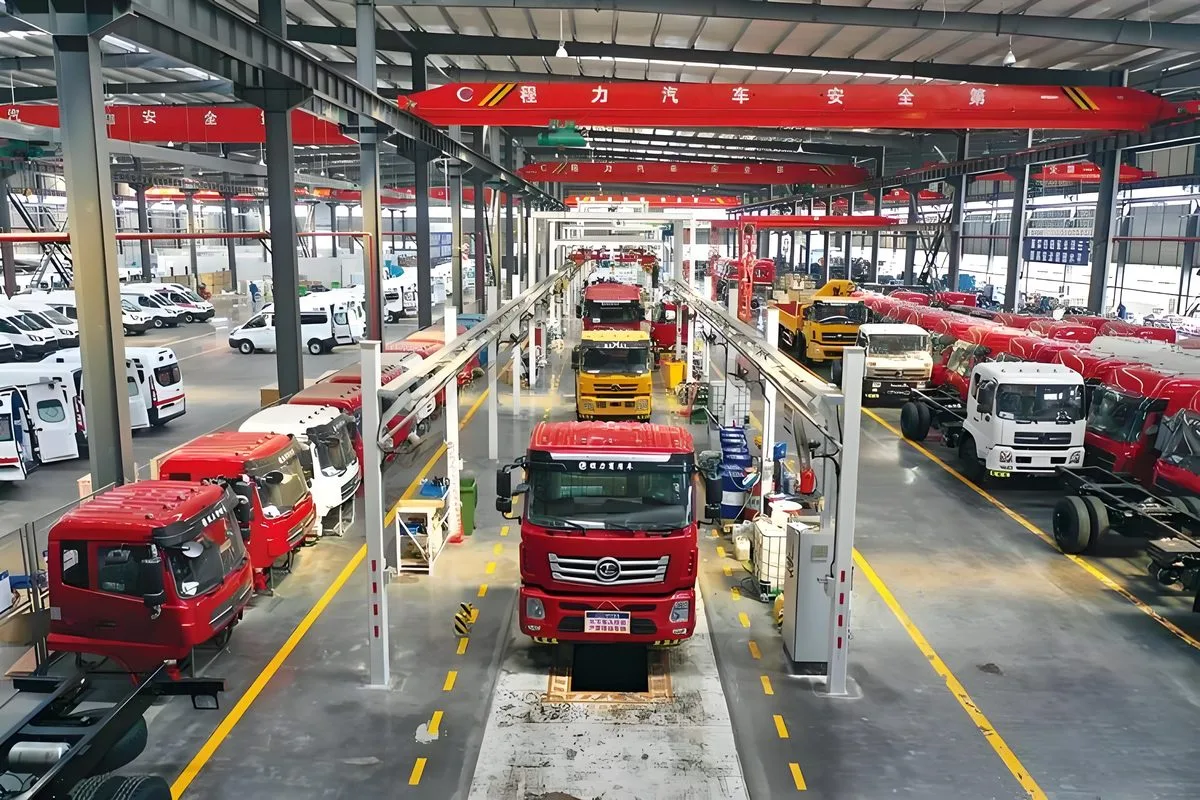
A tank truck at Kaili's production line: chassis arrival, body installation and final testing are separate stages, even when the vehicle already looks complete.
Use a milestone evidence register
Give each milestone an identifier and required evidence. Chassis arrival might require identification, receiving condition and a signed intake record. Body fabrication might require drawing revision, dimensions and records for designated concealed features. Final testing requires the test identity, vehicle identity, conditions and results. Link the evidence file rather than writing completed beside every line. A missing record remains an open evidence item even when the physical activity has finished. That distinction helps the buyer arrange a recheck while the vehicle remains accessible.
A hypothetical progress review
Assume illustrative Truck A has a painted body, the correct chassis on site and an auxiliary unit due later. A report saying ninety percent complete suggests readiness but hides the integration dependency. The revised register shows body coating complete, component receipt open, installation not started and function testing blocked. The buyer asks for the component delivery confirmation and a revised integration slot. These are invented project conditions, not a SUI AUTO delivery estimate. The decision improves because it follows the unfinished sequence rather than the visual appearance of the body.
Agree a reporting rhythm that supports decisions
Set a routine update interval and request an exception report when a critical dependency changes. Each update should show baseline date, current forecast, evidence received, unresolved issue and owner. Keep photographs tied to specific milestones so readers can interpret them. Ask the buyer's technical contact to respond within the agreed decision window; waiting for buyer approval can also affect production. Avoid daily requests that consume workshop time without changing a decision. The reporting plan should help both sides protect the agreed build and identify the next action.
Keep completion and acceptance as separate statuses
A milestone can be physically complete while its evidence remains under review. Give the register separate fields for work status and review status. This avoids blocking unrelated activity while preserving a visible requirement for record completion. Ask the designated reviewer to explain rejection or further evidence needs against the agreed criterion. Once the evidence is accepted, record the decision date and move the project forward using a shared definition of the stage.
What does ready for inspection mean?
Define readiness against the inspection scope. A body fabrication review may occur before the complete vehicle is operable. A final function test needs the selected equipment installed, utilities available and relevant previous issues resolved. Ask the factory to confirm readiness in writing against the agreed checklist. If an item is unavailable, decide whether the inspection can cover a limited scope and how the remainder will be witnessed. Record the limitation in the report and schedule the missing work explicitly.
Can photos establish that production is on schedule?
Photos can support a stage claim when they identify the vehicle, date and operation. They rarely show supplier commitments or the remaining critical path. Compare imagery with component receipt records, the production plan and unresolved approvals. A single attractive workshop view should not replace those records. If the report and photographs disagree, ask the manufacturer to reconcile them. Keep the query specific so the production team can answer with the relevant evidence.
Can a supplier mark a milestone complete while its records are missing?
Keep physical completion and evidence acceptance as separate statuses. Ask what work finished, which required record is unavailable and when that record will be delivered or reconstructed. A missing record may require another check while the feature remains accessible. Identify whether later work can proceed under the agreed plan, or whether it would hide the evidence. Give the gap an owner and response date. The next release should reflect the authorized decision, with the limitation visible rather than treating a completed progress photograph as acceptance of every underlying requirement.
References and further reading
Planning a purchase? Follow the overseas buyer guide for specification, payment, shipping and import preparation.