Agree on evidence as well as payment dates
A truck deposit should be considered within a written purchase agreement, not as an isolated percentage mentioned in a message. Define what the payment starts, the accepted technical revision, the seller's identity and what happens if an essential requirement cannot be met. There is no universal deposit percentage for every special-purpose vehicle. The amount and later milestones depend on the transaction and negotiated terms. Before transferring funds, understand the evidence associated with each milestone and who is authorized to approve it. A payment date alone cannot tell you whether the build, inspection or document work has reached the agreed stage.
Verify the party receiving the money
Check that the contracting entity, invoice and beneficiary information are consistent, or that any difference has a documented explanation acceptable to your finance team. Confirm changed bank details through a previously verified contact route rather than relying only on a new email. Keep the accepted quotation, contract, beneficiary verification and transfer reference together. This is a transaction-control practice, not a guarantee against fraud. If a seller asks for payment to an unrelated personal or third-party account, stop and resolve the discrepancy before paying. Do not let an urgent shipping claim replace normal identity and approval checks.
Design milestones around observable progress
Possible evidence points include specification approval, an identifiable chassis allocation, completion of the working body, agreed functional demonstrations, resolution of inspection defects and readiness of shipment documents. Which points are appropriate depends on the contract and the production sequence. Ask what evidence will be supplied and whether you can arrange an independent inspection. Avoid vague milestones such as nearly finished without a definition. A photograph should show the relevant vehicle and identifiers; a video of a similar truck is not evidence of your allocated build. Payment approval should refer to the agreed deliverable and any outstanding exceptions.
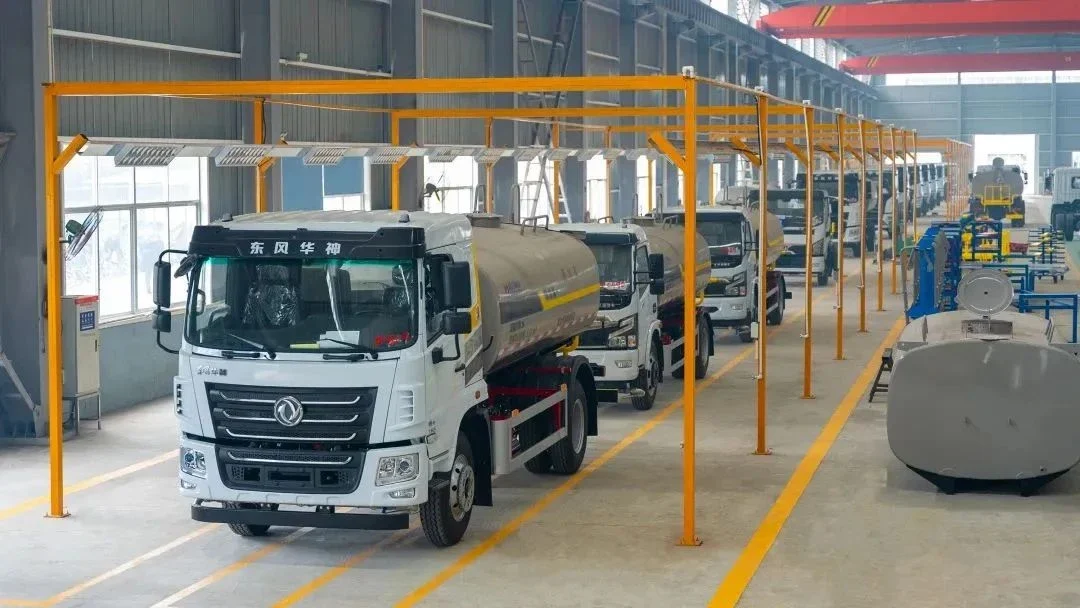
A vehicle on Kaili's assembly line demonstrates physical progress at a particular stage. Payment release still needs the agreed milestone evidence and acceptance conditions, rather than a general factory photograph.
Write each milestone as an event, required evidence, authorized reviewer and treatment of exceptions. For example, if the contract uses completed body as a trigger, state whether that means fabrication only or installed, tested equipment. Where a hose remains outstanding, record its agreed disposition against that milestone. This clarifies the existing terms; it does not create a new right to delay or release payment.
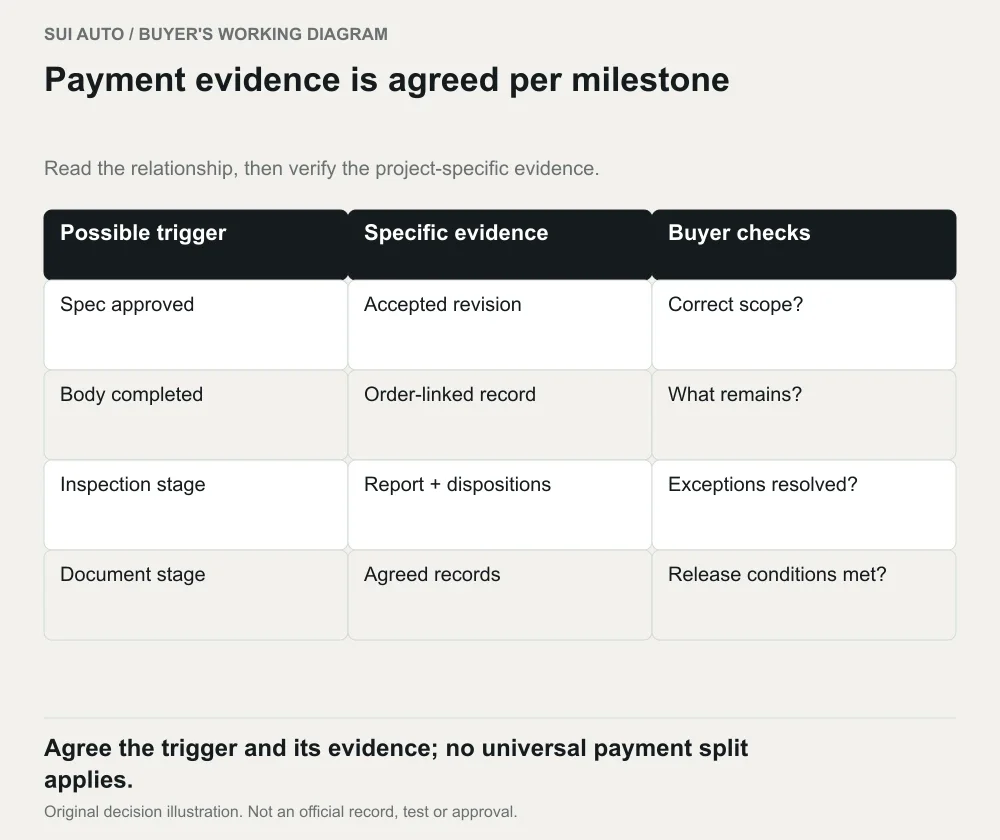
Buyer illustration: possible evidence gates for negotiation, not a binding payment schedule.
Understand the payment method's limitations
The International Trade Administration's trade-finance guide explains that advance payment places more risk on the importer, while documentary methods allocate risk differently. That distinction does not make any method universally suitable. Ask your bank about the costs, documents, timing and practical limitations of the proposed arrangement. A documentary credit should not be mistaken for an engineering inspection or a general product-quality guarantee. Align any required inspection or shipment evidence with the transaction's documentation. This article gives questions for procurement planning; your bank and advisers must assess the actual payment instrument and contract.
An illustrative two-party disagreement
Suppose the supplier regards a completed body as the balance-payment trigger, while the buyer expects a functional inspection and corrected document pack first. Neither assumption should be discovered when the truck is ready to ship. The contract should identify the accepted trigger and the treatment of minor and major defects. If a demonstration finds a missing accessory, record whether it must be installed before payment, separately supplied or handled under another agreed arrangement. This hypothetical example shows why evidence and exceptions need to be defined together. It does not prescribe withholding terms or a standard payment split.
Questions for your final payment review
Ask whether the final build matches the approved revision, whether the inspection record identifies your vehicle, whether every agreed defect has a documented disposition and whether the shipping description matches the truck. Confirm the shipment plan and the person responsible for document release. Check whether freight or exchange-rate changes affect the outstanding amount under the quotation. Keep your internal approval separate from any informal acknowledgement of photographs. If there is a dispute, refer to the contract's agreed process and seek transaction-specific advice; do not improvise a new payment condition at the last minute.
Is a small deposit automatically safer?
It limits the amount initially transferred but does not resolve identity, technical, document or delivery risks. A clear specification and verified counterparties remain necessary. Compare the entire payment sequence and its evidence requirements rather than judging the transaction from one percentage alone.
Can SUI AUTO quote fixed deposit terms online?
The website does not provide a universal binding payment schedule. The proposed vehicle, supply scope and contract need review first. Request the actual seller's terms, ask which evidence supports each milestone and have your finance team verify the payment arrangement before approval.
References and related reading
Planning a purchase? Follow the overseas buyer guide for specification, payment, shipping and import preparation.