Create a receiving record before distributing the equipment
When an imported truck arrives, match its identity and visible condition to the pre-shipment file and the agreed delivery scope. Arrange the receiving procedure with the logistics provider and insurer before departure. The receiving team needs the actual vehicle identifiers, final specification, condition photographs, package inventory and reporting contacts. Record what can be checked at the handover point and what remains inaccessible or requires a qualified workshop. Do not turn a limited visual check into an unqualified acceptance of every function. A clear receiving record helps distinguish transit condition, missing items and later commissioning questions.
Check identity and visible condition safely
Verify the relevant identifiers and document any visible damage using an agreed safe inspection method. Photograph the vehicle and affected areas with enough context to identify the issue. Compare accessible body panels, mounted equipment, storage and controls with the departure record. Do not climb onto unsecured equipment, open pressurized systems or perform an improvised functional test at a terminal. If specialist examination is required, arrange it with qualified personnel. Note any limitations in access or visibility rather than assuming unobserved equipment is complete and undamaged.
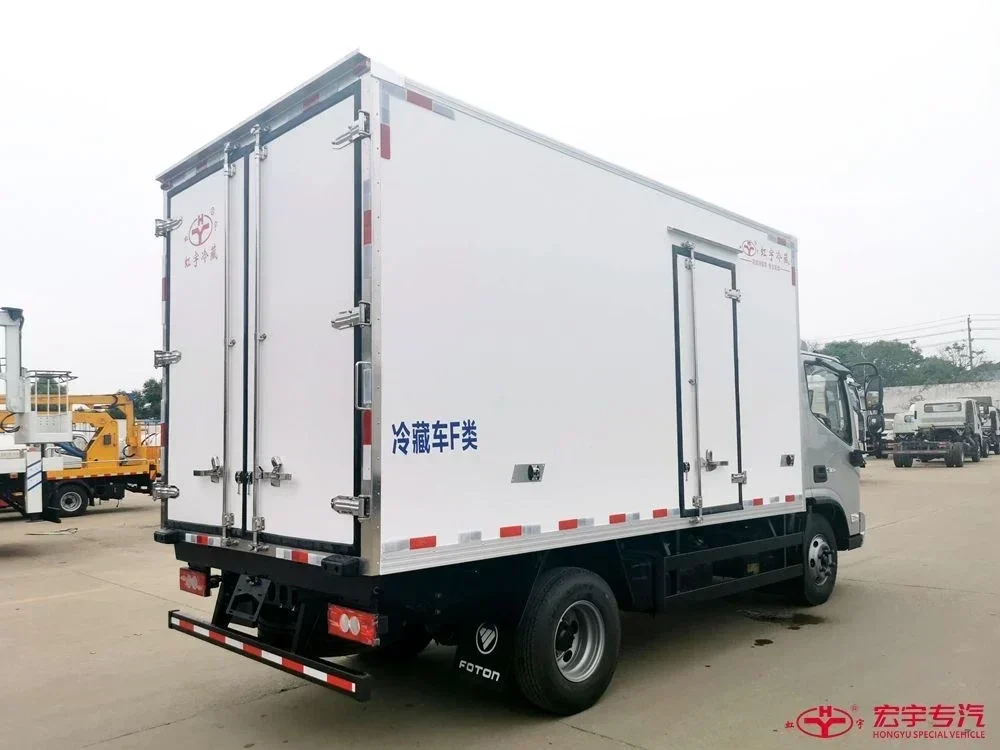
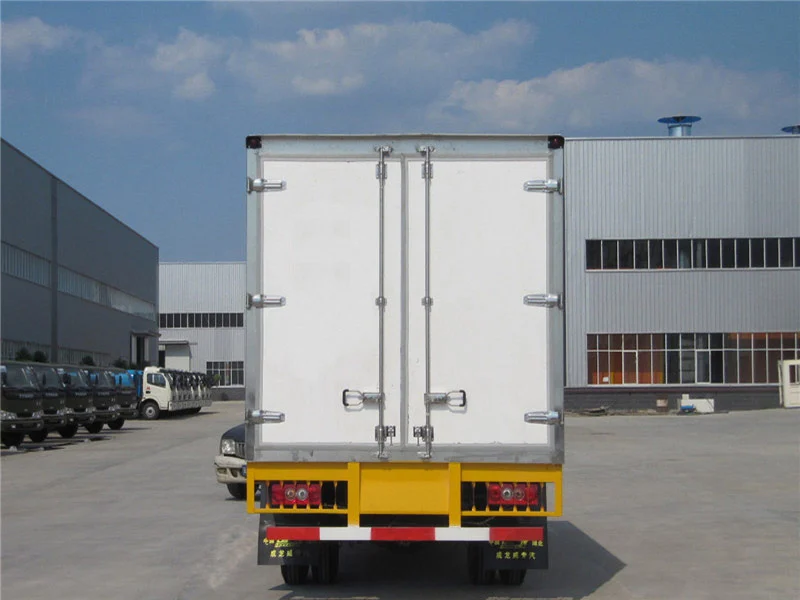
The rear doors, hinges, body corners and rear protection visible on this Hongyu truck are examples of receiving-inspection locations. A condition record must use dated photographs of the vehicle actually received.
Reconcile packages and supplied equipment
Use the final inventory to check loose accessories, operating equipment, removed components and optional spares. Record package numbers, count and visible condition before parts are moved into different stores. Identify which items belong to which truck if several units arrive together. Keep transport-removed equipment separate from spare stock until its approved reinstatement is complete. If a package cannot be opened at the initial handover, record that fact and plan the next check. This avoids a later dispute based on a complete-receipt statement that did not reflect what the receiver could actually inspect.
Report discrepancies through the agreed routes
Notify the appropriate supplier, logistics or insurance contacts according to the actual agreements and policy requirements. Provide identifiers, dates, photographs, inventory references and a concise description of the issue. Preserve relevant packaging and records when advised. Ask the insurer or claims provider whether a survey is required before changing the affected item. Do not assume a warranty automatically covers shipping damage or that repairing immediately will be acceptable to every claim process. This guide cannot decide liability or cover; the evidence and transaction terms need review by the responsible parties.
An illustrative hose-equipment discrepancy
Imagine a water truck arrives with its visible body in good condition, but the inventory shows an operating hose that the receiver cannot locate. The team checks the package register and records which packages were accessible before declaring a shortage. It sends the supplier the vehicle identity and item reference and asks for the packing evidence. This hypothetical process is more useful than a general message saying accessories are missing. It does not imply that the supplier, carrier or buyer is automatically responsible; the records help determine where the discrepancy arose and how it should be resolved.
Keep commissioning separate from receiving
After condition and inventory checks, follow the manufacturer's approved handover and commissioning requirements with qualified personnel. Verify transport-preparation work, required local approvals, operating information and operator readiness before entering service. The truck may need actions that were deliberately left until arrival, and those should already be defined in the shipment plan. Record completion and outstanding issues. Do not erase the initial condition record when a later workshop check adds findings. Keeping both stages identifiable allows the team to distinguish what was observed at receipt from what was discovered during safe functional preparation.
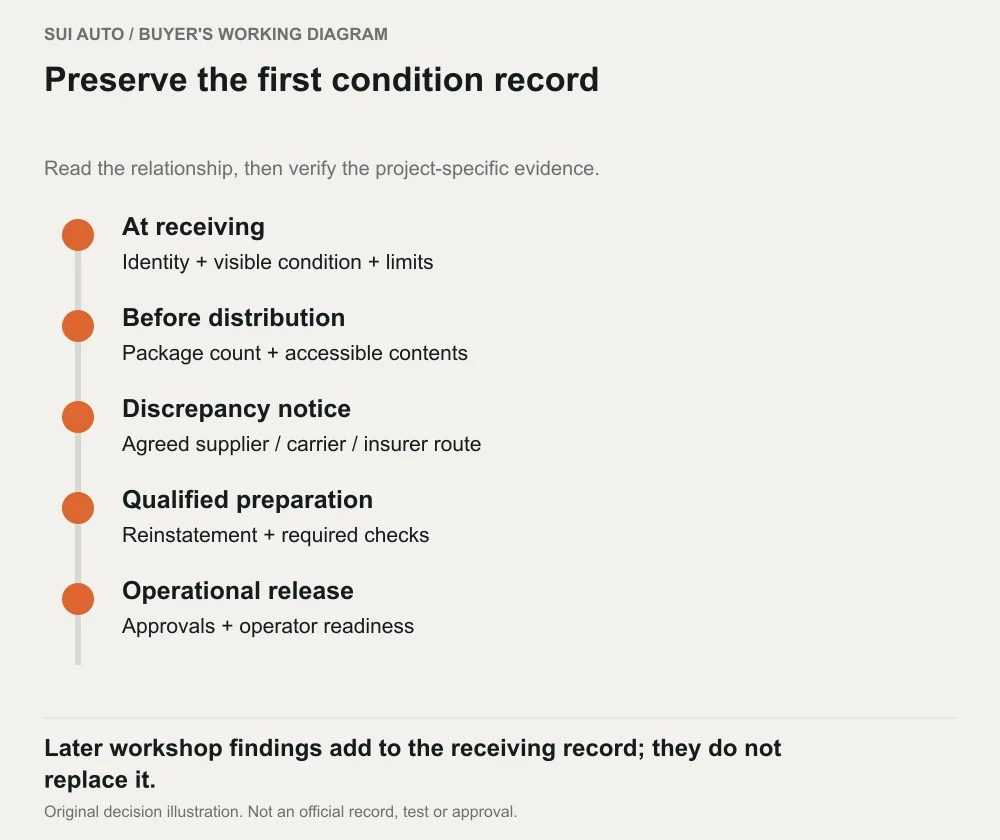
Buyer illustration: original receiving workflow; it does not decide liability, insurance cover or road-use permission.
Should I sign a clean receipt if only some areas were checked?
Ask your logistics and legal advisers how to record limitations or exceptions under the actual delivery arrangement. Be accurate about what you observed. Do not imply a full inspection when access, time or safety conditions only allowed a partial check.
Can I operate the truck immediately after unloading?
Confirm the required approvals, reinstatement, manufacturer checks and operator handover first. A vehicle's ability to move does not establish that every body function is ready or that it may lawfully enter public-road service. Use the agreed commissioning plan rather than an improvised arrival test. Give your receiving workshop the accepted transport-preparation instructions in advance, so required reinstatement is reviewed safely rather than guessed at the terminal.
References and related reading
Planning a purchase? Follow the overseas buyer guide for specification, payment, shipping and import preparation.