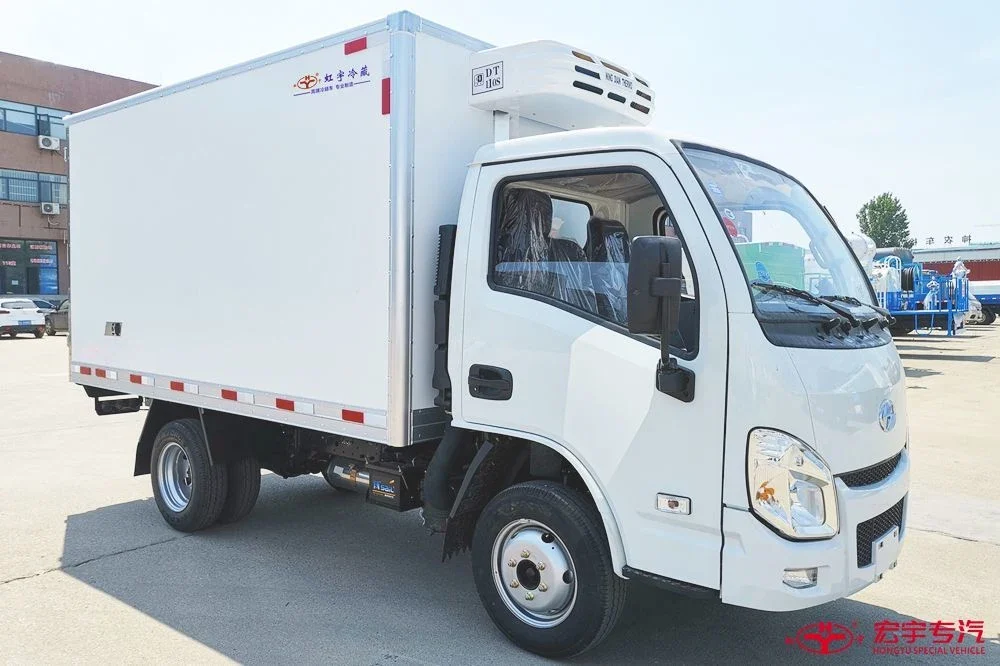
Treat each zone as a complete thermal system
A movable partition provides usable temperature zones only when the refrigeration package, air paths, partition sealing and load plan support those zones together. Ask for a layout and application assessment for each intended partition position. A curtain or insulated bulkhead by itself does not establish independent temperature control.
This article addresses partitioned-body integration. It goes beyond choosing doors or general body insulation. A buyer needs to know whether the proposed vehicle can support the actual combination of products, delivery sequence and changing compartment sizes. Do not infer a multi-temperature capability from the single-zone refrigerated trucks linked as general body references.
Draw the loaded body before choosing the partition
Mark the products in each zone, the planned partition positions and the access used at every delivery. Include evaporators, return paths, ducts and required air spaces. Ask the refrigeration integrator to confirm which of these areas must remain unobstructed after crates or pallets are loaded.
Thermo King's loading guidance explains the importance of unobstructed discharge and return air. Apply that principle when reviewing a proposed partition. A drawing of an empty box can conceal a blocked air path after loading. The useful drawing shows cargo and airflow together, with the clear usable dimensions identified for each zone.
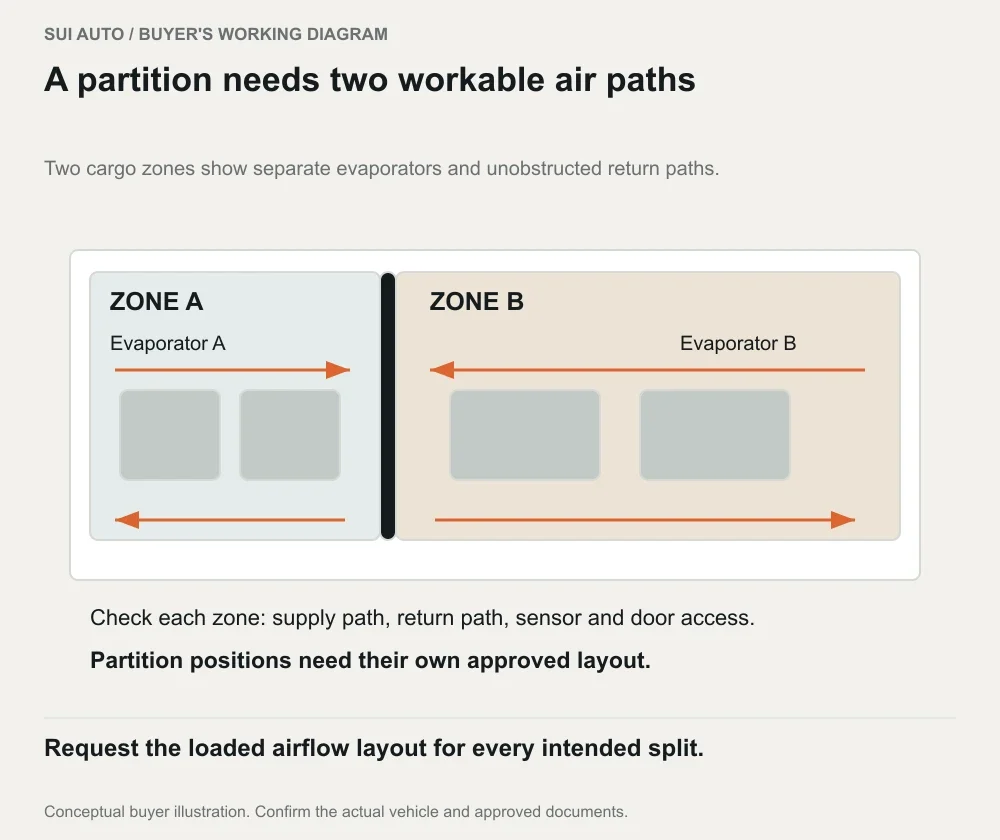
Conceptual illustration. Two cargo zones show separate evaporators and unobstructed return paths. Request the loaded airflow layout for every intended split.
Ask how the zones are controlled
Request the exact refrigeration arrangement, control sensors and operating modes. One unit serving two spaces through controlled airflow differs from a package with separately managed evaporators. The supplier should identify the system it is actually quoting and the zone combinations it approves.
Separate the required temperature conditions from the number of controllers on the dashboard. Ask where temperatures are sensed, how alarms identify a zone and what happens when one zone requires cooling while the other does not. The controls supplier and body builder should provide one coordinated explanation. A generic claim of dual temperature leaves the integration question unanswered.
Review every intended partition position
A larger front zone and a smaller rear zone may present a different application from the reverse arrangement. Moving the partition changes usable volume and can alter the air route. Ask the supplier which positions are approved and how the owner will identify them after delivery.
Check whether the bulkhead seals against the ceiling, walls and floor in every contracted position. Review the effect of floor channels, door gear and cargo-restraint equipment. Also identify where the partition is stored when unused. The stored bulkhead must have a defined place in the load plan rather than taking space that was counted as sellable cargo volume.
Match the delivery sequence to access
List which door is opened at each stop and which zone is exposed. A route with repeated access through one zone to reach another can undermine the assumed separation. Give the supplier the actual sequence and ask for a documented assessment instead of comparing only nominal compartment volumes.
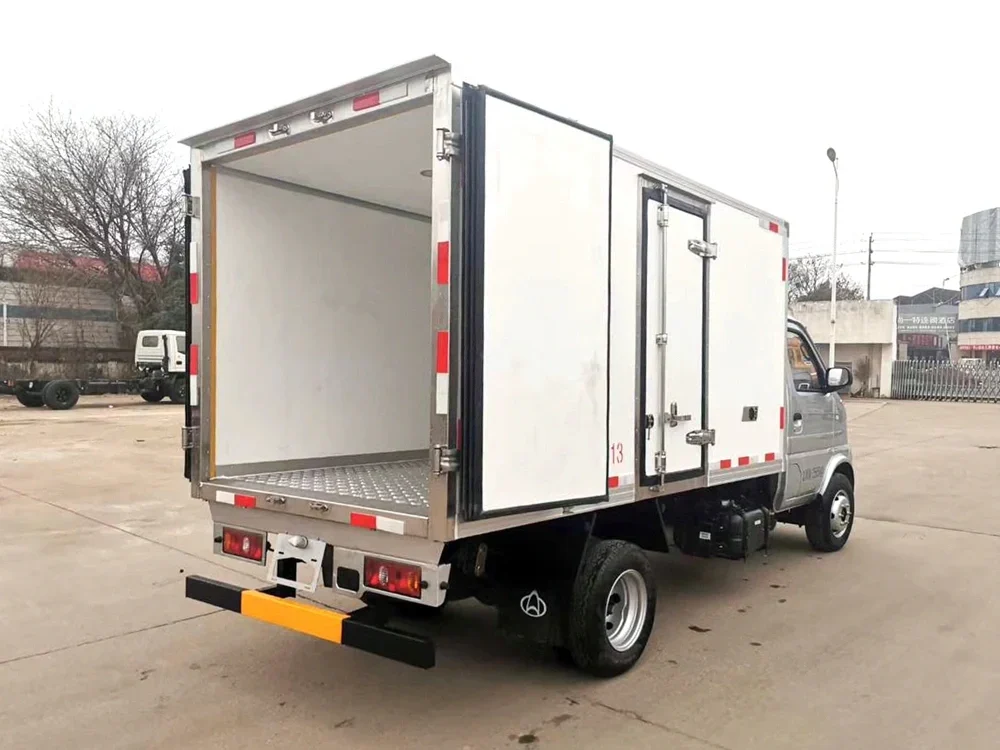
Manufacturer reference photograph. The open rear and side doors expose loading access on this small refrigerated body; no multi-temperature partition is shown.
Where side doors are proposed, check their clear apertures and local air paths. Confirm that a door option appears in the quoted body drawing and thermal assessment. The buyer should be able to follow a product from loading position to delivery access without assuming that crates will be moved through another occupied temperature zone.
A hypothetical mixed-product delivery
Assume a food distributor wants chilled goods in one compartment and frozen goods in another, with the split changing between routes. The first offer adds an insulated movable wall to a single-zone drawing. The buyer requests refrigeration and airflow evidence for both planned layouts before treating it as a multi-temperature solution.
The revised proposal may require a different refrigeration arrangement, restricted partition positions or a revised delivery sequence. Those are potential design outcomes. Neither linked reference is represented as already offering them. The hypothetical example shows why a partition price alone is insufficient for comparing the complete investment.
Define a zone-specific acceptance record
Have the integrator propose an assessment covering the contracted zone combination and partition positions. Record starting conditions, power mode, door state, sensor positions and the agreed observation period. The evidence should distinguish readings from each zone, rather than presenting only a common controller setpoint.
If the test uses an empty body, state that limitation. Product-quality verification and a representative route trial may require a separate plan. Ask who approves changes to the load arrangement after handover. Moving cargo or adding shelving can affect the air path even when the refrigeration unit and partition remain unchanged.
Procurement questions that reveal missing scope
Which zone combinations are approved? Which partition positions are supported? What refrigeration components and sensors serve each space? Where are the return paths after loading? How is leakage at the partition assessed? What cargo-restraint arrangements preserve the specified air spaces?
Request the as-built drawing, control manual, partition hardware references and zone-specific assessment. Confirm who resolves a mismatch between the body and refrigeration supplier. A coordinated acceptance file makes the limits understandable to dispatchers and operators, rather than leaving them to discover restrictions after the truck joins a route.
FAQ: Can a curtain create a second temperature zone?
It may serve a defined role in a designed system, but it does not independently establish temperature control. Obtain approval for the complete proposed arrangement.
FAQ: Is a larger refrigeration unit enough?
Capacity does not answer the zoning, airflow and control questions. The integrator must assess how the required conditions are maintained in each compartment.
FAQ: Can the partition be moved anywhere?
Use positions approved for the actual body and refrigeration package. Ask the supplier to mark and document them, including cargo and air-space restrictions.
References and further reading
Planning a purchase? Follow the overseas buyer guide for specification, payment, shipping and import preparation.