Specify the required speed and load before counting gears
Choose gearing that supports the required road and working speeds at the intended load. The number of forward gears alone cannot tell you whether a truck can move smoothly during slow cleaning, start on a site gradient or cruise at a suitable engine speed. Request the actual transmission model, ratios, final-drive ratio and tyre specification.
A road sweeper is a useful example because it may need controlled low-speed movement while operating equipment. A vehicle designed mainly for loaded road travel has a different pattern. Establish the duty before deciding whether a gearbox with more speeds offers a practical benefit.
Connect engine speed to road speed
With the clutch fully engaged, road speed depends on engine speed divided by the selected gearbox and final-drive ratios, then multiplied by tyre rolling circumference. Real tyre rolling data is preferable to a rough outside-diameter estimate. A supplier can use this relationship to prepare a speed chart for the exact chassis.
A lower first gear increases reduction, which can help achieve a lower road speed at a given engine speed. It also changes wheel torque within the driveline's limits. That does not guarantee traction or acceptable continuous operation. Ask about clutch use, driveline ratings, cooling and the engine-speed requirement of the body system.
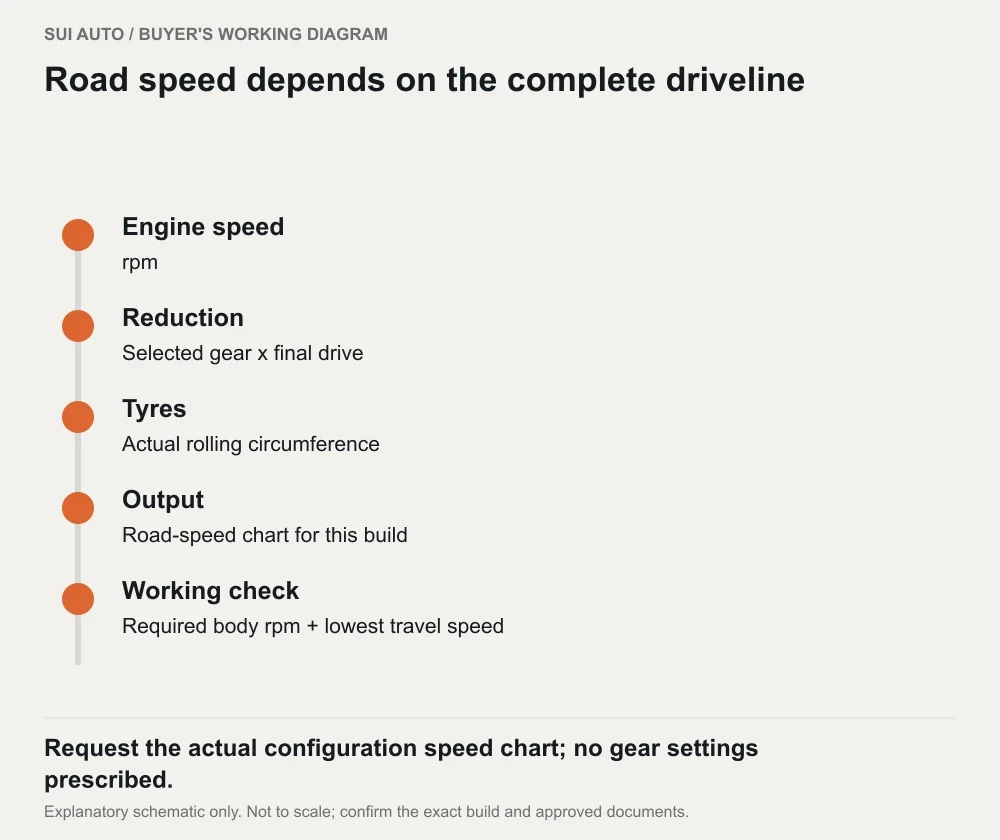
Request the actual configuration speed chart; no gear settings prescribed. Explanatory schematic.
Compare the ratios that affect your assignment
First gear: review loaded starts and the lowest practical controlled travel speed.
Intermediate ratios: review how the driver maintains engine speed on the normal route and during repeated acceleration.
Top gear and final drive: review engine speed at the intended road speed, rather than relying on an advertised maximum vehicle speed.
Reverse ratios: review controlled positioning at customer sites and discharge locations.
Auxiliary drive ratio: review separately where body equipment is driven through a gearbox interface. A road-speed chart does not establish auxiliary equipment compatibility.
Ask the supplier to show these values in one configuration-specific table. A transmission-family brochure can contain alternatives that are not installed in the quoted truck.
A hypothetical sweeper duty exposes a mismatch
Assume a cleaning assignment requires steady movement at 5 km/h while the body equipment needs a particular engine-speed range. This is an illustrative procurement requirement, not a confirmed capability of a listed model.
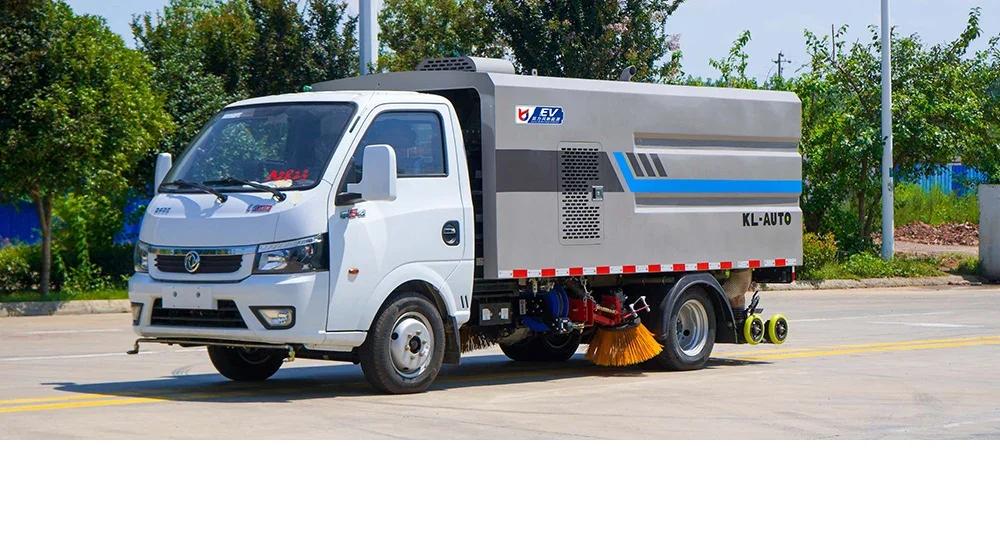
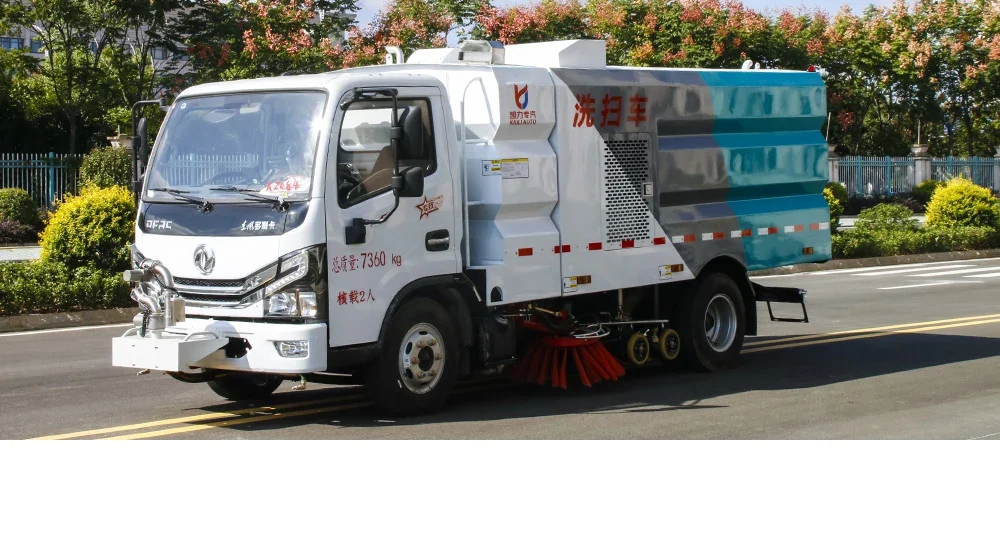
Manufacturer reference photograph. Sweeping brushes sit below the body on this electric sweeper; working-speed needs belong in the completed-vehicle duty review.
Ask the supplier to show whether the proposed gear and final drive can meet both conditions with the clutch fully engaged. If the demonstration depends on prolonged clutch slip, discuss the consequences with the chassis and body suppliers before accepting the configuration. If the body has a separate engine or electric drive, the speed relationship may be different, but road manoeuvring still needs review.
Repeat the discussion for a loaded start and for reverse positioning. A single successful unloaded pass across a flat yard does not cover the entire duty cycle. Define which cases the supplier will demonstrate and under what conditions.
Transmission names and substitutions need discipline
Two gearboxes described as six-speed can have different ratios, torque capacities and auxiliary interfaces. Likewise, two versions within one model family may use different controls or approved options. Record the complete installed model and relevant configuration code.
ZF's Ecosplit information illustrates that auxiliary and cooling options are part of a transmission system. It does not establish compatibility for another gearbox or vehicle. Ask for the documentation applicable to the proposed installation.
When a supplier changes tyre size, final-drive ratio or transmission, request an updated speed chart and performance review. A change that improves one end of the duty can affect another. Keep the original route assumptions visible so the revision can be assessed consistently.
Enquiry and acceptance checklist
Send the intended loaded masses, road speeds, gradients, start frequency and lowest working speed. State how the body equipment is powered and the required engine-speed range. Request transmission and axle codes, ratio tables, tyre rolling data and the chassis-specific speed chart.
At acceptance, reconcile the installed driveline identification with the specification. Witness the agreed low-speed and loaded manoeuvre with qualified personnel in a suitable test area. Record gear selection, engine speed, load and surface conditions. Confirm controls, operating instructions and any working limitations before the vehicle enters service.
Keep the test record for driver training. Operators need to know the intended working gear and engagement procedure rather than improvising a technique that hides an unsuitable configuration.
Include transitions between road and working modes
Ask the supplier to explain how the operator enters and leaves the intended low-speed working mode. The sequence may involve body controls, gear selection and equipment enable conditions that need coordination. Request clear labels and the correct operating instructions. During the demonstration, record any delay or awkward control transition that affects normal work. This gives the buyer useful operational evidence without encouraging improvised gear or clutch techniques. Later changes to control programming or equipment should be reviewed against the same agreed sequence.
Are more gears always better for slow work?
Ratio spread and the actual lowest ratio matter more than the count alone. Compare the complete speed chart and operating method.
Can a different final-drive ratio solve every low-speed problem?
It affects road and working speeds together and must remain compatible with the chassis. Review the complete duty and approval basis.
Does an automatic transmission remove the need for a low-speed review?
No. Confirm creep behaviour, heat management, control integration and the specified working cycle for the installed transmission.
References and further reading
- ZF Ecosplit transmission information
- Isuzu official body builder guide access
- Daimler Truck official commercial-vehicle body builder information
- Kaili Dongfeng Compact Washing Sweeper manufacturer reference
- CLW Dongfeng Equipment Transporter manufacturer reference
- Hongyu JAC Gallop Road Cleaning Truck manufacturer reference
- Kaili Dongfeng Compact Washing Sweeper
- CLW Dongfeng Equipment Transporter
- Hongyu JAC Gallop Road Cleaning Truck
- Overseas buyer guide
Planning a purchase? Follow the overseas buyer guide for specification, payment, shipping and import preparation.