Specify access rather than assuming capability
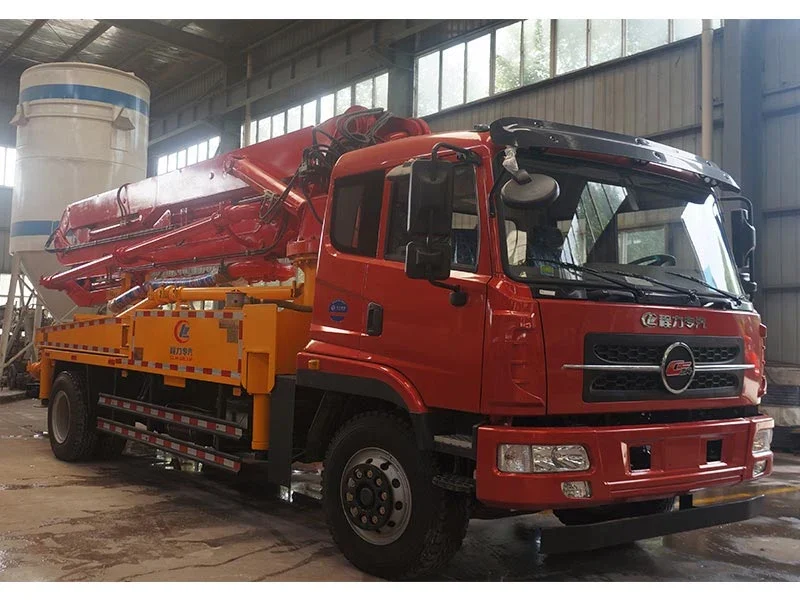
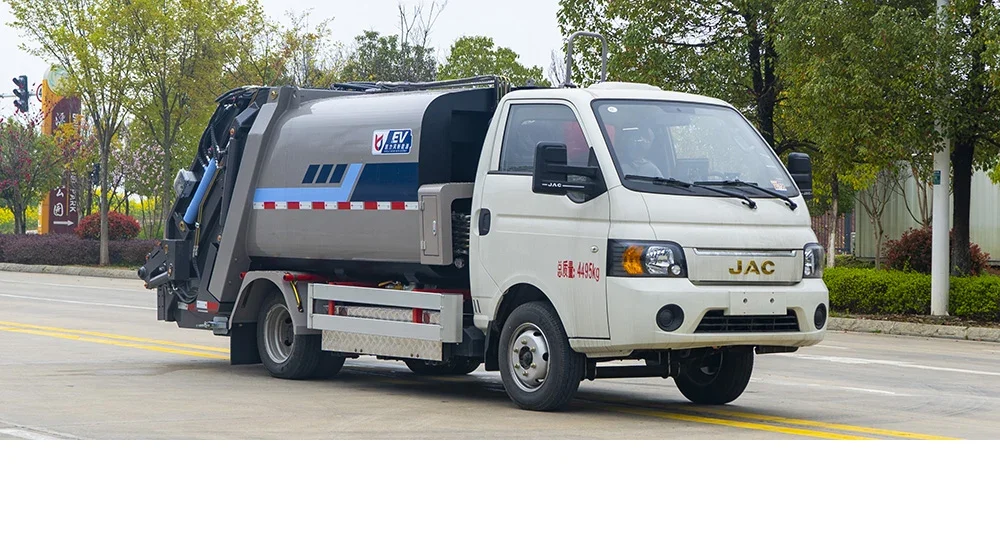
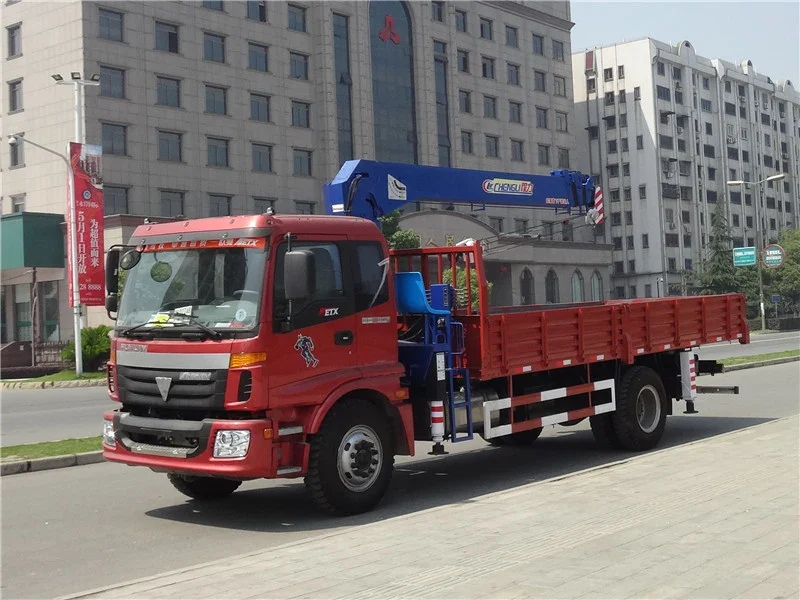
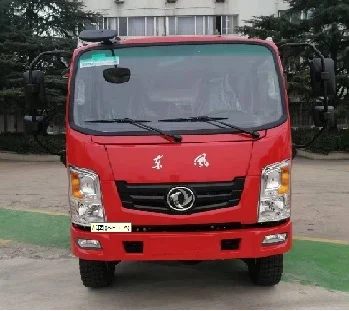
For a forest fire truck, specify the roads and access constraints that the responsible authority expects the vehicle to use, then request a manufacturer assessment in its fully equipped condition. Four-wheel drive alone does not establish safe passage, stability or operational suitability. This guide is for professional procurement and route planning, not driving instructions or wildfire tactics. The XDR Dongfeng and Foton four-wheel-drive references provide possible discussion points, but their catalogue designation must not be interpreted as permission to cross a particular slope, watercourse or damaged track. The operating authority establishes limits with competent advisers.
Define the assumed service area
Consider a rural agency with paved links, maintained forest roads and occasional narrow gates. Its brief differs from that of a specialist unit expected to use remote terrain without nearby servicing. Map turning restrictions, bridge limits, overhead obstructions, surfaces and places where vehicles can safely stop or turn around. Mark unknown routes for assessment rather than describing them as accessible. Include how often water and equipment are replenished. This exercise can reveal that a smaller appliance with dependable support is more useful than a larger one whose dimensions exclude important access points. It does not establish off-road ratings.
Review the completed vehicle's condition
Request an assessment that includes water, fuel, crew and every specified tool. Ask for axle loads, gross mass, centre-of-gravity information where appropriate and the manufacturer's approved operating constraints. Empty chassis information does not represent the finished appliance. Extra equipment added after delivery can change the assumptions behind the original assessment. Maintain a controlled equipment inventory so the supplier knows what must be carried. When a proposed build changes chassis, wheelbase, tank position or compartment layout, request an updated review; do not inherit the earlier vehicle's conclusions simply because both vehicles use a four-wheel-drive description.
Make route geometry measurable
Use an actual gate width, turning area drawing and height restriction in the enquiry where these have been surveyed. Ask the supplier for the completed vehicle's dimensions and turning information, including mirrors and externally mounted equipment. Wheelbase and body overhang should be reviewed together by the chassis and body specialists. Do not ask a salesperson to promise that the vehicle can reach any forest location. A reference photograph on rough ground is not a route assessment. Where local road or bridge limits apply, the buyer's transport adviser should check them before treating an otherwise appealing configuration as feasible.
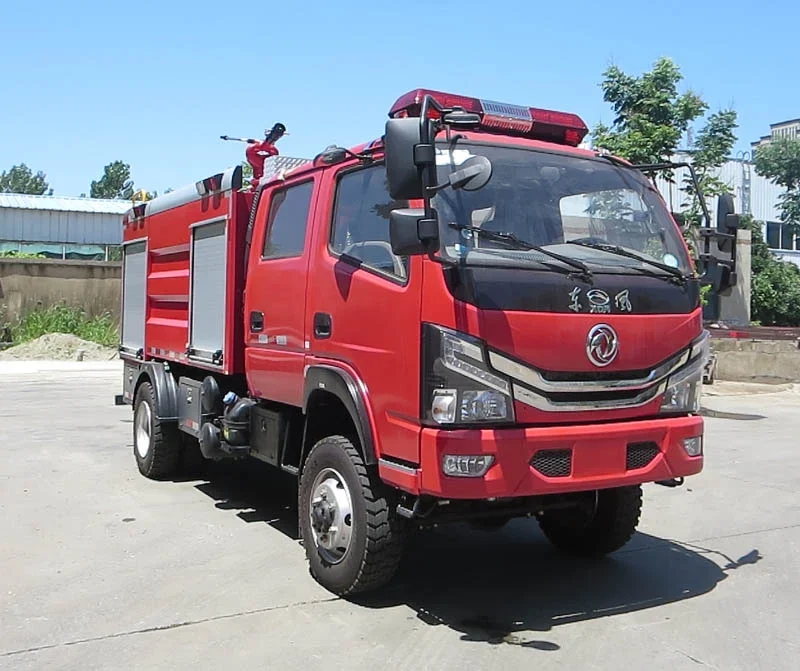
Manufacturer reference photograph. The forest-fire truck's bumper, wheelbase and rear overhang are visible; compare the completed dimensions with surveyed access.
Create a route register with surveyed restrictions and a matching completed-vehicle record. Keep unknown bridges, turning areas or clearances marked unverified. A four-wheel-drive designation does not change that status; the responsible route and vehicle reviewers must provide the missing assessment.
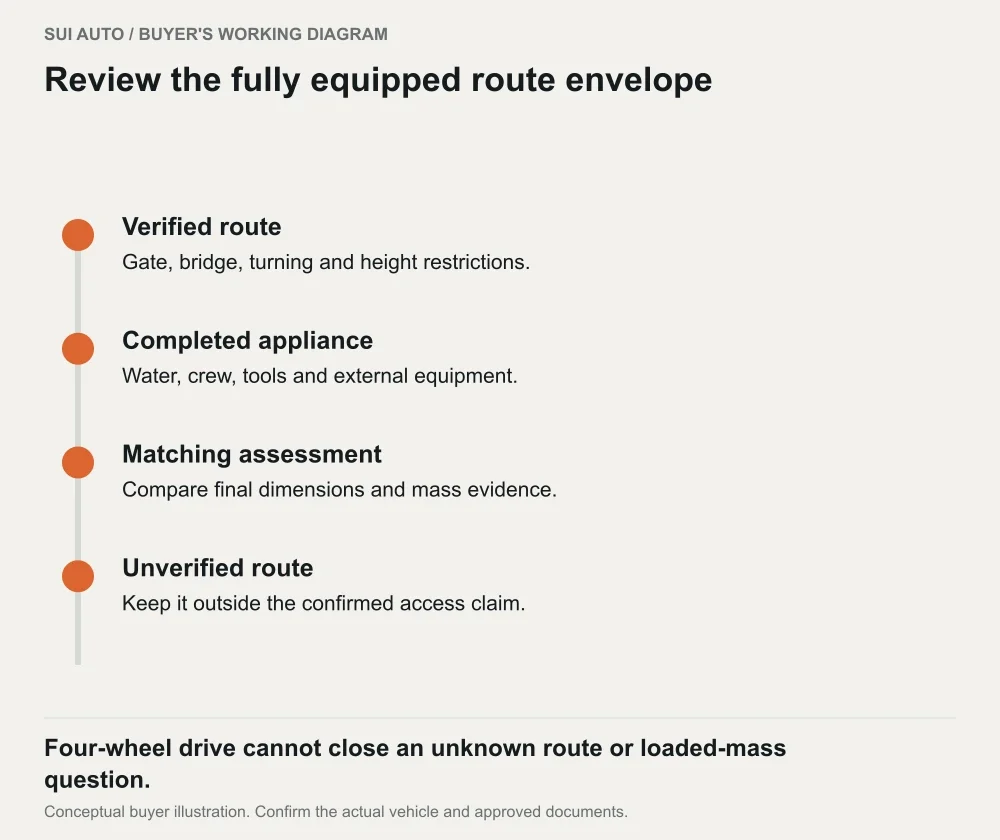
Conceptual illustration. Forest route review compares surveyed restrictions with the fully equipped appliance. Four-wheel drive cannot close an unknown route or loaded-mass question.
Supportability is a rural capability issue
List the nearest competent service points and their ability to support the chassis, pump, controls and four-wheel-drive equipment. Ask which inspections require specialist tools and which spares should be held locally. Confirm access to manuals in a language the maintenance team uses. Long distances to support can make a minor fault operationally significant. Evaluate corrosion protection, compartment sealing and storage arrangements for the actual environment, but request evidence rather than assuming a forest designation includes every protective feature. Supply continuity for tyres and replacement components should be considered alongside the vehicle's visible equipment.
Enquiry and delivery review
The enquiry should contain the route survey, mission statement, crew and tool inventory, replenishment assumptions, applicable standard and support plan. At delivery, verify vehicle identity, dimensions, equipment placement, loaded mass evidence and the approved operating-limit documentation. Agree whether an authority-supervised site evaluation is required and how it will be conducted safely by qualified personnel. Check that supplier substitutions have been assessed. Keep photographic records of the delivered layout for future equipment changes. Catalogue specifications and manufacturer images remain reference evidence; final acceptance concerns the exact built vehicle and the department's documented requirements.
Separate transport access from deployment expectations
The route review should distinguish ordinary travel to a support location from any specialised movement the authority expects during an incident. Do not merge those requirements under the word access. A truck that can travel on a maintained road has not thereby been assessed for every adjacent track. Ask the supplier and authority to document which conditions were considered and where further assessment is needed. This boundary is useful during shortlisting: it lets the buyer reject unsupported claims while still evaluating a viable vehicle for a narrower, clearly approved role. It also gives the maintenance team a stable reference for later changes.
Clarifications before shortlisting
Does four-wheel drive guarantee off-road access? No; the completed vehicle, route and operating limits must be assessed. Is a larger tank always better in rural service? No; it can alter mass, access and replenishment trade-offs. Can an extra tool rack be added later? Only after reviewing mounting, mass and clearance implications with the appropriate specialists. The useful procurement question is whether the fully specified appliance can serve the approved routes and be kept ready by the available team. Any unresolved access claim should be recorded as pending verification rather than converted into an advertised capability.
References and related reading
Planning a purchase? Follow the overseas buyer guide for specification, payment, shipping and import preparation.