Start with duty and charging evidence
Consider an electric garbage compactor when the entire working day and depot charging arrangement can be demonstrated for the quoted vehicle. A familiar body size does not establish driving range, battery endurance or charging compatibility. The collection body also performs work between road movements, so a driving-only comparison is incomplete. Request the manufacturer's approved duty and charging information for the exact chassis and body. Compare it with recorded route demand, time at the depot and operational contingencies. An electric purchase should answer how tomorrow's collection will be completed after an interrupted charge as well as how the normal route is expected to run.
Map energy-consuming work without inventing a range
Record distance, stop frequency, time using body equipment, gradients, load changes and climate. Keep these inputs separate because two routes with the same mileage can place different demands on a collection vehicle. The reviewed Kaili JAC reference lists a 5.3 m³ body and 55.7 kWh battery. Those reference figures do not establish a guaranteed operational range for this purchase without evidence for the intended duty. Ask for battery and charging documents, body power arrangement and warranty conditions. Request an assessment or representative trial with a defined state of charge and duty. Do not convert a battery label into a predicted daily route using an assumed consumption figure. The supplier should identify which conditions its evidence represents and which remain untested.
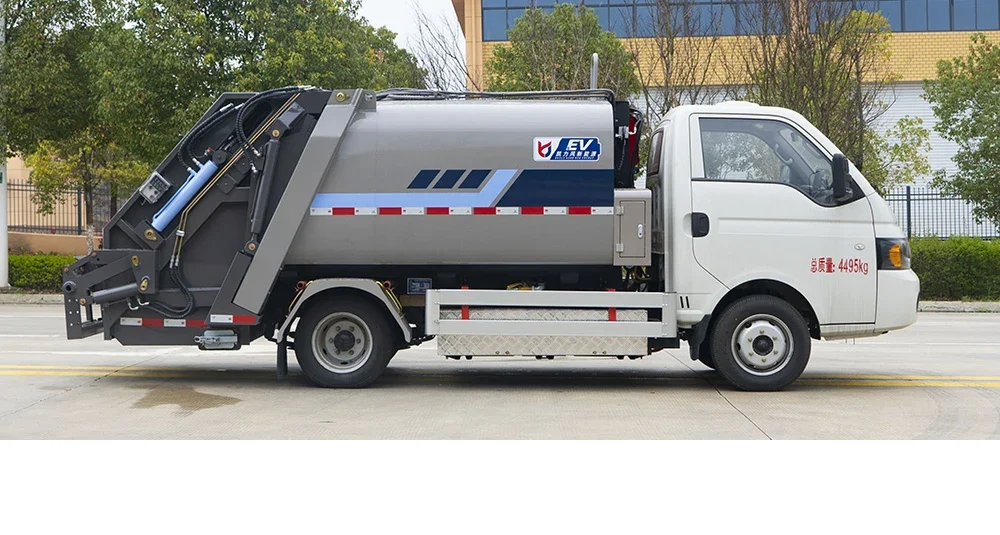
Manufacturer reference photograph. The electric compactor has both road-running equipment and a hydraulic collection body; include both duties in energy assessment.
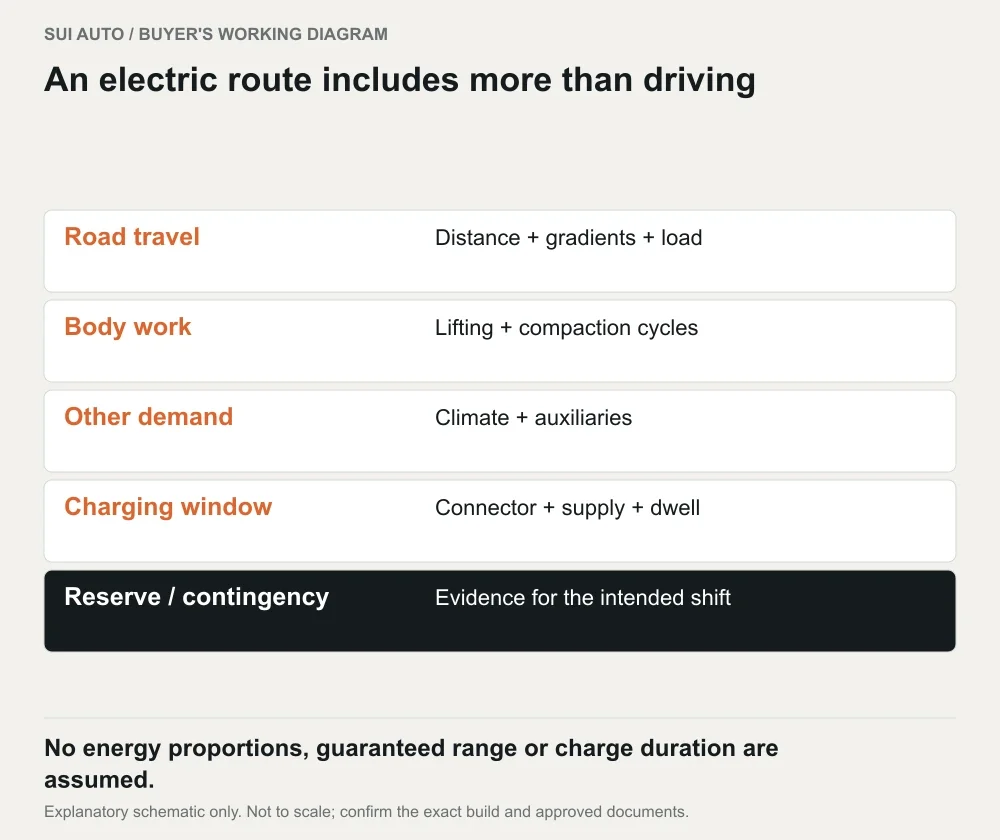
No energy proportions, guaranteed range or charge duration are assumed. Explanatory schematic.
An assumed depot-based collection service
Assume a municipality operates a repeatable urban route and parks its vehicles at one depot overnight. This example assumes depot control and predictable scheduling, not that charging infrastructure already exists. The buyer should review electrical provision, charger installation responsibilities and the time available between shifts. If the truck sometimes covers an extra afternoon route, include that demand in the assessment rather than treating it as exceptional. A diesel backup or another agreed contingency may be needed during commissioning. The purchase can still be justified, but the budget must account for the charging project and support arrangements alongside the truck. Confirm each responsibility before fixing a delivery date.
Separate body service from electrical service
The bin lifter, compaction equipment, seals and hydraulics still need support, while the electric chassis introduces another service scope. Ask which organisation handles each system and what training or qualifications are required. High-voltage servicing should be reserved for authorised specialists following the vehicle manufacturer's procedures. A workshop experienced with diesel bodies should not assume it can service the electrical system. Obtain isolation guidance, fault-reporting contacts and emergency information as part of handover. Review spare-part supply for both the body and chassis. A clear responsibility map prevents a hydraulic fault from becoming an argument between suppliers while the route waits for a repair decision.
Specify acceptance around the intended shift
Send the route log, operating schedule, expected loading pattern and depot information. Request the exact charging connector, charger scope, power requirements, body controls and battery support terms. Define a trial that covers the intended road and collection duty under agreed conditions. Record charge status, work completed, interruptions and the remaining reserve according to the manufacturer's method. The trial should be performed by trained personnel and should not involve unauthorised electrical access. Verify manuals and training records before handover. Also document what happens when charging is unavailable, how a fault is escalated and whether the delivery package includes installation or only the vehicle and its stated accessories.
Request a commissioning boundary for the charger
Clarify whether the charger is supplied, installed, tested or merely recommended as part of the order. Name the party responsible for the depot electrical assessment and for resolving a connector or communications mismatch. Also confirm which evidence must be available before the route trial and what happens if installation is delayed. These questions belong in the commercial schedule because the vehicle and charging project may have different delivery dates. A truck arriving on time can still be unavailable for the planned service if the charging arrangement has not been commissioned and handed over by competent parties.
Questions that matter before a commitment
Does the listed body capacity prove the truck can complete a diesel route? No; body volume and route energy are separate issues requiring an exact-build review. Can any depot socket charge it? Connector, supply, charger and installation requirements must be confirmed by competent parties for the vehicle provided. Is electric servicing simpler for an existing workshop? The workshop must assess its authorisation, tools and support for the specific electrical system as well as the body. SUI AUTO can coordinate the information request, but the purchase decision should rest on a documented route and charging plan. Treat unverified range, installation costs and commissioning performance as unresolved items rather than expected benefits.
References and related reading
- NIOSH: Preventing struck-by injuries and deaths when working with refuse trucks
- OSHA 1910.332: Electrical safety-related work practices training (United States reference)
- Kaili JAC Electric Garbage Compactor: published vehicle reference
- Kaili Foton 5.8 m³ Garbage Compactor: published vehicle reference
- JAC Electric Garbage Compactor: Battery and Route Planning
- Prepare your vehicle requirements
Planning a purchase? Follow the overseas buyer guide for specification, payment, shipping and import preparation.