Start with completed deliveries
Choose a concrete mixer truck around the deliveries your route can actually complete, rather than the largest drum advertised. Drum volume, usable concrete load and permitted road payload describe different limits. A useful purchase brief connects batch demand, concrete supply arrangements, travel time, site access and unloading delays. The published Dongfeng, HOWO and Foton mixer references provide vehicles to compare, but their names do not establish a lawful load for your roads. Ask for the exact quoted chassis, body and weight documents before deciding that a larger mixer will increase output.
A clearly defined example
Assume a contractor serves several building sites from one batching plant, with narrow entrances and unpredictable queues. This is an illustrative scenario, not a record of a SUI AUTO customer. The contractor should record an ordinary week of orders, actual departure and arrival times, rejected deliveries and time spent waiting for placement. Separate occasional peak pours from repeat daily demand. If waiting dominates the cycle, extra drum capacity may leave more material exposed to delay without creating another delivery. If the plant can dispatch reliably and sites accept the load promptly, capacity may deserve greater weight.
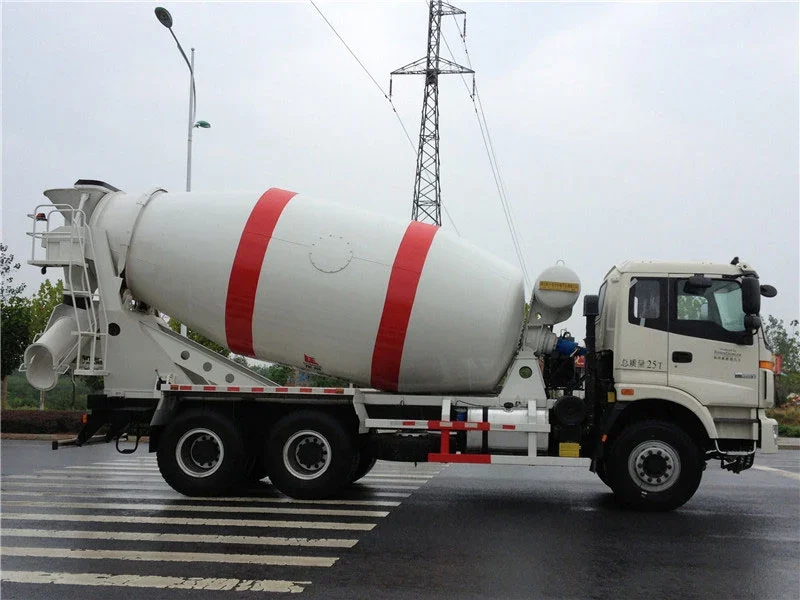
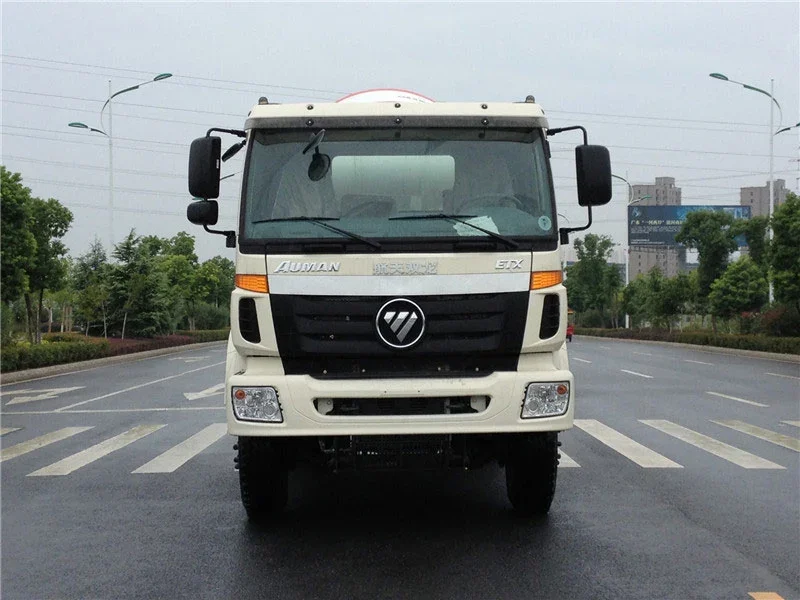
Manufacturer reference photograph. The mixer drum and three-axle chassis provide a physical reference for comparing route access with complete-vehicle mass.
Use a trip log with one row for each completed delivery and separate columns for plant waiting, travel, site waiting, discharge and return. If site waiting is the repeated bottleneck, ask how a larger drum would change that constraint before treating capacity as the preferred upgrade.
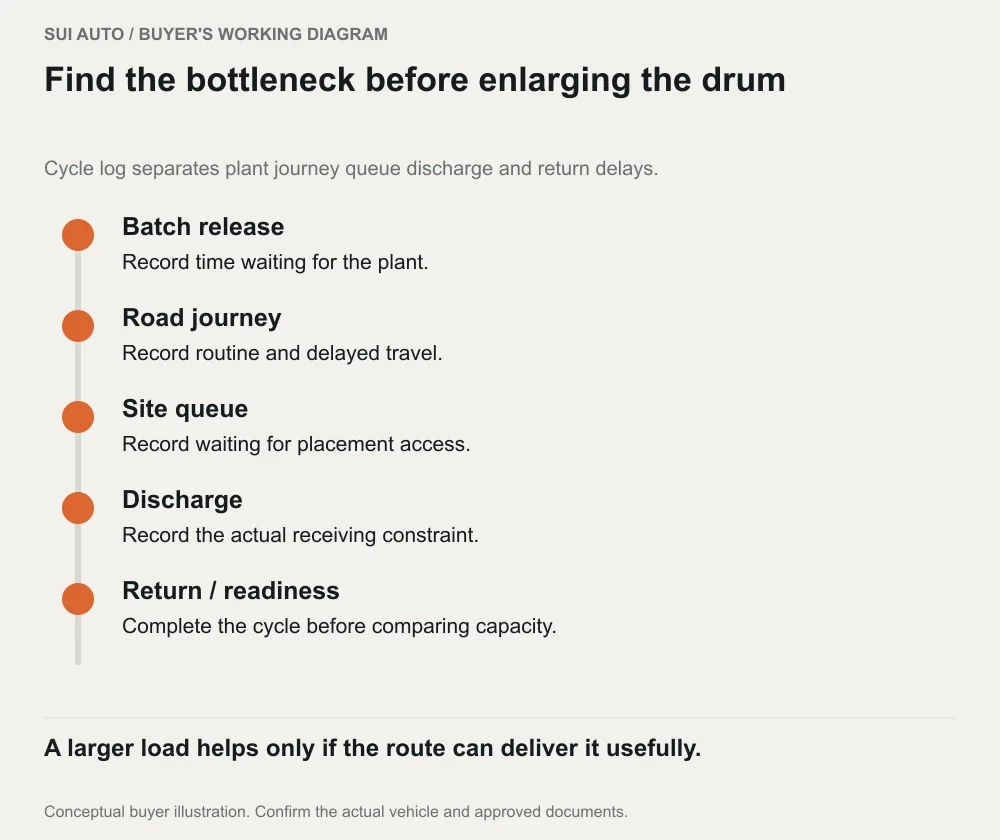
Conceptual illustration. Cycle log separates plant journey queue discharge and return delays. A larger load helps only if the route can deliver it usefully.
Compare volume with weight
Request a weight statement showing chassis, mixer installation, fuel, water, crew and carried equipment under the proposed configuration. Establish how the quoted load would be distributed across axles, not merely its total mass. Concrete mix density and the destination's permitted vehicle limits belong in the assessment; this article supplies no assumed density or legal allowance. Ask who will validate the calculation and what evidence accompanies delivery. A nominal body volume should never become a payload promise through a sales spreadsheet. Confirm whether published dimensions and photos describe the same chassis revision as the offer.
Access can change the answer
Trace the route from the plant exit to the discharge position. Gates, overhead structures, bends, gradients and turning space may exclude a vehicle that appears attractive in a capacity comparison. Have the site responsible person identify suitable standing and maneuvering areas. Include the return route and designated cleaning arrangements in the review. A mixer is not a solution for placing concrete beyond its approved discharge arrangement; that may require separately specified placement equipment. Compare chassis choices using documented dimensions and site information, rather than inferring turning performance from photographs or a shorter looking cab.
Specify the body as a system
The drum, drive, reduction gear, hydraulic equipment, support rollers and discharge arrangement need compatible documentation. Ask for the manufacturer's approved loading envelope, operating manual, cleaning provisions and maintenance schedule for the exact build. Water equipment should be described by purpose, since water carried for cleaning does not authorize altering a concrete mix. Understand access to routine inspection points and how service personnel isolate equipment. OSHA's United States construction equipment provisions offer a safety reference, particularly for maintenance isolation; they are not certification of a listed truck or a substitute for local rules.
A purchasing checklist that separates uncertainties
Before comparing offers, collect route restrictions, site entrance dimensions, order sizes, plant dispatch capacity, typical queue duration and legal weight advice. Then request chassis identification, mixer model, installed weight statement, drawing, included accessories, manuals and inspection scope. Put uncertain items on a written clarification list with an owner and due date. Do not silently accept a supplier's alternative axle arrangement or a larger water tank as equivalent. Compare service access and replacement part support alongside capacity. These details make quotations comparable without inventing a universal best mixer or a guaranteed number of daily trips.
Acceptance should test your assumptions
Agree an acceptance plan that checks identification, dimensions, documentation and supplied equipment against the signed configuration. Functional demonstrations should be supervised by the manufacturer or an authorized specialist under suitable conditions. Record the agreed demonstration conditions and any deviations; a short unloaded rotation does not prove loaded route productivity. Review driver familiarization, inspection records and service contacts before dispatching to work. Keep an unresolved access or weight issue open until evidence closes it. SUI AUTO can help coordinate the comparison and inspection questions, while the responsible local parties determine operational and regulatory suitability.
Questions buyers ask
Does a bigger drum always reduce trips? Only if the permitted payload, mix requirements, dispatch system and receiving site allow the additional material to be delivered usefully. Should a smaller truck be chosen for urban work? It is a candidate when verified access and route constraints favor it, not an automatic rule. Can the listed photographs settle the decision? They help identify a reference vehicle and visible arrangements; they cannot establish axle loading, maneuverability or the exact equipment included in a quotation. Ask for documents that describe your proposed build.
References and related reading
- OSHA United States construction equipment requirements
- CLW Dongfeng 6×4 Concrete Mixer: published vehicle reference
- CLW HOWO 6×4 Concrete Mixer: published vehicle reference
- CLW Foton 6×4 Concrete Mixer Truck: published vehicle reference
- Dongfeng 6×4 Concrete Mixer: Drum Volume and Site Access
- Prepare your vehicle requirements
Planning a purchase? Follow the overseas buyer guide for specification, payment, shipping and import preparation.