Define the thermal duty of the completed vehicle
Specify ambient conditions, load, working duration and vehicle speed when reviewing cooling. A truck that travels adequately on the road may face a different thermal duty when stationary or moving slowly with pumps and fans operating. An engine's peak power rating does not demonstrate that the entire installation can reject heat throughout the shift.
Ask the chassis and body suppliers to review their systems together. The engine, transmission, hydraulic circuit and separate body engine may each have cooling requirements. Identify the actual heat sources and airflow paths before asking for a larger radiator or an additional cooler.
Compare four operating conditions
Loaded road travel: review route gradients, sustained load and the proposed cooling package.
Low-speed body work: review reduced vehicle airflow, auxiliary demand and normal working engine speed.
Stationary operation: review fan capability, ventilation and any restrictions on continuous working duration.
Cleaning and recovery after work: review shutdown, draining and maintenance procedures required by the installed equipment.
For each condition, ask the supplier to identify the temperatures monitored and the relevant limits from the installed equipment documentation. There is no useful universal temperature number for every engine, transmission or hydraulic system. The test plan should use the actual component limits and a defined measurement method.
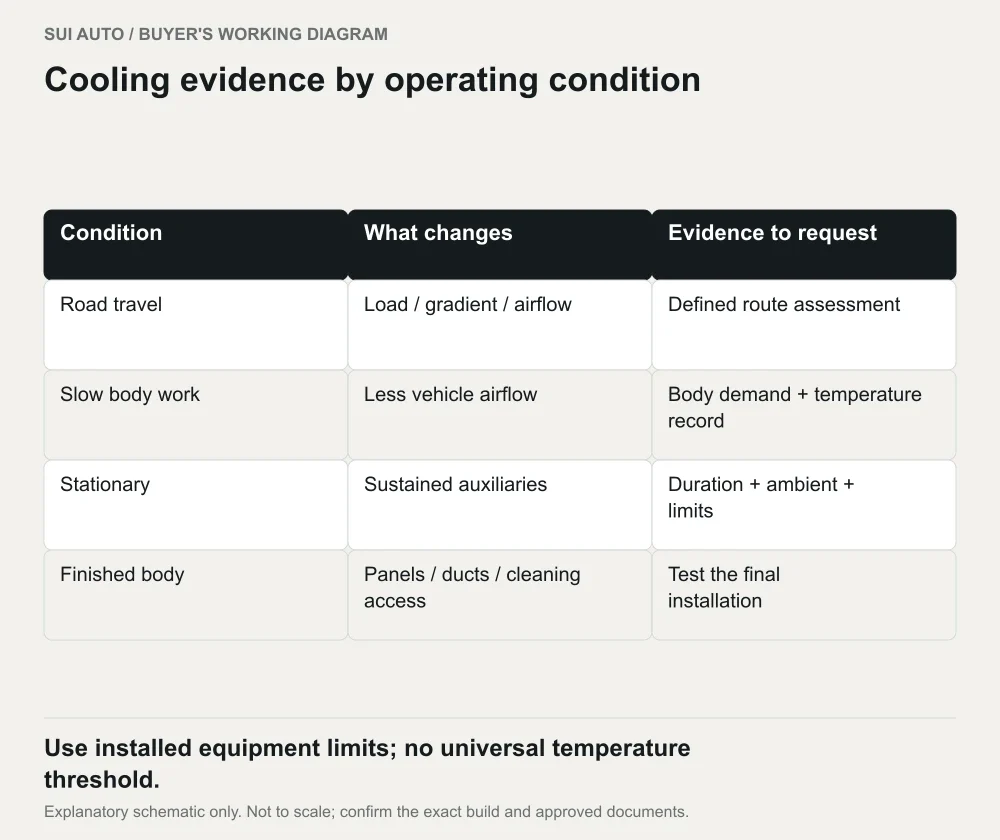
Use installed equipment limits; no universal temperature threshold. Explanatory schematic.
Packaging can change cooling after the chassis leaves the factory
A body can obstruct airflow, place hot exhaust near sensitive components or make cooling surfaces difficult to clean. Auxiliary engines and hydraulic power units can be installed in compartments that need their own ventilation. Ask for the finished layout, not just a chassis radiator specification.
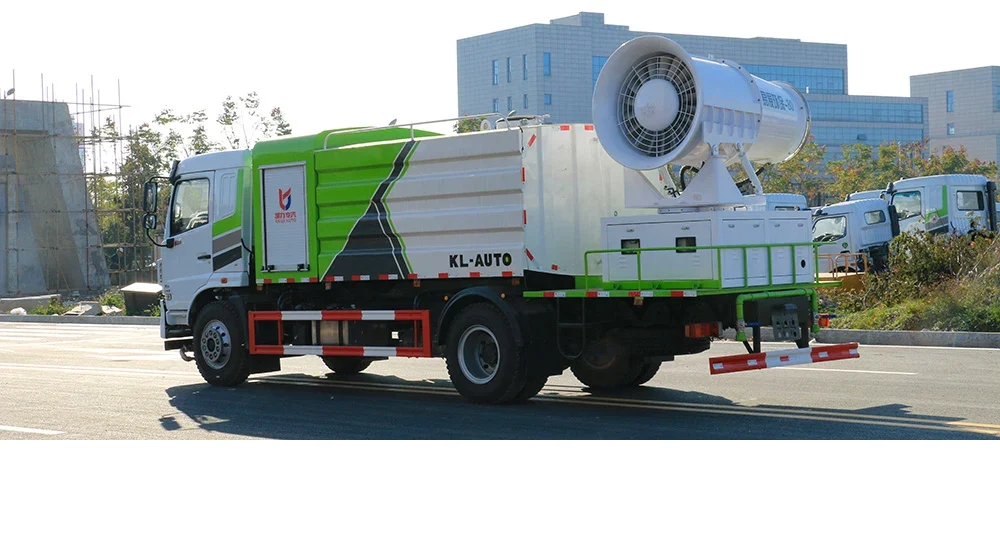
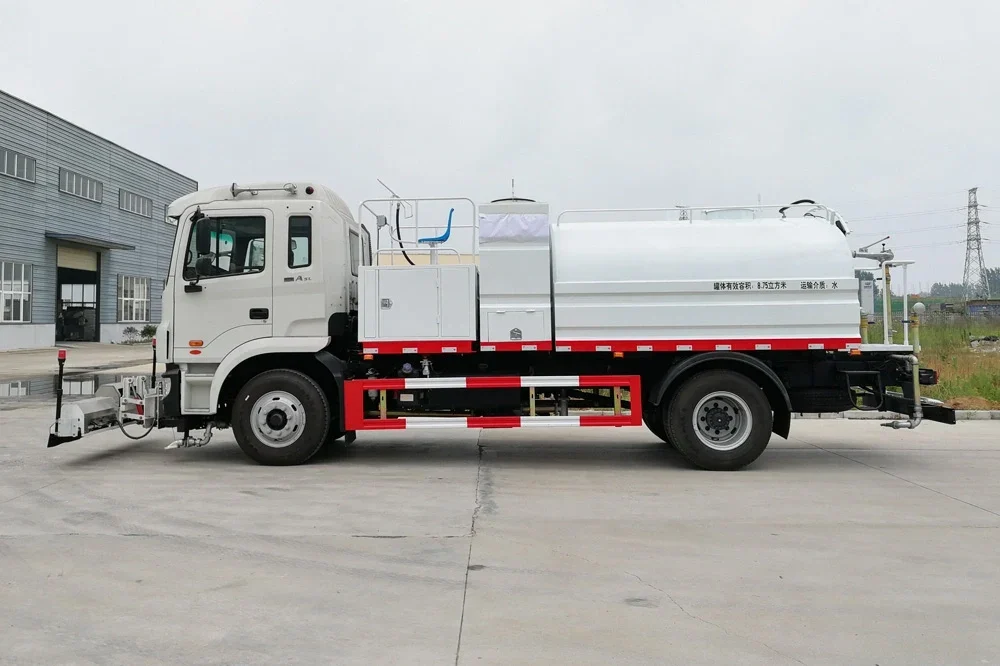
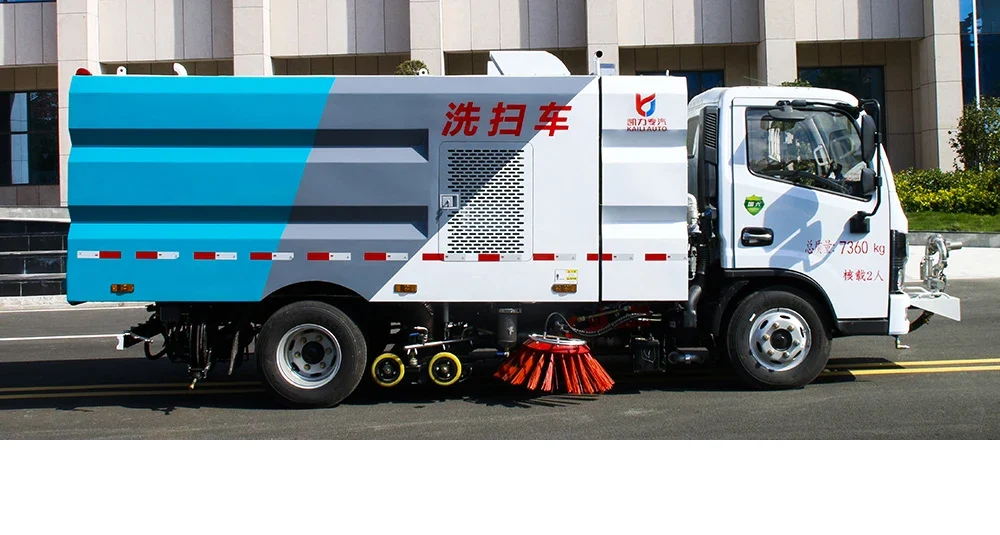
Manufacturer reference photograph. The dust-suppression fan and body equipment occupy space behind the cab; integration can change airflow and service access.
Dust, debris and working liquid can affect access and cleaning. A municipal truck should allow routine inspection of relevant cooling surfaces and filters. Request the maintenance method with the body installed. If cleaning requires removing major equipment, include that practical burden in the comparison.
Also review hose routing and service replacement space. Adding a cooler is only one part of an installation; connections, protection, controls and maintenance must suit the actual duty.
A hypothetical hot-yard acceptance plan
Assume a buyer expects prolonged stationary sewer work in a hot industrial yard. The buyer knows the expected ambient range and the normal work sequence. These are procurement assumptions and should be confirmed by local operating records.
Ask the supplier to propose a representative thermal demonstration. Record ambient conditions, starting fluid temperatures, operating speed, pump duty, load condition and duration. Define what constitutes acceptable operation using the installed equipment's documentation. A short video of a pump turning does not reveal whether temperatures stabilise or continue rising.
If the available factory conditions do not reproduce the intended environment, record that limitation and agree how the design evidence or later commissioning will close it. Do not claim an unperformed high-ambient test has passed.
Control logic matters when temperatures rise
Ask how the vehicle warns the operator and protects equipment when a temperature limit is approached. Establish which functions may reduce output or stop, and how the operator should respond. A warning should be documented in the correct manual and understood during training.
Review whether the proposed controls coordinate the chassis and body systems. For example, a body demand should not rely on an engine speed or transmission mode that the suppliers have not reviewed. Separate auxiliary engines also need an operating and service plan.
ZF transmission information includes cooling provisions for specific products. That supports asking about the complete installed system; it does not establish that a listed truck uses those products or that one cooler specification transfers between transmissions.
Enquiry and acceptance checklist
Provide ambient conditions, altitude where relevant, dust exposure, gradients, loaded travel and the body-work sequence. State the longest intended continuous work period and available cleaning facilities. Request the cooling layout, component limits, maintenance access and supplier's thermal verification plan.
At acceptance, identify the actual engine, transmission and auxiliary equipment. Witness the agreed test with recorded conditions and temperatures. Confirm warning indications and operating instructions without deliberately exceeding limits. Keep the results and any unverified environment assumptions in the vehicle file.
Inspect airflow paths and service access after all guards, panels and accessories are fitted. A test on an unfinished installation may not represent the delivered truck.
Separate observed temperatures from the conclusion
A thermal test report should show the recorded conditions before declaring a result. Include the measurement locations and the operating sequence so another reviewer can understand what was tested. If the truck was unloaded, the panels were removed or the ambient condition was milder than intended, state that explicitly. Those observations may still be useful, but they do not demonstrate the complete proposed duty. Ask the supplier to identify the remaining verification work rather than compressing partial evidence into a general high-temperature capability claim.
Is a larger radiator always the answer?
The limiting system may be the transmission, hydraulics, auxiliary ventilation or airflow packaging. Identify the heat source and installation constraints first.
Does a highway test cover stationary pumping?
The operating load and airflow are different. Specify the stationary duty and obtain evidence for that condition.
Can I demand one temperature limit for every system?
Use the limits and measurement locations from the installed equipment documentation. Generic figures can create a misleading acceptance criterion.
References and further reading
- ZF Ecosplit auxiliary cooling information
- Kaili Tianlong separate auxiliary reference
- Isuzu official body builder guide access
- Daimler Truck official commercial-vehicle body builder information
- Kaili Shacman Delong Combination Sewer Truck manufacturer reference
- Kaili Dongfeng Compact Washing Sweeper manufacturer reference
- Kaili Dongfeng Tianlong Combination Sewer Truck
- Kaili Shacman Delong Combination Sewer Truck
- Kaili Dongfeng Compact Washing Sweeper
- Overseas buyer guide
Planning a purchase? Follow the overseas buyer guide for specification, payment, shipping and import preparation.