Choose the route that reduces your project's coordination burden
Direct factory purchasing can suit a buyer who already knows the exact product, understands the technical specification and has an established import and service team. A multi-manufacturer platform can suit a buyer comparing different body suppliers, assembling a mixed fleet or needing one coordinated requirements process. Neither route is automatically cheaper or safer. The useful question is who will perform each task and how that responsibility is documented. SUI AUTO presents itself as a sourcing and sales coordination platform, not the owner of every factory shown in the catalogue. Manufacturer references identify product sources, not blanket authorization for every destination.
What direct factory purchasing can simplify
A direct conversation can make it easier to discuss a manufacturer's own body design, production options and component choices. It can also reduce the number of commercial intermediaries when the factory can supply the complete scope you need. However, chassis, equipment, transport and destination support may still involve separate organizations. Ask whether the factory is the contracting seller, which items it actually manufactures and which support tasks remain with other parties. A direct factory label is not evidence that the entire vehicle and every accessory have one warranty provider. The technical annex and service responsibilities matter more than the label.
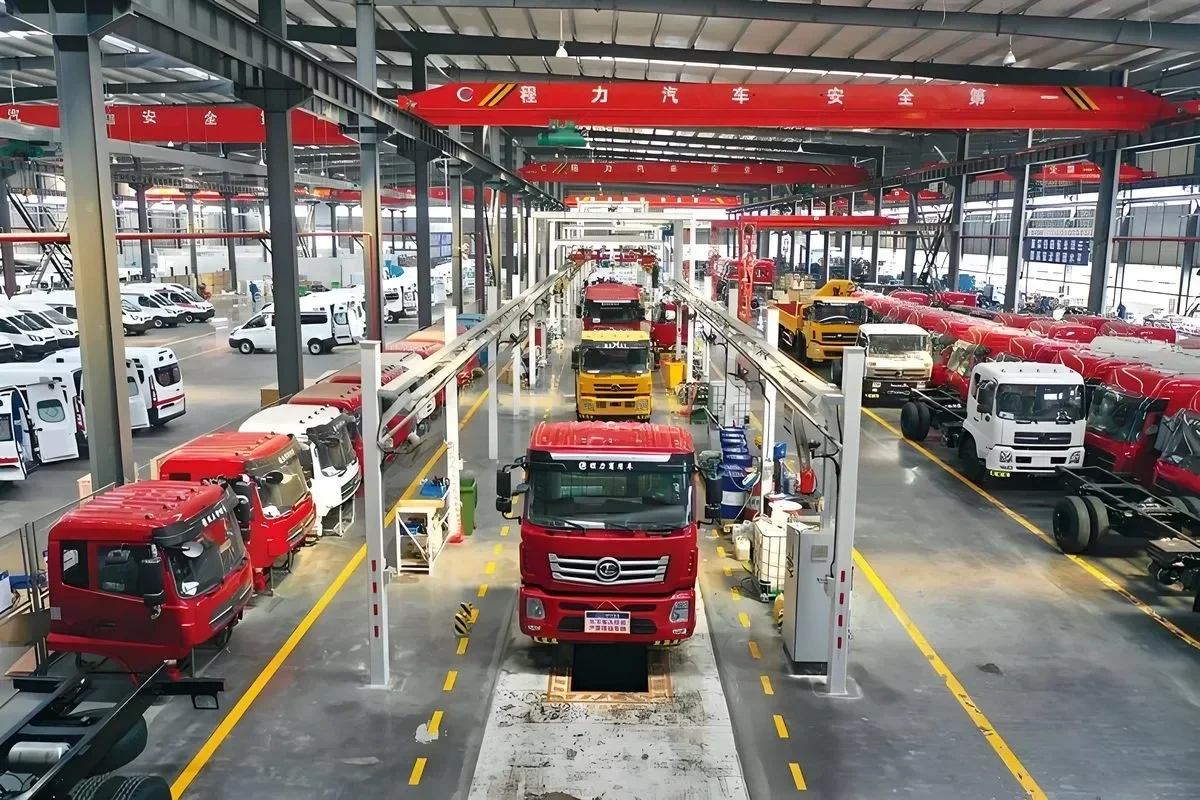
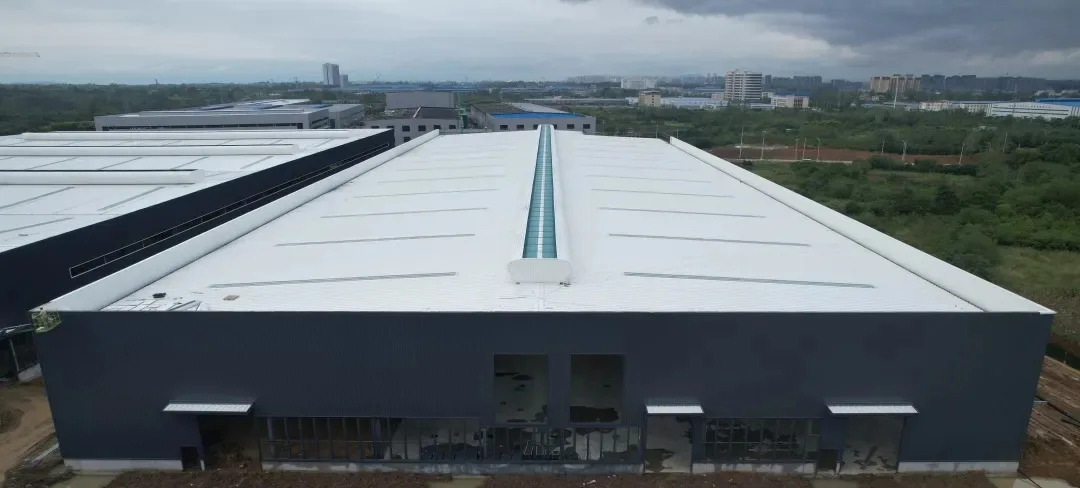
Chengli's published assembly-hall photograph illustrates the physical manufacturing side of the buying chain. The supplying factory, seller and project coordinator may still be separate organisations.
What coordinated sourcing can add
A platform may organize comparable proposals, reconcile conflicting brochure information and coordinate chassis, body and parts discussions. For a mixed fleet, it may help produce a consistent inspection format and an identifiable spares list across several vehicle types. Those are useful deliverables only if they are actually included in the agreement. Ask what will be supplied: comparison sheets, specification revisions, inspection coordination, document checking, handover arrangements or parts consolidation. Avoid paying for a vague promise of complete service without a named scope. Your contract should identify the seller and clarify how the platform handles supplier substitutions and unresolved technical questions.
A mixed-fleet example
Imagine a contractor purchasing a compactor, a concrete mixer and a service truck. This is an illustrative project, not a SUI AUTO delivery claim. One factory may have a strong compactor offering but not the best fit for the other duties. Separate direct purchases would require the buyer to coordinate three specifications, inspections and export packages. A platform proposal could consolidate those tasks, while still identifying each manufacturer and vehicle. The buyer should compare that coordination cost with its own staff time and verify whether shipment consolidation is physically and commercially possible. Consolidation is an option to evaluate, not a guaranteed saving.
Check accountability before checking the sales presentation
Request the contracting entity, beneficiary identity, vehicle source, technical approval contact and after-sales contacts. Ask who approves a component change and who resolves a discrepancy discovered during inspection. Check whether quoted prices include coordination fees or services paid separately. Confirm the inspection evidence and document ownership available to you. When a supplier cannot answer a responsibility question, keep it open in the comparison instead of assuming another party will handle it. A polished catalogue can introduce vehicles, but it cannot replace the written allocation of responsibilities for your particular transaction.
Compare the buying routes against your internal resources
List the tasks your team can competently perform: specification review, destination approval, factory inspection, shipping coordination, broker communication and local maintenance. Identify gaps and price assistance for those gaps. If you have a skilled local workshop and an experienced importer, you may need less coordination. If this is your first special-purpose vehicle, document review and handover support may matter more. Ask both direct and platform suppliers to propose the same acceptance and support scope. This reveals whether one route actually removes work or merely moves it to an unnamed third party.
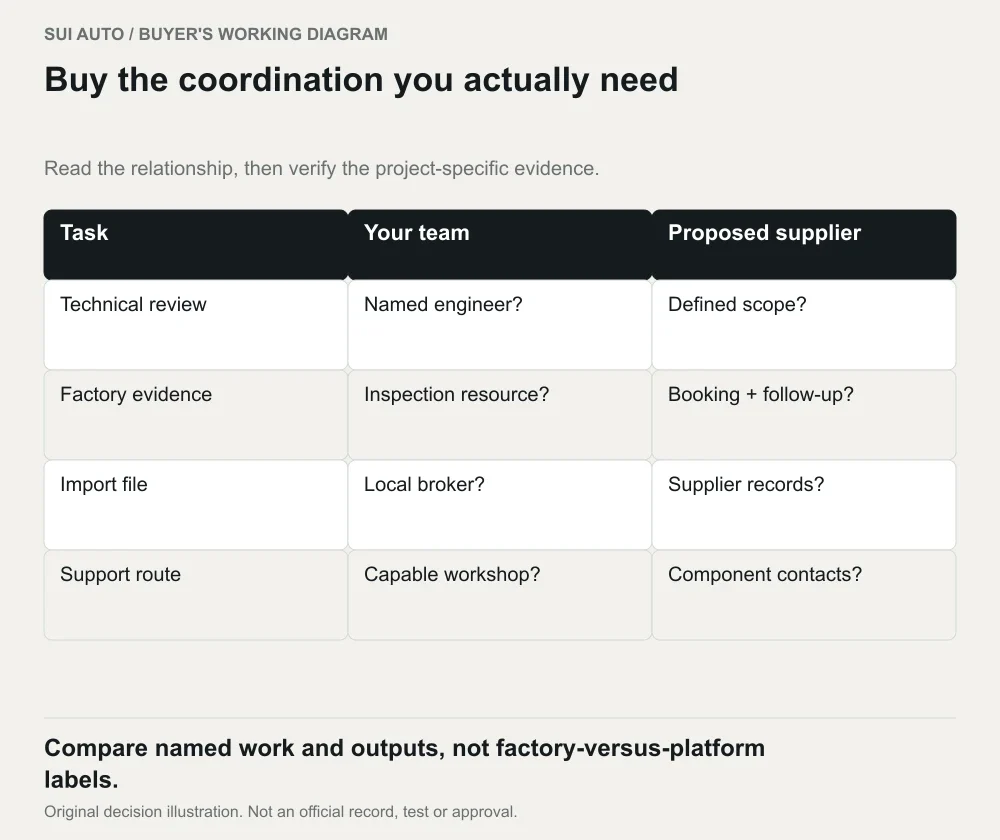
Buyer illustration: questions for comparing buying routes; cells are prompts, not supplier performance ratings.
Does a platform guarantee the lowest price?
No. A platform may offer alternative suppliers, standard components or consolidated procurement that optimize cost, but the outcome depends on the agreed specification and transaction. Compare complete scope and support rather than assuming an intermediary always raises cost or always lowers it. SUI AUTO does not use an unverified lowest-price guarantee.
Can I know the supplying manufacturer?
You should ask for the manufacturer and exact model associated with your proposal, along with the evidence needed for inspection, import and service. A catalogue photograph can show a reference vehicle; it should not be treated as proof that the photographed vehicle is your allocated unit. Confirm the actual build through its identifiers and inspection records.
References and related reading
Planning a purchase? Follow the overseas buyer guide for specification, payment, shipping and import preparation.