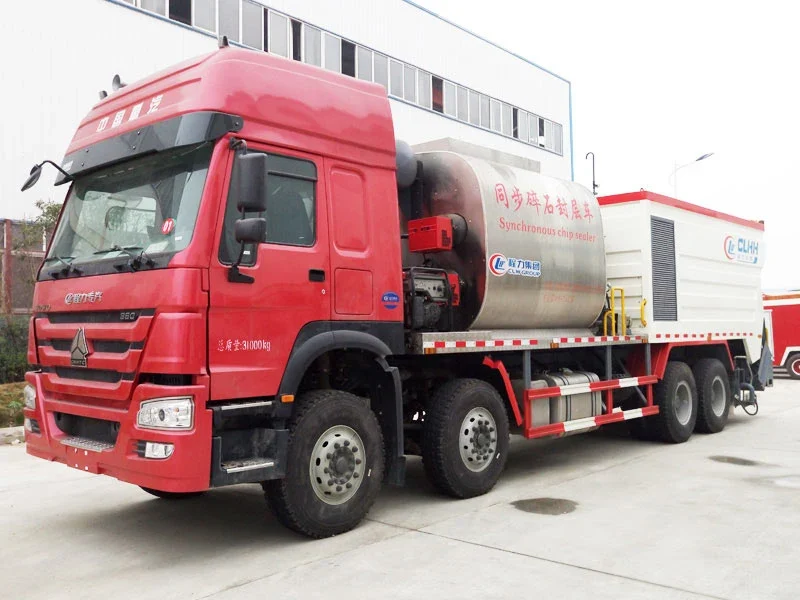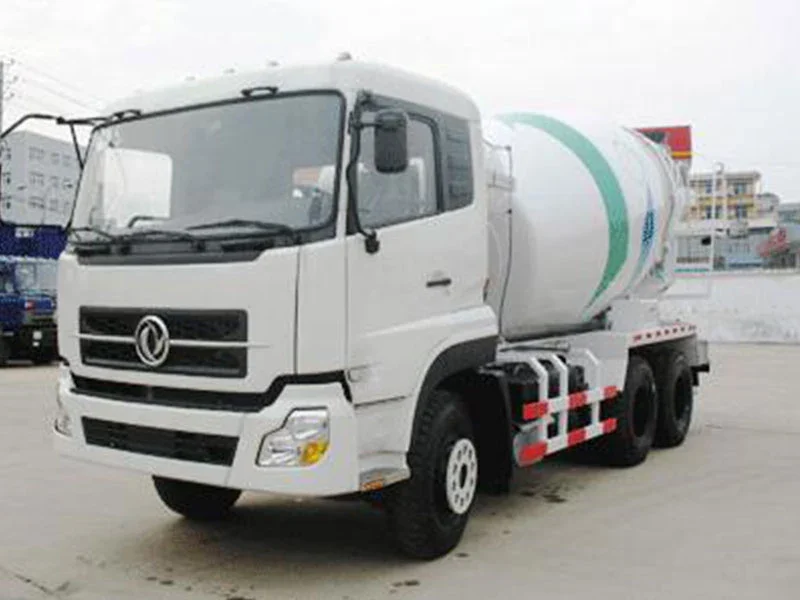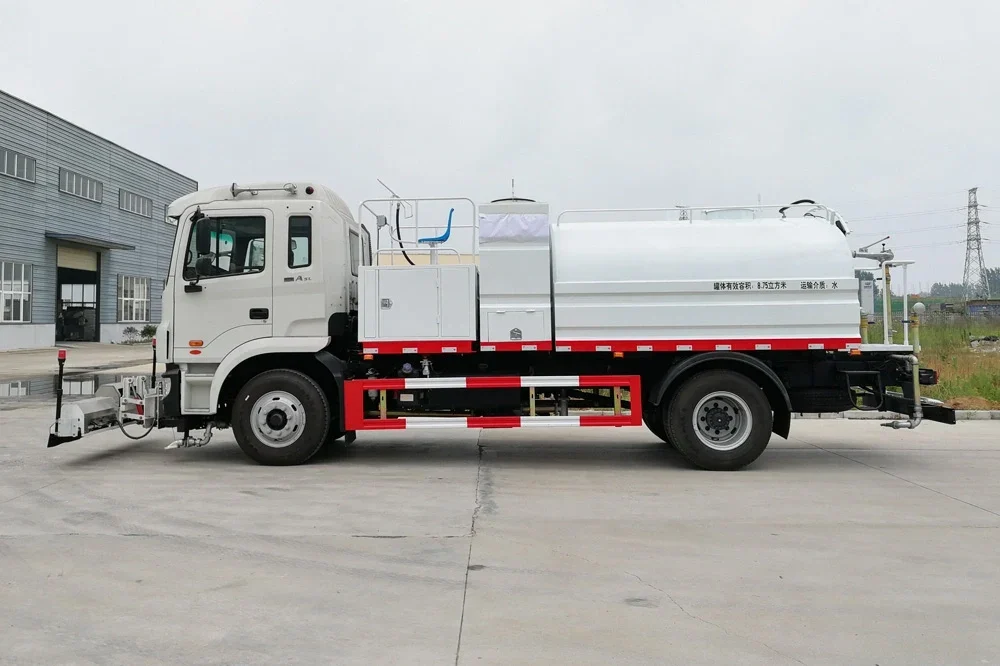
Compare the transmission type against the working cycle
Choose a transmission by examining stop frequency, low-speed control, loaded starts, auxiliary integration and local support. Manual, automated manual and torque-converter automatic transmissions operate differently. The word automatic on a quotation is too broad to establish how a special truck will behave.
Ask for the exact transmission model and control arrangement. Then describe the actual duty: repeated refuse stops, slow road cleaning, loaded road travel or occasional site manoeuvres. A driver-friendly demonstration on an empty vehicle is useful, but it cannot establish suitability for the full loaded shift.
Understand the three categories before comparing offers
Manual: the driver selects gears and controls the clutch. Review the ratios, clutch operating duty and driver workload on the intended route.
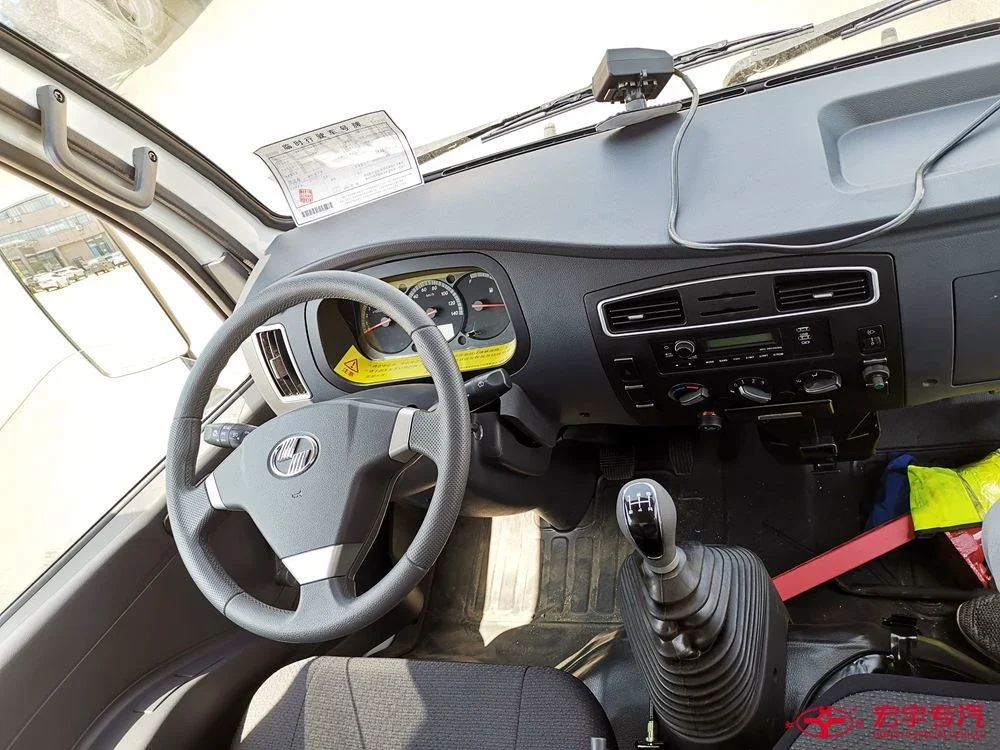
Manufacturer reference photograph. The manufacturer's cab photograph shows a steering wheel and gear lever; confirm the actual transmission identity instead of relying on appearance.
Automated manual: gear selection and clutch actuation are automated within a mechanically geared transmission. Review low-speed behaviour, engagement controls and application-specific programming for the exact unit.
Torque-converter automatic: a hydrodynamic torque converter is part of the system, with the transmission's own gearing and control strategy. Review cooling, working modes and low-speed control under the specified load.
These descriptions do not rank durability or fuel consumption. Those outcomes depend on the installed system, duty cycle, controls, maintenance and operator practice. A transmission-category label is only the beginning of the comparison.
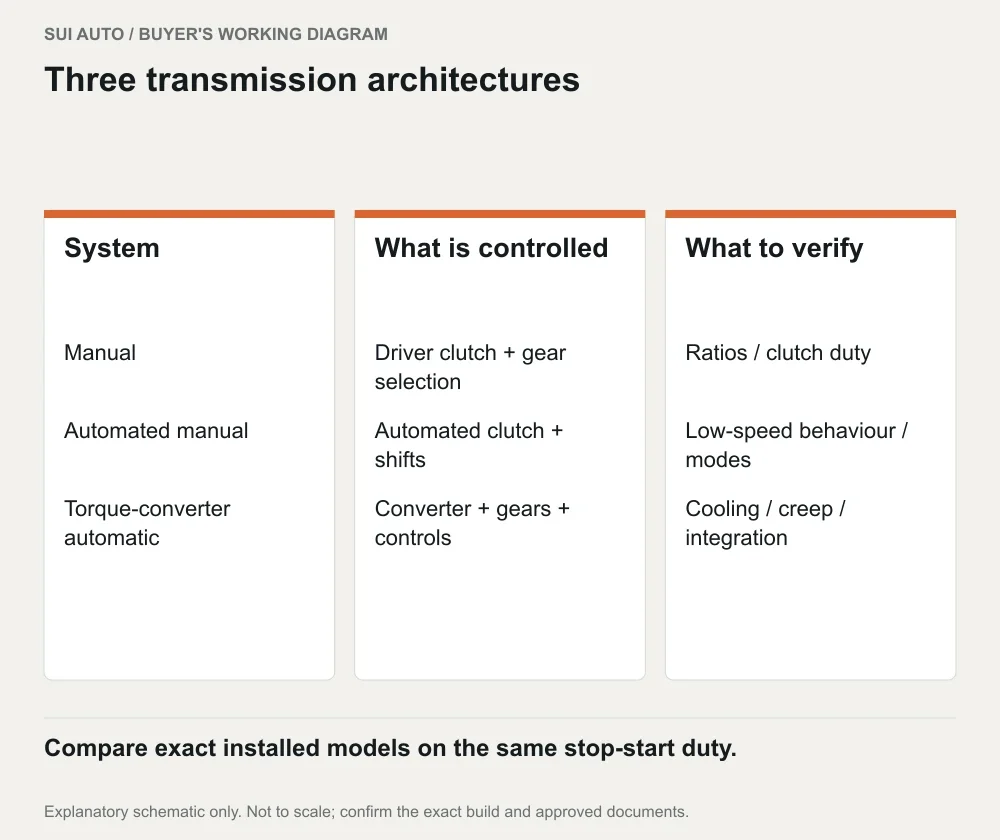
Compare exact installed models on the same stop-start duty. Explanatory schematic.
Separate convenience from engineering suitability
Repeated stopping can make driver workload an important purchasing factor. Ask operators to evaluate the controls, but also ask the technical team to review continuous duty and integration. Smooth movement in one demonstration does not prove adequate thermal performance throughout a shift.
For body equipment, establish which operations require neutral, parking brake application, a specific gear state or an auxiliary mode. Confirm engagement and disengagement logic with the body builder. The exact sequence should be in the operating instructions and reflected in the control labels.
Review reversing and recovery arrangements as well. A fleet needs a documented response when the truck cannot move under its own power. Use the transmission manufacturer's procedure rather than assuming every automatic can be towed or handled like a manual vehicle.
A hypothetical collection route makes the comparison concrete
Assume a refuse route includes frequent stops, a sloping depot exit and a tight unloading area. The buyer is comparing manual and automatic proposals with the same body duty. These are hypothetical conditions, not a vehicle test result.
Ask for a representative trial covering normal stop-start operation, low-speed positioning and the agreed loaded start. Record operator observations separately from technical measurements. If a driver prefers one transmission, identify the reason: pedal effort, control placement, engagement delay or reversing behaviour. This makes the preference useful rather than anecdotal.
Then examine maintenance readiness. Which workshop can diagnose the exact transmission? What fluids, filters and diagnostic tools are required? How will the supplier identify software or calibration changes? An easier driving experience still needs a practical support plan.
Compare quotations without inventing lifetime savings
Put purchase configuration, service requirements, cooling equipment, warranty terms and operating assumptions in separate rows. Ask for evidence before accepting a fuel-saving percentage or maintenance-cost claim. Results from a different vehicle or route may not transfer to your assignment.
ZF's PowerLine maintenance guide describes a transmission with a torque converter, planetary gearing and defined service interfaces. It is useful for understanding why the exact transmission and maintenance documentation matter. It does not prove that PowerLine is installed in any catalogue reference, or that a particular gearbox fits your chosen chassis.
If a gearbox substitution is proposed, review the body-control interface, auxiliary provision, cooling and driver instructions again. A revised price alone does not describe the technical effect of the change.
RFQ and acceptance checklist
Provide stop frequency, route gradients, loaded mass, reversing requirements and working-equipment sequence. Request exact transmission identification, ratios, control modes, auxiliary integration, cooling specification and maintenance schedule. Ask for local support capability tied to the installed model.
At acceptance, reconcile hardware and controls with the quotation. Witness the agreed low-speed, stop-start and body-operation sequence under controlled conditions. Confirm warning indications, operating instructions and the recovery procedure. Record test conditions and any restrictions that operations staff must understand before using the truck.
Use operator feedback as structured evidence
Give drivers a short evaluation sheet for engagement, reversing, visibility of indications and control clarity. Separate subjective preference from a failure to meet the written duty. A driver may prefer one control arrangement even when both proposals satisfy the technical requirement. That preference can still matter for training and daily use, provided it is described accurately. Record the test vehicle, load and conditions so the feedback is not mistaken for a brand-wide verdict about every manual or automatic transmission.
For repeated positioning, ask the operator to describe the intended pace and control sequence before the trial. Record how the proposed system achieves that requirement, including any working mode. This is more useful than accepting a short demonstration chosen solely because it makes one transmission appear smooth.
Is AMT the same as a torque-converter automatic?
No. Ask which mechanical architecture and control system the proposal uses. The difference matters for low-speed behaviour and service requirements.
Will an automatic always use less fuel?
A category-wide promise is not justified. Compare evidence from a representative duty with the actual build and assumptions stated.
Can a body builder add any auxiliary drive to an automatic?
Compatibility depends on the exact transmission, interfaces, controls and duty. Obtain a confirmed installation specification.
References and further reading
- ZF PowerLine maintenance guide
- Isuzu official body builder guide access
- Daimler Truck official commercial-vehicle body builder information
- Kaili Foton 5.8 m³ Garbage Compactor manufacturer reference
- CLW Dongfeng 5 m³ Hook Loader manufacturer reference
- Hongyu JAC Gallop Road Cleaning Truck manufacturer reference
- Kaili Foton 5.8 m³ Garbage Compactor
- CLW Dongfeng 5 m³ Hook Loader
- Hongyu JAC Gallop Road Cleaning Truck
- Overseas buyer guide
Planning a purchase? Follow the overseas buyer guide for specification, payment, shipping and import preparation.