Compare each vehicle with the approved configuration
For a multi-truck order, build a vehicle-by-vehicle matrix of the components and settings that matter to operation and maintenance. Trucks with matching paint and bodies can contain different pumps, controllers or service parts. Start with the accepted bill of materials and identify which lines must remain common across the batch. Record intentional variations explicitly. The buyer needs to know whether a difference is approved, unresolved or simply a different serial number on the same component model. This turns fleet consistency into a verifiable requirement.
Define commonality before production starts
Discuss which elements must be identical and where alternatives are acceptable. Commonality can matter for training, spare parts, diagnostic tools and workshop procedures. A pump of the same published duty may have different connections or service parts. Ask the manufacturer to distinguish functional equivalence from maintenance interchangeability. Set the review process for substitutions and specify whether approval applies to one vehicle or the entire order. The production team should receive a current batch configuration register so an accepted exception cannot spread silently to later vehicles.
Choose the controlled comparison fields
For each truck, record VIN, body serial number and major equipment identity. Include model, revision or configuration where it affects compatibility, plus serial numbers for traceable assemblies. Useful fields may cover pumps, PTOs, hydraulic devices, controllers, sensors and fitted tool packages. Ask the responsible engineer which settings need retention and how they will be verified. Avoid collecting every minor fastener identity without a purpose. The matrix should focus on differences that affect the order, operation or support, and link to detailed records when the reviewer needs them.

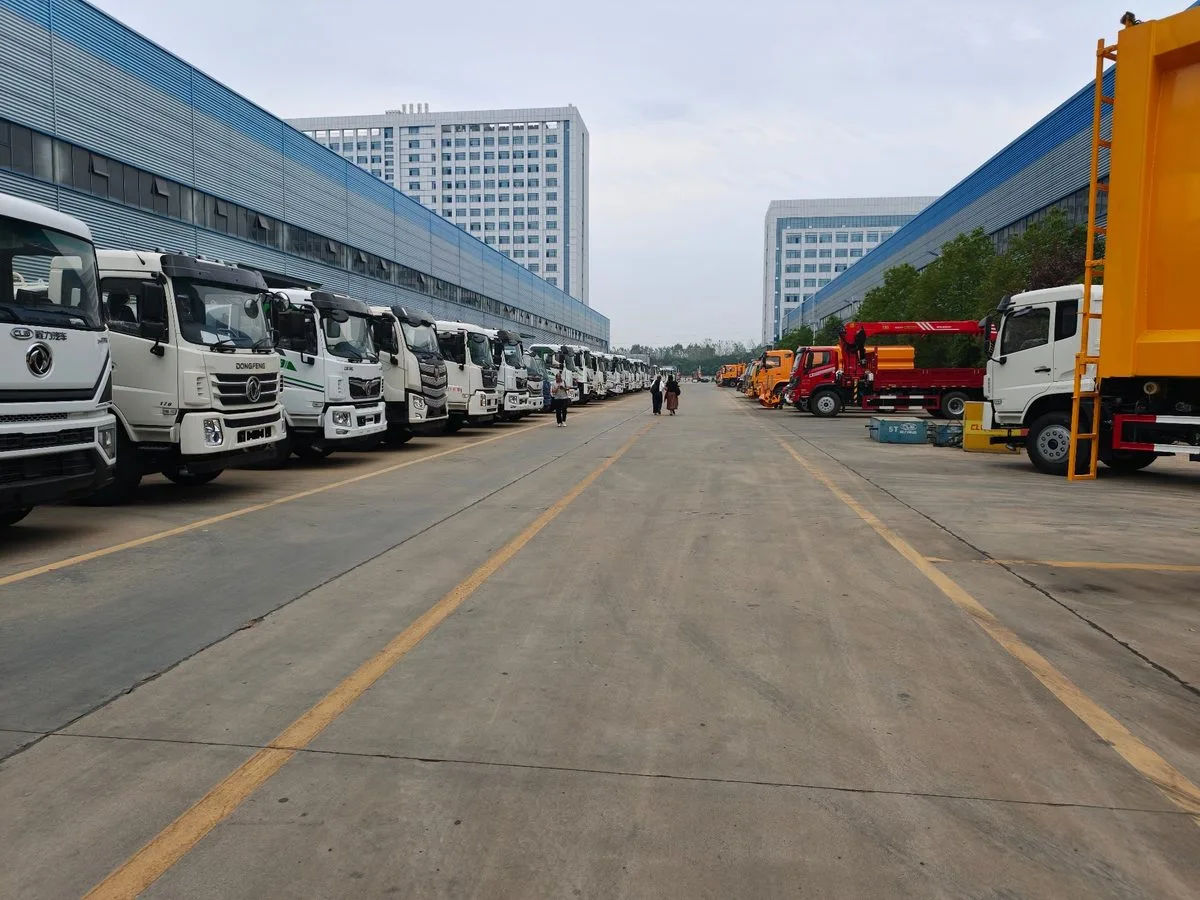
Kaili's published batch photograph shows multiple body and chassis configurations in one lineup. Batch review therefore compares controlled fields vehicle by vehicle rather than treating a group photograph as a common bill of materials.
Review the first completed unit carefully
Use the first completed truck to confirm the as-built configuration and resolve discrepancies in the documentation. This supports batch control even when the buyer has already selected the model. Record any accepted changes in the master register before later units proceed with the affected work. The decision is distinct from a general pilot-order strategy: here the order already covers multiple vehicles and the task is to prevent uncontrolled variation within it. SGS describes production-stage inspection as an opportunity to identify issues before the finished batch. Tailor the review to the actual truck build.
A hypothetical batch discrepancy
Assume illustrative Trucks F-01 through F-06 should use Controller C2. The matrix shows C2 on five vehicles and C3 on F-04. The manufacturer explains that C3 was installed after a supply shortage. The buyer requests the approved substitution record and assesses software, wiring and spare-parts effects. This is an invented example, not a SUI AUTO fleet. If the change was never approved, the issue remains open. If accepted, the final register identifies F-04 clearly and the maintenance file explains the difference.
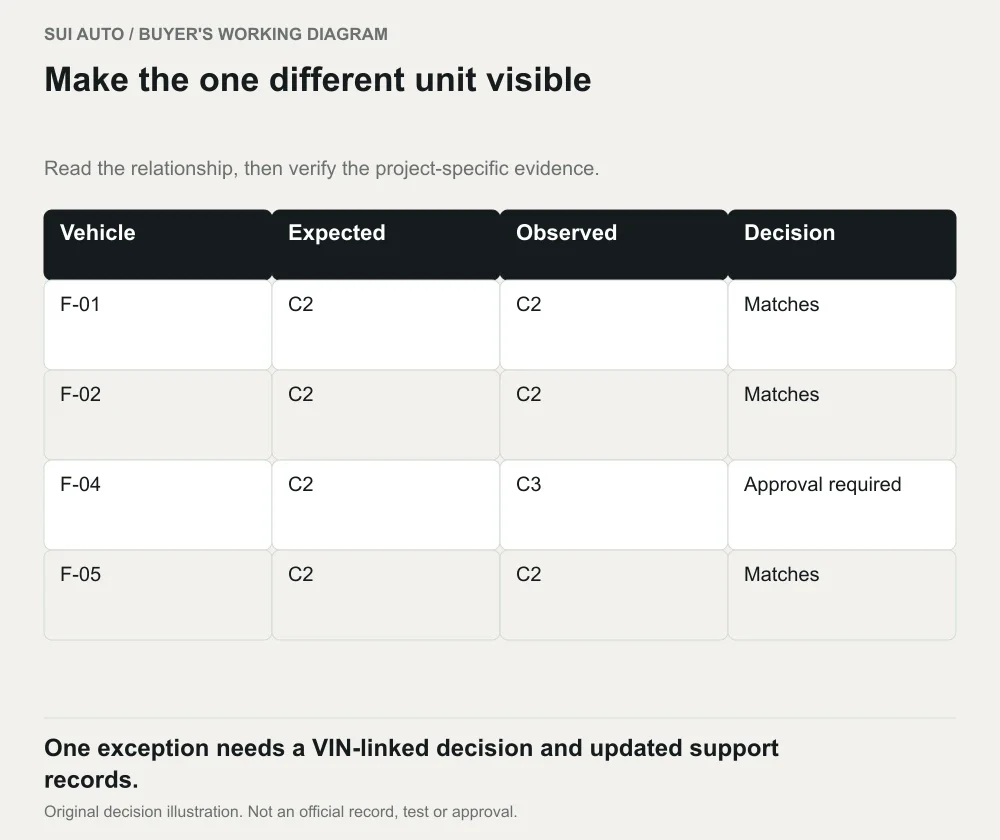
Illustrative component identities only; no real fleet or compatibility result is represented.
Sample wisely and verify critical identities
An inspection provider may propose sampling for repeat checks, but the buyer should define which identity and configuration fields need a record for every vehicle. Sampling a dimensional check and recording all fitted controller models are different activities. Agree the coverage and its limitations with the technical reviewer. Where a difference appears, decide whether to expand the review to other vehicles or production periods. The report should state the vehicles actually checked. Avoid turning a satisfactory result on one truck into an unsupported statement that every unit is identical.
Close the batch with an exception register
Reconcile each vehicle's as-built data with the approved master configuration and accepted variations. Link serial numbers to manuals, software or settings records where relevant. Maintain one list of unresolved differences and one list of accepted exceptions. Give the receiving workshop a readable summary showing what is common and what differs. This helps the buyer order service parts and train operators without searching through individual quotation files. Preserve the batch register when a component is replaced before dispatch so the final record still describes the supplied fleet.
Are different serial numbers a consistency problem?
Serial numbers identify individual units and will normally differ. The relevant question is whether model, revision, configuration and required performance match the accepted specification. A different serial number can be entirely expected; an undocumented model change may need review. Ask the supplier to explain the identification structure for important assemblies. This prevents the buyer from treating normal production identity as a defect while missing the technical differences that affect maintenance or operation.
Can different chassis production batches be accepted?
Review the actual configuration and documentation against the order. Manufacturing date or batch alone does not resolve compatibility, destination suitability or equipment interfaces. Ask whether changes affect the selected powertrain, integration provisions or service information. Keep the analysis specific to the proposed chassis. The designated technical and import parties should assess relevant differences. Record any accepted variation by VIN so later teams know which vehicle the decision covers.
What if only one truck in the batch has a different component?
Identify the component by model, revision and serial number, then find the approval covering that particular vehicle. Ask whether the difference changes operation, software, interfaces, service parts or manuals. If approval is missing, raise a configuration discrepancy and obtain the designated reviewer’s decision before treating the unit as equivalent. A single exception can be manageable when it is accepted and documented. Update the batch matrix and workshop information so parts staff can identify the affected VIN. Also check whether the same unrecorded substitution occurred elsewhere in the order.
References and further reading
Planning a purchase? Follow the overseas buyer guide for specification, payment, shipping and import preparation.