The receiving site comes first
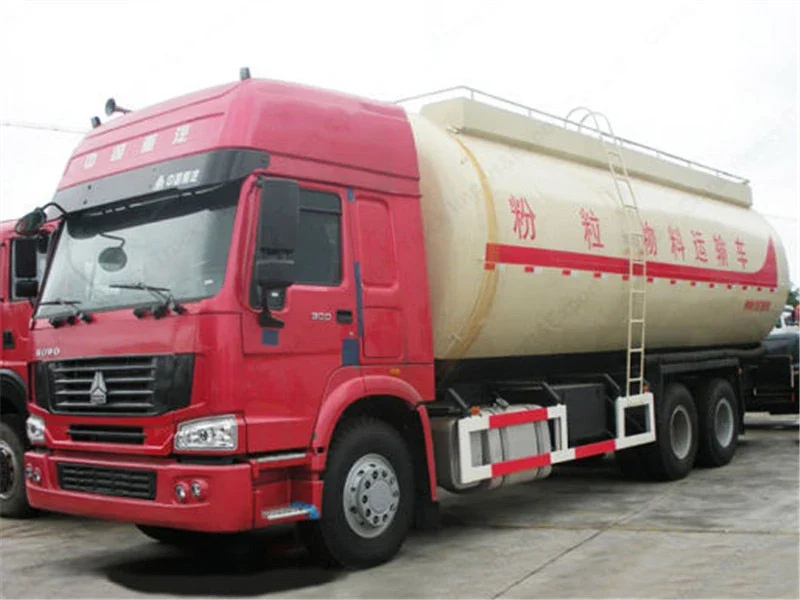
A bulk cement truck should be specified with the receiving facility, material and unloading interface in mind. Tank volume alone cannot show whether a proposed vehicle can connect to the site or deliver the intended powder within the manufacturer's approved conditions. The catalog includes a HOWO bulk cement reference, with manufacturer photographs available through the associated product. Treat that listing as a starting point, then obtain the actual tanker, compressor and transfer documentation. This guide concerns procurement questions; it does not provide pressure settings, unloading instructions or a method for clearing obstructed equipment.
An explicit hypothetical case
Assume a cement distributor plans recurring deliveries to several batching plants with different receiving arrangements. The buyer knows the material supplied but has not yet collected the plants' connection and access details. In this example, a tanker ordered only around volume could arrive with an unsuitable interface or insufficient supporting documentation. The distributor should obtain information from each receiving site's responsible technical contact. Include the expected operating environment, connection identification and any site restrictions. Where information is missing, mark the site as unverified instead of assuming that common looking couplings make facilities interchangeable.
Separate volume from lawful payload
The proposed material's properties, tanker weight, compressor installation and destination road limits affect the load that can be carried. Request an installed weight statement and axle assessment for the exact chassis and body. A volume designation in a product name is not a legal mass allowance or an invitation to use the tank fully with every powder. Confirm the materials the manufacturer permits and any conditions attached to them. Keep estimates traceable to their inputs, and have the relevant professionals validate them. Do not fill a missing material density or permitted limit with a convenient generic value.
Specify the transfer interface
Ask the vehicle supplier and receiving facility to review connection type, hose identification, compatible fittings and the intended transfer arrangement. Request the compressor's identification, approved operating information and documented interface requirements. Ensure any accessories are included or assigned to a named provider. Similar appearance does not prove pressure suitability, material compatibility or correct sealing. The written scope should state who verifies the combined system. It should also describe how the receiving facility confirms readiness through its established process, without asking the driver to make engineering decisions about a silo or improvise an adapter at arrival.
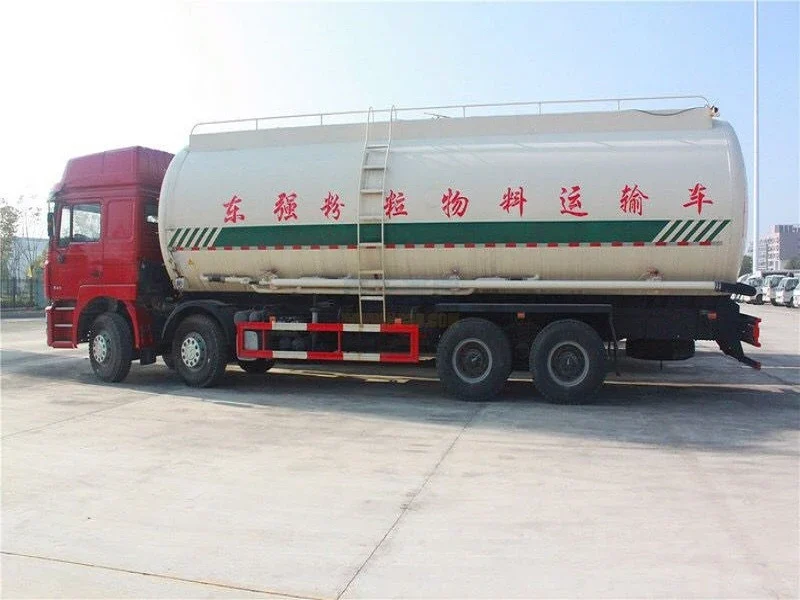
Manufacturer reference photograph. The bulk-cement tank, rear outlet region and chassis layout provide an orientation reference for a dimensioned unloading-interface drawing.
Create a site-by-site connection register. For each receiving facility, place the supplier outlet and hose information beside the facility inlet and restrictions, then record the competent reviewer and conclusion. Treat a missing facility record as an unverified destination, even when another plant accepted a visually similar connection.
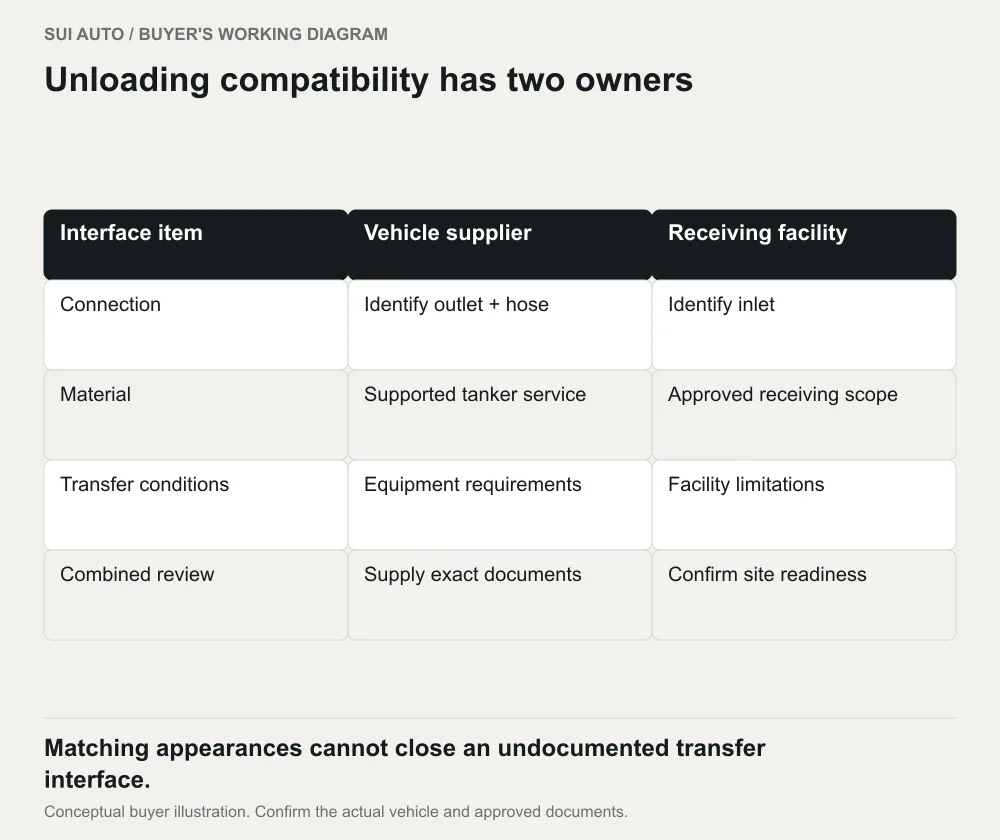
Conceptual illustration. Dry bulk unloading interface assigns truck and receiving facility evidence separately. Matching appearances cannot close an undocumented transfer interface.
Pressure and dust require specialist planning
Request manufacturer safety documents and maintenance requirements for the pressure related equipment, along with the receiving site's relevant information. Cement dust exposure and storage hazards need an assessment by the responsible employer. OSHA 1926.702 is a United States construction reference that includes bulk cement storage and hazardous energy considerations; it is not a general international tanker certification. Local pressure equipment and workplace requirements must be checked separately. Do not enter tanks or storage equipment, bypass protective devices or use this article to select a pressure. Those matters belong to approved procedures and qualified personnel.
Make the parts enquiry specific
Ask for a parts list tied to tanker and compressor identification, covering manufacturer specified service items, hose assemblies, compatible seals and other approved wear parts. Specify which documentation accompanies a replacement and whether specialist installation or testing is required. Check local support for both chassis and body equipment. A spare package should address plausible support needs, not become a collection of unverified generic fittings. Record suppliers, part numbers and revision information in a vehicle file. When different plants use different arrangements, maintain a verified compatibility record rather than expecting the driver to remember which hose appears to fit.
Acceptance and handover questions
Check identification, installed equipment, accessory inventory and agreed documents against the purchase schedule. Have any functional demonstration conducted by authorized specialists under an approved plan and record the conditions. Clarify transport, handover, training and future inspection responsibilities. Ask how a missing document, unsupported connection or equipment discrepancy will be resolved before use. A buyer can arrange an interface review with a representative receiving site without claiming universal compatibility. Preserve the final drawings and approved equipment list so later procurement of hoses or compressor parts uses the delivered configuration rather than an outdated advertisement.
Frequently asked questions
Can the same tanker carry any dry powder? Do not assume this; material suitability and cleaning or contamination implications require manufacturer confirmation. Does a larger compressor automatically improve deliveries? The whole transfer system and receiving facility must be assessed, so a component size alone is not an answer. Can a supplier confirm compatibility from a phone photograph? A photograph can help identify questions, but the technical review needs reliable equipment information. Request written conclusions and supporting documents before treating a connection as approved for the intended service.
References and related reading
Planning a purchase? Follow the overseas buyer guide for specification, payment, shipping and import preparation.