Map support responsibilities before there is a fault
An imported special-purpose truck combines a chassis, a working body and equipment that may come from different organizations. Ask who provides support for each part and who coordinates an issue that crosses those boundaries. Do not assume one warranty statement covers every component or all repair costs. Request the actual terms for your proposed build, including exclusions, start date, claim process and the destination support arrangements. SUI AUTO can coordinate discussions, but the responsibilities and coverage still need confirmation with the supplying parties. A clear handover file is more useful than a broad promise that service will always be available.
Identify what your local workshop can maintain
Discuss the proposed engine, transmission, hydraulic equipment, electrical controls and specialist body functions with your maintenance provider. Ask which diagnostic tools, manuals and replacement parts it can use. A familiar chassis badge does not prove that the exact engine or control system is locally supported. Check the component identities rather than the appearance of the truck. If a service task requires a manufacturer's technician or specialized equipment, include that limitation in the purchase evaluation. Local workshop capability may influence the configuration you choose even when another proposal has a lower purchase price.
Make remote diagnosis possible without improvising repairs
Request manuals, wiring or hydraulic information appropriate to the supplied configuration, fault reporting instructions and a parts-identification method. A useful report can include the vehicle identifier, component model, symptom, operating conditions, safe photographs and any recorded fault messages. It should also describe what changed before the problem appeared. Do not treat remote messages as authorization to bypass guards, work under unsupported equipment or open pressurized systems. Qualified personnel should follow the manufacturer's approved procedures. The goal is to supply accurate information to the support provider, not to turn a purchasing guide into a hazardous repair tutorial.
Separate coverage from logistics
Ask who pays for a replacement part, international freight, customs charges, local labor, travel and any required inspection. Confirm whether a failed part must be returned and how the supplier identifies it. The availability of a warranty does not mean an urgent component can arrive immediately. Obtain an explanation of the normal parts-ordering route and any stock information that can be verified for your build. If downtime is critical, discuss an initial service kit separately from warranty coverage. Do not assume that consumables, wear items or damage caused by use are covered without reading the actual terms.
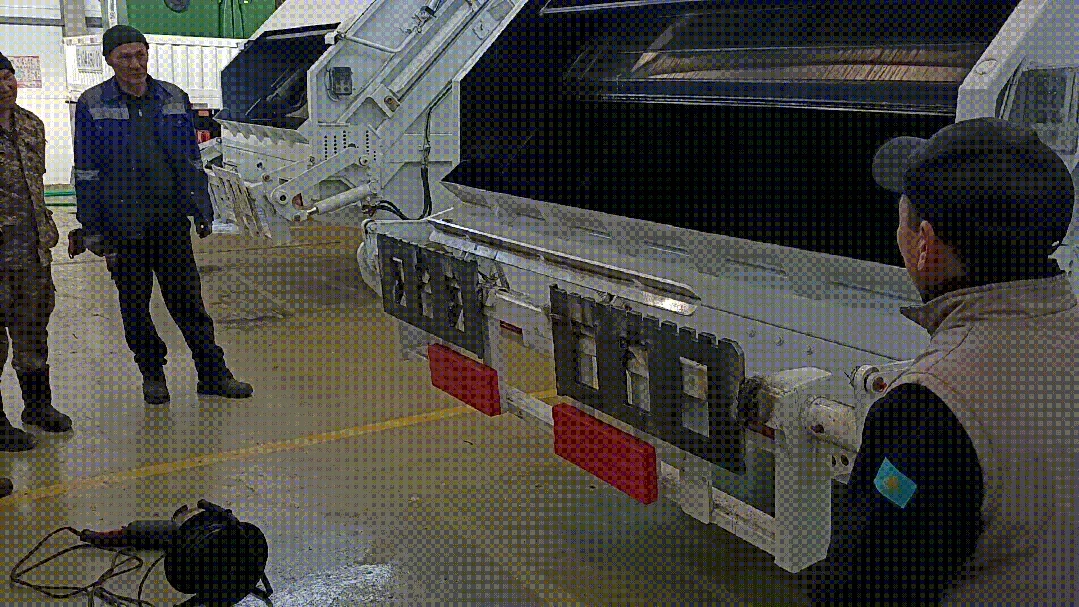
Kaili's published overseas-service report shows technicians at a vehicle, making the distinction between remote diagnosis and physical access clear. Its service visit does not establish warranty coverage or a service network for a SUI AUTO purchase.
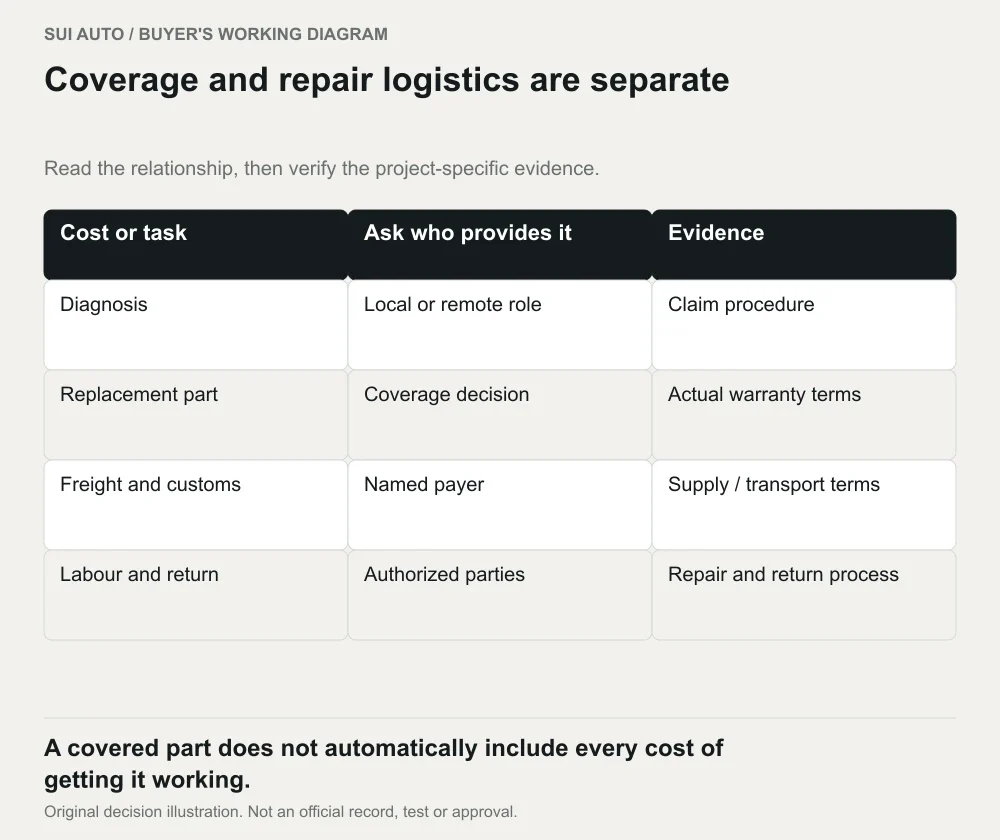
Buyer illustration: questions to resolve in the actual support agreement; no coverage or response time is promised.
A support handover for a remote fleet
Imagine a fleet located far from the supplying factory. Its handover file assigns a chassis contact, body contact and coordinator, and identifies the local workshop. It contains vehicle-specific manuals, a component list, service intervals from the manufacturers and a small agreed parts kit. When a control fault appears, the workshop submits the identifier and fault evidence instead of ordering a visually similar replacement. This is an illustrative arrangement. Its value is a shorter path to an informed decision; it does not establish a guaranteed response time or repair outcome for any SUI AUTO customer.
Questions to resolve in the support annex
Ask when coverage begins, whether geographic limitations apply, how claims are submitted, what evidence is required and who authorizes repairs. Define the escalation contact if different suppliers disagree about responsibility. Confirm the language and format of operating information and who will train operators. State whether any proposed response time is an agreed service commitment or simply an expectation. Keep this annex with the accepted component list, since changing an equipment model can change the support route. Review outstanding service questions before payment approval rather than leaving them for your receiving team to discover.
Is chassis warranty the same as body warranty?
Usually the responsibilities must be checked separately. Ask for the actual terms and contacts for the exact chassis, body and mounted equipment. A manufacturer name on one component does not automatically establish coverage for another or for local installation work.
Should I buy spare parts even when a warranty exists?
Consider the operational consequence of waiting for a part and the availability of routine service items locally. An initial kit can support planned maintenance, but it should be based on the actual component list and approved service instructions. Avoid buying unverified substitutes merely because their dimensions look similar.
References and related reading
Planning a purchase? Follow the overseas buyer guide for specification, payment, shipping and import preparation.