A pilot is useful when it answers an expensive uncertainty
A pilot purchase can help when your team has not operated the proposed body, route or powertrain combination. It should test a defined question rather than simply delay the main order. Examples include bin compatibility, depot access, refill logistics, charging readiness or local service capability. A pilot is less useful if the main uncertainty is a document approval that can be resolved before buying. Compare the pilot's cost and timing with the risk of repeating a configuration mistake across the fleet. The decision should follow your project constraints, not an assumption that every bulk purchase requires a sample vehicle.
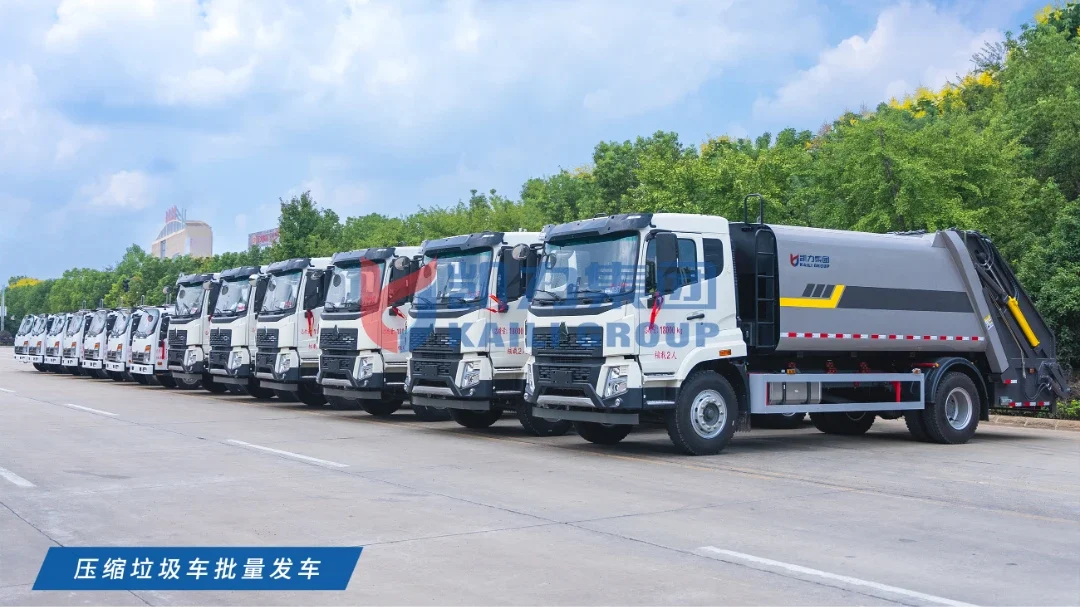
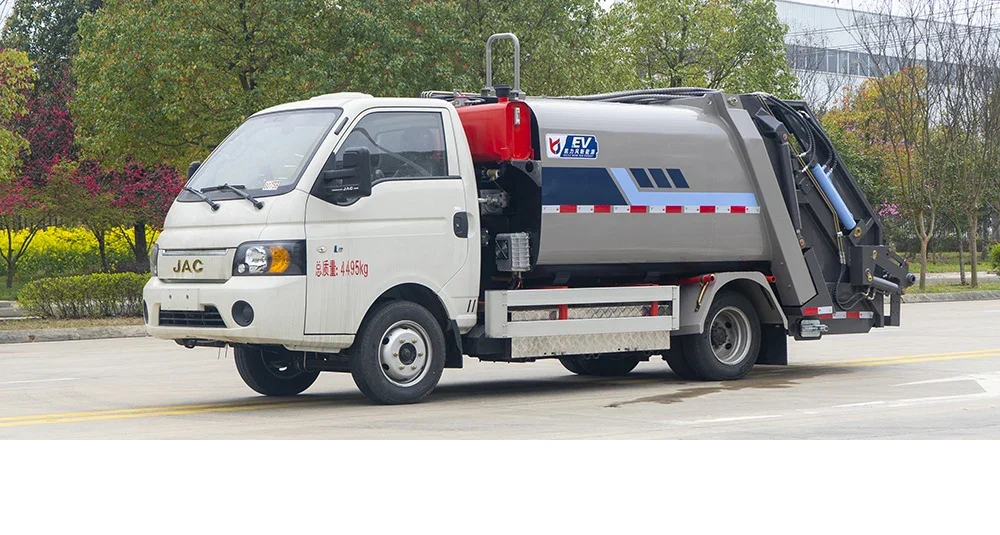
A manufacturer's batch of compactor trucks shows why one route-level pilot can matter before repetition at fleet scale. This Kaili photograph is a batch reference, not evidence of a completed pilot evaluation.
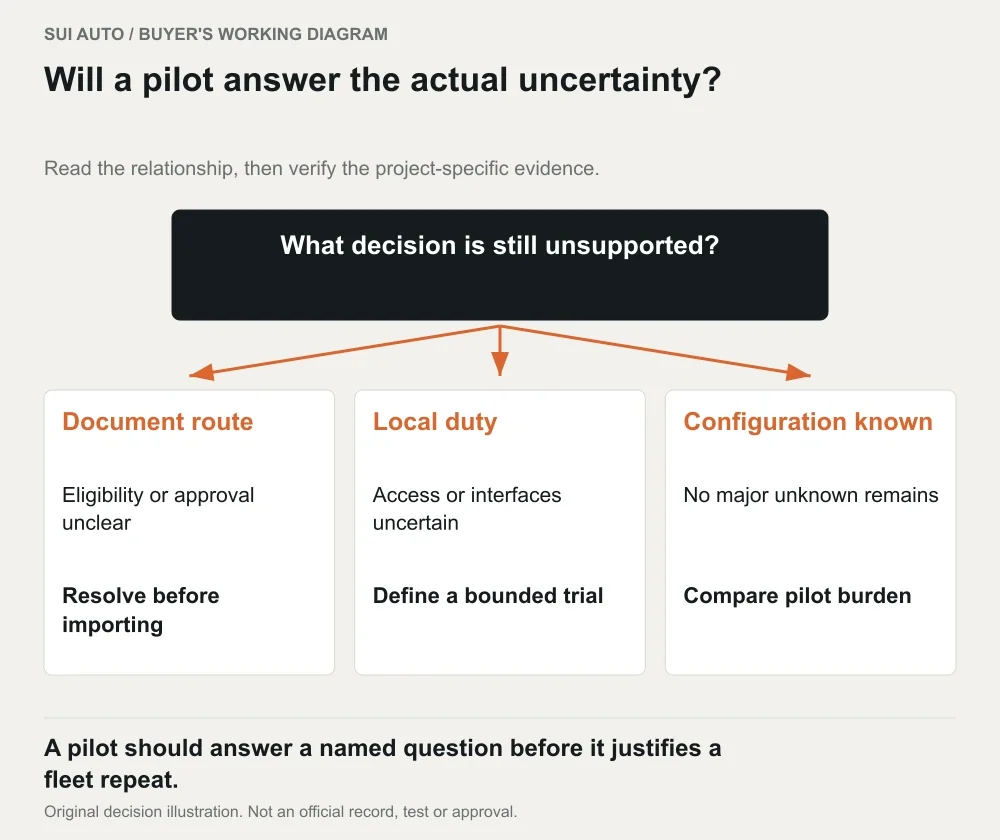
Buyer illustration: original pilot-planning decision tree; no operational or import approval is implied.
Define the evaluation before selecting the pilot
Choose a representative route, operators and operating period. Record normal and peak workload separately, and identify the interface checks that must pass. Have the manufacturer and local specialists establish any safe functional assessment needed for the vehicle. Decide which observations will lead to acceptance, a configuration revision or rejection. A vague statement that operators like the truck is not enough to authorize repeated purchases. The evaluation should produce measured route information, a list of compatibility findings and a record of service needs that can be compared with the original proposal.
Do not confuse pilot suitability with destination approval
A vehicle can perform a job well and still lack the approvals required for its intended public-road use. Confirm the destination path before importing even a single pilot. Separately review operating permissions, operator training and site conditions with appropriate local parties. For an electric compactor, include charging infrastructure and the intended work cycle; a short demonstration at a factory does not prove a full local route. For a conventional truck, review the exact engine and body support route. A successful pilot supplies evidence for a defined duty, not unrestricted approval for every configuration or region.
An illustrative municipal-fleet decision
Imagine a municipality considering several compactors for routes with different access constraints. It selects one representative route containing the narrowest agreed access and the normal bin types. The pilot record tracks access, collection interfaces, trips to disposal, operator observations and maintenance needs. If a mismatch appears, the buyer revises the technical annex before reviewing the larger order. This is a hypothetical planning example, not a claim about a delivered fleet or a promised productivity result. The useful outcome is a traceable configuration decision, including the conditions under which the selected vehicle was assessed.
Standardize what genuinely helps service
After reviewing the pilot, identify the components that can be shared across the proposed fleet: common interfaces, verified service parts, operating controls or documentation formats. Standardization can simplify stores and training, but only where the components and duties truly match. A uniform tank size or wheelbase may be unsuitable for every route. Keep justified exceptions in the fleet plan. Ask suppliers to state where a variant changes the spare-parts list or operating information. Do not force apparent consistency at the expense of access, loading or maintenance requirements.
Structure the next order around lessons learned
Create an accepted revision incorporating the findings and list any changes from the pilot. Obtain a new price and timing response rather than assuming the first vehicle's terms apply unchanged. Agree how the repeated units will be inspected and how identity and configuration consistency will be recorded. Confirm that the chassis and component references remain available before relying on the pilot's findings. If the supplier proposes a substitute, review whether it affects the conclusions. Keep the evaluation report with the fleet specification so future procurement staff understand why a particular layout or interface was chosen.
Will a pilot always save money?
No. It can add freight, inspection and project time, and a small order may have different commercial terms. Its value depends on the uncertainty it resolves and the consequence of repeating a mistake. Make that uncertainty explicit before committing to the pilot.
Can a factory demonstration replace a pilot?
It may resolve some equipment questions, but it may not reproduce your route, weather, depot interfaces or service conditions. Identify what the demonstration actually proves and what still needs local evidence. You can combine document review, factory inspection and a narrowly scoped pilot rather than treating any one method as complete assurance.
References and related reading
Planning a purchase? Follow the overseas buyer guide for specification, payment, shipping and import preparation.