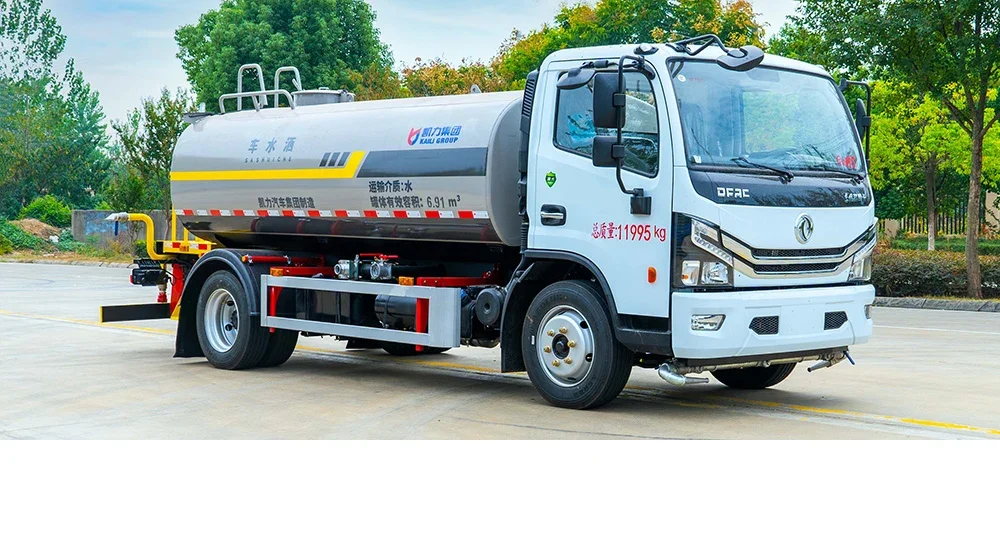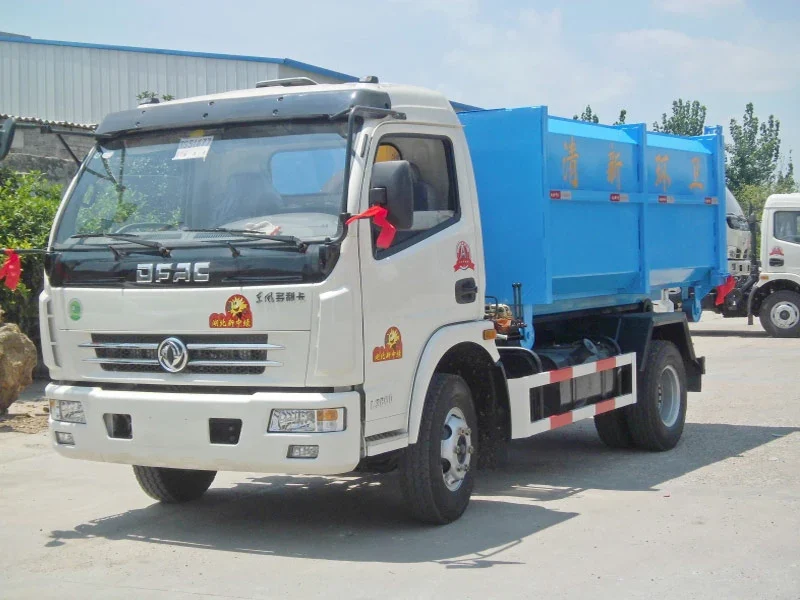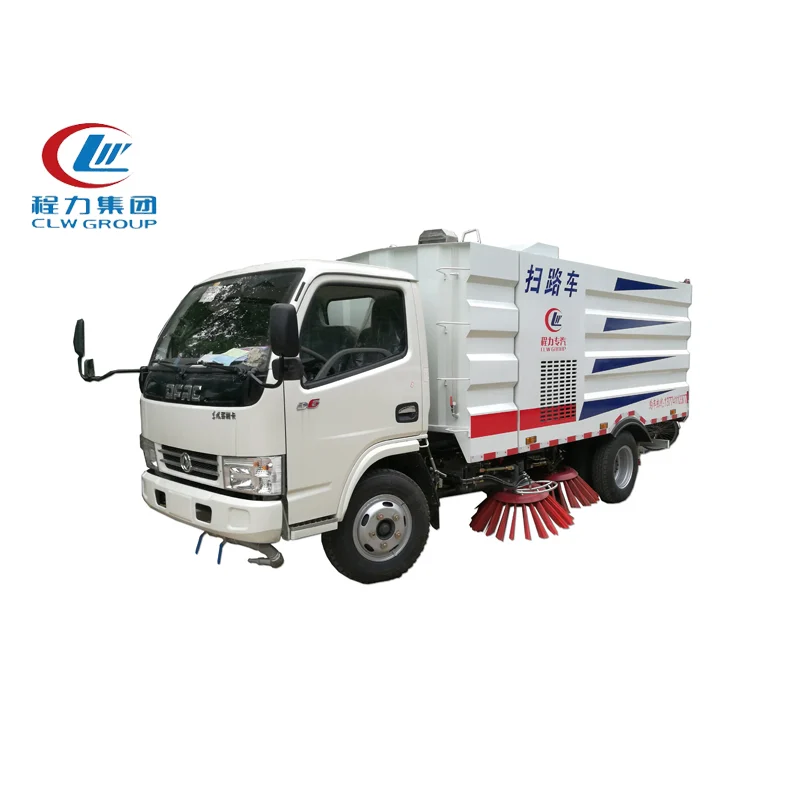
Compare service tasks on the completed vehicle
Choose a chassis-body proposal that allows the required maintenance tasks to be performed through a documented, practical procedure. Cab tilt, filter removal, battery access and component replacement can change after a special body is fitted. A bare chassis demonstration does not establish serviceability of the delivered truck.
Ask the fleet's maintenance team to review the finished layout before production. Their contribution should be specific: which task is performed, what clearance is needed, which tool is used and what equipment must be moved. This gives the supplier a requirement it can demonstrate instead of a general request for easy maintenance.
Divide access into three levels
Daily inspection: fluid checks, visible leaks, drains and routine condition checks should follow the installed equipment's instructions.
Scheduled service: filters, lubrication points, belts and other service items need the access required by the actual maintenance schedule.
Major repair: cab tilt, removal paths and lifting access may be needed for larger components. Ask which body parts or accessories must be removed and how that procedure is documented.
These levels have different space and equipment needs. A hatch that permits a visual check may not permit filter replacement. A cab that tilts partially may not provide the clearance required for a major repair. Review the actual task rather than simply counting access panels.
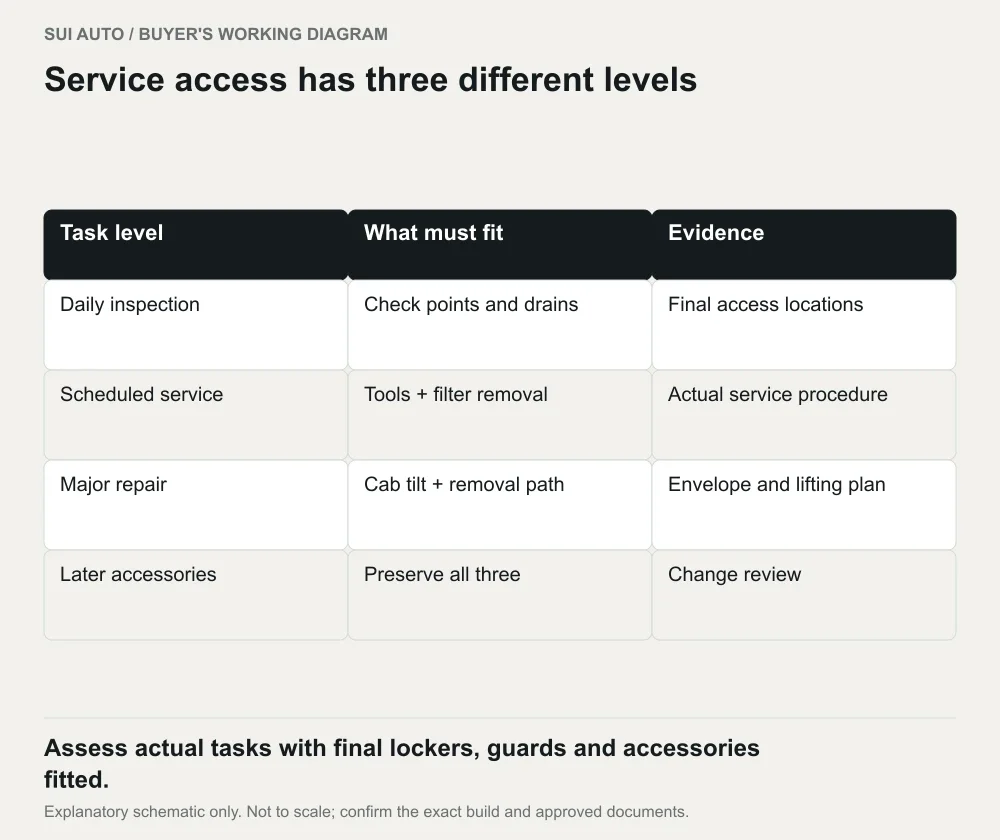
Assess actual tasks with final lockers, guards and accessories fitted. Explanatory schematic.
Compare proposals through a service-task matrix
Give each vehicle proposal a column and list the key tasks in rows. Record the access method, required tool, expected preparation and any body component that must be removed. Use the manufacturer's procedure to identify the task; do not invent a shorter method to make a comparison look favourable.
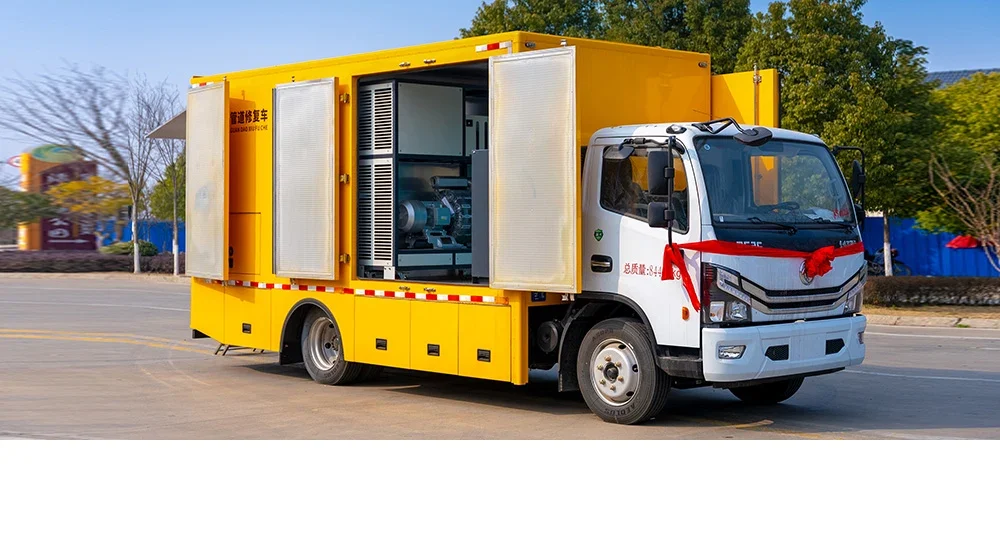
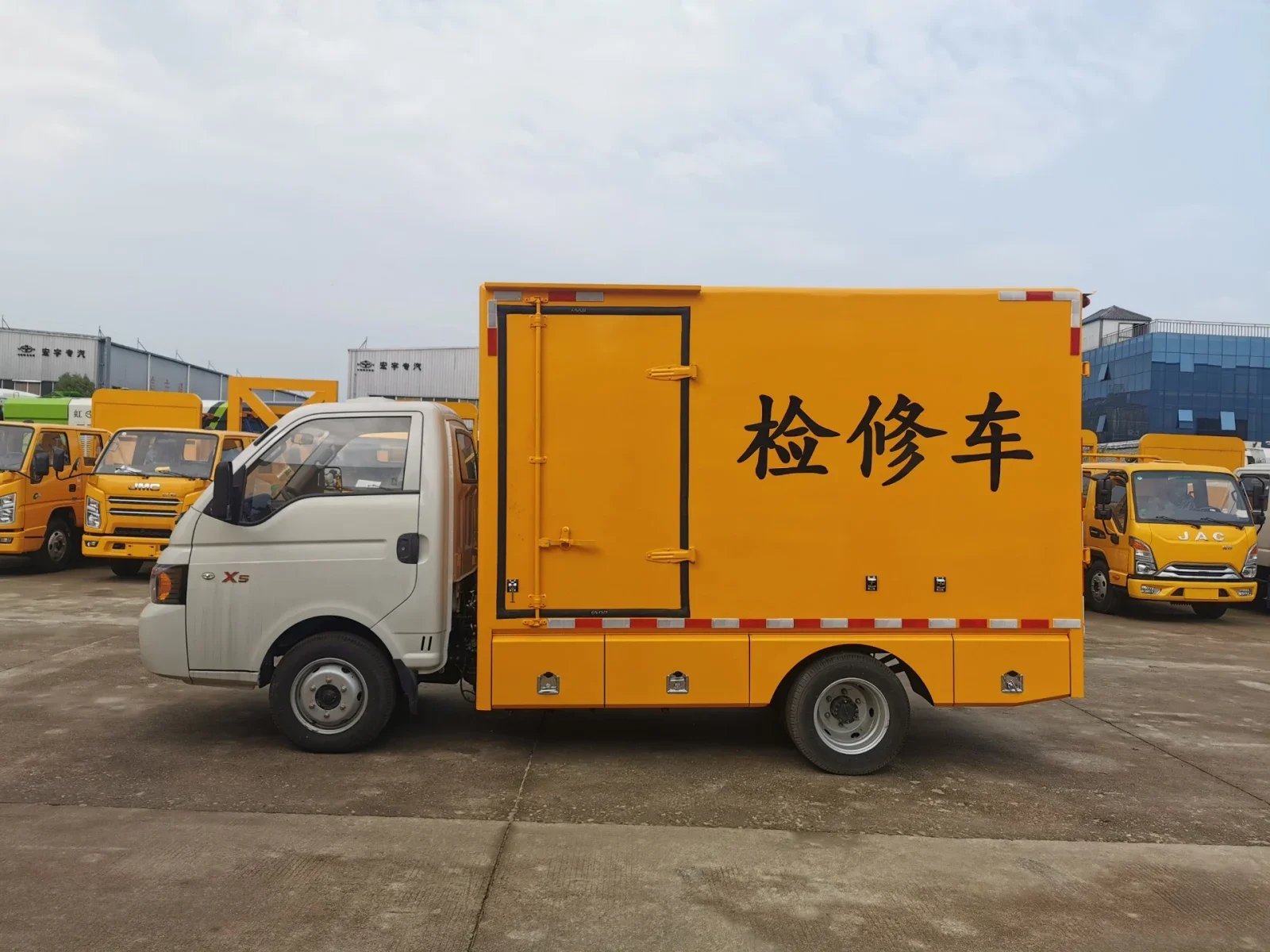
Manufacturer reference photograph. The open side equipment compartment of the pipeline-repair truck demonstrates the access area to review against actual service tasks.
Include separate chassis and body equipment. A workshop may understand the engine but still lack information for a pump, fan, hydraulic control or electric body drive. Identify component models and support contacts for both sides of the installation.
Where the fleet has limited lifting or diagnostic equipment, tell the supplier early. The maintenance plan should reflect actual workshop capability or identify the external service arrangement needed.
A hypothetical cab-tilt conflict
Assume a buyer adds a front body locker and an overhead equipment rack after approving a chassis. The new arrangement interferes with the cab's normal tilt path. These are hypothetical changes, but they illustrate a common packaging question.
Ask the builder to demonstrate the required clearance in the final drawing and finished vehicle. If an accessory must be removed, obtain a documented procedure, the necessary lifting arrangements and an assessment of how that affects maintenance. A verbal promise that mechanics can work around it is inadequate.
The same approach applies to side tanks, batteries and rear-mounted equipment. Check removal paths as well as visible access. A component can be reachable by hand while still impossible to withdraw through the available opening.
Parts identification can save more time than a familiar badge
Record the exact engine, transmission, axle, brake and body-equipment models. Add serial numbers or installed part references where the manufacturer uses them. Keep a copy of the final equipment schedule with the vehicle's service documents.
A local mechanic's familiarity with a brand is valuable only when it covers the actual configuration and diagnostics. Ask the workshop to review the proposed list before purchase. Identify fluids, consumables and tools that require advance ordering.
For a mixed fleet, shared stock should be based on confirmed part compatibility. Similar appearance or the same broad engine family does not establish interchangeability. Keep chassis and body parts traceable so a replacement request reaches the right supplier with enough information.
RFQ and acceptance checklist
Send the workshop's service capability, access equipment and normal maintenance approach. Ask for final-layout drawings, cab-tilt and component-removal envelopes, maintenance schedules and installed parts information. Identify the key tasks that must be demonstrated before handover.
At acceptance, carry out the agreed access review with competent personnel and the final guards, lockers and accessories fitted. Confirm that manuals match the delivered equipment. Photograph service points and retain the task matrix with the vehicle identity and drawing revision.
Record unresolved serviceability issues as acceptance items. An attractive body layout should not hide a maintenance task that cannot be performed through the agreed procedure. Later body modifications should be checked against this access record.
Keep access evidence through the vehicle life
Store the acceptance photographs, task matrix and final equipment list where the maintenance team can retrieve them. When a repair requires removing body equipment, record the approved procedure and any replacement components. Review later accessories against cab-tilt and removal envelopes before fitting them. A serviceable truck can become difficult to maintain through a series of individually small changes. Maintaining the access record gives the fleet a practical way to protect the original service plan without redesigning the vehicle at every workshop visit.
Is a larger access door enough to prove easy maintenance?
Only if it permits the required inspection, tool use and component-removal procedure. Demonstrate the actual tasks.
Can the fleet use one generic manual for similar trucks?
Keep manuals and service information tied to each installed configuration. Similar-looking vehicles can contain different equipment or controls.
Should maintenance staff review a vehicle before ordering?
Yes. Their task-level knowledge can expose access, parts and diagnostic gaps while the design can still be changed through the proper review process.
References and further reading
- Isuzu official body builder guide access
- Daimler Truck official commercial-vehicle body builder information
- Hongyu JAC X5 Maintenance Truck manufacturer reference
- Hongyu XCMG Hanchi Mobile Workshop manufacturer reference
- Kaili Dongfeng Compact Washing Sweeper manufacturer reference
- Hongyu JAC X5 Maintenance Truck
- Hongyu XCMG Hanchi Mobile Workshop
- Kaili Dongfeng Compact Washing Sweeper
- Overseas buyer guide
Planning a purchase? Follow the overseas buyer guide for specification, payment, shipping and import preparation.