Answer before comparing pump sizes
Select the pump against its sustained duty envelope and the complete vehicle cooling arrangement. A maximum pressure or displacement figure does not show whether the body can repeat its work cycle through a hot shift. Ask the body builder to document pressure, flow, speed, fluid condition and temperature together, then agree a representative loaded-cycle acceptance test.
This review matters when a crane spends hours handling repeated deliveries or a hydraulic body works while the chassis is stationary. Driving airflow and a brief factory demonstration can produce different conditions. Your purchase specification should identify the longest uninterrupted work period and the real pauses between operations. Include the anticipated stationary work as a separate condition so the integrator cannot assume that road travel supplies cooling between every loaded movement.
Build a time-based duty sheet
Describe a normal cycle as separate functions: lifting, extending, slewing, returning and waiting. Record which functions may operate together and which are mutually exclusive. Provide the expected frequency and the longest difficult task. Give the supplier actual delivery records where available instead of describing the work as heavy duty.
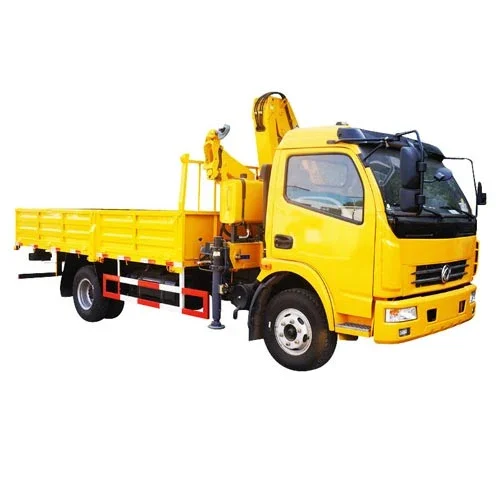
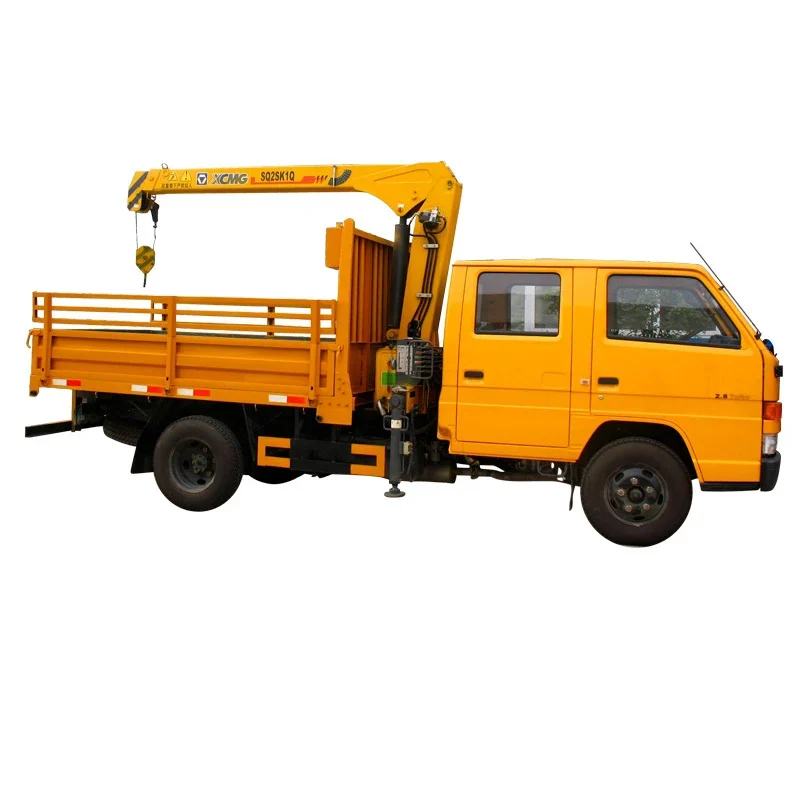
Manufacturer reference photograph. The folded crane behind the cab provides an orientation for the lift-and-slew functions in the duty sheet.
The body builder should translate that schedule into a hydraulic duty calculation. Buyers need the assumptions, component identities and conclusion rather than an unexplained pump upgrade. Ask whether quoted flow refers to theoretical displacement or useful delivered flow at the specified operating point. Confirm which engine speed produces it in the installed vehicle.
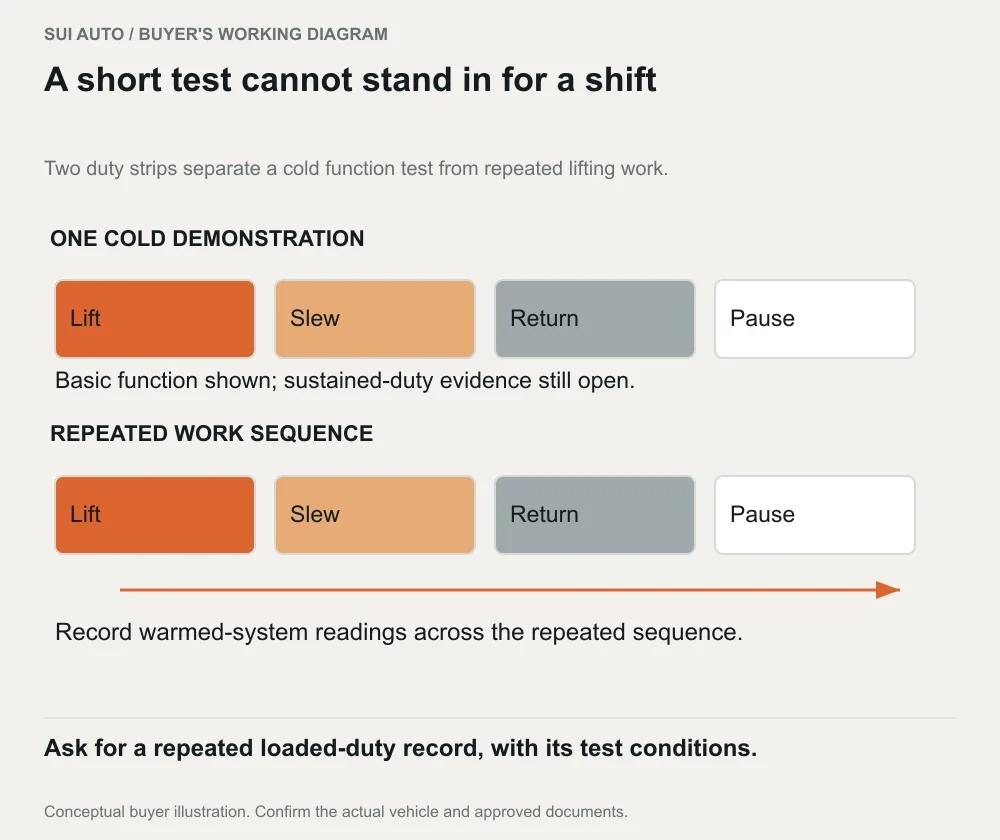
Conceptual illustration. Two duty strips separate a cold function test from repeated lifting work. Ask for a repeated loaded-duty record, with its test conditions.
Read continuous and peak limits separately
Parker's P1M information distinguishes continuous operating conditions from short-duration limits, including fluid-viscosity conditions. That is an example of why a single large catalogue number cannot define a complete application. Use the actual installed pump manufacturer's current data; P1M ratings do not transfer to another pump.
Put the continuous and intermittent limits in separate quotation columns. Ask the integrator to identify the intended operating point and any transient conditions. The pump, motor, valves, reservoir and cooler must be considered together. A component with a higher peak rating may leave the sustained thermal limitation elsewhere in the system.
Compare two offers on the same evidence
Offer A may include a larger pump without a cooling calculation. Offer B may specify a smaller pump with a matched cooler and an agreed cycle demonstration. Neither deserves an automatic preference. Compare how each supplier supports the required output after the system has warmed through the planned duty.
Request a circuit diagram showing where temperature and pressure are assessed, plus the component operating limits used in the design. Ask how the proposed system behaves during a pause and how alarms reach the operator. The supplier should define acceptable evidence and any automatic protective response. Do not ask a purchasing team to adjust relief settings to make a test pass.
A hypothetical repetitive-lift contract
Assume a distributor unloads similar packages throughout a shift, with short travel between customers. The first quotation was based on one lift followed by a long pause. The revised requirement includes a representative sequence of loaded movements and short waiting periods at the expected ambient condition.
The purchasing decision changes when the supplier documents the full sequence. A cooler option may matter more than headline lifting capacity, or the required duty may need a different hydraulic package. These are possible outcomes, not claims about either linked vehicle. The crane's load chart and stability approval remain separate requirements throughout the thermal assessment.
Put the acceptance conditions in writing
Include the agreed task sequence, load definition, environment, recording locations, instrument identification and supplier-approved duration. State who provides the load and conducts the demonstration. Require dated raw records and the final as-built component list. A short edited video can accompany the records but cannot replace them.
Have the supplier define pass criteria from the approved design. Record how deviations are investigated and who approves a retest. Confirm that the delivered cooler, reservoir, pump and controller match the tested configuration. A substituted component should trigger a documented review before shipment, even when the replacement looks equivalent.
Questions to include in your RFQ
Ask: What is the longest approved uninterrupted duty for this installed hydraulic package? Which ambient and oil conditions support that statement? What continuous pump speed and working pressure were used? Which component controls the thermal limit? What service access is required around the cooler and filters?
Also ask whether a locally available fluid grade is approved, which readings are accessible for maintenance and which replacement parts identify the exact pump variant. The resulting answers should connect to document numbers and installed components. Avoid accepting a general assurance that a familiar pump brand will work in every vehicle.
FAQ: Does a larger reservoir prove continuous-duty capability?
No. Reservoir size is one part of the thermal and fluid-management design. Request the integrator's complete duty assessment and evidence for the supplied cooling arrangement.
FAQ: Can a higher peak pressure compensate for low sustained output?
Peak capability and sustained output answer different questions. The supplier must show the required operating point within the installed system's approved continuous limits.
FAQ: Is a cold demonstration enough?
A cold demonstration can confirm basic function. It cannot establish warmed-system behavior over the agreed work sequence. Specify both functional checks and representative sustained-duty evidence.
References and further reading
Planning a purchase? Follow the overseas buyer guide for specification, payment, shipping and import preparation.