Use the route cycle to decide whether a fourth axle helps
Choose between 6×4 and 8×4 proposals by comparing permitted usable load and completed trips on your route. A fourth axle can help distribute load and package a larger body, but it also changes vehicle mass, manoeuvring and service requirements. The buying question is whether those changes improve the actual assignment.
Begin with two completed-vehicle proposals, not two bare chassis brochures. Each should include the selected body, permanently fitted equipment, normal crew and operating consumables. Ask the supplier to identify the steering and driven axles. The axle-layout label does not by itself establish the vehicle's legal mass or the capability of the installed body.
Establish what limits each trip
A special truck may run out of permitted mass before using all its body volume. Another may fill its tank or hopper while carrying material of relatively low density. Site access, pump duty or available working time can also limit a trip. Identify the actual constraint before assuming a larger body will improve productivity.
For combination sewer trucks, clean water and recovered waste change during the shift. A truck can start with water, use it during jetting and then collect waste. Ask the body builder to model these states rather than treating both maximum tank capacities as usable simultaneously. Load distribution at an intermediate stage can matter as much as the departure condition.
Compare three route situations
Open route with long disposal travel: evaluate usable material carried per completed cycle. Larger capacity can be valuable if it reduces a substantial travel component.
Restricted customer access: measure the turning and parking area. A truck that cannot reach the work position may need longer hoses, additional setup or another vehicle.
Mixed route with frequent short stops: compare positioning, loading and discharge time. A large truck's additional capacity may remain unused if operating time rather than storage is the limiting factor.
Keep each comparison tied to a specific proposal. Do not assign a generic cost or productivity advantage to every 6×4 or every 8×4 vehicle.
A hypothetical calculation without invented performance
Assume an operation must move 40 tonnes of suitable material per shift. Proposal A is demonstrated to carry 10 tonnes within its applicable limits; proposal B is demonstrated to carry 13 tonnes. These are illustrative planning values, not ratings for catalogue vehicles.
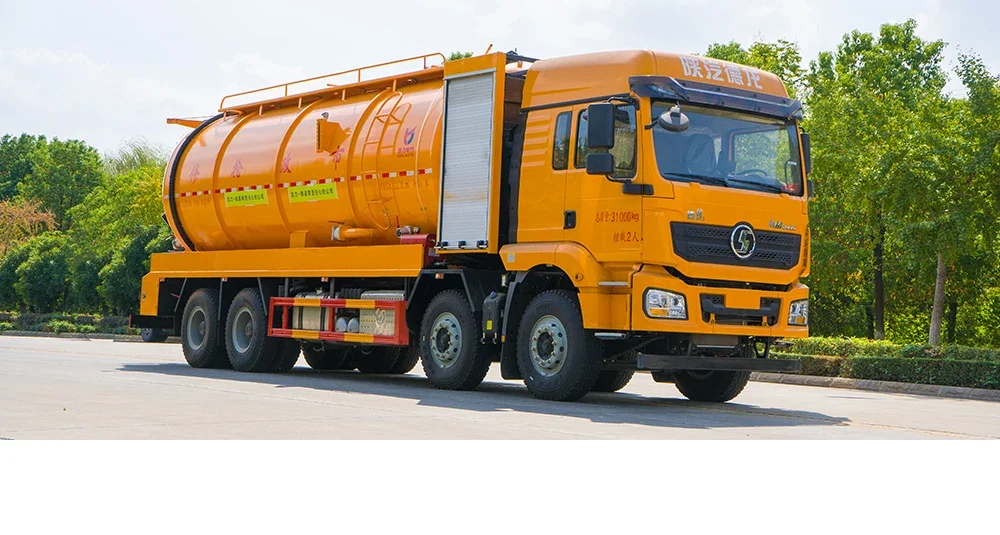
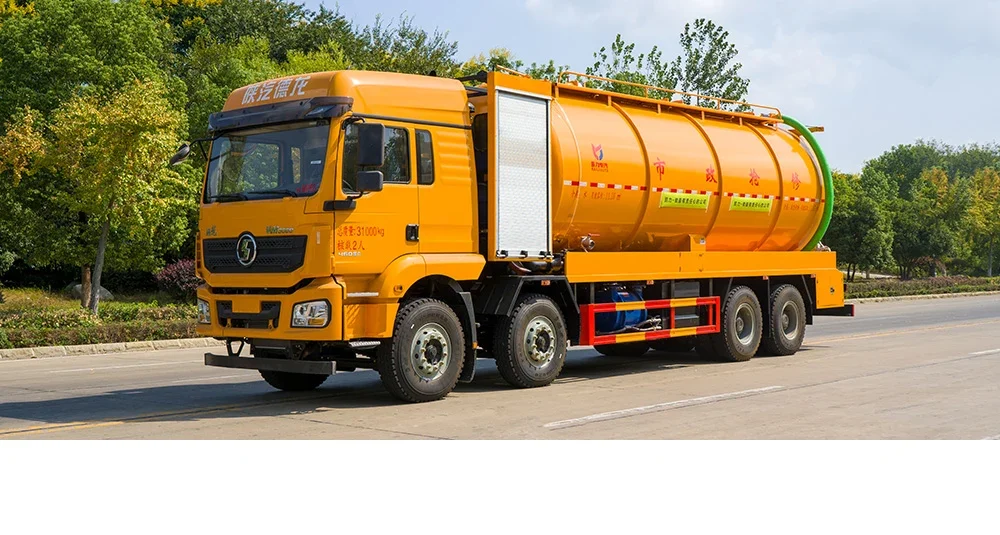
Manufacturer reference photograph. The four-axle combination truck makes overall length and tank packaging visible; route productivity still needs payload and cycle evidence.
Proposal A needs four loaded trips. Proposal B also needs four because three trips would move only 39 tonnes. That small capacity increase does not reduce trip count for this assignment. Change the daily demand or confirmed usable loads and the result may change. This is why comparing capacities as percentages can mislead a buyer.
Next add actual cycle times. If one vehicle takes longer to position or cannot use the shortest disposal route, include that difference. Keep travel, work, queue and cleaning times separate so the calculation can be updated when operations change.
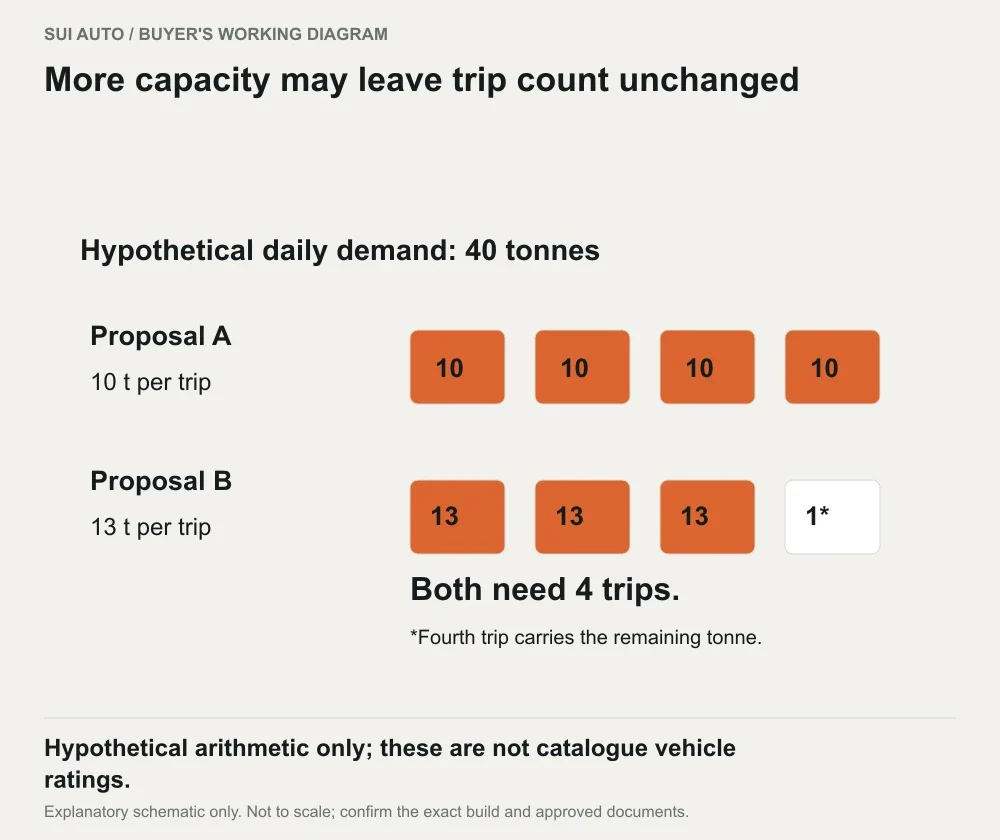
Hypothetical arithmetic only; these are not catalogue vehicle ratings. Explanatory schematic.
Understand what the reference vehicles contribute
The Kaili Tianlong combination vehicle KLF5250GQWD6 lists a 4350 + 1350 mm wheelbase. The Shacman Delong KLF5310GQWS6 lists 1800 + 4575 + 1400 mm. They provide real multi-axle reference points for discussing footprint and equipment packaging.
Their published water and waste tank maxima are different, but the catalogue does not establish a current permitted combined liquid load for your destination. Request completed weights, tank drawings and the exact build. Confirm the chassis code, drive layout and route suitability independently of the manufacturer's marketing name.
For an operator, the useful comparison file connects those identity details to measurable work: material handled, time consumed, fuel or energy used and maintenance resources required. Each observation should state its load and operating conditions.
RFQ and acceptance checklist
Send daily demand, material characteristics, route distances, work-site measurements and disposal constraints. Request usable loads for the relevant working states, axle calculations and a dimensioned swept-path proposal. Ask for tyres, brakes and driveline details for each alternative.
At acceptance, weigh the finished vehicles in the specified states and reconcile the equipment inventory. Witness the agreed manoeuvre and functional trial. Record differences from the quotation, including substituted tanks, pumps, storage or accessories. A capacity comparison remains valid only while the compared build and assumptions remain unchanged.
Test demand sensitivity before deciding
Repeat the trip calculation for a quieter day and a peak day using clearly labelled planning assumptions. Compare whether a larger vehicle changes trip count at either demand level. Also examine a delayed disposal cycle or an unavailable customer access point. The purpose is to understand which proposal remains useful as conditions vary. Avoid reporting a single estimated saving as a guaranteed annual result. A transparent worksheet lets the fleet replace assumptions with real operating records after commissioning and reassess future purchases.
Does an 8×4 always reduce the number of trips?
Only if the confirmed usable capacity crosses a meaningful threshold for the assignment and route access remains practical.
Should I compare tank volumes or payload?
Compare both. Tank volume limits space; permitted usable load limits mass. Material density and operating states connect them.
Can lower trip count justify a more complex chassis?
It can, but compare the complete operating plan, including access, service capability and downtime assumptions. Document the inputs instead of relying on an assumed payback period.
References and further reading
- Kaili Tianlong combination reference
- Kaili Delong combination reference
- Isuzu official body builder guide access
- Daimler Truck official commercial-vehicle body builder information
- CLW HOWO 8×4 Logging Truck manufacturer reference
- Kaili Dongfeng Tianlong Combination Sewer Truck
- Kaili Shacman Delong Combination Sewer Truck
- CLW HOWO 8×4 Logging Truck
- Overseas buyer guide
Planning a purchase? Follow the overseas buyer guide for specification, payment, shipping and import preparation.