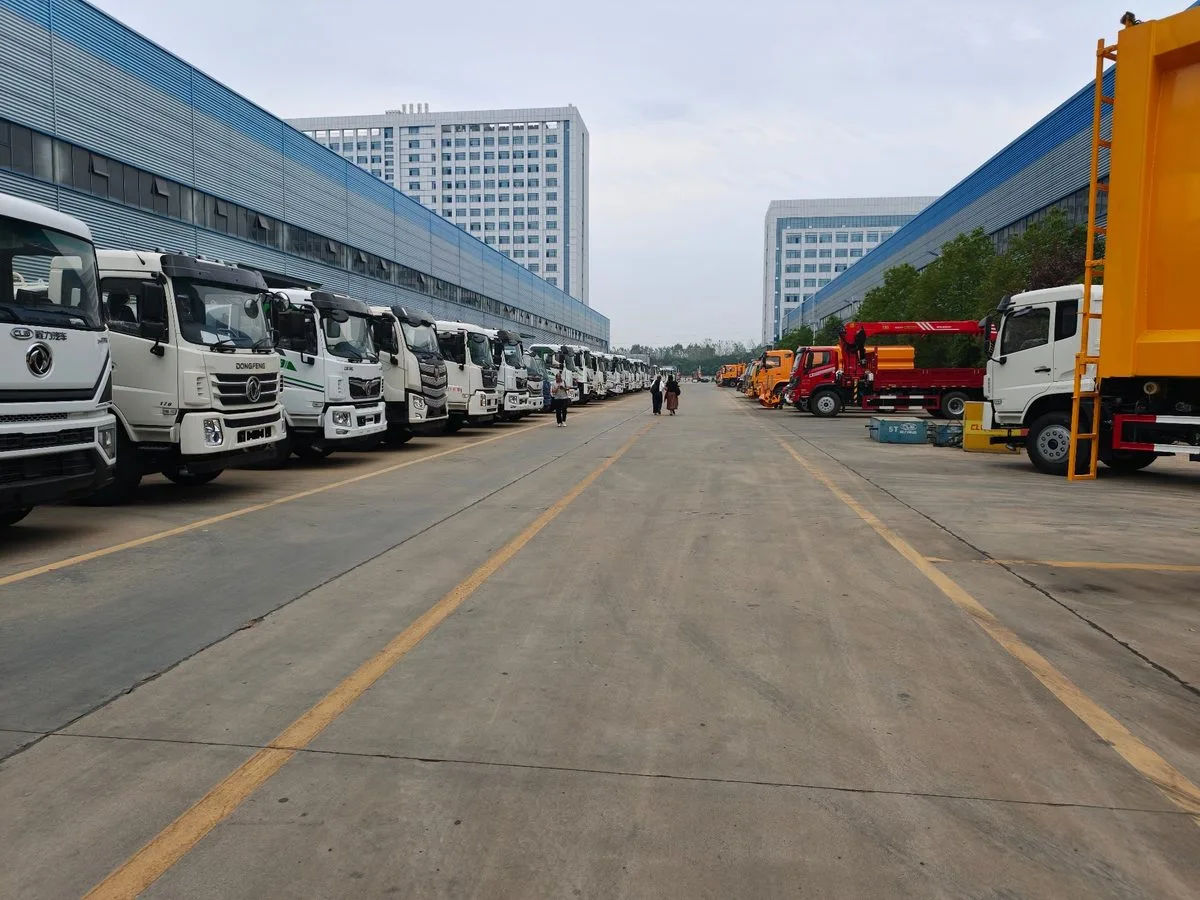
Start with the job the truck must complete
A useful custom truck RFQ describes the work before prescribing a model. Explain what the vehicle will carry or operate, where it will work, who will use it and what a successful shift looks like. Include the purchase destination and intended registration location. A supplier can then distinguish a genuine technical requirement from a preference. Asking only for the cheapest water truck, for example, does not tell the supplier whether you need road washing, dust suppression or water delivery. Those duties can require different outlets, equipment and operating evidence even when the vehicles have similar silhouettes.
Describe the route with measurements
Give the narrowest gate opening, the lowest overhead obstruction, typical gradients, road surface and available turning area. If exact measurements are unavailable, mark them as pending instead of guessing. Attach photographs of access points with a scale or a clearly measured reference. Describe the refilling, unloading or disposal locations as well as the outward route. Record any site axle, gross-weight or vehicle-length restriction as a requirement to be verified locally. The supplier needs these inputs to propose a chassis and layout; a brochure wheelbase alone cannot prove that a complete vehicle will enter your facility.
Define workload and operating conditions
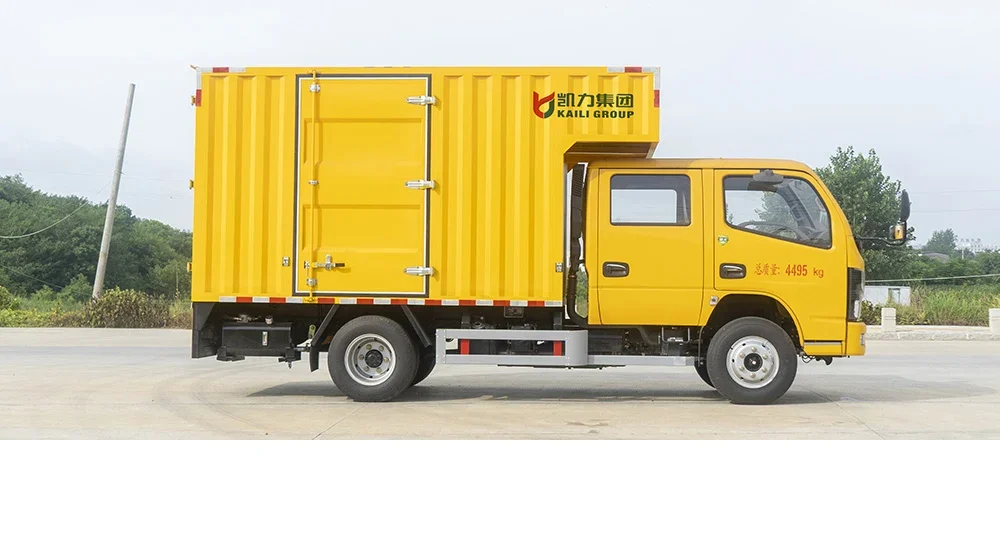
State the material, approximate daily quantity, typical trip length and expected shift pattern. For water or sewer equipment, describe the liquid and the intended collection or discharge task. For a mobile service vehicle, identify the tools that must run together and their power requirements. Separate normal work from occasional peak demand. Mention heat, cold, dust, salt exposure or long periods of stationary operation if relevant. Do not turn an estimate into a guaranteed workload: label the measurement period and explain how representative it is. This allows bidders to discuss tradeoffs openly instead of sizing everything from an unrealistic worst case.
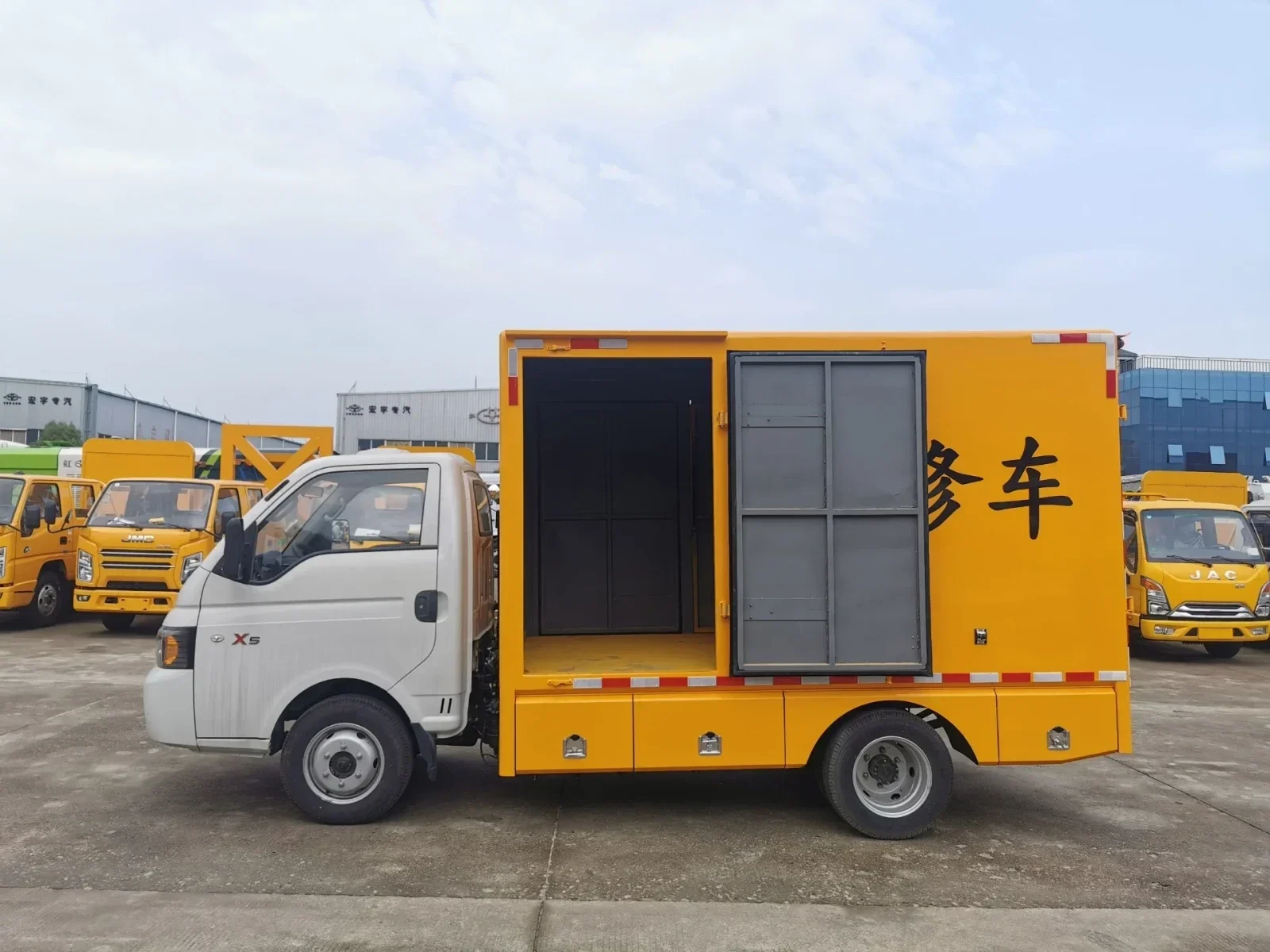
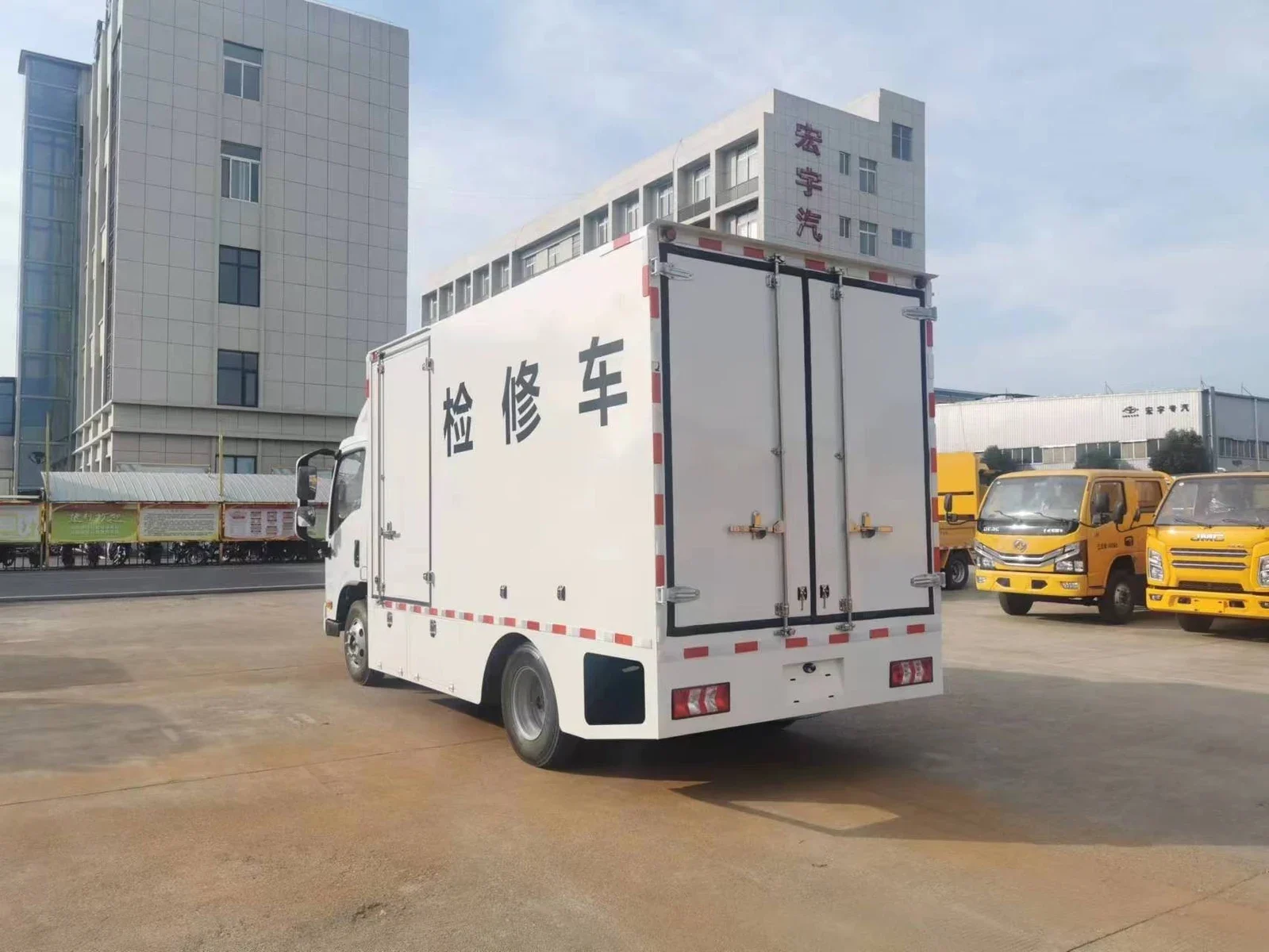
The large side opening on Hongyu's maintenance truck is a concrete access requirement for a field-service brief: tools, personnel and loading paths must fit the planned jobs. The photograph does not define the supplied tool inventory.
Sort requirements into mandatory and optional
List mandatory destination constraints and essential working functions first. Put preferred brands, paint, storage layout and convenience accessories in a second group. For each requested component, include the function it serves and any existing interface it must match. A particular hose connector may be essential because your depot already uses it; an equipment brand may merely be a preference. Ask the supplier to price options separately and identify any proposal that changes weight, axle distribution, electrical load or service access. This makes customization review manageable and prevents decorative preferences from hiding a missing operating requirement.
For example, record a depot hose coupling as mandatory when existing equipment requires that interface; record a preferred pump maker as optional unless a justified requirement makes it essential. If the gate width is unmeasured, mark it pending, name the person measuring it and prevent that blank from becoming an assumed clearance. Ask bidders to answer mandatory, optional and pending rows separately.
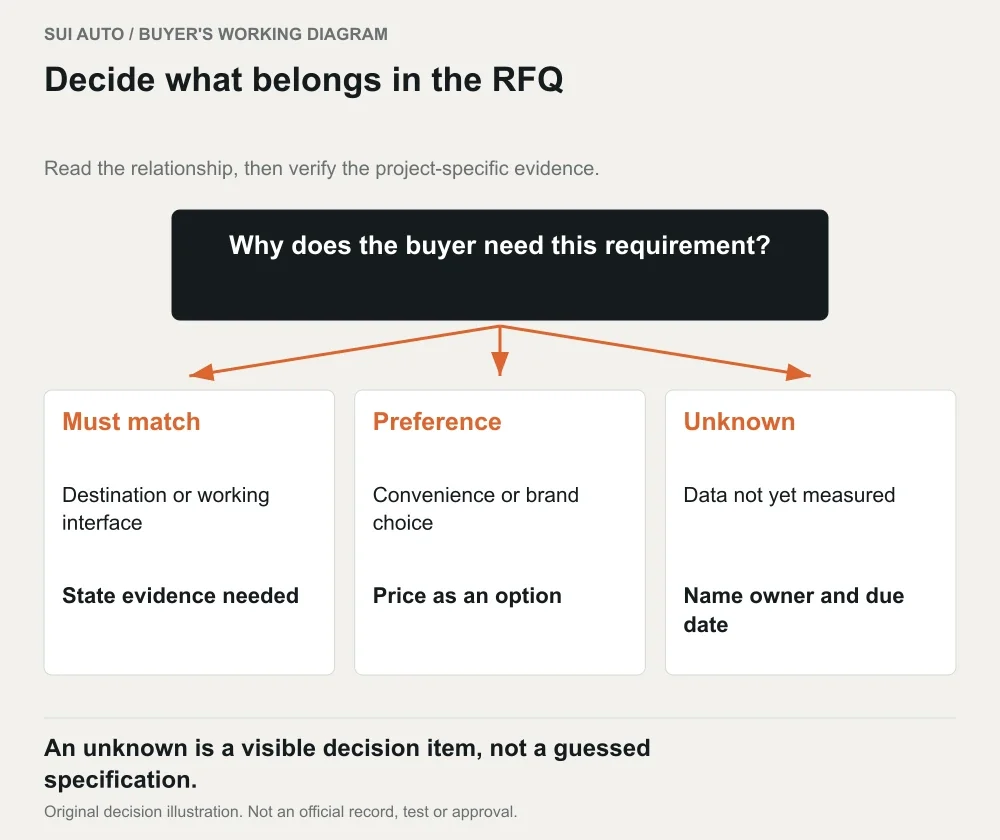
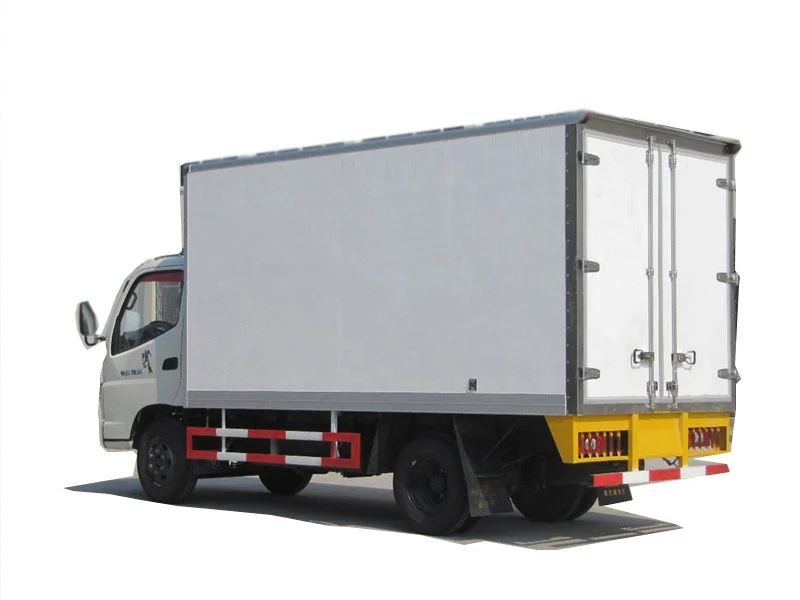
Requirement-triage illustration for preparing a custom-truck enquiry.
An example brief for a municipal water truck
Consider a hypothetical buyer serving a gated industrial estate. The brief describes paved access, measured entrance clearance, the permitted vehicle weight, refill availability, daily road-washing periods and local workshop capabilities. It asks for a proposed tank, pump duty, front and rear washing arrangement and a documented drain-down method appropriate to the local climate. It does not simply request the largest tank that fits. The supplier must explain the proposed load distribution and which functions are included. Any capacity or pump result remains a quoted technical proposal until it is confirmed against the complete build and the buyer's actual conditions.
Specify how the proposal will be accepted
Request a quotation that refers to a numbered technical specification, a layout drawing or diagram, a component list and an inspection plan. Say whether you need a remote demonstration, a third-party inspection or an operator handover. State the preferred delivery point, shipping route assumptions and document review sequence. Name the person authorized to approve technical changes. Include a deadline for questions and a separate deadline for the commercial response. Before issuing the RFQ, check that every mandatory item can be evidenced or tested. An acceptance requirement such as high quality is too vague; a requirement to verify supplied component identities and documented functions is actionable.
Do I need CAD drawings to request a custom truck?
No. Measurements, photographs, a clear operating brief and a list of interfaces can start the discussion. The supplier must provide the engineering confirmation needed for the actual build. Website configuration images or generated three-dimensional models can communicate preferences, but they do not substitute for approved dimensions, compatibility review or destination approval.
What if I do not know the right capacity?
Send the workload and route information rather than selecting a capacity at random. Ask for two explained alternatives, including their assumptions and limitations. Compare refill or disposal trips, access and legal loading before choosing. SUI AUTO can use that brief to coordinate proposals across chassis, body and equipment sources without presenting an early visual configuration as a finalized engineering design.
References and related reading
Planning a purchase? Follow the overseas buyer guide for specification, payment, shipping and import preparation.