Ask what changed and what must happen next
A credible recovery plan identifies the cause of delay, the affected sequence, named actions and evidence behind the revised forecast. A new completion date alone leaves the buyer unable to judge whether the plan is achievable. Request the current production stage, open dependencies and actual work remaining. Keep the original baseline visible alongside the revised plan. The goal is to identify decisions the parties can make now, such as resolving a technical approval or arranging a missing component, while preserving the agreed acceptance requirements.
Find the controlling dependency
Ask the manufacturer to distinguish procurement delays, fabrication work, buyer approvals, testing and document preparation. Identify the activity that currently controls the next stage. Several late tasks may run in parallel, so adding their durations can misrepresent the remaining time. Conversely, a small unavailable component can block integration and testing. The factory should explain the sequence in plain language. Request the supporting evidence appropriate to the cause, such as component receipt status or a revised workshop slot, rather than a general statement that production is being accelerated.
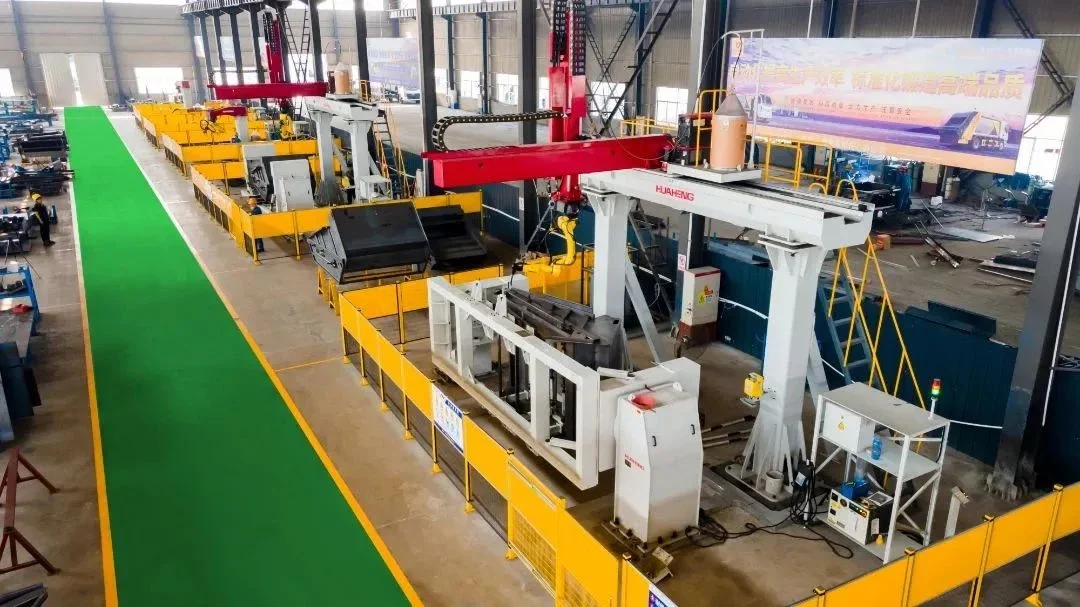
Bodies at successive Kaili fabrication stations illustrate a physical sequence. A recovery plan needs to identify which unfinished operation controls the next one; this photograph makes no claim about a late order.
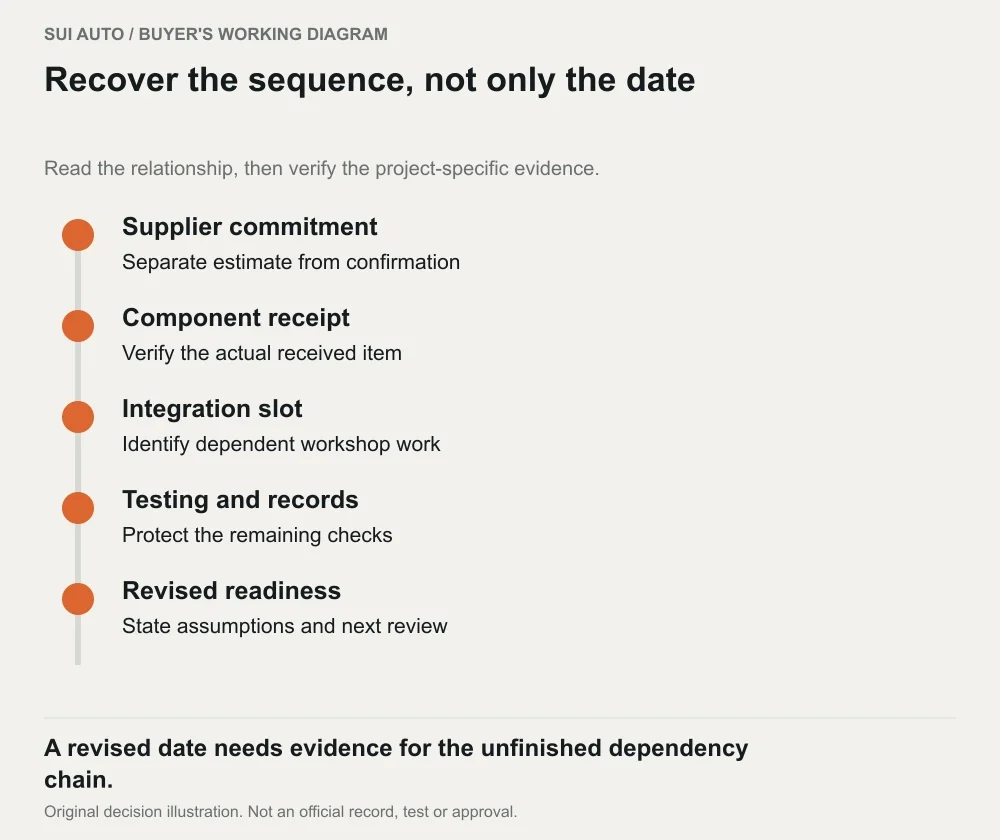
Buyer illustration: delay-recovery planning sequence without a universal production or delivery duration.
Separate forecasts from confirmed events
A supplier's estimated dispatch date, a confirmed collection and physical receipt are different milestones. Mark each accordingly in the recovery plan. Ask which forecast depends on information outside the manufacturer's control and when it will next be verified. For workshop operations, identify available resources and the predecessor work that must finish first. Avoid requesting confidential commercial documents indiscriminately; ask for sufficient confirmation to understand the dependency. The plan becomes stronger when each date has a stated basis and the next evidence check is already scheduled.
Protect the remaining acceptance sequence
An urgent schedule can create pressure to combine or omit checks. Ask the responsible technical parties which operations can run in parallel and which require a completed predecessor. A function test cannot verify equipment that has not been installed. Concealed-work checks need access before closure. SGS describes inspections at different production stages, supporting the use of planned checks rather than waiting for the final appearance. If the recovery proposal changes the inspection method or scope, obtain the designated reviewer’s decision and record the limitation. Do not silently treat acceleration as authorization to reduce acceptance evidence.
A hypothetical recovery review
Assume illustrative Truck P-12 is waiting for a hydraulic unit. The first forecast says completion next week. The revised plan identifies unit receipt, installation, controls setup, testing and record review as separate steps. The buyer asks for the supplier's current dispatch confirmation and a workshop installation slot. These conditions are hypothetical, not a SUI AUTO lead-time promise. If receipt slips, the plan shows which later dates must move. The buyer can then assess operational alternatives using an evidence-based readiness forecast instead of relying on a succession of unsupported dates.
Set owners and escalation points
Assign an owner to each recovery action and identify who can make the required decision. Buyer approvals need response dates as well as factory tasks. State when an unresolved dependency should be escalated and who receives the issue summary. Keep the summary focused on the effect, available options and evidence needed. Commercial remedies or contract changes should follow the parties' agreement and appropriate advice. The production coordinator should maintain the operational record while the authorized commercial contacts handle decisions outside that role.
Check whether the recovery plan is working
At each update, compare promised evidence with actual events. Record completed actions, changed assumptions and the remaining critical dependency. Keep previous forecasts so the trend is visible. If the same milestone repeatedly moves without new evidence, request a deeper review of the underlying cause and alternatives. A short update can be sufficient when it contains the relevant facts. The buyer does not need a new slide deck each day; the useful information is whether the controlling activity advanced and what decision is required next.
Does factory completion establish the delivery date?
Factory readiness is one event in a larger delivery plan. Inspection closure, documents, transport availability and destination arrangements can affect later stages. Keep those dependencies visible and ask which party coordinates each one. This article focuses on production recovery; it does not establish a standard shipping duration. A buyer should compare the revised factory forecast with the actual logistics plan before making an operational promise to its own customer or deployment team.
Should I accept a component change to save time?
Request a technical comparison and the full effect on installation, testing, manuals, spares and support. The replacement may help, but an unreviewed substitution can create further work. Have the authorized technical reviewer assess the proposal and record its scope for the affected vehicles. Keep the accepted as-built configuration current. A faster component arrival is useful only if the complete remaining sequence becomes achievable and the proposed build still meets the agreed requirements.
What if the supplier keeps moving the completion date?
Ask for the controlling dependency, evidence of progress since the last forecast and the remaining sequence through testing and record review. Compare each promised event with what actually happened. If the same activity repeatedly slips, request a specific cause review and supported alternatives rather than another date alone. Keep buyer approvals and external supplier dependencies visible as well as workshop work. The authorized commercial parties should handle any contractual response. Operationally, maintain the baseline, revised forecast and next evidence check so deployment decisions reflect the uncertainty the project actually has.
References and further reading
Planning a purchase? Follow the overseas buyer guide for specification, payment, shipping and import preparation.