Compare usable oil conditions and layout, not shell volume alone
Ask the body builder to distinguish the reservoir's physical capacity, specified fill quantity and approved operating-level range. These figures can describe different things. The proposed layout must support the actual oil-volume changes and pump-inlet conditions throughout the approved machine states. A larger nominal tank does not independently establish better reservoir performance.
This is a reservoir-layout and working-volume question. It is separate from selecting continuous pump duty, cooling a full shift or setting a particle-cleanliness target. The buyer needs to understand how the tank supplies the pump as actuators move and how returning oil is conditioned before it reaches the inlet again.
Give every volume a clear definition
Request the meaning and reference condition for each capacity figure in the quotation. Ask whether the stated oil quantity covers only the reservoir or the whole filled circuit. Identify the machine configuration used to establish the normal level and the source of the approved range.
Do not derive a filling instruction by subtracting an assumed headspace from exterior dimensions. The actual reservoir includes internal features, connection positions and operating requirements. The manufacturer should supply the correct service information. A purchasing comparison is clearer when each supplier reports the same defined quantities and explains what the operator will see on the level indicator.
Include the machine's oil-volume exchange
Ask which actuator and operating states were considered in the reservoir assessment. Extending and retracting hydraulic equipment can change the oil held outside the tank. The integrator must assess the relevant combinations for the actual circuit rather than selecting a reservoir solely from pump flow.
Provide the intended body configuration and any planned auxiliary equipment. An added hydraulic function can change the system assessment even when the original pump remains. Ask who reviews that change and whether the reservoir drawing and service-level information need revision. Keep approved working states distinct from positions that the machine's operating instructions do not allow.
Request the return and suction concept
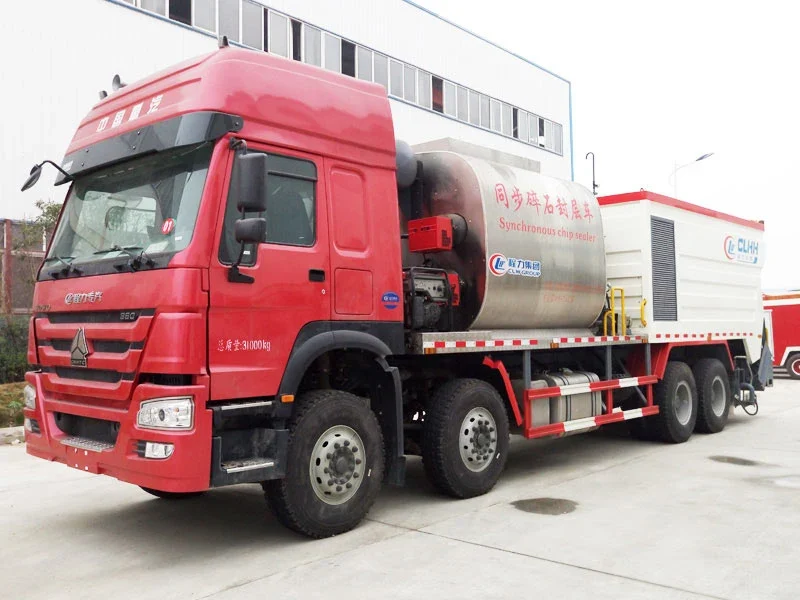
Ask for a drawing identifying suction, return, case-drain and other relevant connections. Request the manufacturer's explanation of how the arrangement supports air release and suitable pump-inlet conditions. A photograph of a large external tank usually cannot reveal that internal flow path.
Parker's vane-pump troubleshooting guide identifies reservoir level, return arrangement and deaeration among factors relevant to aeration problems. This supports asking for the design basis. It does not justify copying its component-specific dimensions or limits into another system. The actual pump and reservoir integrator must establish the requirements for the supplied truck body.
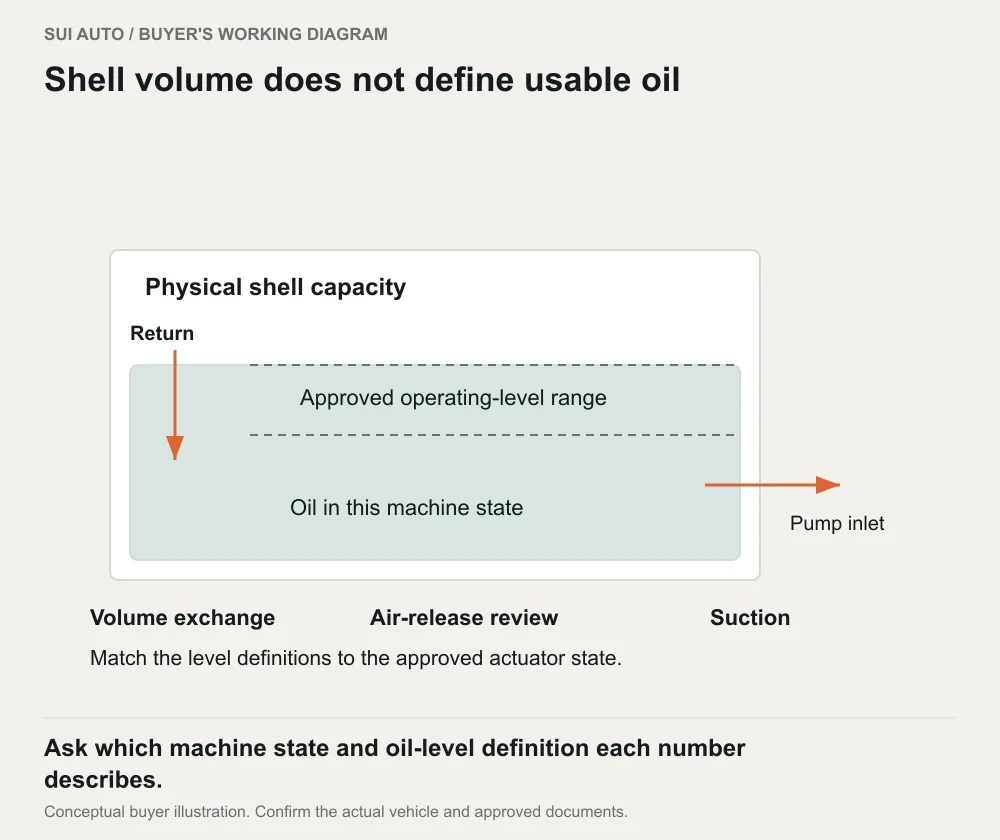
Conceptual illustration. Reservoir concept separates shell capacity operating level and pump inlet review. Ask which machine state and oil-level definition each number describes.
Assess deaeration features as an integrated design
Donaldson describes hydraulic reservoirs that integrate filtration and deaeration functions. Such designs illustrate why nominal volume and internal function should be reviewed together. A compact engineered reservoir may have a different design basis from a conventional tank, so capacity alone is a weak comparison rule.
Ask what evidence supports the proposed return-flow and air-separation arrangement at the intended duty. Do not demand a particular baffle merely because another design uses one. Different reservoir concepts may use different features. The useful answer identifies the actual hardware, its supported application and the integrator's responsibility for the complete assembly.
A hypothetical auxiliary-equipment change
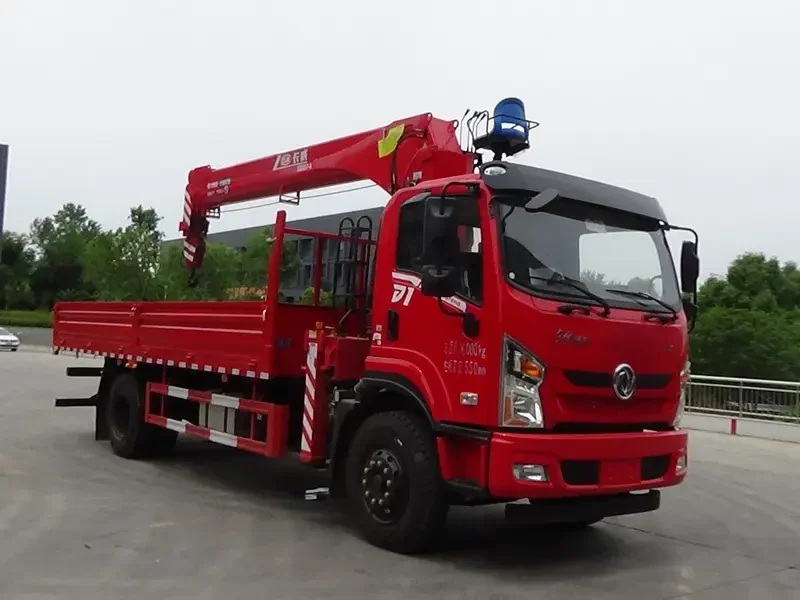
Assume a buyer approves a loader-crane truck and later adds a hydraulic attachment. The reservoir has enough apparent physical space, so the sales team initially expects no change. The buyer asks the integrator to assess the added circuit, oil-volume exchange and return arrangement before confirming the option.
The supplier may approve the existing layout, revise connections or recommend another reservoir package. This example does not establish that a larger tank is required. It demonstrates why an unchanged exterior capacity figure cannot resolve an altered hydraulic system. Neither linked reference is represented as using Donaldson reservoirs or Parker pumps.
Check service access and identification
Request the location of the fill point, level indication, filters, breathers and other service items relevant to the actual design. Ask which machine state the manual requires when the level is assessed. The purchasing team should verify that those instructions identify the delivered configuration and remain practical with the body installed.
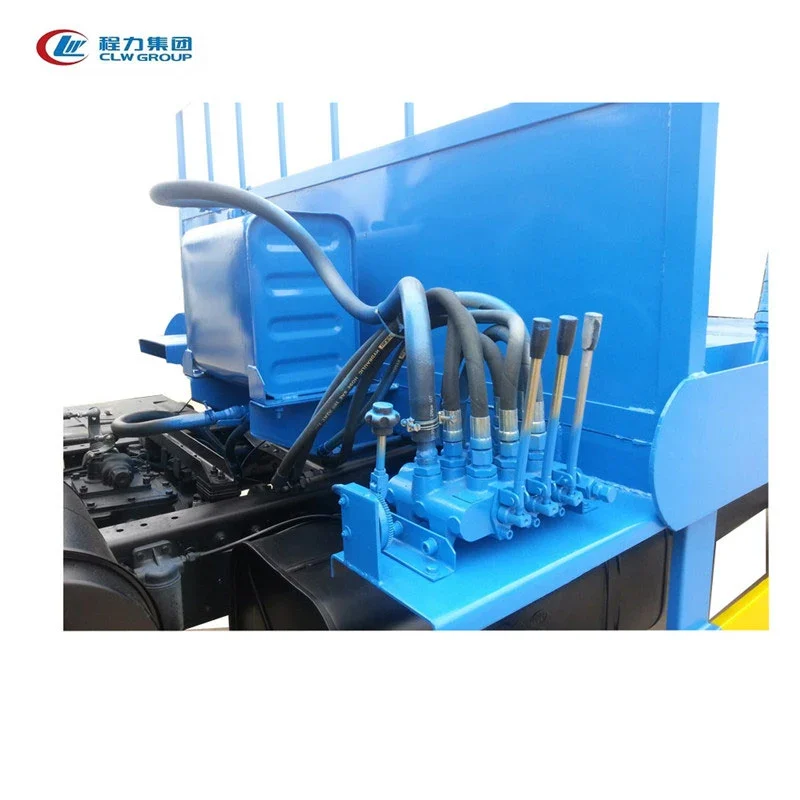
Manufacturer reference photograph. The skip-loader hydraulic connection area provides a concrete access example; reservoir internals and usable oil volume are not visible.
Check whether cargo equipment or accessories obstruct the specified access. Require the final component register and replacement references. A service team should be able to distinguish a level indicator or breather variant without guessing from its appearance. Review access and documentation during acceptance, before the vehicle leaves the supplier's facility.
Acceptance and RFQ checklist
Request defined capacity figures, the approved fill and level information, reservoir and circuit drawings, relevant operating states and the deaeration assessment basis. Ask how the installed configuration is verified and which evidence will accompany handover. Include any agreed functional assessment in the manufacturer's approved test plan.
At delivery, match the tank identity, connection arrangement and visible service components to the approved file. Record substitutions and unresolved checks. If the body configuration changes, have the integrator review the reservoir assumptions. Retain the final service instructions rather than relying on a sales capacity number when commissioning or maintaining the truck.
FAQ: Is nominal tank capacity the correct filling quantity?
Not necessarily. Ask the manufacturer for the specified quantity and operating-level procedure for the actual configuration, including the relevant machine state.
FAQ: Does twice the reservoir volume mean twice the useful performance?
Nominal volume does not establish inlet conditions or deaeration. Compare the supported system design and duty rather than assuming a direct relationship.
FAQ: Can an extra hydraulic function use the same reservoir automatically?
The integrator should review oil-volume exchange, connections and operating conditions. Obtain approval for the revised circuit before treating the original reservoir assessment as sufficient.
References and further reading
Planning a purchase? Follow the overseas buyer guide for specification, payment, shipping and import preparation.