Bind each image to a vehicle and a production event
Ask the manufacturer to identify the order, vehicle or body serial number, production stage and capture date for progress photos and videos. The strongest practical record connects a recognisable assembly to the relevant work record. A logo, watermark or factory building provides context but cannot establish that a particular body belongs to your order. Agree an image plan before production starts. Include wide views, identification close-ups and views of the features the buyer needs to approve. Keep the original files alongside any annotated report.
Establish identity before a VIN is visible
A separate body may be fabricated before it is mounted on the chassis. Ask how the manufacturer identifies that body during production and later links it to the chassis VIN. The evidence could include a body serial plate, workshop traveller and final installation record. Confirm where temporary identification is placed and how it survives painting or assembly. A handwritten order card in a photograph helps navigation but needs support from factory records. The buyer should be able to follow one continuous identity chain through the main stages.
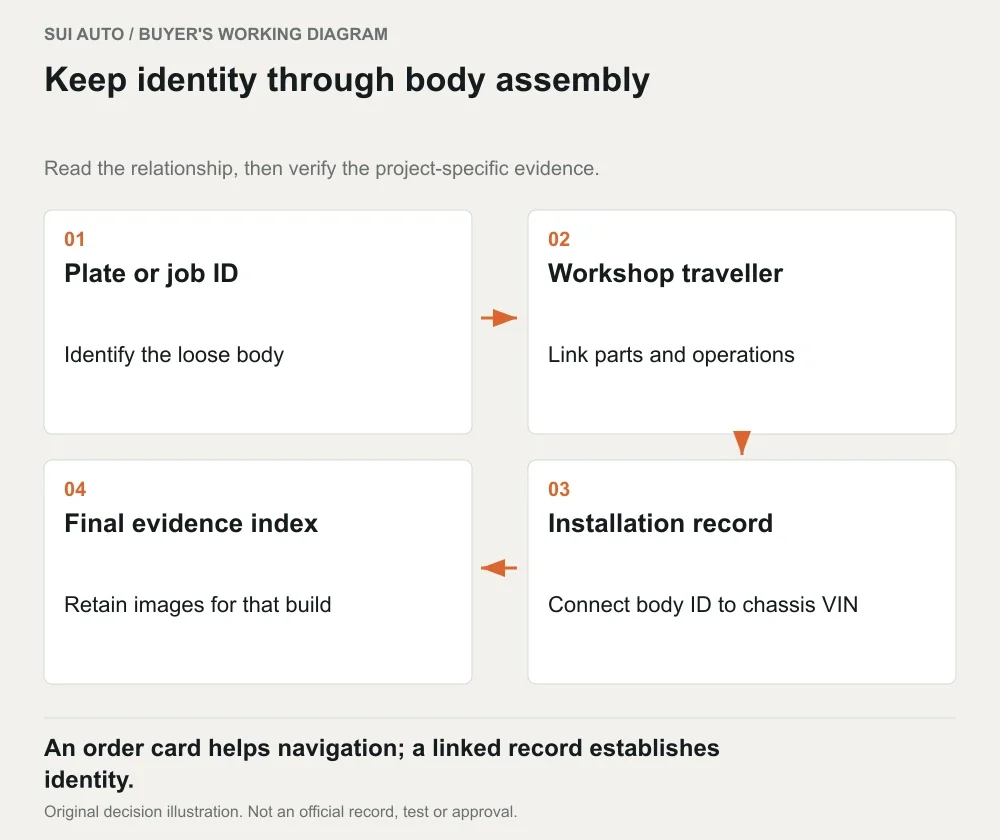
Buyer illustration: conceptual identity chain for an order-specific production image set.
Request views that answer a defined question
A photo request should name the feature and the decision it supports. For a mobile workshop, ask for storage access with the proposed tool arrangement. For a rescue body, request the equipment restraints and identification of the installed winch. A wide view establishes context; a close-up records the detail. Include a scale or measuring instrument when dimension evidence is required, with the measurement method agreed in advance. A photograph of a ruler at an oblique angle can be misleading. Critical dimensions may need a recorded inspection rather than an image alone.
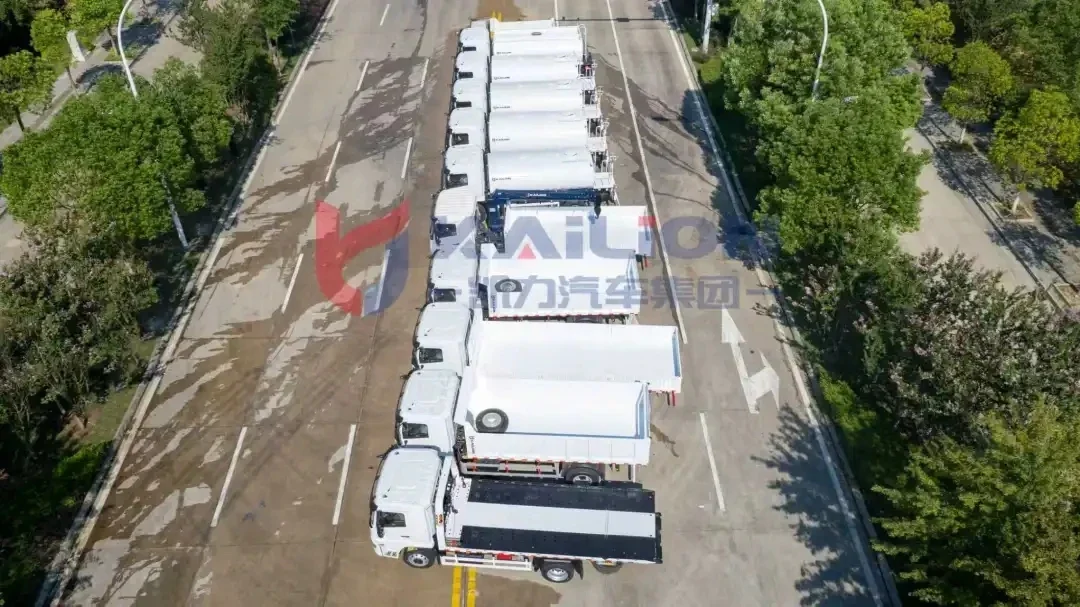
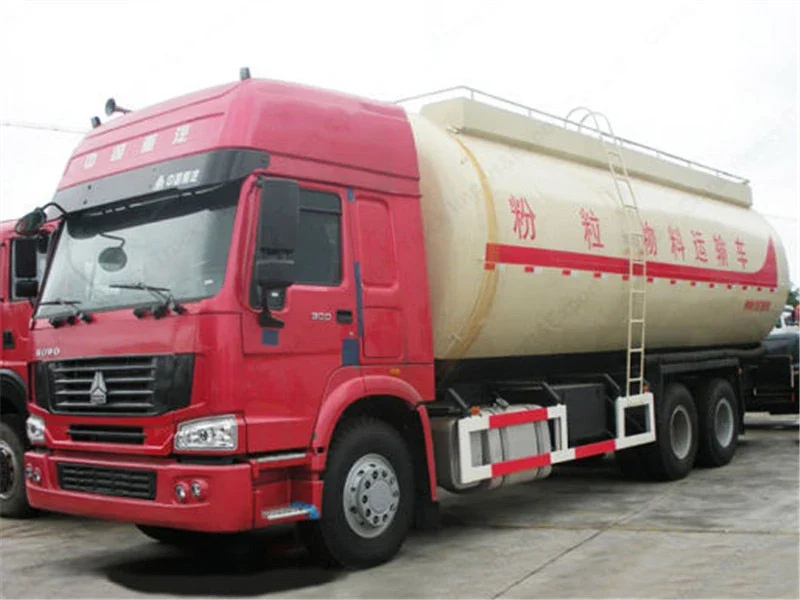
In Kaili's published dispatch photograph, similar cabs and roofs repeat across the row. An overhead fleet photograph cannot identify your particular order without vehicle-specific references.
Use live video for a structured walkthrough
Prepare a short route for a live call: vehicle identity, overall configuration, requested detail, relevant document and final wider view. Ask the operator to respond to specific requests in real time, such as opening the named compartment. Record the date, attendees and limitations of the call. Safe access and factory permissions govern what can be shown. A live session can strengthen confidence that the observed vehicle exists at that location, but measured performance still depends on appropriate instruments, conditions and records. Use the call for the questions it can actually answer.
A hypothetical image mismatch
Suppose an illustrative progress folder shows a two-door cab while the approved vehicle uses a four-door crew cab. The buyer should first identify whether the photo shows a loose body, a reference vehicle or the actual build. The manufacturer labels the unrelated view as reference and supplies the order-specific identity sequence. The buyer records the corrected evidence rather than deleting the query. This example is hypothetical. It shows why early clarification is more productive than assuming every mismatch proves misconduct or accepting every image as relevant.
Maintain an evidence index
For each requested image group, record the order reference, vehicle or body identity, feature, capture date, file name, linked drawing and reviewer decision. Mark photographs as progress, reference, acceptance or unresolved. Preserve the unedited original and use separate copies for arrows and notes. Restrict public sharing of VINs and documents where confidentiality is required. Ask for replacement files when compression prevents reading a plate or measurement. A consistent index lets the final reviewer find the right evidence quickly and makes it harder for unrelated photos to enter the handover package.
Cross-check images against the equipment record
Compare visible component nameplates with the current equipment schedule. If a photo shows an earlier component, ask when it was replaced and which later image or test record covers the final installation. Keep reference and superseded imagery clearly labelled. This prevents a technically accurate old photograph from being used to describe the supplied configuration. The final acceptance folder should point to the evidence for the vehicle as it will actually be delivered.
Does a current date on a card prove authenticity?
A dated card adds context, but the buyer should compare it with vehicle identity, the live walkthrough and workshop records. File metadata can also be incomplete after messaging applications process an image. Treat several independent connections as more useful than one date marker. If a feature remains important and unclear, arrange a targeted check by an agreed inspector. The aim is a proportionate evidence chain that answers the procurement question, rather than a promise that one visual trick eliminates uncertainty.
Can a running video replace a factory test report?
A video can show an operation and may support a witnessed test. To assess performance, the buyer also needs the test method, conditions, instruments, relevant readings and result against the agreed criterion. A pump running without the recorded pressure and flow does not establish its duty point. Ask the technical parties to specify which tests require retained readings and which are simple functional demonstrations. The video and report should reference the same vehicle and test event.
What if the supplier sends only compressed messaging-app images?
Request the original files through an agreed transfer route when compression prevents reading identification or evaluating the requested feature. Name the exact plate, detail or measurement that remains unclear. Keep the message copies as communication history and link the replacement originals to the same evidence index. If originals are unavailable, arrange a focused live walkthrough or an independent physical check for the unresolved question. A chat timestamp can help locate a conversation; it does not independently establish the capture date, vehicle identity or technical result shown in the image.
References and further reading
Planning a purchase? Follow the overseas buyer guide for specification, payment, shipping and import preparation.