Map the companies before approving the order
Verify the legal identities of the body manufacturer, contracting seller and exporter, then document how each participates in your truck order. A familiar factory name on a brochure does not explain who will accept your specification or resolve a defect. Start with a one-page responsibility map. Record the exact legal name, registration identifier, address, named representative and project role for every company. Ask the seller to explain any differences between the quotation, technical documents and proposed invoice. A trading company can provide a useful procurement service when its authority and responsibilities are visible.
Separate registration, capability and authority
A registration check establishes an entity's recorded identity and status. It does not demonstrate that the factory can build your particular rescue body or that a salesperson can approve technical changes. Request three separate evidence groups: company registration, relevant manufacturing capability and authority for the transaction. Capability evidence might include the proposed production location and a technical review of your equipment list. Authority evidence should identify who can sign the order, accept specifications and issue binding commercial instructions. Keep the original legal names alongside English trading names so translations cannot hide a mismatch.
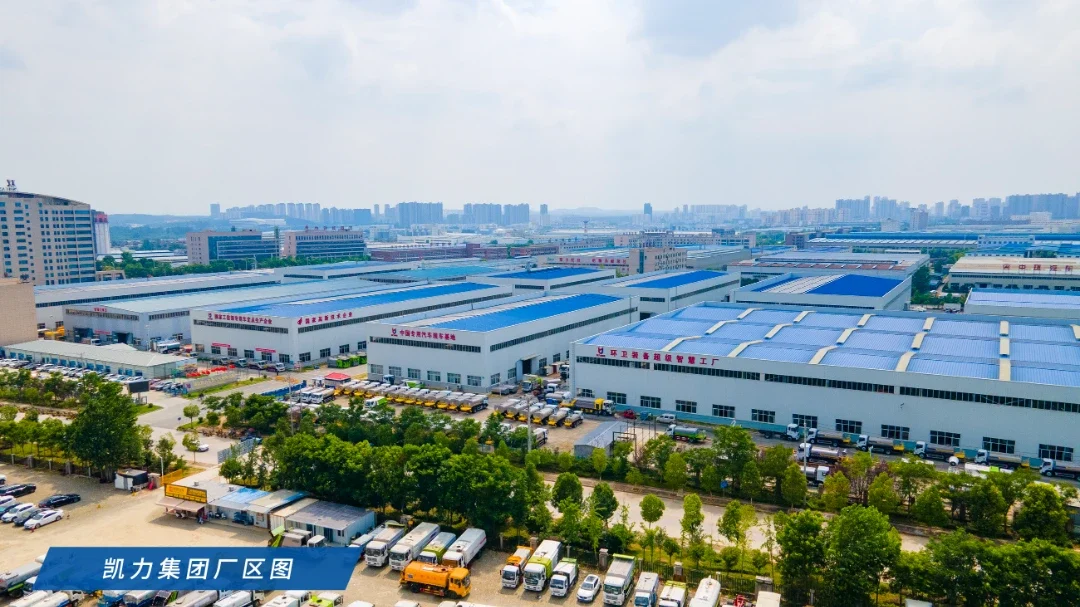
Kaili's published factory aerial identifies physical premises to investigate. It does not establish who owns the site or who may sign your order.
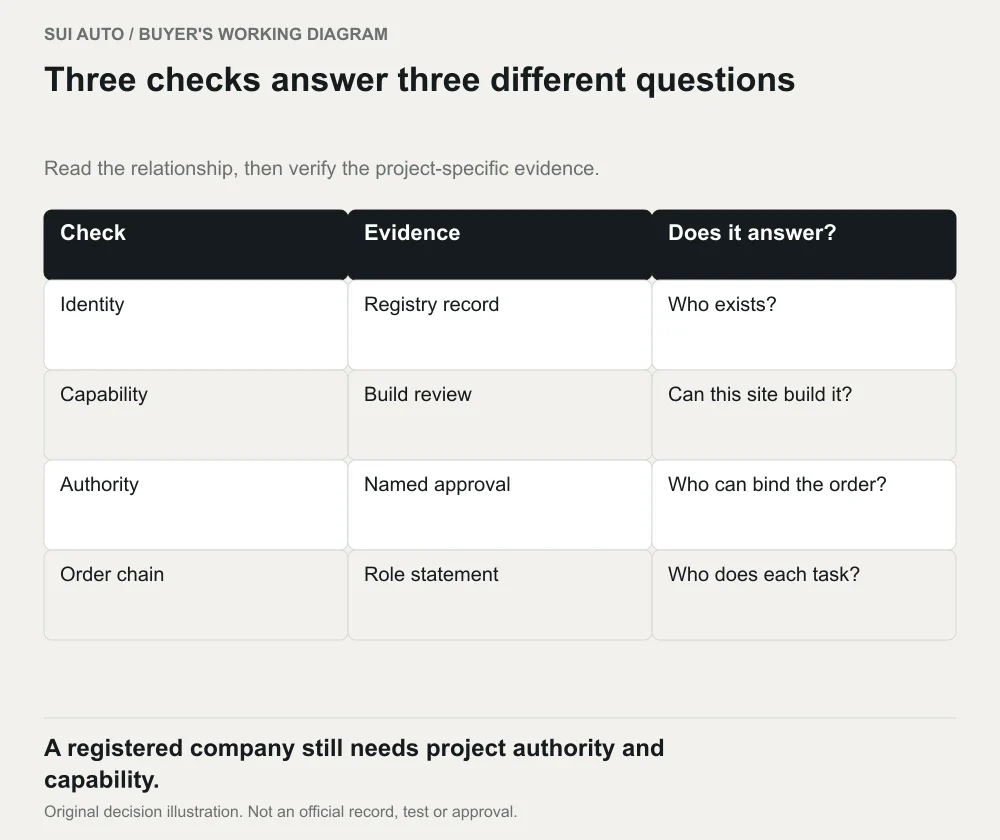
Buyer illustration: different documents answer different supplier-verification questions.
Check through an independent route
The Canadian Trade Commissioner Service recommends checking Chinese business registration through the National Enterprise Credit Information Publicity System and verifying representatives' authority. Use the official registry where accessible and retain the search date and exact identifier. If translation or registry access is difficult, obtain independent professional assistance. For a claimed management-system certificate, compare the legal entity, certified location, scope, issuing body and current status. IAF CertSearch provides a verification route and explains that a missing search result can have several causes. Follow up with the issuer rather than treating a failed search as a final conclusion.
Test the chain on one technical question
Choose a requirement that needs an engineering answer, such as the rescue truck's equipment restraint layout. Send it through the proposed seller and ask who reviews it at the body builder. A useful reply names the responsible technical contact, identifies the drawing revision and records the decision. Compare that path with the authority map. If a third company answers, add its role and ask who accepts responsibility for its work. This practical exercise reveals whether the proposed coordination path can handle your order before an urgent production question arises.
A hypothetical identity reconciliation
Assume a quotation names Seller A, a drawing carries Manufacturer B and the export documents will name Company C. This is an illustrative example, not a SUI AUTO transaction. The buyer asks A for a written role statement, B's confirmation of the project and C's export-document role. A generic dealer certificate does not resolve an order-specific discrepancy. The file becomes usable when the order references the agreed technical annex, each entity's role is recorded and authorized contacts confirm the arrangement. Remaining questions go into an issue register with an owner and a response date.
Keep a compact verification file
Before order approval, check these items: exact registered names and identifiers; the production location; the manufacturer's relationship to the seller; the signer's authority; the proposed document issuer; independently checked certificate details; and the technical communication path. Retain dated copies and a short explanation for every name difference. Restrict personal identification documents to the people who need them. When a company or representative changes, reopen the affected checks. A verified file should make future decisions faster because the buyer can see which person has authority for the decision in question.
Confirm authority when the project changes
Repeat the relevant authority check if the seller, production location or signatory changes during the order. Ask which existing approvals remain valid and which need acknowledgment by the new responsible entity. Keep the earlier evidence and record the reason for the change. A replacement contact should receive the current annex and unresolved issues before issuing instructions. This makes verification an active project control rather than a one-time folder created at the quotation stage.
Does a factory video prove the seller owns the factory?
A video can show a location and activity, but ownership and contractual authority require separate evidence. Ask for the production address and identify the entity operating there. Compare the video with a live site visit or an independently arranged inspection if the project warrants it. A multi-manufacturer platform may coordinate production without owning the premises. Record that role accurately and judge the proposal against the responsibilities it actually accepts.
Is an ISO certificate approval for my truck?
A management-system certificate has a defined entity, location and scope. It does not by itself establish that your proposed vehicle is approved for the destination or that every fitted component matches the order. Verify the certificate claim and assess the actual vehicle documentation separately. Request the applicable destination review from the responsible importer or technical adviser. This keeps company verification useful without asking one document to answer unrelated questions.
What if the manufacturer, seller and exporter have different names?
Ask the seller to explain each company’s role in an order-specific statement, then verify the identities and authority through independent records. A different name can reflect a legitimate supply arrangement, but the buyer still needs a clear contracting party and a route for technical decisions and defect resolution. Ask the manufacturer to confirm the project relationship through a contact obtained independently. Keep unresolved differences open before approving the order. If the chain changes later, repeat the affected checks rather than relying on the original brochure or a general dealer letter.
References and further reading
Planning a purchase? Follow the overseas buyer guide for specification, payment, shipping and import preparation.