Review the load path before comparing steel thickness
Select the chassis and subframe around the forces created by the actual body and equipment. Frame thickness alone cannot establish suitability. Ask how loads enter the chassis during road travel, loading, discharge and stationary operation, then obtain a chassis-specific mounting design.
A recovery body, liquid tank and crane installation can load a frame differently. The supplier should identify the relevant chassis instructions and the engineering basis for the proposed connection. The buyer needs a documented installation and inspection file rather than a promise that thicker steel automatically makes a stronger completed truck.
Separate distributed loads from concentrated equipment loads
A body can distribute mass over a substantial length, while equipment such as a lifting mechanism or heavy rear accessory introduces concentrated forces. Dynamic road loads and working forces add further considerations. A simple body mass total cannot describe these effects.
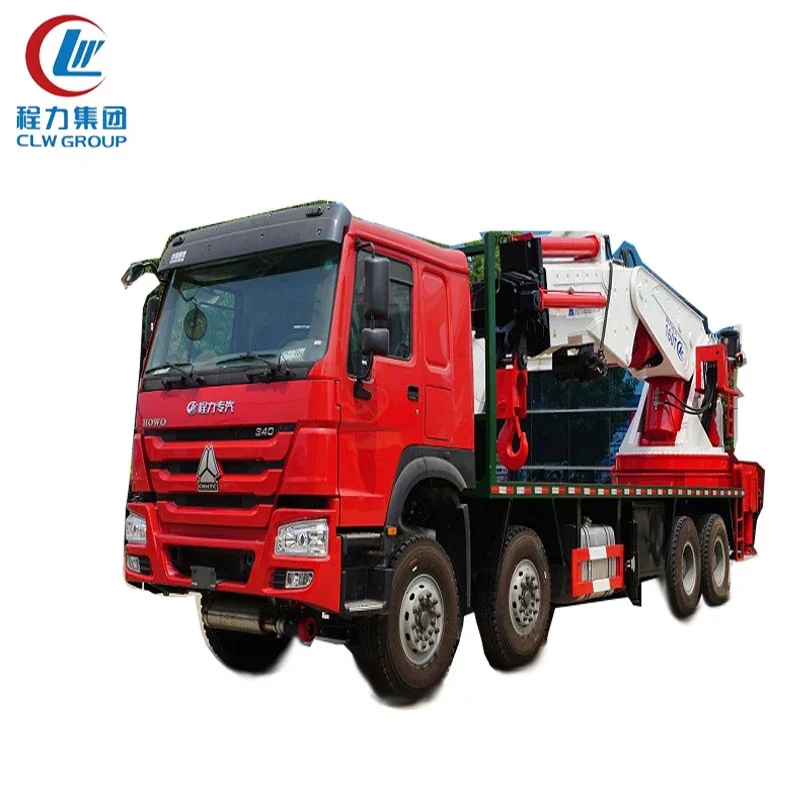
Manufacturer reference photograph. A large folded crane concentrates equipment behind the cab, unlike a uniformly loaded cargo body.
Ask the builder to mark major load-entry points, mounts, crossmembers and equipment locations on the drawing. Identify where the body may need to accommodate chassis movement and where a defined rigid connection is required. The applicable method comes from the exact chassis and body design; a generic mounting rule should not be copied across vehicle families.
Review any body movement separately. Tipping, lifting or deployment can create a different structural case from normal travel, even when the carried material mass is unchanged.
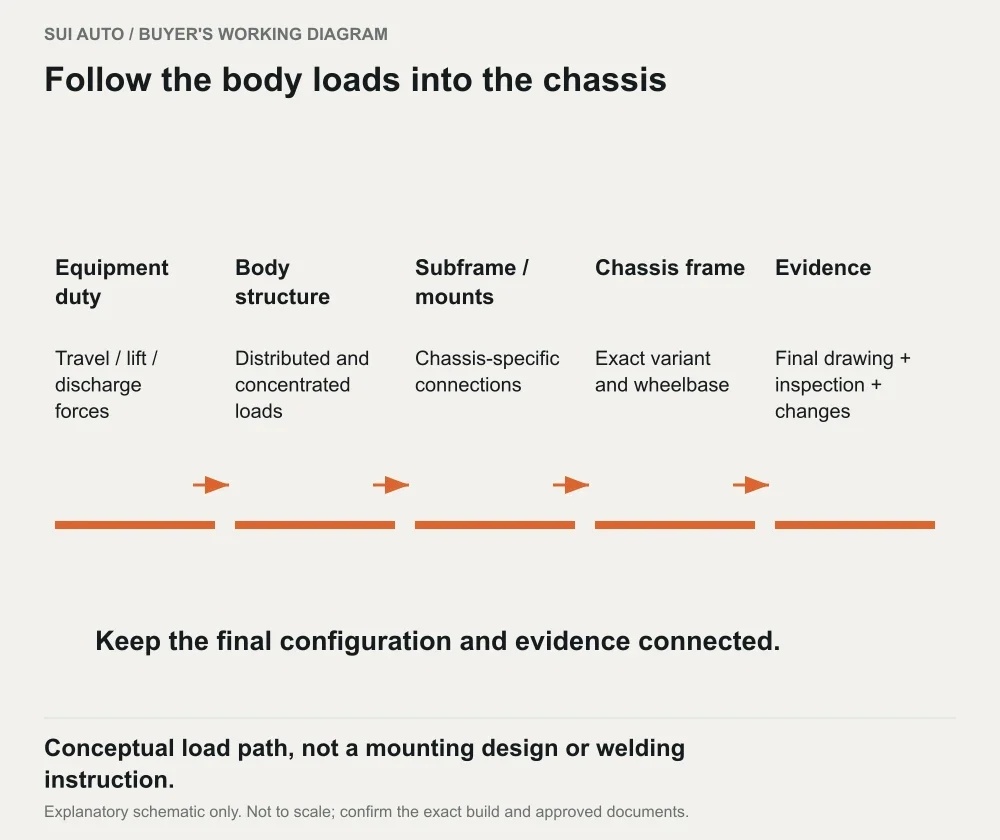
Conceptual load path, not a mounting design or welding instruction. Explanatory schematic.
Compare structural proposals with evidence questions
Chassis identity: what exact frame variant and wheelbase is supplied?
Material and section: what documented chassis and subframe specifications apply?
Mounting method: which approved connection details and attachment positions are used?
Working loads: which travel, loading, discharge and equipment-operation states were assessed?
Manufacture and inspection: what records identify the built installation and any deviations from the design?
A photograph of a double frame does not answer those questions. Nor does a broad statement that a body is heavy duty. The comparison should show how the supplier turns a specific duty into a specific installation.
A hypothetical rear-equipment change
Assume a buyer adds a lifting device and storage locker behind the rear axle of a service truck. The combined mass fits within an initial gross-weight allowance. These are hypothetical design changes.
The builder must still review the new concentrated loads, rear overhang, axle distribution and mounting arrangement. If the device operates while stationary, its working forces and support conditions need attention too. Adding mass to the quotation without revising the structural review leaves a significant gap.
Ask for the revised drawing and a record of the chassis supplier's applicable requirements. At acceptance, check that the delivered installation matches the revised version. Keep the original and revised configurations clearly identified so future repairs do not rely on obsolete information.
Repairability and corrosion protection belong in the review
Ask how the installation can be inspected and maintained after guards, tanks and lockers are fitted. Critical attachments should have an appropriate inspection method and service access. A strong design that cannot be maintained practically can create avoidable operating difficulty.
Request the relevant protection and repair instructions for the installed materials and connections. Do not prescribe welding, drilling or local reinforcement from a general article. Those actions can affect the chassis and require the proper technical review.
If the vehicle will work in a corrosive or abrasive environment, describe that exposure in the enquiry. Ask how it is addressed in material selection, coating, drainage and maintenance. A paint colour or a generic anti-corrosion claim does not describe the actual protection system.
Enquiry and acceptance checklist
Provide equipment masses, positions, working forces where available, road conditions and the intended operating sequence. Request exact chassis and frame identification, the body installation drawing, the applicable mounting requirements and the supplier's verification records.
At acceptance, reconcile the built mounts, subframe and equipment positions with the approved drawing. Use competent inspection personnel for the agreed structural checks. Document substitutions, additional holes, brackets or other departures for technical resolution before handover.
Retain the final drawings and repair guidance with the vehicle. Later modifications need the same discipline. The original frame review does not automatically cover an added crane, larger tank, extra locker or changed operating method.
Make the final drawing useful for later inspection
The installation file should identify attachment locations and the relevant inspection points clearly enough for a competent workshop to use. Ask for photographs of areas that will be concealed after final assembly where the agreed inspection process requires them. Keep any approved deviation alongside the drawing rather than in a separate untraceable message. These records help distinguish original construction from later modifications. They also give the buyer a more practical basis for evaluating supplier workmanship than an isolated close-up of thick steel.
Confirm which document controls the installation if several drawings are supplied. Mark the final approved revision and withdraw superseded workshop copies through the supplier process. This reduces the chance that a correctly reviewed design is assembled using an earlier bracket position or equipment layout.
Is a thicker frame always better?
Material, section, mounting, loads and chassis flexibility all matter. Thickness is one input, not a complete structural assessment.
Can a proven subframe design be copied to another chassis?
The new chassis has its own geometry and requirements. Obtain a specific installation review.
Does remaining payload mean extra equipment can be added safely?
Total mass is only one constraint. Axle loads, local frame loads, stability, clearance and the working interface also require review.
References and further reading
- DAF official body-builder guidelines overview
- Isuzu official body builder guide access
- Daimler Truck official commercial-vehicle body builder information
- CLW HOWO Heavy Tow Truck manufacturer reference
- Hongyu Shacman Delong Heavy Recovery Truck manufacturer reference
- Kaili Shacman Delong Combination Sewer Truck manufacturer reference
- CLW HOWO Heavy Tow Truck
- Hongyu Shacman Delong Heavy Recovery Truck
- Kaili Shacman Delong Combination Sewer Truck
- Overseas buyer guide
Planning a purchase? Follow the overseas buyer guide for specification, payment, shipping and import preparation.