Begin with tools and responsibilities
Specify a rescue truck by its authority-approved equipment inventory and role, then ask the body builder to design storage and verify the completed vehicle's mass and interfaces. An empty compartment layout tells little about the usable appliance. The HOWO emergency rescue reference includes specialist equipment, but its published maximum ratings do not describe every possible working condition. This guide supports professional procurement and offers no rescue or lifting procedures. The department and qualified equipment specialists must approve operating limits, competency requirements and the test programme for any crane, winch or other powered rescue equipment.
Define a realistic agency example
Assume a municipal rescue team needs to transport its existing tools and several newly selected devices. Some tools are heavy, others require protected storage, and several have charging or servicing needs. Have the team document item dimensions, mass, quantity, storage orientation and handling requirements. Identify equipment supplied by the buyer separately from equipment supplied with the truck. Otherwise both parties may assume the other has allowed for it. A body designed around an incomplete list can become crowded before its first assignment, while a deliberately prioritised inventory gives the designer a stable basis for compartment planning.
Evaluate access with the users
Ask trained users to review a proposed layout drawing or mock-up. Discuss whether frequently required items can be identified and reached without moving unrelated equipment, and whether heavy items have suitable handling provisions. Record where protective cases and restraints are needed. Do not infer safe access from a promotional photo with compartment doors open. Consider the travel condition, service access and the authority's own work practices together. This is a design review, not a substitute for operational training. Where equipment handling involves lifting or powered devices, the relevant competent person should review the arrangement before it is accepted.
Separate headline ratings from approved capability
For a crane, request the exact model, load charts, mounting assessment and inspection documentation. For a winch, request the manufacturer's ratings and limitations, installed arrangement and approved accessories. Avoid presenting a maximum catalogue value as a constant capability. The supplier should explain how vehicle stability, mounting and equipment interfaces are verified for the delivered build. Ask whether support equipment is included and whether proposed substitutes change the review. A technically complete equipment package may be quite different from a truck carrying visually similar machinery, which is why component identity and supporting evidence belong in the enquiry.
Calculate the travelling inventory
Request mass and axle evidence for the truck with the agreed tools, crew, fuel and accessories. Make the weighing assumptions explicit, particularly if the buyer will add equipment after delivery. The body builder should identify any remaining allowance and the constraints on future additions. A gross vehicle figure is not the same as available equipment payload. Discuss electrical demand for chargers and lighting with the integration specialist, including approved protection and isolation arrangements. Do not add a universal spare capacity percentage; the authority should decide its planned future equipment needs and ask for them to be assessed.
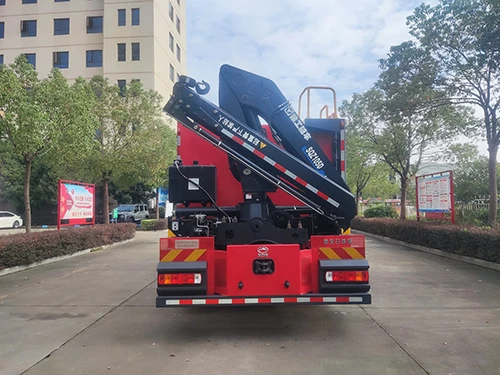
Manufacturer reference photograph. The rescue truck carries a rear-mounted crane in addition to its equipment body; include both fixed and removable items in mass review.
Keep supplier equipment and buyer-provided equipment in separate inventory columns, then include both in the declared travelling condition. Where an item is not yet selected, mark the mass and mounting review provisional. Empty storage space should not be recorded as an approved future payload allowance.
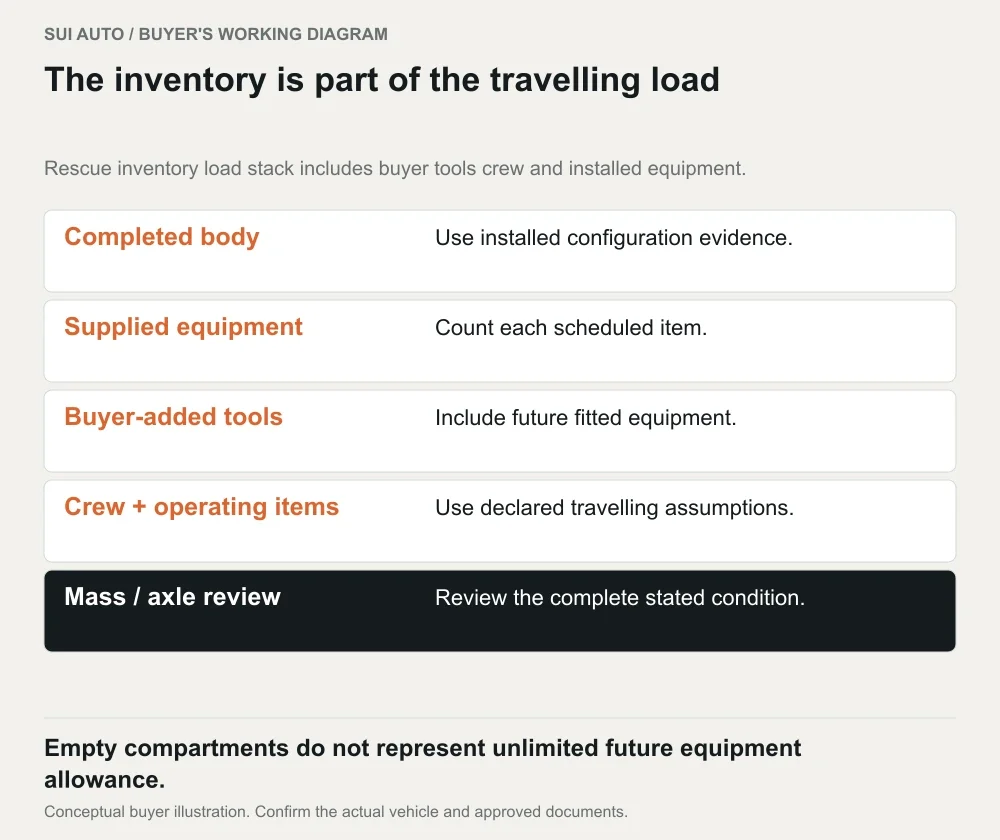
Conceptual illustration. Rescue inventory load stack includes buyer tools crew and installed equipment. Empty compartments do not represent unlimited future equipment allowance.
Inspect against a numbered schedule
Number every equipment item and compartment on the approved schedule. At acceptance, reconcile quantities, model identities, restraints, labels, chargers, access provisions and documentation. Qualified personnel should conduct any crane or winch tests under the approved programme; the buyer should not improvise demonstrations to prove headline figures. Record delivery condition and unresolved items. Ask for user and maintenance training appropriate to the installed equipment and ensure service information can be accessed locally. A structured inventory review can prevent small omissions from becoming readiness problems, especially where several suppliers contribute equipment to one vehicle.
Keep ownership of the inventory visible
Assign one department role to maintain the accepted tool list after handover. Equipment added by different teams can otherwise accumulate without anyone updating the vehicle record. The responsible person should route proposed additions to the relevant mass, mounting or electrical review and keep the approved layout current. This is a procurement continuity measure, not a new rescue procedure. It helps the workshop identify what belongs on the vehicle and makes missing equipment easier to reconcile. The original acceptance inventory should remain available so later changes can be distinguished from supplier omissions or changes made during routine service.
Common specification questions
Can a rescue truck be ordered before the tools are chosen? It can be discussed, but the layout and mass review remain provisional until the inventory is defined. Does a maximum crane capacity prove every rescue task is feasible? No; conditions and approved charts govern. Can spare compartments be treated as unlimited future payload? No; additions require a mass and integration review. Product images should illustrate the reference vehicle only. The final body, equipment and operating limits should be documented for the exact build, with the department retaining approval of its professional mission.
References and related reading
Planning a purchase? Follow the overseas buyer guide for specification, payment, shipping and import preparation.