
Read who checked what before deciding acceptance
An independent inspection report supports the checks stated in its scope. Read the vehicle identity, criteria, method, coverage and exclusions before using it for a delivery decision. Inspection findings, authorization to dispatch and acceptance under the purchase agreement can involve different people and documents. Map those responsibilities early. A report marked satisfactory may still contain untested functions or outstanding records. The buyer should reconcile those limits with the order and obtain the required decisions from the designated authorities before describing the truck as fully accepted.
Specify the inspection scope before booking
Give the provider the current technical annex, drawing register and equipment schedule. Ask which checks will be visual, measured, witnessed or based on document review. Identify required access, utilities and factory readiness. SGS lists several available inspection activities, including dimensions, documentation and witness tests; their inclusion depends on the agreed service. A generic booking titled truck inspection may leave important requirements outside the visit. Request a written scope and ensure the manufacturer can prepare the vehicle and records needed for it.
Verify the report's identity and method
Check that the report names the correct VIN or body serial number and the location and date of inspection. Compare component identities with the as-built schedule. Read the method used for each finding. Reviewing a manufacturer's test sheet is different from witnessing the test, and sampling selected equipment is different from checking every item. The report should retain those distinctions. If the wording is ambiguous, ask the provider for clarification through the agreed route. Keep the clarification with the report rather than relying on an informal explanation passed between several parties.
Distinguish certification claims from inspection work
A management-system certificate and a vehicle inspection report answer different questions. IAF CertSearch provides a way to verify management-system certificate details and status. That verification does not expand the scope of a separate inspection report. Similarly, an inspector's attendance does not establish destination registration eligibility or a manufacturer authorization chain. Ask which specialist or authority addresses each unresolved requirement. The buyer gains more confidence from a clear division of evidence than from collecting documents with familiar logos but unclear relevance to the actual order.
A hypothetical satisfactory report with exclusions
Assume illustrative report I-28 records dimensions and equipment identity as satisfactory but excludes a foam-system test because the required consumable was unavailable. The buyer should retain that test as an open acceptance item. The parties can arrange the missing check or obtain an authorized disposition under the agreed process. This is an invented example, not a SUI AUTO inspection. The report remains useful for the checks performed. Its positive summary should not be stretched to mean the excluded function was tested or that the truck meets every requirement.
Map the release decisions
Create a responsibility table covering technical findings, defect closure, dispatch authorization, document release and receiving handover. Name the person or role authorized for each decision and identify required inputs. The manufacturer may release its production work while the buyer still needs to review outstanding inspection evidence. A logistics provider may confirm collection without accepting technical conformity. State these roles in plain language and reconcile them with the commercial agreement. The table is a coordination aid, not a universal statement of legal rights or liability.
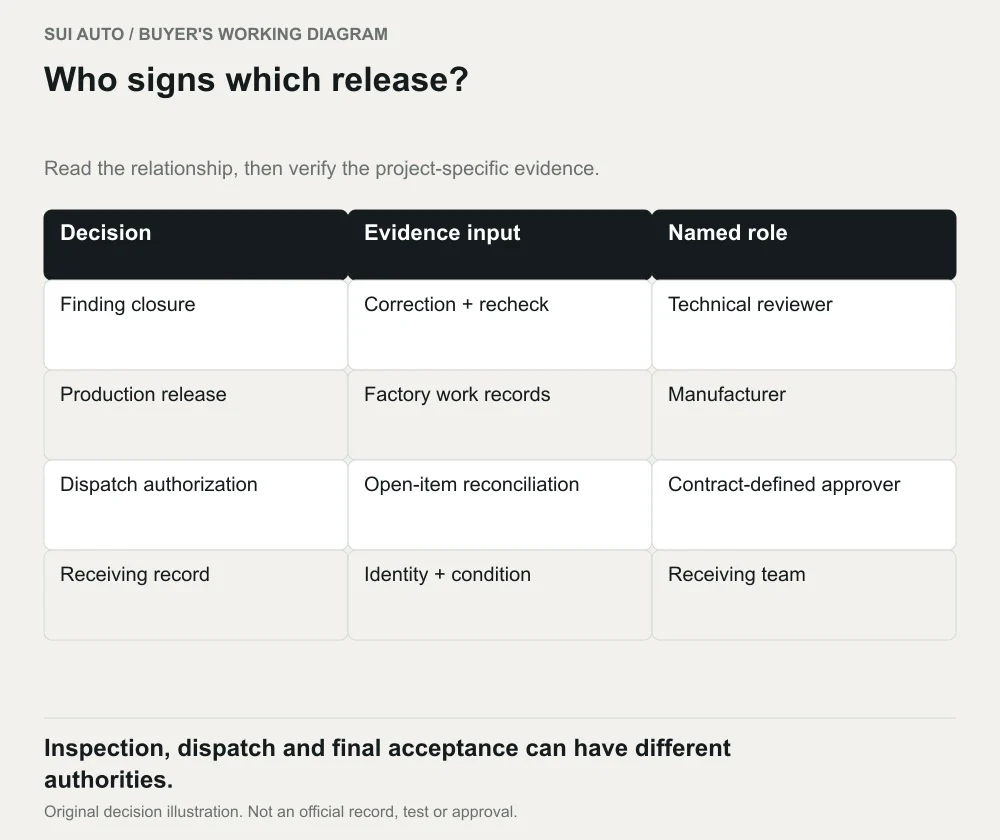
Buyer illustration: planning roles for separate release decisions; the contract determines actual authority.
Reconcile all reports before handover
Check the inspection report against the current annex, test index, defect register and loose-item schedule. List excluded checks, unavailable evidence and any accepted exceptions. Record the final decision and the authority making it. If the vehicle changed after inspection, identify the affected checks and whether a reinspection is needed. Retain the provider's original report and any later clarification or addendum. This gives the receiving team an accurate account of the condition and configuration reviewed, rather than a simplified all passed message without supporting detail.
Does an inspector replace the manufacturer's responsibility?
The manufacturer's obligations arise from the applicable agreement and requirements. An inspection service has its own defined scope and terms. Ask the authorized commercial advisers to clarify responsibilities where necessary. Operationally, continue to route defects and missing records to the responsible supplier while the inspector reports the checks it performed. A buyer should avoid treating the presence of an independent observer as a reason to leave manufacturing requirements or acceptance authority undefined.
Can a report be accepted with open observations?
Read the nature of each observation and compare it with the agreed acceptance process. Some may be informational; others may require correction, further evidence or a designated exception decision. The relevant technical reviewer should classify them. Record the outcome by finding identifier and preserve any limitations. A positive report title should not override its detailed open items. Conversely, a clearly identified minor observation should be handled through the agreed process instead of being treated automatically as failure of the whole vehicle.
What if a satisfactory third-party report excludes a critical test?
Treat the excluded test as unresolved against the purchase requirement. Ask the inspection provider to confirm the scope limitation and request a plan for the missing verification from the responsible supplier. The designated technical authority should decide whether another visit, witnessed test or supported alternative is appropriate. Keep the positive findings for work actually checked, while preserving the excluded item in the acceptance register. Dispatch and final acceptance require their own authorized decisions. A report’s summary wording should never silently convert an untested function into a verified one.
References and further reading
Planning a purchase? Follow the overseas buyer guide for specification, payment, shipping and import preparation.