Review tank locations as part of the finished vehicle layout
Resolve fuel, aftertreatment-fluid and auxiliary-tank packaging before approving the special body. The selected chassis may already use valuable frame space for tanks, exhaust equipment, batteries and air reservoirs. Adding a body system without a coordinated layout can obstruct filling, service access or required clearances.
Ask for the exact chassis configuration. Not every engine or emissions system uses the same equipment, and a generic chassis image may omit items fitted to the quoted version. Confirm the actual system and destination requirements with the responsible suppliers rather than inferring them from a broad emissions label.
Give each fluid its own requirement
Fuel: identify the engine or engines supplied, intended duty and the proposed tank arrangement.
Aftertreatment fluid where fitted: identify the actual system, filling access, service instructions and component locations.
Hydraulic oil: identify the working equipment, reservoir arrangement, cooling and maintenance access.
Process liquids: distinguish water, waste or other working liquids from the vehicle's operating fluids.
A tank volume does not establish range, working duration or liquid compatibility on its own. For procurement, state the duty and ask the supplier to explain the selected arrangement. Keep each circuit and its filling point clearly identified in drawings, labels and manuals.
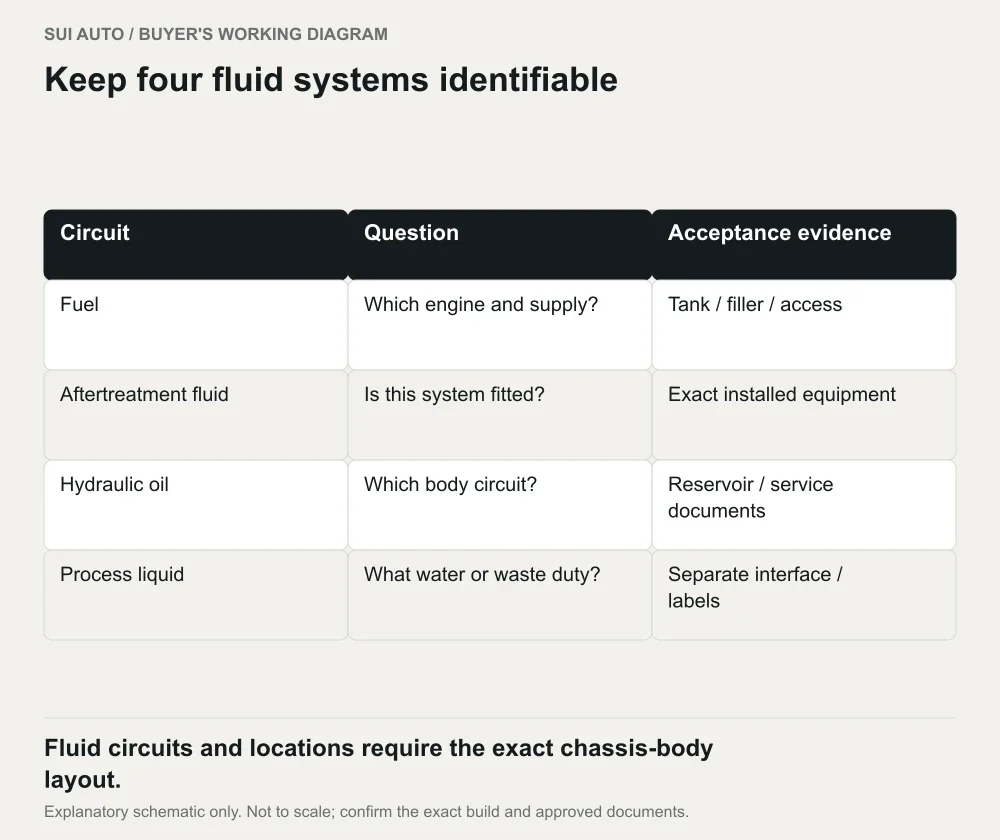
Fluid circuits and locations require the exact chassis-body layout. Explanatory schematic.
Inspect the space with all equipment fitted
A filler can be visible in a chassis photograph yet become difficult to use after the body is installed. Ask whether a normal filling nozzle or service tool can reach it in the completed vehicle. Check the space needed to open caps, remove filters and replace components.
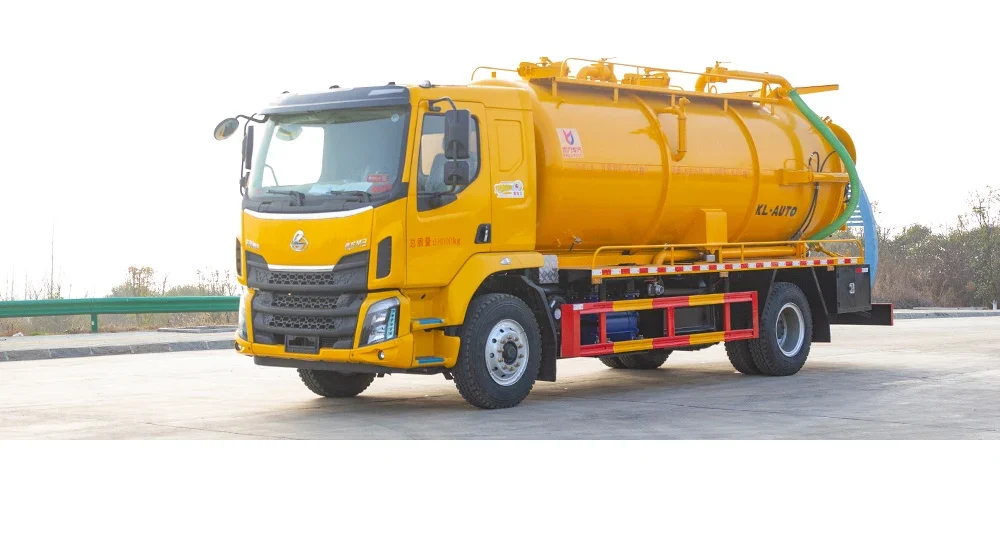
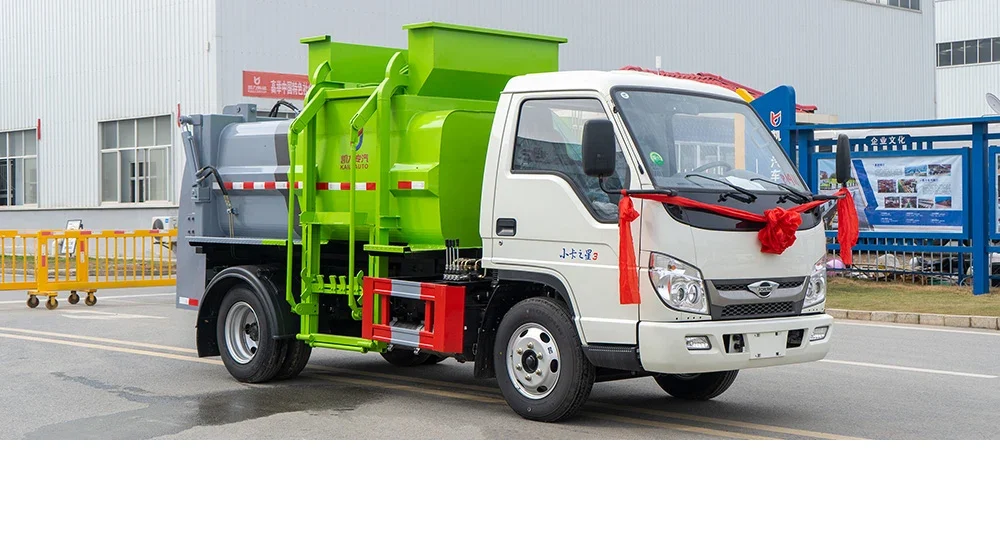
Manufacturer reference photograph. The combination truck's tank, hose storage and side equipment share the chassis envelope.
Review the routing of hoses, wiring and exhaust-related equipment with the builder. Heat, moving parts, road debris and maintenance access all affect the installation. Required clearances must come from the applicable equipment and chassis instructions, not a universal distance taken from another vehicle.
For separate auxiliary engines, identify their own fuel and service arrangements. Establish whether the proposal uses a shared or separate supply and obtain the documented installation basis. Do not assume a body engine can be connected wherever space appears available.
A hypothetical combination-truck layout review
Assume a buyer adds a hose reel and tool locker beside the frame of a combination sewer truck. The chosen positions appear convenient for the crew but overlap the chassis's filling and service area. These are illustrative planning conditions.
Ask the suppliers to produce one coordinated drawing showing the chassis components and the added equipment. Compare alternatives using service access, axle distribution, crew working space and protection. Moving a tank may create other technical obligations, so the drawing should identify who approves any chassis-component relocation.
A simple mock-up or dimensional access check can reveal problems before manufacture. Use actual service-tool and filling requirements where practical. Resolve the layout while it is still a drawing rather than cutting a new access opening into the finished body.
Operating duration needs evidence beyond tank size
If the buyer wants fewer refuelling stops, provide the route and auxiliary duty. Ask for a supported consumption basis or a suitable measurement plan. A larger fuel tank increases stored volume but also adds mass and uses space. It may change axle loads or reduce room for body equipment.
For aftertreatment fluids, use the actual manufacturer's handling and maintenance guidance. Do not promise universal consumption ratios, fluid substitutions or service intervals. The correct information belongs to the installed system and operating conditions.
The same discipline applies to hydraulic reservoirs. Their suitability depends on the circuit and duty, including heat management and service requirements. A bigger reservoir is not automatic proof that an overheating or aeration issue has been solved.
RFQ and acceptance checklist
Provide the driving and body-work duty, desired refuelling pattern, operating environment and service facilities. Request the exact chassis component layout, all fluid tank capacities and identities, filling-point drawings and any approved relocation details. Ask for labels and maintenance instructions matching the installed build.
At acceptance, inspect all filling and service points with final lockers, guards and accessories installed. Confirm that caps, filters and relevant components can be accessed through the agreed procedure. Reconcile tank and component identification with the specification and final drawings.
Record any changed location or routing before handover. Keep the completed layout available to maintenance staff so a later accessory does not block a critical service point or introduce an unreviewed interference.
Use a labelled filling-point schedule
List each filling point, fluid identity, related equipment and access procedure. Ask the supplier to show the schedule in the correct language and match it to the final vehicle. This is especially useful where a chassis engine, auxiliary engine and body hydraulic system have separate service requirements. The schedule helps the operator find the right instruction without guessing from the location of a cap. Include any changed tank position in the final record so later maintenance does not rely on an earlier layout.
Can I relocate a fuel or AdBlue tank to make room for the body?
Any relocation needs the applicable chassis and system review. Ask who approves and documents the revised installation.
Does every diesel special truck need AdBlue?
Systems differ by exact engine and emissions configuration. Confirm the installed equipment and destination requirements rather than assuming from the fuel type.
Will a larger fuel tank guarantee a full working shift?
Range depends on consumption, usable volume, driving and auxiliary duty. Obtain a supported operating basis for the actual vehicle.
References and further reading
- Isuzu official body builder guide access
- Daimler Truck official commercial-vehicle body builder information
- Kaili Dongfeng Tianlong Combination Sewer Truck manufacturer reference
- Hongyu JAC Gallop Road Cleaning Truck manufacturer reference
- CLW HOWO Heavy Tow Truck manufacturer reference
- Kaili Dongfeng Tianlong Combination Sewer Truck
- Hongyu JAC Gallop Road Cleaning Truck
- CLW HOWO Heavy Tow Truck
- Overseas buyer guide
Planning a purchase? Follow the overseas buyer guide for specification, payment, shipping and import preparation.