
Use one identity register for the entire transaction
A truck import file should consistently identify the vehicle you are buying and shipping. Create a register for its VIN or applicable chassis identifier, exact model, body description, equipment references and approved specification revision. Ask the supplier and broker which identifiers and documents are required for your destination. Use the register when reviewing draft invoices, shipment information and inspection evidence. A typographical error can become difficult to trace once several parties have copied it. The goal is consistency and truthful identification, not forcing every document to use a generic product title that omits the actual vehicle.
Check the vehicle against the commercial records
Request clear identifier photographs from the allocated truck and compare them with the commercial invoice and other relevant records. Do not rely solely on a typed number sent separately from the vehicle. Check the seller, buyer, model description and agreed equipment scope as well. If an invoice combines several units, make sure the identities remain distinguishable. An inspection report should identify which truck was inspected, not merely the category. When an identifier is unclear or differs between records, resolve it with the responsible parties before payment or shipment approval rather than assuming customs will accept an explanation later.
Keep the working-body description accurate
A special-purpose vehicle may need more description than the chassis brand and model. Ask the broker what information is needed to understand the complete function, body and mounted equipment. Keep that information consistent with the accepted technical specification. Do not replace a truthful description with a vague label to obtain a preferred tax treatment. If the body or component changes during production, review the draft import file again. A cargo description copied from a preliminary quotation may no longer represent the finished vehicle, even when the chassis identifier has not changed.
Review draft shipment records while correction is practical
Ask the logistics provider which shipment records can be reviewed in draft and who authorizes changes. Confirm consignee details, cargo description, package counts and any required identifiers against the transaction file. Keep separately packed spares identifiable rather than hiding them under a broad truck line. The International Trade Administration identifies invoices and packing information among common trade documents; the exact destination file must be checked by your broker. Set a document review owner so that a request for approval is not answered by someone who has never seen the accepted build specification.
An illustrative model-name discrepancy
Imagine a vehicle ordered under a broad marketing name, while the chassis plate and final manufacturer record use a specific model designation. The buyer asks the supplier to explain the relationship and gives both records to the broker. The parties agree the accurate description and correct draft documents where needed. This hypothetical situation is different from simply inventing a new identifier or changing a document to resemble an advertising title. The important evidence is the actual truck and the legitimate manufacturer's records, interpreted through the requirements of the importing authority.
Create a document reconciliation checklist
Use columns for document, issuer, date or revision, vehicle identifier, model description, buyer and consignee identity, quantity, package references and unresolved discrepancy. Record who confirmed each item and retain the final approved copies. Keep draft and final documents clearly separated so a receiver does not use a superseded version. Ask the broker to review any certificate, approval or inspection requirement specific to the destination before departure. Reconciliation is an internal control, not a promise of clearance. Authorities may request additional information or apply requirements that depend on the actual import category and circumstances.
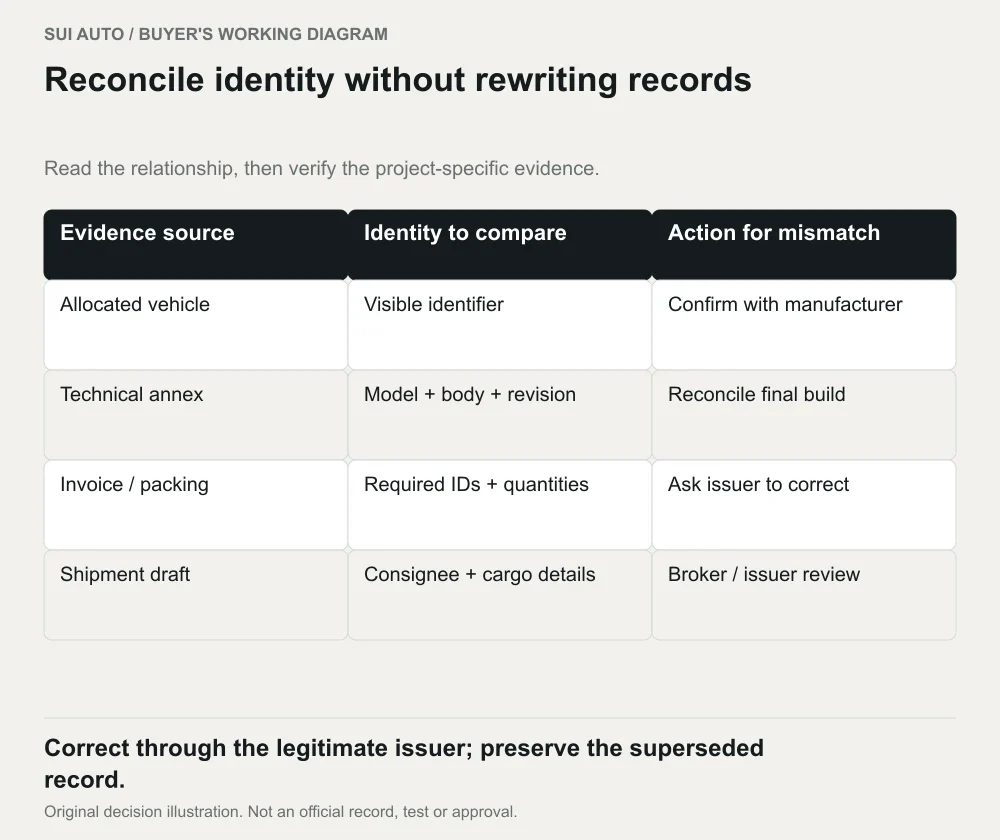
Buyer illustration: identity-review fields only; no genuine identifier, invoice or customs document is shown.
Should every document contain the VIN?
Ask the responsible issuer and broker which identifiers belong on each document. The aim is consistent traceability, not adding unrequested fields everywhere. Where an identifier is required, verify it against the truck and the accepted manufacturer record before approving the final document.
What if an error is found after shipment?
Contact the issuing party and broker promptly and follow their legitimate correction process. Preserve the original record and the explanation of the discrepancy. Do not alter official documents yourself or assume a simple informal note will satisfy the importing authority. Give each final file a clear revision reference so the receiving team can distinguish it from a superseded draft.
References and related reading
Planning a purchase? Follow the overseas buyer guide for specification, payment, shipping and import preparation.