Buy the protection system with the pump
Specify liquid-carryover protection as an identified system with documented inspection access and a supplier-approved functional demonstration. A pump model and tank volume do not establish how the installation prevents collected liquid from entering the pump. Ask the builder to map the protection devices between tank and pump and explain the supplied arrangement.
This question becomes more significant when waste properties vary or the working tank is difficult to observe. The aim is to verify the engineered package before purchase. It is not a reason to test protection by deliberately overfilling a working tank or bypassing a shutoff device.
Separate four functions in the drawing
Liquid interception, particulate protection, pressure or vacuum limitation, and exhaust treatment have different roles. Ask the manufacturer to label each device in the schematic and connect that label to a part number. A broad phrase such as pump protection can hide missing scope or an ambiguous drawing.
The Jurop PR installation manual describes primary and secondary shutoffs to protect its pump from liquid intake. It also addresses other protective functions separately. This is useful evidence of the questions an installation review should resolve. The actual pump manufacturer's current manual must determine the design for your supplied vehicle; another product's arrangement should not be copied automatically.
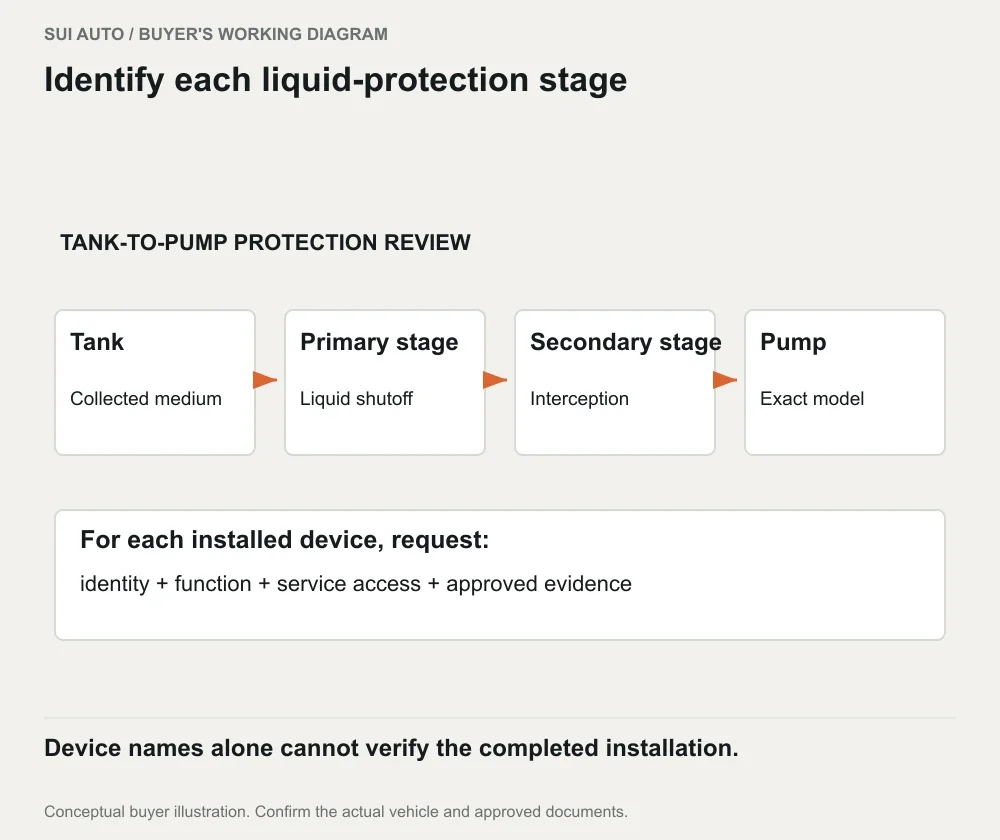
Conceptual illustration. Tank to pump concept marks separate liquid interception stages and their evidence. Device names alone cannot verify the completed installation.
Describe the collected material accurately
Provide the expected liquid, solids content, tendency to foam and any known chemical compatibility constraints. Report unusual operating conditions rather than asking for a universal sewage package. A material change can affect what the integrator needs to assess, including separator selection and service access.
Ask the builder to state exclusions and the information still needed. Where the material is unknown, make sampling or specialist compatibility assessment a purchase condition. The useful answer may be a revised specification, an application restriction or a different equipment package. A larger pump alone does not resolve an undefined collected medium.
Compare access as well as device count
A protection device that is difficult to identify or inspect creates a practical support problem. Request photographs showing service access in the actual proposed layout. Ask whether other equipment blocks inspection points and whether the owner's service team can reach them using the manufacturer's approved method.
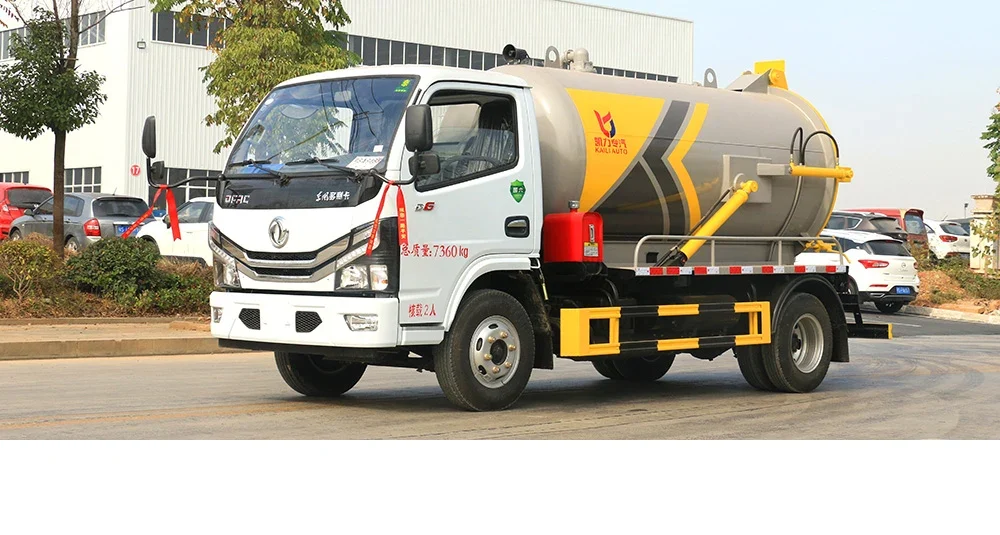
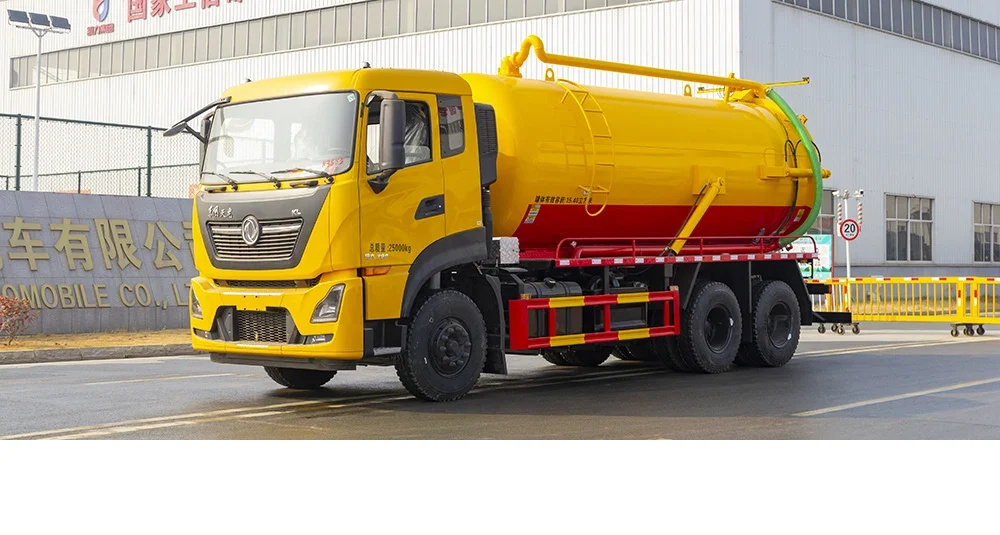
Manufacturer reference photograph. The externally routed discharge pipe and tank layout show the complete vehicle package; ask separately for identified protection-device and service-access drawings.
Compare the supplied manuals, replacement references and inspection responsibilities across offers. Two quotations may both name a secondary separator while giving very different handover information. Traceability matters because a visually similar spare can have different internal components. The delivery file should connect the installed housing and its replaceable parts to an approved equipment register.
Agree evidence without creating a hazardous test
Have the manufacturer propose the functional demonstration and its safe conditions. The plan should identify the devices being demonstrated, the personnel responsible, what is recorded and the pass criteria. Ask for evidence that the actual protection arrangement responds as intended within the approved test procedure.
Purchasing staff should not define an improvised overfill exercise or direct workers to defeat protections. If a complete demonstration cannot be conducted at the factory, document the remaining verification and who will approve it. A normal suction video alone leaves the protection question open because it may never exercise the relevant devices.
A hypothetical contractor comparison
Assume a contractor collects mostly watery sludge but occasionally encounters foaming waste. Offer A quotes a familiar pump and a single sentence about overflow protection. Offer B supplies an installation drawing, identifies both liquid-interception stages and specifies accessible inspection points. The second file is easier to assess, although it still needs review against the actual duty.
The contractor sends the material information to both suppliers and requests their written application response. The comparison then covers device arrangement, supported waste conditions and service provisions. Neither pump is selected only by its suction claim. The example does not establish that either linked vehicle uses Jurop equipment or has identical protection.
The RFQ and acceptance checklist
Include the pump's exact model and manual revision, tank-to-pump schematic, device register, liquid-interception arrangement, relevant filters, exhaust equipment and service-access drawings. Require the builder to identify which items are standard and which are optional. Specify the waste conditions under which the supplier accepts the application.
At handover, match nameplates and device locations to the final drawing. Check that manuals and replacement-part references describe the installed variants. Record the approved demonstration and outstanding commissioning checks. Ask who can assess a liquid-ingestion event after delivery; an owner should not assume that an undocumented cleaning attempt preserves the pump warranty or equipment safety.
Keep performance and protection claims distinct
A suction-lift claim, a pumping-rate claim and a carryover-protection claim establish different things. Each needs its own operating conditions and evidence. A satisfactory collection test does not demonstrate chemical compatibility, and a component certificate does not verify the completed installation.
If a quotation uses words such as automatic protection, ask what is detected, what action follows and how the operator recognizes it. Put those answers in the technical schedule. Clear scope is more useful than a long list of protective-sounding accessories without functions or identifiers.
FAQ: Is a separator the same as a shutoff?
The terms can describe different devices and functions. Ask for the actual schematic, internal function and manufacturer identification rather than assuming the labels are interchangeable.
FAQ: Can a larger tank remove the carryover risk?
Tank size does not establish protection. The builder must assess liquid behavior and the complete tank-to-pump arrangement for the intended service.
FAQ: Should the buyer prove protection by overfilling?
Use only a manufacturer-approved demonstration conducted by qualified personnel. Procurement acceptance should never depend on an improvised hazardous test or a bypassed safeguard.
References and further reading
Planning a purchase? Follow the overseas buyer guide for specification, payment, shipping and import preparation.