Obtain an interface drawing before ordering
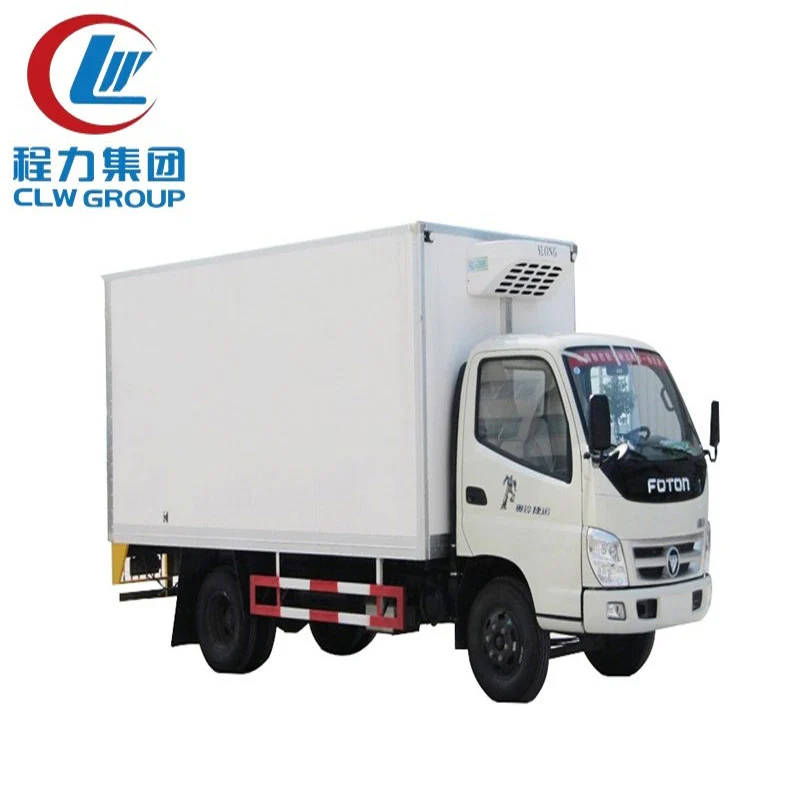
A hook-loader container is suitable only when its dimensions, structure and lifting interface match the approved hook mechanism and transport arrangement. A shared volume description is insufficient. Buyers reusing existing containers should send measured drawings and condition photographs before the supplier commits to compatibility. Buyers ordering new containers should include them as identified items in the quotation. The reviewed CLW and Kaili vehicles are useful reference configurations, but their product names do not certify another container. Ask the manufacturer to approve the complete truck-and-container combination in writing, including any restrictions that affect loading, exchange or discharge at the intended sites.
Record the dimensions the mechanism actually uses
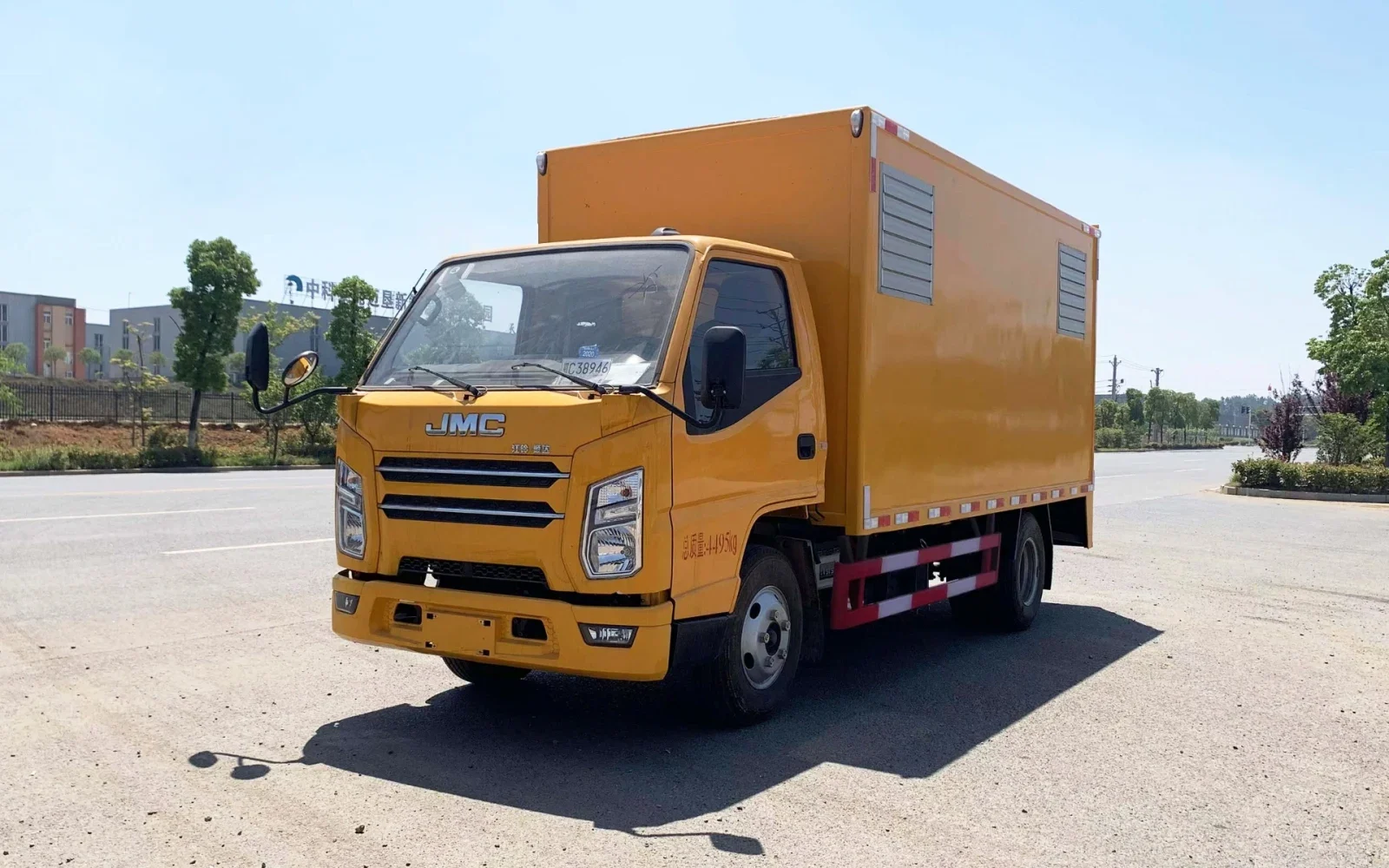
The container drawing should identify hook position, rail spacing, length, underside geometry and the points used for restraint. Confirm the exact measurements the supplier requires instead of choosing a universal interface from an internet image. Examine repaired containers for altered geometry, damaged rails or changed lifting attachments. A box can retain its nominal volume while its interface changes. The truck supplier should also review container mass and intended content loading. The Kaili Xiangling reference lists a matched 3 m³ container and a published lifting capability range; that still does not approve a heavier existing container. Specify the exact combination, and request the limits and supporting documents relevant to that combination.
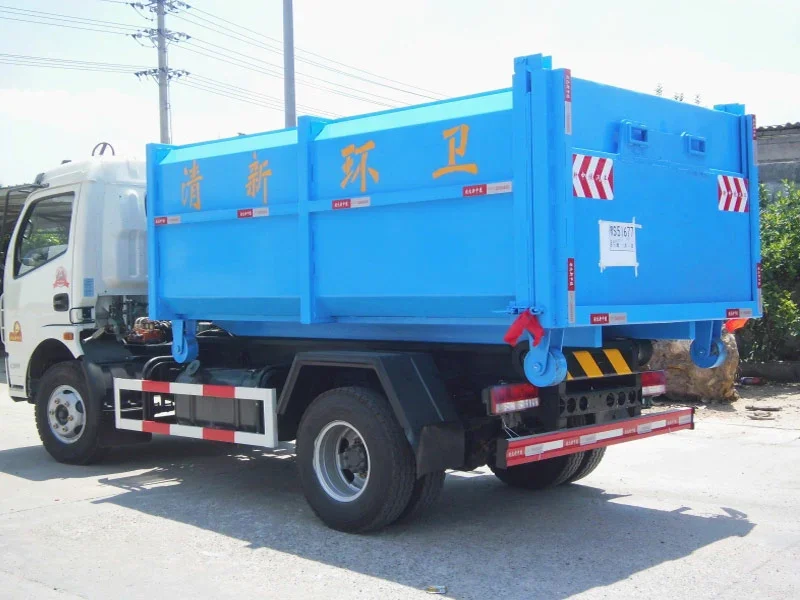
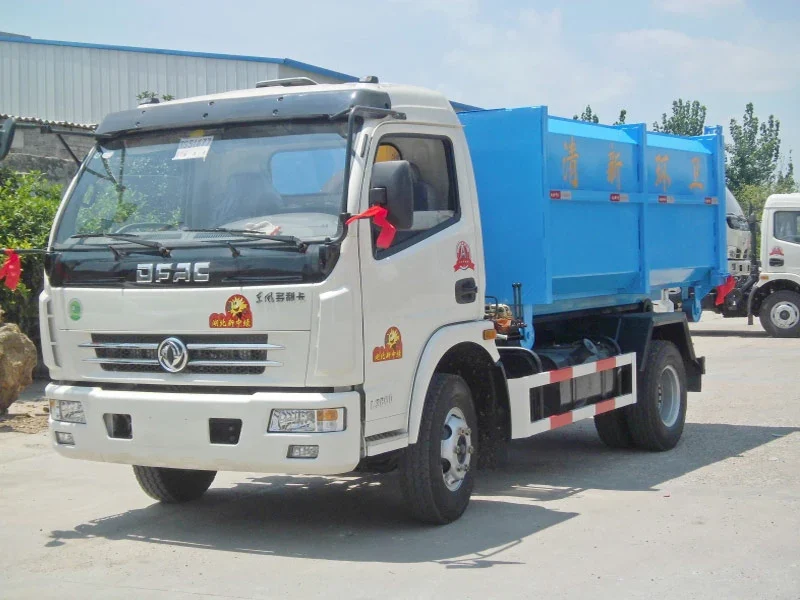
Manufacturer reference photograph. The removable container and rear chassis arrangement show where the container interface must be dimensioned.
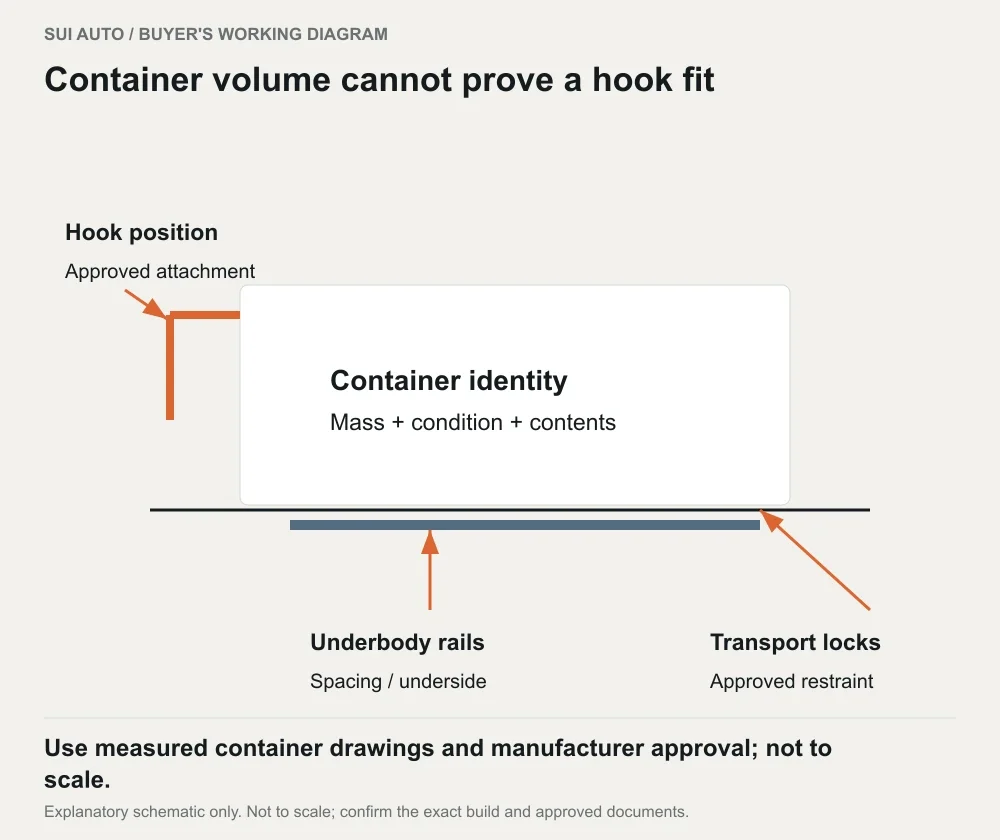
Use measured container drawings and manufacturer approval; not to scale. Explanatory schematic.
An assumed transfer-station replacement
Assume a local authority wants to replace a truck while retaining containers accumulated from several suppliers. The authority believes all boxes are similar, but there is no verified drawing register. The first procurement step is an inventory, not a truck price request. Group containers by measured interface and condition, then ask which groups the proposed hook loader can accept. Some boxes may require manufacturer-approved changes or replacement; include those costs before comparing bids. A demonstration with one selected container cannot prove every box in the inventory. The contract should identify the accepted container types and state how exceptions will be treated rather than leaving crews to discover mismatch at collection sites.
Site space and locks complete the comparison
A container that fits the truck can still be unsuitable for the exchange site. Ask for the operating envelope and required site conditions of the quoted equipment. Check approach space, overhead clearance and the route taken by the container during the approved exchange procedure. Confirm the transport locks and position indications included. Request details of how these components are inspected and how wear parts are replaced by authorised staff. A visible hook connection alone should never be treated as sufficient transport restraint. Do not improvise adapters or modify lifting points in the field. Any proposed change should return to the responsible manufacturer or engineer for review before it enters the service plan.
Acceptance should use the agreed container identity
The enquiry should include container drawings, empty masses, intended content descriptions, site sketches and existing repair history. Ask the supplier for the approved interface, limits, locks, equipment schedule and training materials. At acceptance, record the identification of the actual test container, its condition and its correspondence with the approved drawing. A trained operator should perform the defined demonstration in a controlled area under the manufacturer's instructions. The buyer should witness fit, restraint indications and the agreed discharge interface without entering the mechanism's movement area. Separately verify documentation for inspection and servicing. Record any accepted deviations in writing; a verbal statement that the container looks close enough should not close the issue.
Freeze the approved container specification
Once the interface is approved, retain a dated drawing and an identification list for the accepted container types. Require later container purchases or repairs that affect the interface to return for compatibility review. A small difference in a replacement box can be easy to miss when the volume and paint colour look familiar. The register should also separate accepted boxes from those awaiting repair or review. This gives the fleet a practical procurement control without suggesting that an office drawing alone certifies a damaged container as safe for use.
Interface questions with direct answers
Can a 5 m³ container fit every truck advertised for 5 m³? No; volume does not establish hook position, rail geometry, structure or allowed mass. Can a damaged lifting attachment be repaired during commissioning? Its repair needs competent assessment and manufacturer approval, so it should be resolved before demonstration. Does a successful exchange prove the container can carry the buyer's intended load? It proves only the conditions tested; loading limits and structural suitability require their own documented review. SUI AUTO can help assemble the interface package and compare supplier responses. Keep that approved package with the fleet records so replacement boxes and spare restraint components are ordered against the correct configuration later.
References and related reading
Planning a purchase? Follow the overseas buyer guide for specification, payment, shipping and import preparation.