The right starting point is a load schedule
Select a mobile power supply truck from a qualified assessment of the loads and interfaces it must serve. A vehicle brochure's voltage and frequency are not a complete power specification. Ask an electrical professional to define the required duty, starting characteristics, protection and site connection requirements, then request the supplier's proposal. The Hongyu JMC reference can illustrate a vehicle arrangement, but it does not establish compatibility with your facility. This article concerns procurement and commissioning; electrical connections, testing and operation must be carried out by competent personnel using applicable requirements and manufacturer instructions.
Describe an illustrative outage duty
Assume a public-service operator needs temporary support for selected equipment during an outage. The intention is not to energise every building circuit automatically. List which loads are essential, their equipment data, expected duration and whether several devices must start or operate together. Have the site professional identify connection points and any existing transfer equipment. A supplier can then distinguish the generator requirement from the vehicle requirement. Without that separation, a compact truck may appear suitable because its outlets look familiar, while the actual load or site interface remains unreviewed.
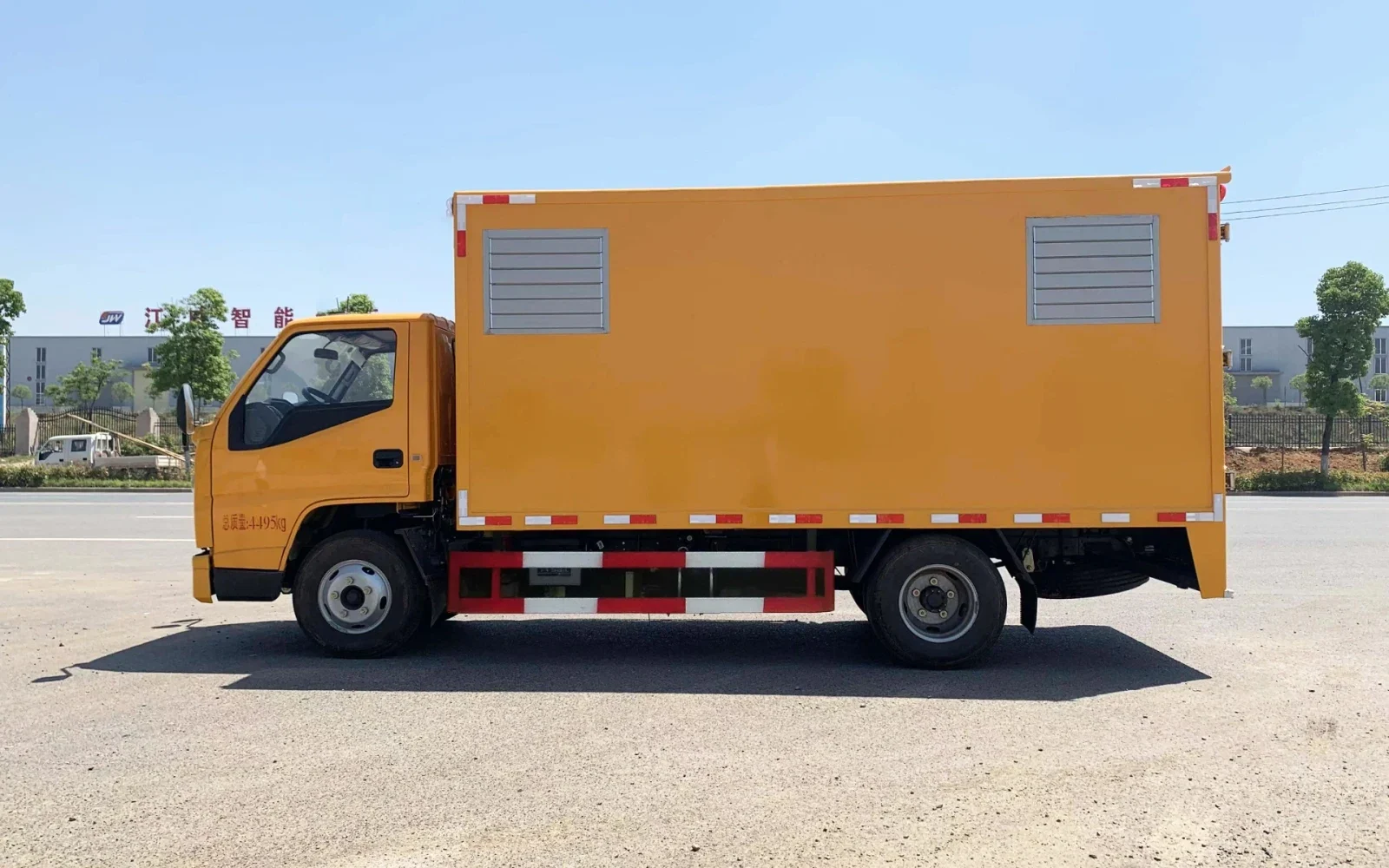
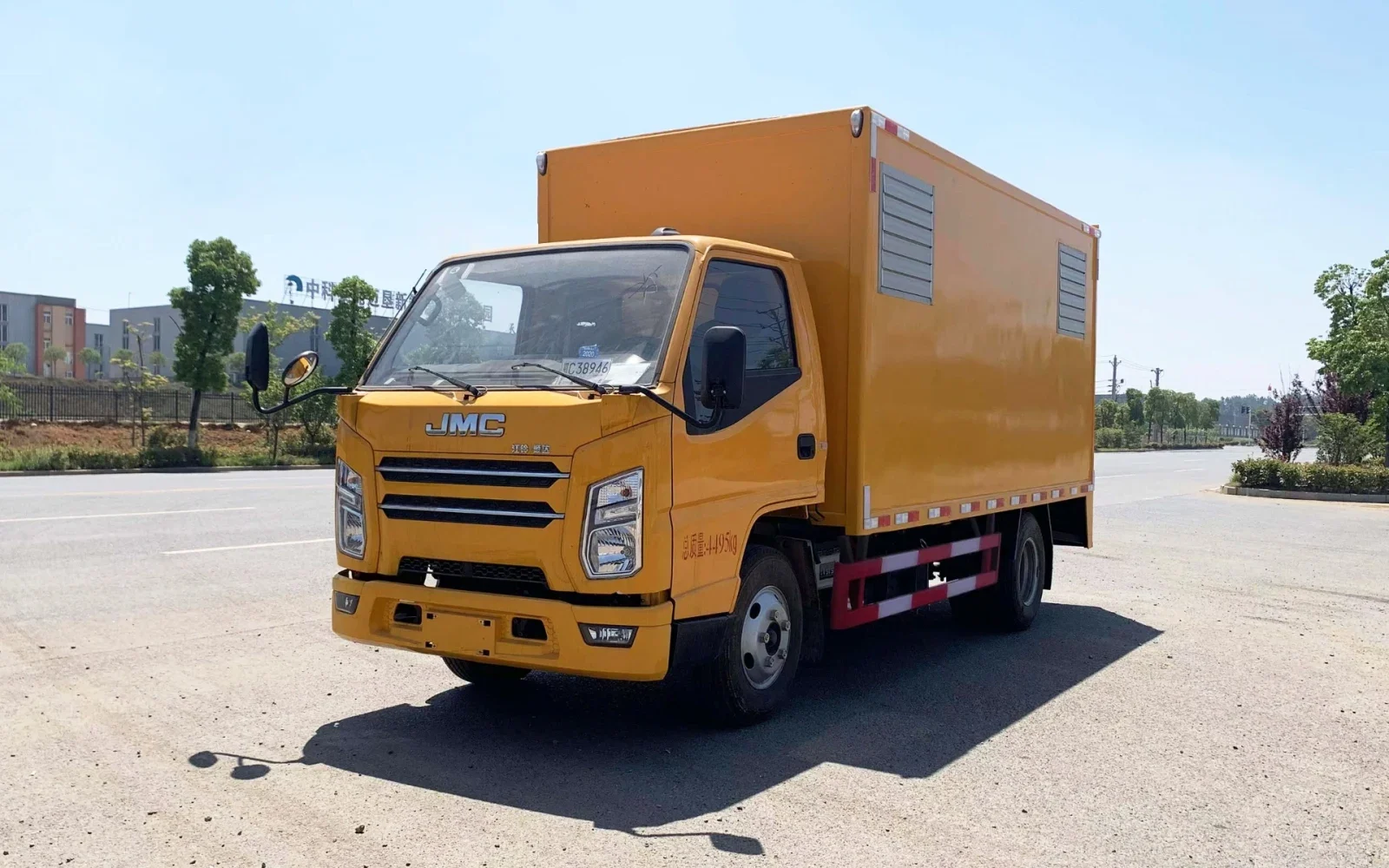
Manufacturer reference photograph. The mobile-power body's side ventilation and enclosed layout are visible; load capacity and connection scope need separate electrical documents.
Give the electrical reviewer separate fields for normal running combinations, starting combinations and the vehicle own auxiliaries. Identify which loads are essential and which are excluded. Ask the reviewer to connect the accepted generator rating basis to that schedule; a matching voltage alone should leave the duty decision unresolved.
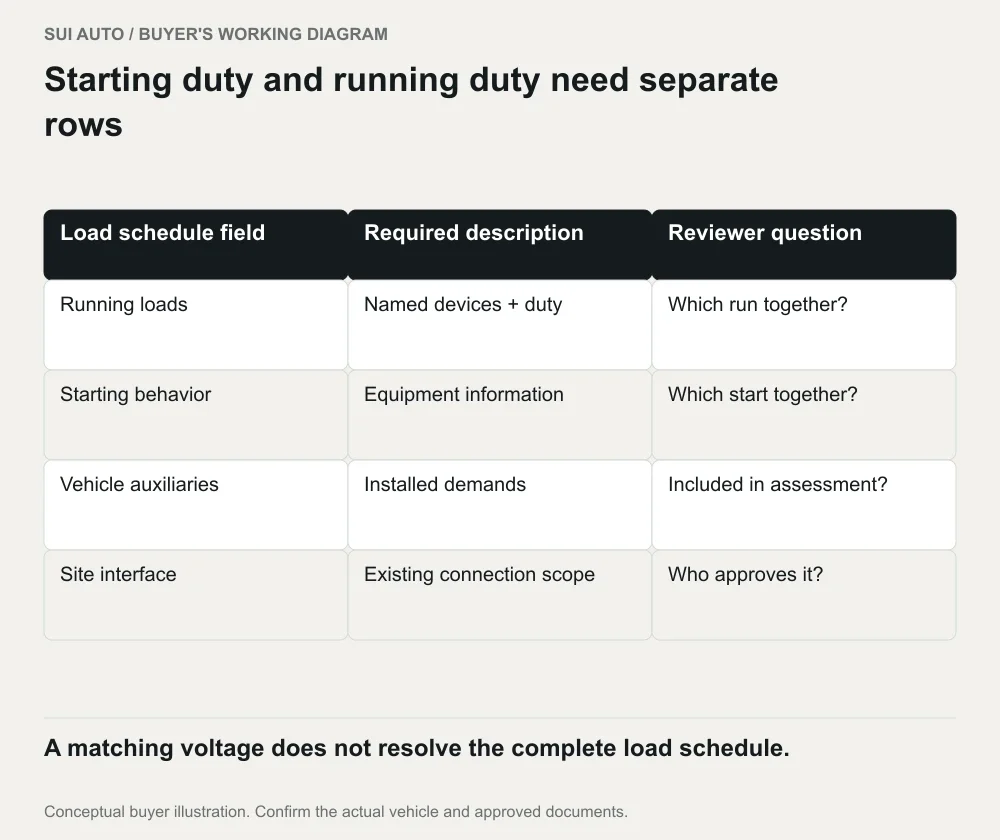
Conceptual illustration. Mobile power schedule distinguishes running starting auxiliary and site-interface demands. A matching voltage does not resolve the complete load schedule.
Do not compare only headline output
Request the generator manufacturer's rating basis and operating limitations, along with the offered voltage, frequency and configuration. Clarify how ambient conditions and continuous duty are considered by the supplier. Different rated figures may describe different service conditions, so the professional reviewing the proposal should establish a common comparison basis. Include auxiliary demands from the vehicle's own equipment. Ask about protection, monitoring and control documentation without attempting to design the installation yourself. A larger nominal generator can still be an unsuitable proposal if its electrical arrangement cannot match the approved site requirements.
Review the site and vehicle interfaces
Have a competent electrical specialist review the connection arrangement, cable provision, protective devices and responsibilities for site preparation. Do not assume that delivering a generator truck supplies every item needed for a safe connection. OSHA identifies electrical and exhaust hazards associated with generators; its guidance is a U.S. safety reference rather than a certification of this vehicle. Ask the supplier for safe operating and isolation documentation and have local professionals review applicable requirements. The enquiry should state who supplies each interface item and who performs commissioning, so gaps are visible before the truck is built.
Include endurance and service access
Ask the manufacturer how it determines the proposed duty duration and what information is needed about fuel, ambient conditions and load variation. Do not infer endurance from tank size alone. Review service access, noise information, ventilation and the manufacturer's permitted placement conditions with the responsible team. Specify storage and readiness maintenance for a vehicle that may stand unused between call-outs. Request the spare-parts list and diagnostic support for the exact generator and controller. An emergency-power resource needs a support plan as well as a power rating; otherwise a routine service problem can remove it from availability.
Agree an acceptance programme
The acceptance checklist should identify the generator, controls, electrical equipment, vehicle mass evidence, load-test conditions and required documentation. A qualified team should define and witness tests that reflect the approved duty and interfaces. Record the measured results and the supplied instrument information rather than relying on a video of a running engine. Verify training, maintenance instructions and connection responsibilities at handover. The published Hongyu reference and its photographs are examples of a manufacturer's product; acceptance must concern the actual supplied system and destination-specific professional review.
Record the boundary of the supplied service
A generator vehicle quotation should distinguish equipment supply from site design, connection, commissioning and ongoing load management. If the buyer expects one contractor to coordinate several of these tasks, make that responsibility explicit and verify its scope. Otherwise each supplier may reasonably assume another party provides an essential interface. Keep the technical reviewer involved when the planned loads change. A new device introduced after ordering can make the original duty assessment incomplete. The buyer's decision record should explain the loads covered by the accepted proposal, rather than referring vaguely to power for the entire site.
Questions before placing the specification
Does matching voltage prove compatibility? No; frequency, configuration, protection, loads and site interfaces also require assessment. Is generator maximum output the same as the required continuous duty? Not necessarily; obtain the rating basis and specialist review. Does the truck include site connection work? Only if the agreed scope says so. Keep these questions explicit in the equipment schedule. SUI AUTO can coordinate documentation and supplier responses, while the buyer's qualified electrical professionals determine suitability and approve safe commissioning. No universal output or connection arrangement should be promised from the reference vehicle alone.
References and related reading
Planning a purchase? Follow the overseas buyer guide for specification, payment, shipping and import preparation.