Purchase a documented specialist system
A smoke exhaust fire truck should be purchased against an authority-approved specialist capability brief with documented equipment performance, controls and commissioning requirements. Fan diameter or an impressive demonstration cannot establish suitability for a building, tunnel or incident. The XDR SITRAK reference is a catalogue starting point, not an operational recommendation. This article addresses professional equipment selection only and gives no instructions for ventilation tactics. The fire authority must determine the approved deployment envelope, training and applicable standards, with the equipment manufacturer supplying evidence for the exact installed arrangement.
A defined procurement scenario
Assume an urban authority wants a dedicated ventilation-support vehicle alongside its existing appliances. The first question is which incident types its approved procedures assign to this specialist unit. Then identify how it will integrate with other resources: power supply, communications, equipment storage and transportation. Avoid turning a broad statement such as tunnel support into a performance guarantee. Tunnel geometry, incident conditions and command procedures require specialist assessment. The procurement team should document what evidence is needed to evaluate the proposed system, while keeping tactical decisions with the authority's trained operational personnel.
Ask what the performance figure means
Request the fan manufacturer's performance documentation, the measurement method, test configuration and limitations. Ask whether the quoted figure describes the fan alone or the vehicle-mounted system in its intended arrangement. Clarify which accessories or ducting, if any, were included in the stated test. Different presentation methods can make superficially similar figures incomparable. Have a competent specialist explain the evidence and decide which parameters belong in the tender. A larger published fan dimension is not a substitute for the agreed performance criteria, and a catalogue field should not be converted into a site-specific prediction.
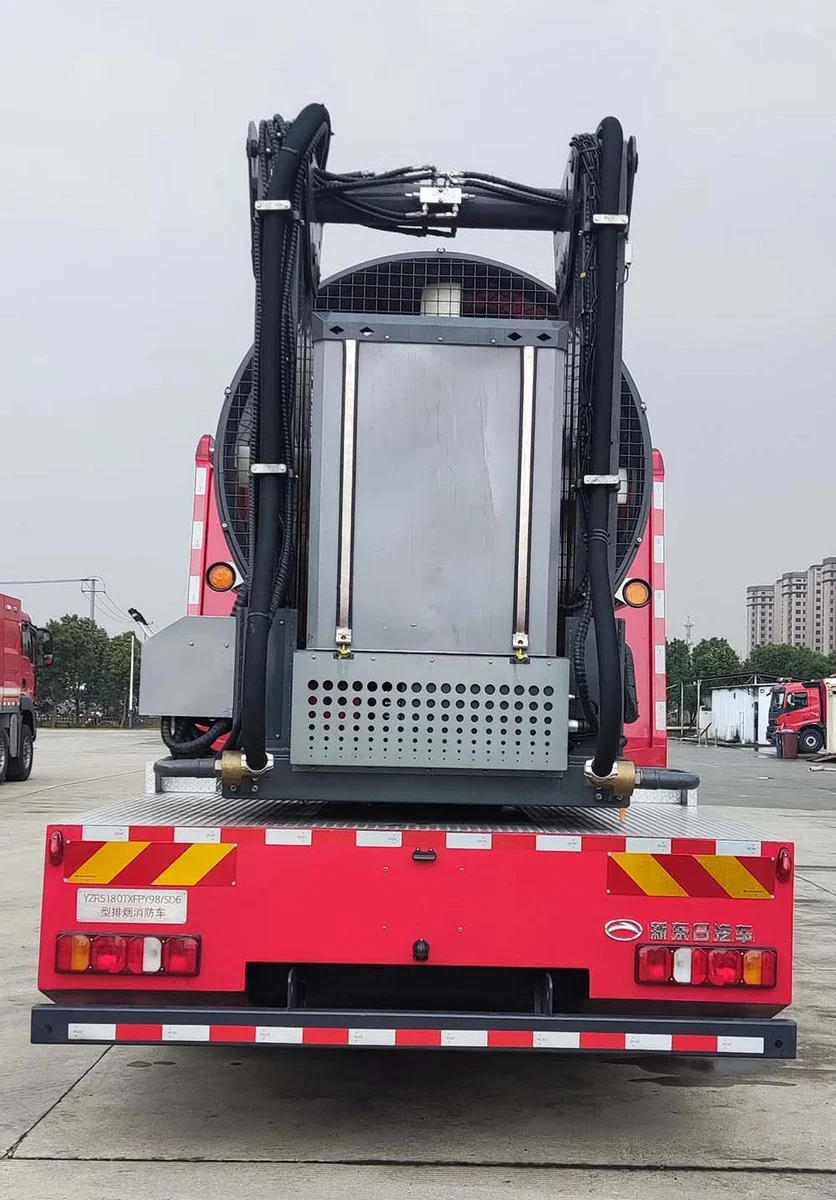
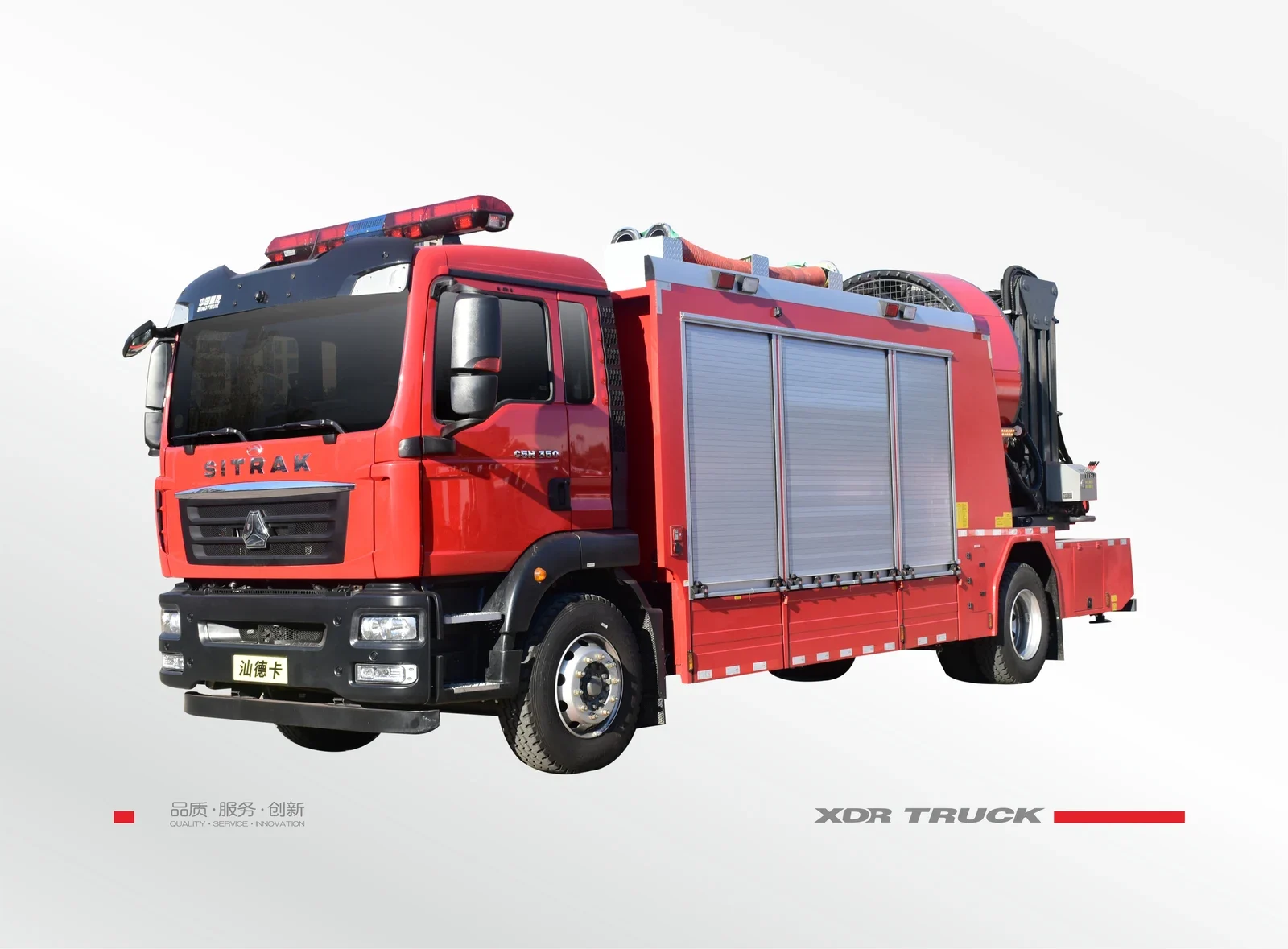
Manufacturer reference photograph. The rear-mounted smoke-exhaust fan is visible in its transport arrangement; ask how the supplied mounting and accessories relate to fan ratings.
Require every performance figure to name the tested object, drive condition and included accessories. If those fields differ, mark the figures non-comparable until the specialist establishes a common basis. Keep incident suitability in a separate authority decision field rather than deriving it from a fan-output ranking.
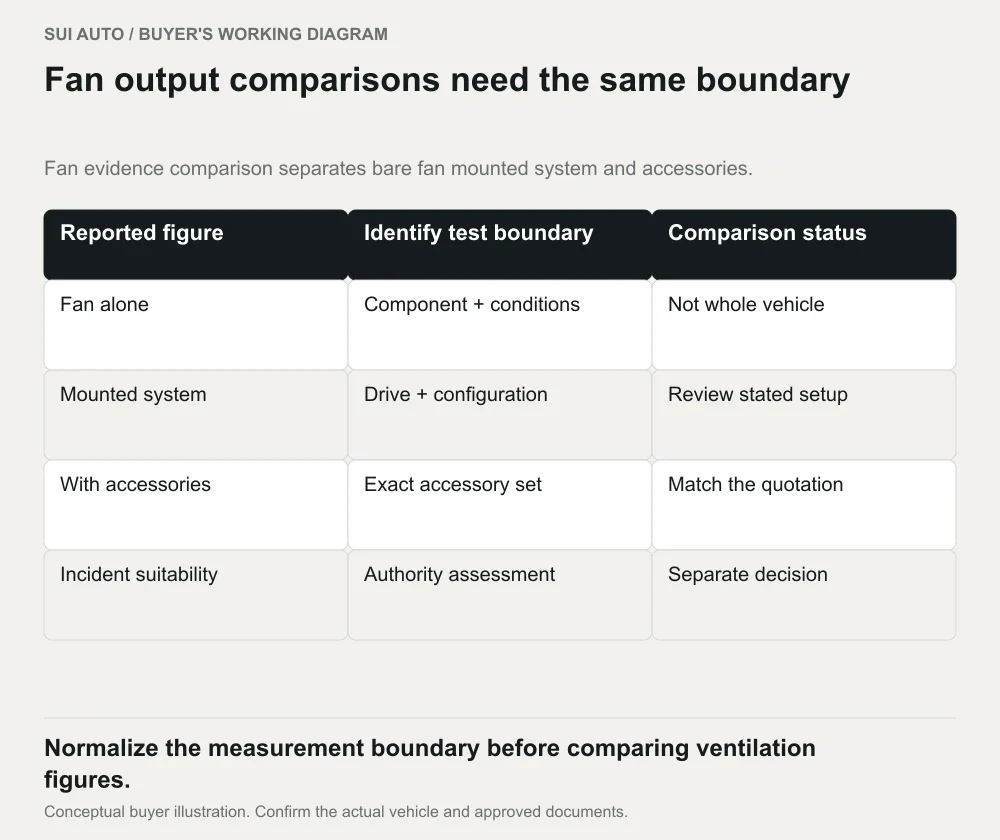
Conceptual illustration. Fan evidence comparison separates bare fan mounted system and accessories. Normalize the measurement boundary before comparing ventilation figures.
Review power and vehicle integration
Require a system diagram identifying the fan drive, auxiliary electrical supply, control interfaces and any other powered equipment. Ask which devices may run together and which interlocks are included. Identify the party responsible for chassis integration and confirm that the body arrangement has been reviewed against the relevant OEM requirements. The maintenance team needs safe isolation documentation and accessible service points, not only operator buttons. If the supplier changes an engine, generator or hydraulic component during production, request a revised integration review. Treat power and control substitutions as technical changes with documented consequences.
Clarify transport, storage and servicing
The buyer should provide its depot dimensions and storage plan, then request overall dimensions in travelling condition and the manufacturer's permitted equipment positions. Ask how externally mounted equipment is secured and inspected. Review access to service points, replacement parts and diagnostic support with the agency's workshop. A specialist vehicle may be idle for long periods, making readiness checks and consumable condition important procurement topics. Obtain the supplier's prescribed maintenance and storage schedule without inventing local procedures. Include the necessary manuals, training material and special tools in the equipment schedule so support is not discovered as an extra requirement after arrival.
Write an evidence-led acceptance checklist
Before production, agree a checklist covering the installed equipment's serial numbers, system diagrams, approved test evidence, controls, transport restraints, service access and documentation. Qualified personnel should define and witness any functional tests, using the manufacturer's safe procedures. Record test conditions and deviations. Include commissioning and training as separate deliverables with clear responsibility for each. USFA's standards-oriented procurement guidance is useful background for specifying evidence, but is not a certificate for this product. The final acceptance authority remains the purchaser's nominated technical team under the requirements applicable in its jurisdiction.
A comparison trap to avoid
Two ventilation proposals may present impressive performance numbers measured under unlike conditions. The procurement specialist should resist putting those numbers in one ranking until the measurement basis is clear. Request a common evidence schedule and have the authority's adviser explain which differences matter to the intended role. A bidder who provides a careful limitation can be more informative than one promising broad suitability without a test basis. Record the comparison conditions in the tender file. That preserves the reasoning behind the decision and prevents a specialist system from being selected on the largest isolated catalogue figure.
Questions to resolve with the authority
Can a fan's advertised output prove tunnel suitability? No; a specialist assessment and agreed evidence are required. Can the vehicle replace a normal pump appliance? Only if the authority's mission review explicitly establishes that role and the delivered equipment supports it. Are catalogue photos enough to confirm accessories? No; obtain an itemised list and inspect the actual vehicle. Any unverified performance claim should be removed from comparison tables until clarified. SUI AUTO can coordinate the enquiry and evidence package, while the responsible authority decides operational suitability and entry into service.
References and related reading
Planning a purchase? Follow the overseas buyer guide for specification, payment, shipping and import preparation.