Classify the actual function, not the catalogue category
The phrase special-purpose truck on a website is not a customs classification decision. The WCO's Chapter 87 distinguishes goods-transport vehicles under heading 8704 from special-purpose motor vehicles under heading 8705. The correct classification requires review of the actual vehicle and applicable rules. A tanker, crane truck, fire appliance and concrete equipment vehicle should not automatically receive the same code because they all have specialist bodies. Ask a qualified broker or the relevant customs authority to assess the complete build and destination nomenclature. This guide helps assemble the enquiry; it does not assign a binding code to a catalogue product.
Explain what the complete vehicle principally does
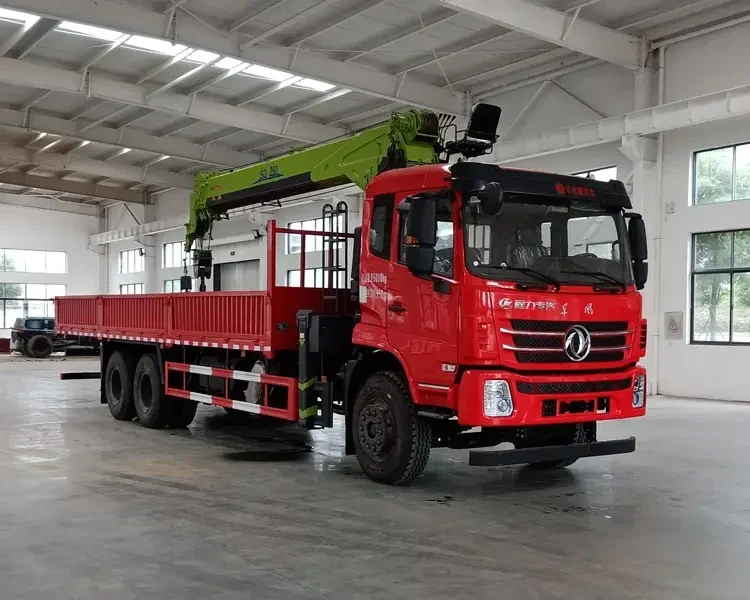
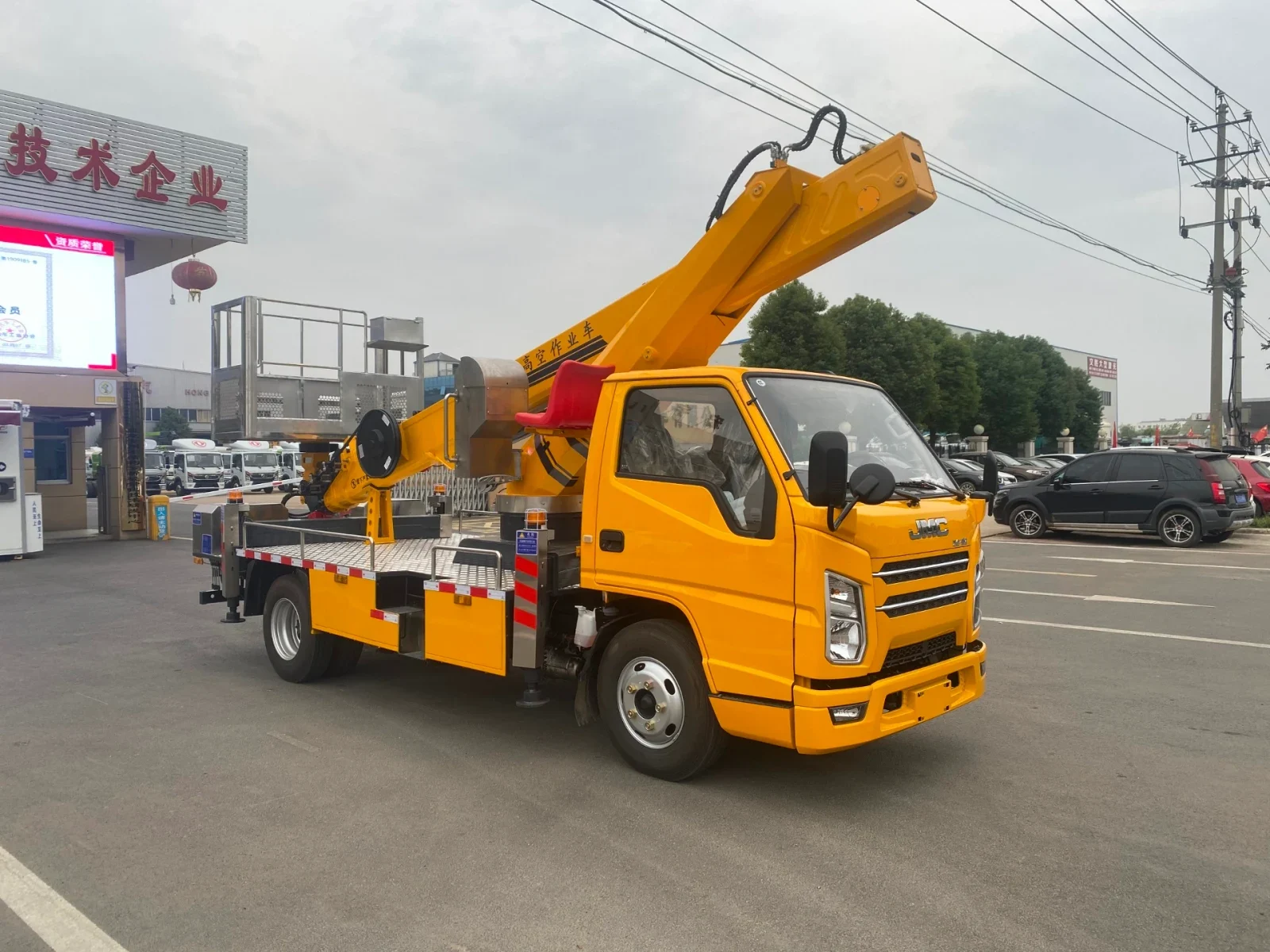
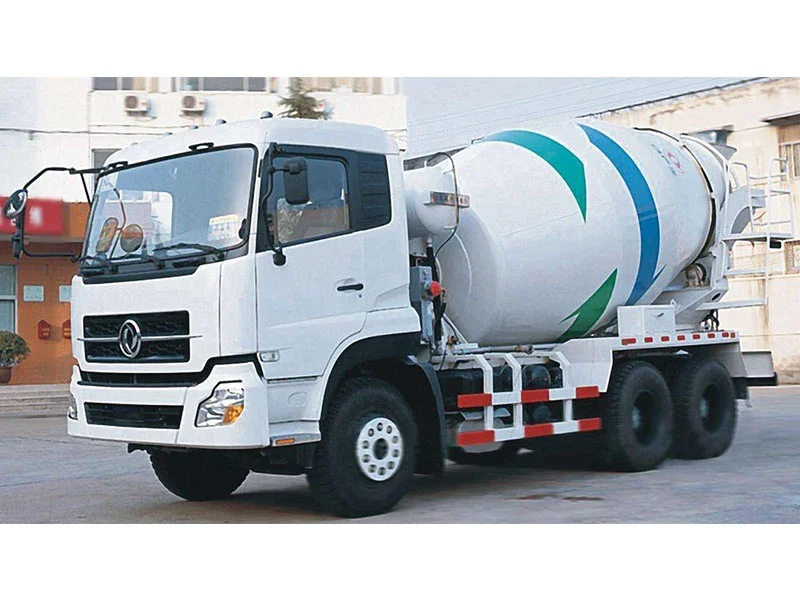
Describe whether the truck primarily transports goods or performs a specialized working function, and how its body and equipment contribute to that purpose. Provide the manufacturer's model information, layout, equipment description and relevant photographs. Avoid reducing the explanation to a marketing name such as multifunction truck. Ask the reviewer what additional technical information is needed and whether a formal advance ruling is available in the destination. Do not choose the desired tax result first and adjust the vehicle description to fit it. Classification should follow the facts and the applicable legal framework.
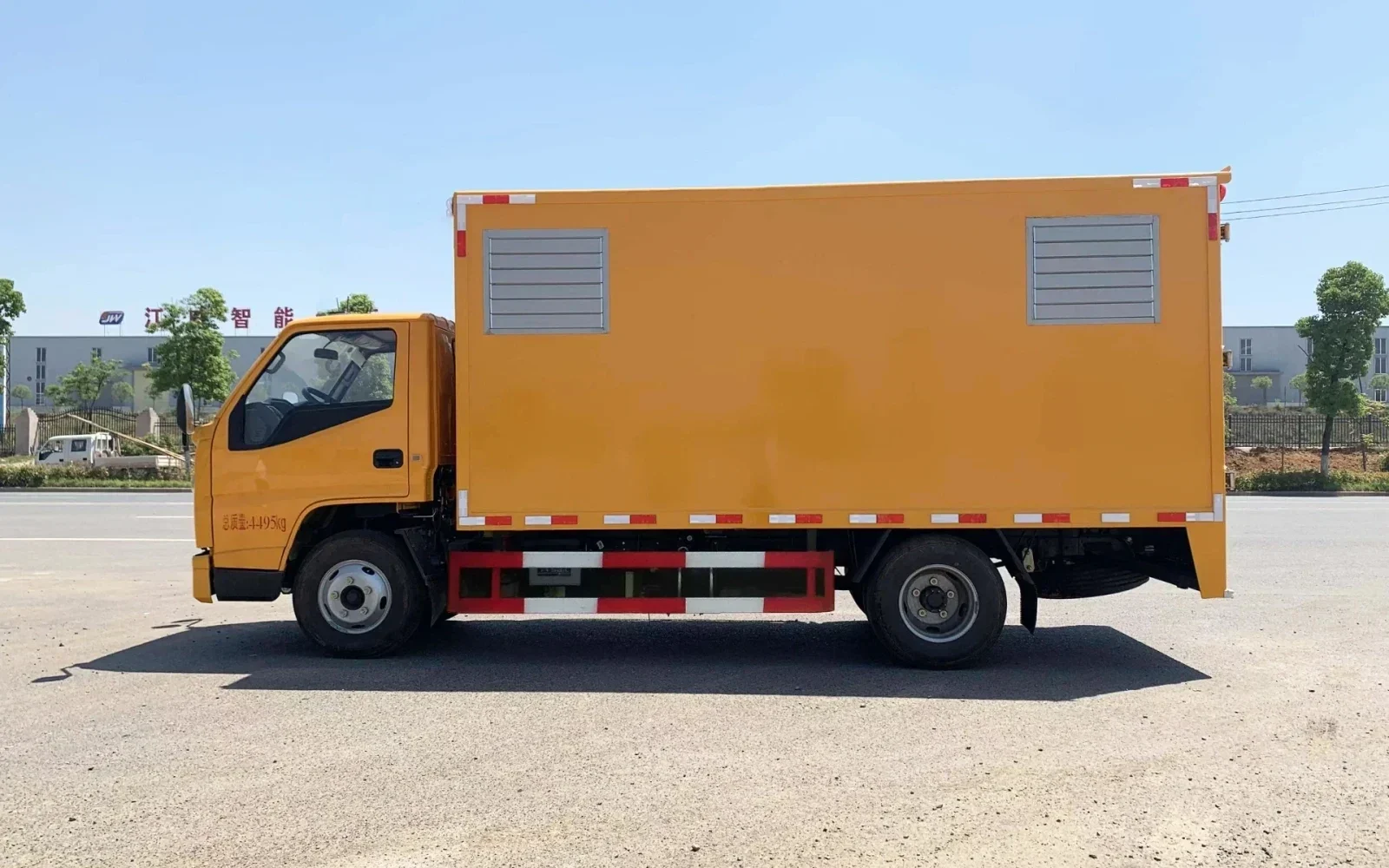
Hongyu's mobile power vehicle demonstrates why a box-shaped body alone does not explain a vehicle's principal function. Classification review needs the installed equipment and operating description as well as photographs.
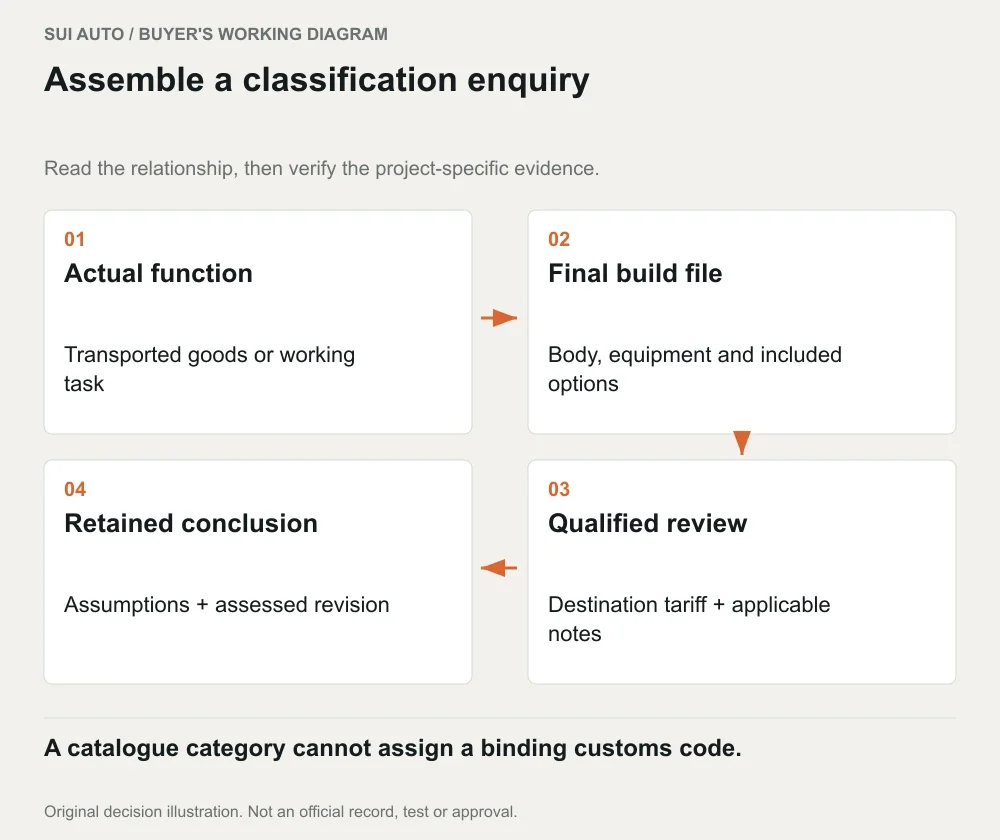
Buyer illustration: original customs-enquiry workflow; it assigns no HS code, duty rate or admissibility conclusion.
Use photographs and technical information together
Photographs can show installed equipment, but they may not explain the function or configuration clearly enough for classification. Include the accepted technical revision and a concise description of how the truck is intended to work. If catalogue photographs show optional equipment, identify which items are actually included. Give the reviewer the complete body configuration rather than a bare chassis image. Where a function remains unresolved in the quotation, say so. A classification assumption made before the final build is defined should be treated as provisional and reviewed again when the vehicle scope changes.
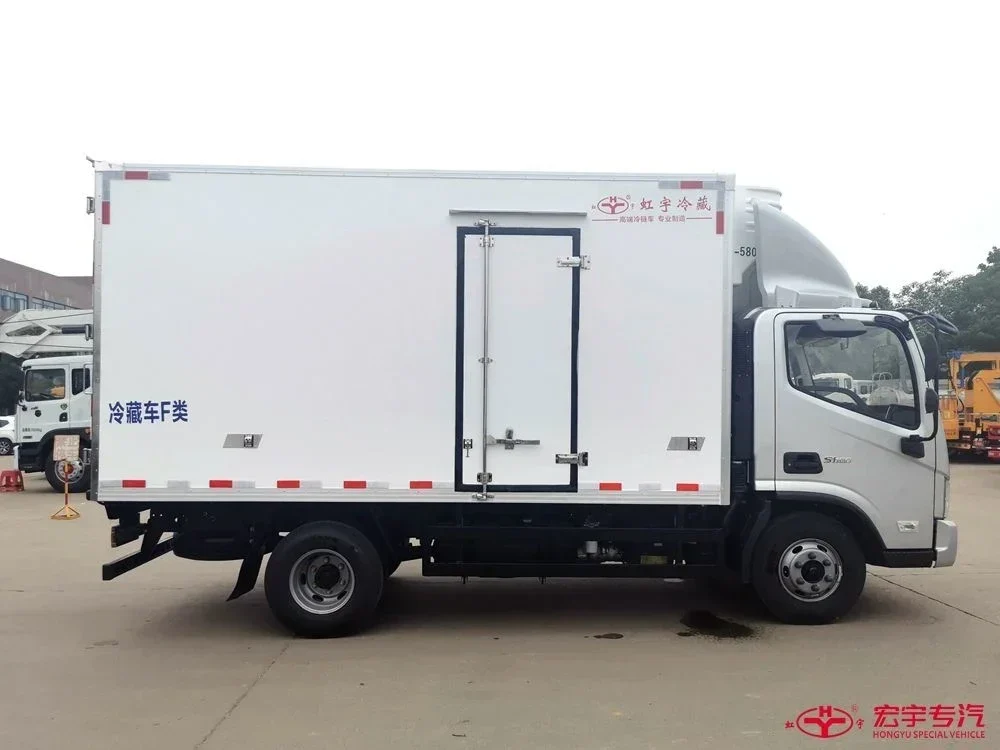
This Hongyu refrigerated truck also has a box body, but its visible refrigeration unit points to a different operating purpose. Similar silhouettes do not establish the same customs classification.
Do not classify every spare as a truck part
Separately shipped equipment and service items need their own accurate descriptions. WCO Section XVII notes exclude some items from the vehicle-parts treatment, including certain general-use parts and separately classifiable machinery. Ask the broker to review the actual items and relevant notes instead of placing every pump, filter or tool under one truck-parts line. Give part identity, material or function information where requested. A complete truck's classification is not an automatic classification for everything packed alongside it. This is especially relevant when a procurement platform consolidates equipment from several sources into one shipment.
An illustrative classification enquiry
Suppose a buyer is comparing a water tanker and a truck with concrete-pumping equipment. It prepares separate enquiries describing each proposed vehicle's function, body and equipment rather than asking for the tax rate for special trucks in general. The broker requests further details and reviews the destination tariff. The buyer records the conclusion, assumptions and date checked, and asks whether production changes would require another review. This is a hypothetical process. It does not determine either vehicle's code or imply that a website label proves classification under 8705.
Keep the classification decision with the final import file
Record the proposed code, the source of the determination, the vehicle specification assessed and any conditions or outstanding questions. Distinguish an informal supplier suggestion from a broker's advice or an authority's ruling. Ask whether the destination uses additional digits or national requirements beyond the international heading. Update the document file if the complete build changes. Use the approved description consistently on transaction records as required by the issuer and broker. A disciplined file reduces avoidable ambiguity, while the importing authority retains the power to assess the actual goods and their declared classification.
Can I use the manufacturer's suggested HS code?
Use it as information for review, not an automatic final answer. A supplier may be referring to export practice or a different jurisdiction. Give the full vehicle details to your destination broker and ask for a current assessment under the applicable tariff.
Does an export report prove a model's customs code?
No. Aggregated export statistics and broad product categories do not establish the classification of a specific imported build. Use the report for market research, then obtain transaction-specific classification advice based on the actual vehicle and destination rules. Ask the reviewer whether classification evidence applies to the finished vehicle or only to the preliminary configuration, and document the distinction.
References and related reading
- World Customs Organization: Harmonized System Chapter 87
- Water Tanker: published vehicle reference
- CLW Dongfeng 28 m Concrete Pump Truck: published vehicle reference
- Foton 4×4 Water Tank Fire Truck: published vehicle reference
- Water Tanker Trucks: Road Washing and Dust Control
- Prepare your vehicle requirements
Planning a purchase? Follow the overseas buyer guide for specification, payment, shipping and import preparation.