Close each finding against its original requirement
A truck inspection finding should close when the responsible reviewer has evidence that the agreed correction meets the relevant requirement. A message saying fixed is a progress update, not a complete closure record. Give every finding an identifier and retain the original observation. Record the location, requirement, proposed action, responsible person and verification method. This lets the buyer separate completed work from an accepted exception or an item still awaiting evidence. Keep the same identifier through repair, reinspection and the final release decision.
Write findings that another person can locate
Describe the condition and its exact position on the vehicle. Include the VIN or body serial number, component identity where relevant and a photograph or marked drawing. State what the inspector observed before drawing a wider conclusion. A clear finding might identify a missing restraint at compartment C3 and the approved drawing that requires it. An unclear finding such as poor workmanship gives the factory little direction and the reviewer no objective closure point. Ask the inspector to resolve ambiguous observations before the repair team starts work.
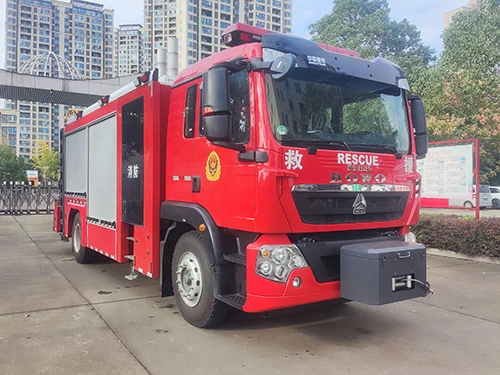
Kaili's published service photograph shows attention to a specific rear-body area. A useful defect entry likewise identifies a physical location and the requirement to be checked; this is not a closeout record for a SUI AUTO order.
Classify the decision that is needed
Different findings require different responses. A missing label, a component identity mismatch and a concern about a critical weld should not share one informal approval route. Agree which issues need engineering review, independent reinspection or buyer authorization. Keep technical severity separate from the inconvenience of the correction. A small-looking defect can affect an important function. Where an exception is proposed, record its technical basis and the person authorized to accept it. The buyer's project team should not assume that every finding can close through a replacement photograph.
Review the proposed correction first
Ask what will be changed and which related checks must follow. Replacing a device can affect wiring, configuration, manuals and the spare-parts list. Reworking a coating can require preparation and verification appropriate to the selected system. For welding concerns, TWI explains that repair procedures depend on the material, defect and practical constraints. Route such work through qualified technical review. The buyer should approve the required decision through the agreed process before critical repair starts. Preserve access for any inspection that must occur before the area is concealed again.
A hypothetical closure sequence
Assume illustrative finding F-09 identifies a missing equipment restraint against drawing D-6 R3. The manufacturer installs the approved restraint, records its position and provides the required check. The reviewer compares the evidence with F-09, requests an additional view of the attachment and then signs the closure. The identifiers are invented and describe a workflow, not a SUI AUTO job. If the drawing itself changes, the record must explain that decision. Otherwise a revised drawing could make the original finding disappear without a clear technical resolution.
Link evidence to the final configuration
Keep before-and-after photographs, relevant measurements, replacement component details and any repeat test under the finding identifier. Record the date, person doing the work and person verifying closure. If the correction affects another accepted test, reopen the relevant line and document the recheck. Maintain the original inspection report with its findings intact. A final summary can show the current state while the detail remains available. This gives the receiving team confidence about what changed and helps the maintenance team interpret later differences from earlier photographs.
Use an accountable closeout register
For each finding, list requirement, observation, disposition, corrective action, evidence reference, reinspection result and closure authority. Separate open, ready for review, closed and accepted exception. Include a target date and an escalation contact for unresolved technical decisions. Before shipment release, reconcile the register with the acceptance plan and any outstanding documentation. If work is deliberately deferred, state the responsible party, location and evidence needed later. The register should make that decision visible rather than presenting the vehicle as fully cleared by default.
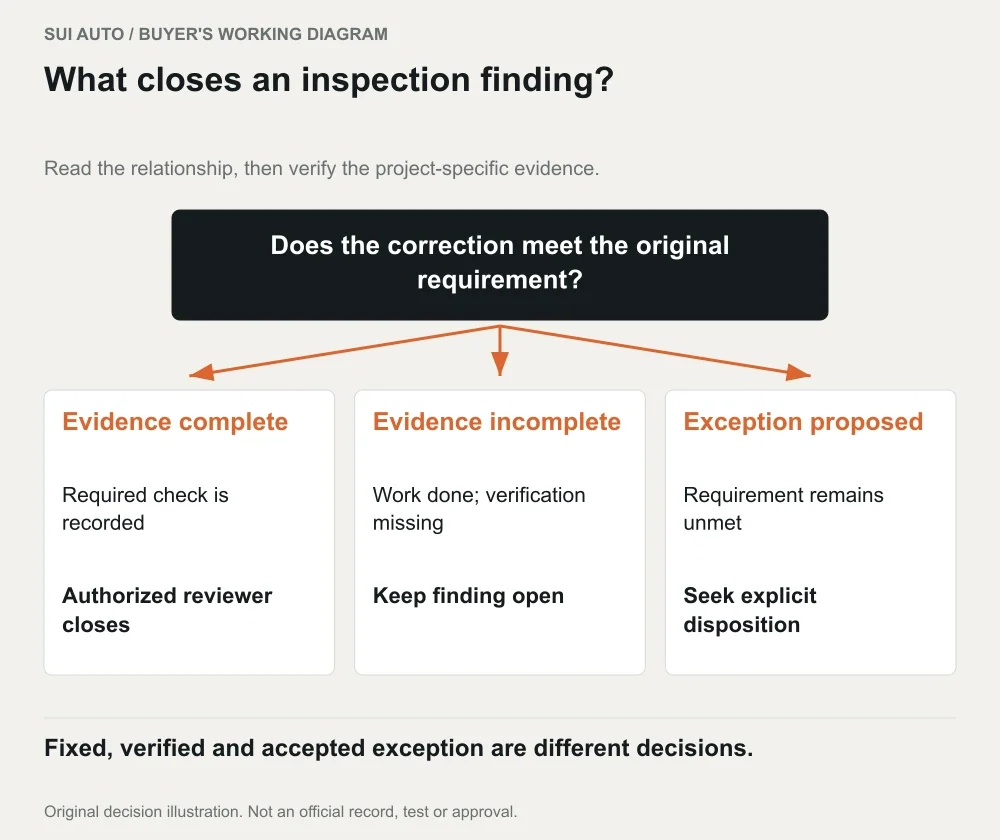
Buyer illustration: finding-closeout decisions under the project’s agreed acceptance process.
Should the buyer accept a discount instead of repair?
That is a commercial and technical decision requiring the appropriate authority. First establish what requirement is unmet and whether the proposed condition is acceptable for the intended use. Some matters may require correction before operation or approval; others can be handled through an agreed exception. Document the decision and its consequences for records and support. A price adjustment alone does not establish technical suitability. Seek the relevant professional advice when contractual rights or regulatory obligations are involved.
Must the same inspector verify the correction?
The inspection agreement should define who may close each type of finding. Continuity can help, but another authorized reviewer can work from a clear record and agreed method. Ask the inspection provider whether a return visit, remote evidence review or specific repeat test is appropriate. Record which method was used and its limitations. A buyer should avoid marking all findings closed simply because the factory has uploaded a new folder of photographs without a completed review.
What if the factory says a defect is fixed but the inspector disagrees?
Return to the finding identifier, original requirement and agreed verification method. Ask both parties to state precisely which evidence or criterion remains disputed. If the requirement is ambiguous, obtain the designated technical authority’s clarification before further work. Preserve the original and revised evidence rather than replacing the record with a general assurance. Escalate the unresolved decision through the agreed route and keep the item open. A useful resolution identifies the accepted condition and closure authority, allowing the final release reviewer to understand why the disagreement was resolved.
References and further reading
Planning a purchase? Follow the overseas buyer guide for specification, payment, shipping and import preparation.