Treat a shortage as a controlled open item
When a component is missing, record the exact item, affected vehicle, remaining work and verification needed before the relevant release. A nearly finished truck should not be described as complete if the accepted equipment list has open items. Start by reconciling the physical vehicle with the current bill of materials and loose-equipment schedule. Distinguish a part that has not arrived from a part that is on site but not installed or tested. Those states lead to different recovery actions and different decisions for the buyer.
Define the missing item precisely
Record the manufacturer, model or part number, quantity, intended location and requirement reference. A description such as one valve outstanding may be too vague when several similar valves exist. Identify the supplier's promised date and the evidence supporting it. Ask whether the shortage affects installation, function tests, manuals, training or shipment preparation. Keep optional items and accepted exclusions separate from true shortages. The buyer should be able to see whether the current issue changes the agreed build or merely needs completion of work already specified.
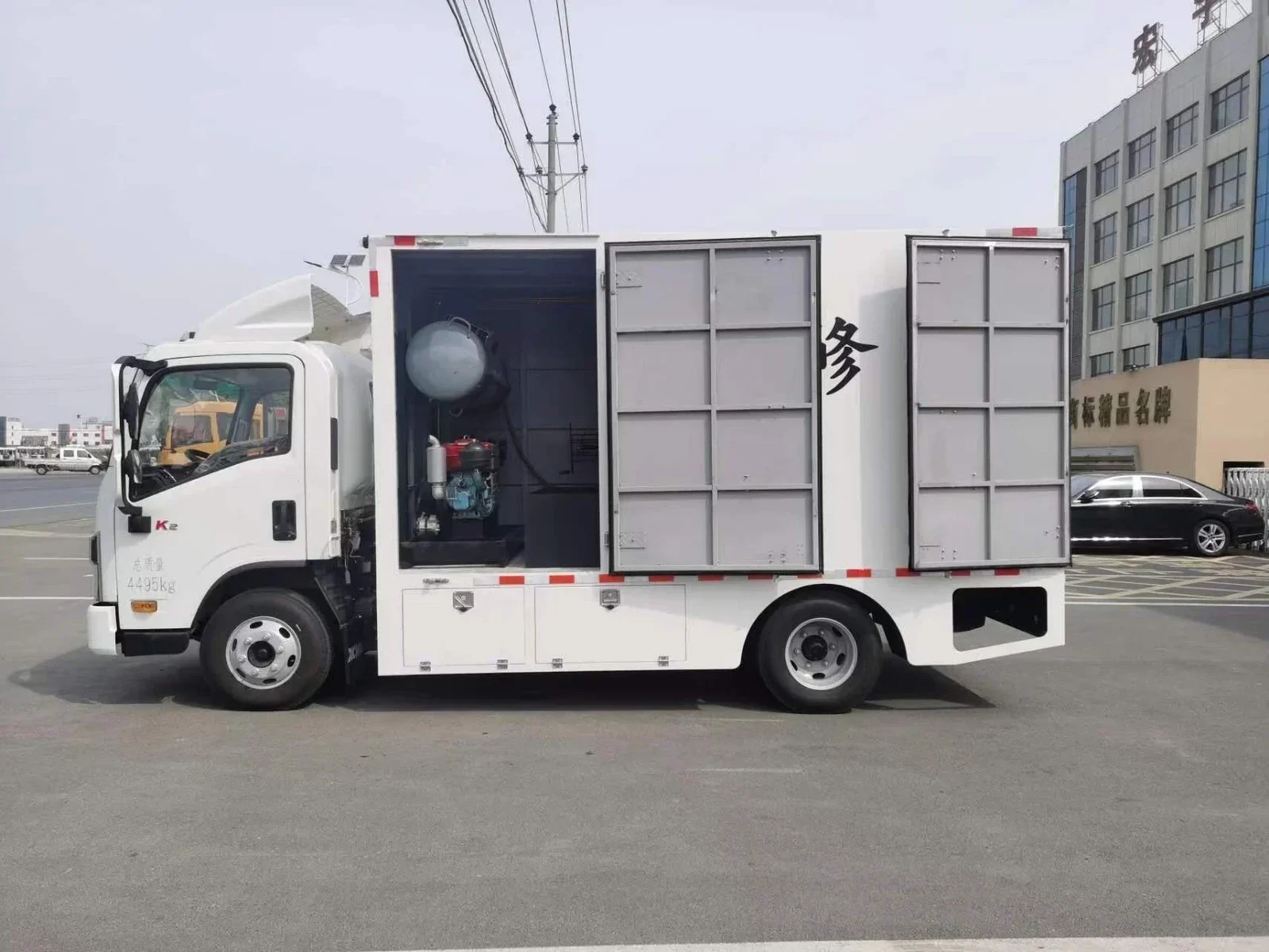
Hongyu's open workshop compartment makes the difference between an empty enclosure and installed working equipment visible. Completion should identify the actual missing assembly rather than use the exterior appearance alone.
Classify the effect on readiness
Ask the responsible technical parties whether the vehicle can be safely tested, moved, transported or operated in its present state. These are separate questions. A missing trim piece may have a different effect from an unavailable control module or equipment restraint. Avoid treating small physical size as evidence of low importance. Record the required decision and authority. If unaffected work can continue, state that scope. The shortage register should help the manufacturer make progress without allowing a partial release to become approval for activities that remain blocked.
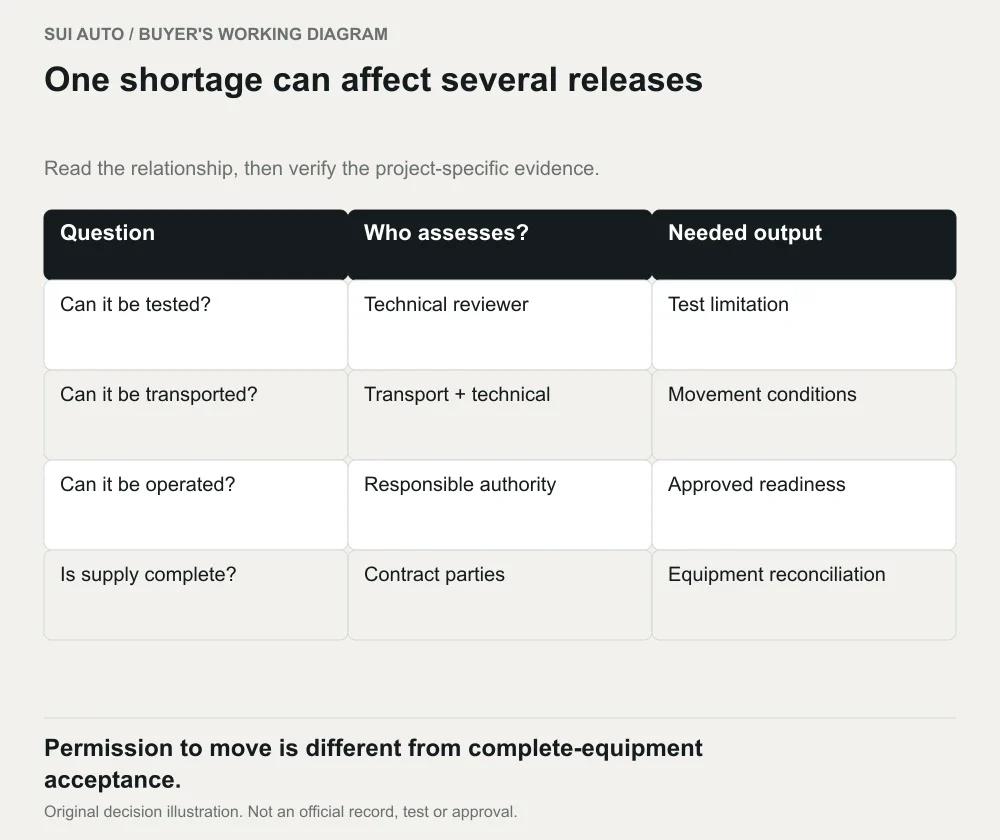
Buyer illustration: release questions for an incomplete vehicle; no missing component is presumed acceptable.
Request a completion plan with evidence
The manufacturer's response should identify the procurement step, installation slot, required retest and documentation update. Ask for the actual dependency rather than a new date alone. A supplier dispatch confirmation is different from receipt at the body builder. If the proposed item changes, use the agreed substitution review with identity, interface and maintenance implications. Do not accept a temporary component silently as the final configuration. Any temporary installation should be clearly identified and its removal or replacement included in the completion record.
A hypothetical shortage decision
Assume illustrative rescue Truck R-08 lacks one specified lighting controller. The mast is installed, but the planned control and protection checks cannot be completed. The manufacturer proposes finishing unrelated compartment work while the controller is in transit. The buyer agrees to that limited sequence and keeps lighting acceptance open. This is an invented example, not a SUI AUTO order. The completion record later includes controller identity, installation, function checks and the updated manual. The shortage closes against those requirements rather than the arrival photograph alone.
Decide partial completion explicitly
If the parties consider dispatch with an open item, record who will supply, install and verify it, where that work will happen and which documents must follow. The buyer should assess the technical, logistical and contractual consequences through the appropriate advisers. Some missing equipment may prevent testing, approval or lawful use. A packing note cannot resolve those constraints. Keep the complete-vehicle acceptance status distinct from authorization for a limited transport movement. The written decision should state its exact scope and should not rely on an assumption that the receiving operator will finish the work.
Reconcile before the final release
Check the current equipment list, installed serial numbers, loose-item inventory, open shortages, accepted exclusions and remaining tests. For each closed shortage, link receipt, installation and verification evidence. Update drawings, manuals and spare-parts references where the actual component affects them. Confirm that the final vehicle record matches the supplied equipment. SGS includes documentation, packing and marking checks in its inspection scope; the buyer's schedule should tell the inspector what belongs to the particular order. An accurate list makes a physical reconciliation faster and more reliable.
Can a supplier call the truck complete while accessories are outstanding?
Ask which definition of completion the supplier is using and compare it with the accepted order. Mechanical assembly, readiness for a particular test and complete contractual supply can occur at different times. Use precise status labels and record the outstanding scope. If accessories are agreed as a separate delivery, make that arrangement explicit. The buyer should avoid inferring that a finished exterior or an engine-running video means all ordered equipment and documentation have been supplied.
Is a substitute the fastest solution?
It may be practical, but the appropriate technical reviewer must assess identity, compatibility, operating limits and support. Ask how the replacement affects wiring, mounting, software, manuals and spare parts. Keep the approval tied to the affected vehicles. A substitute that creates later integration work can delay completion more than waiting for the specified part. Compare the actual remaining sequence for both options and record the accepted decision before installation.
Can missing equipment be supplied separately after the truck leaves?
Assess the specific item and obtain the required technical and commercial decisions before agreeing separate supply. Define who sources, installs and verifies it, where the work takes place and which manuals or approvals must be updated. Ask whether the omission blocks testing, destination approval or intended use. Keep transport authorization separate from complete-equipment acceptance. Record the outstanding item in the handover file with a completion plan and responsible contact. The receiving operator should see the accepted limitation explicitly, instead of discovering an assumed local installation task after arrival.
References and further reading
Planning a purchase? Follow the overseas buyer guide for specification, payment, shipping and import preparation.