Match collection and cleaning functions separately
Start with a vacuum truck when the central task is collecting material approved for its tank and suction system. Review a combination sewer truck when the job also needs a specified jetting function. A suction tank and a water-jetting package solve different parts of a service operation. The word sewage does not establish which materials or blockage conditions either vehicle can handle. Buying the combination package makes sense only if the cleaning work, water logistics and trained staffing justify it. Obtain the manufacturer's description of permitted applications and the buyer's site assessment before treating any truck as a complete sewer maintenance solution.
Understand the two storage demands
The reviewed Kaili combination listing identifies maximum clean-water and sewage tank values of 4 m³ and 8 m³, plus a listed high-pressure pump flow of 215 L/min. These are reference specifications, not proof that both tanks may be simultaneously filled to those values within road mass limits. Ask for the usable volumes, compartment arrangement and allowable loading cases of the exact build. A dedicated vacuum truck has a different allocation of equipment and tank space. Compare the travel between collection points, refill facilities and an authorised disposal site. A combination truck can lose practical time if the route has no convenient water supply, even when its equipment covers the intended cleaning task.
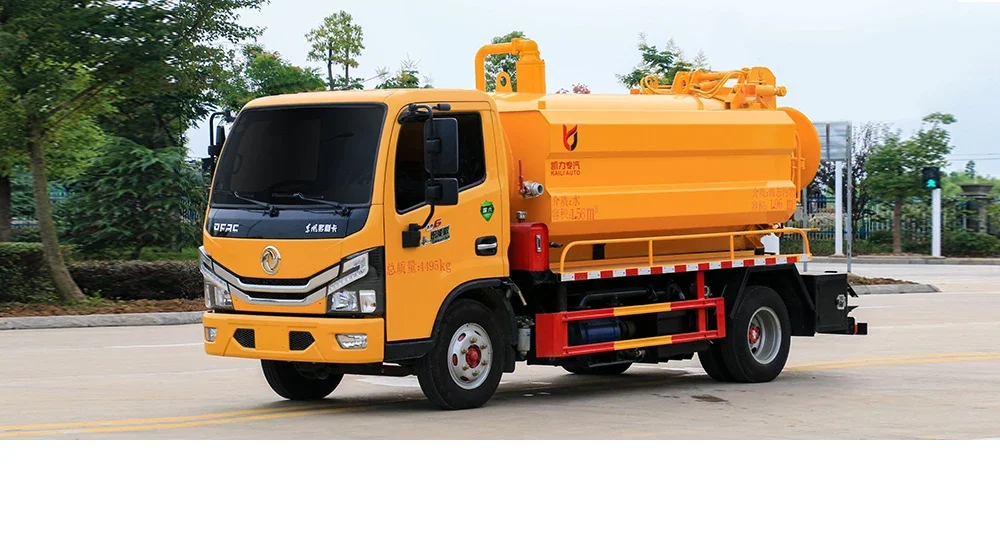
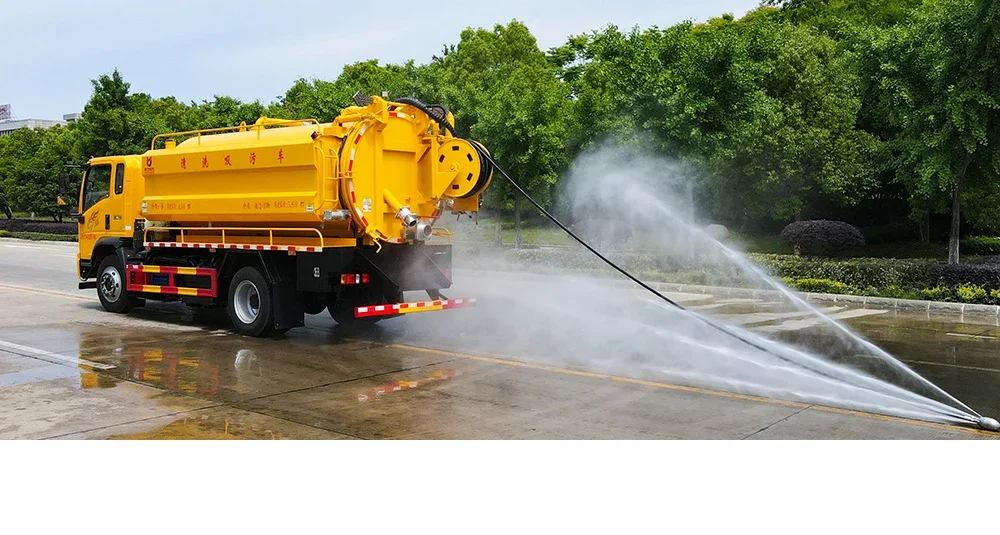
Manufacturer reference photograph. The combination truck packages cleaning-water and waste-service equipment together.
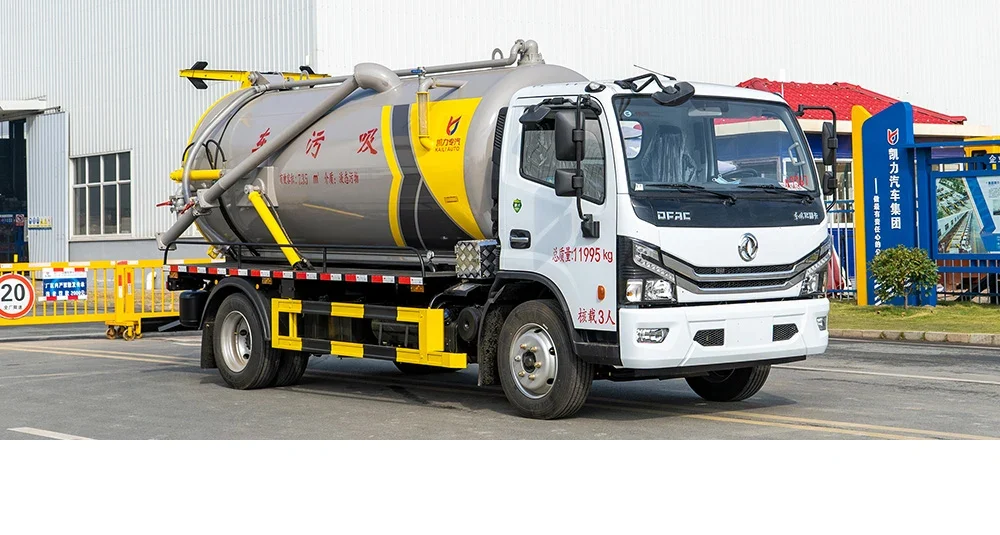
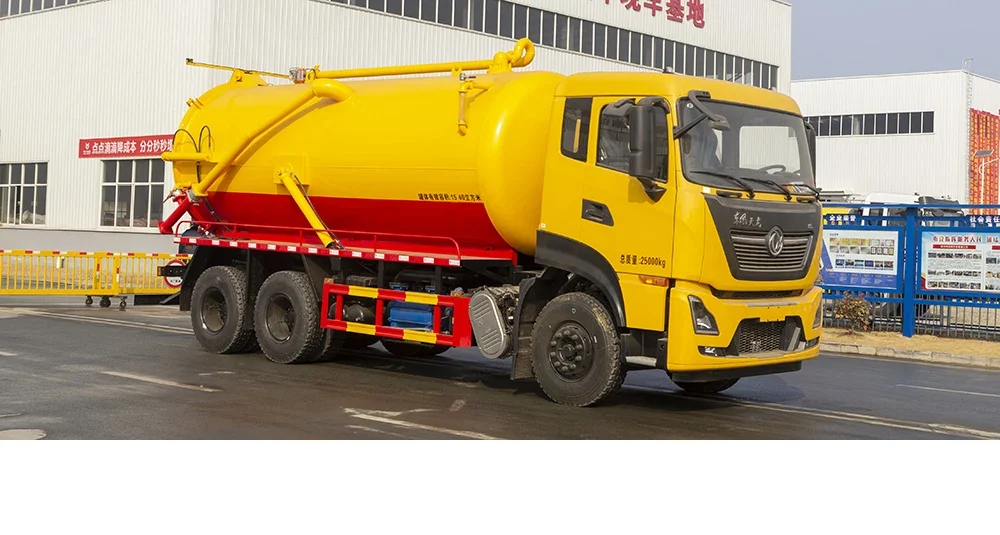
Manufacturer reference photograph. The vacuum truck carries a suction tank body.
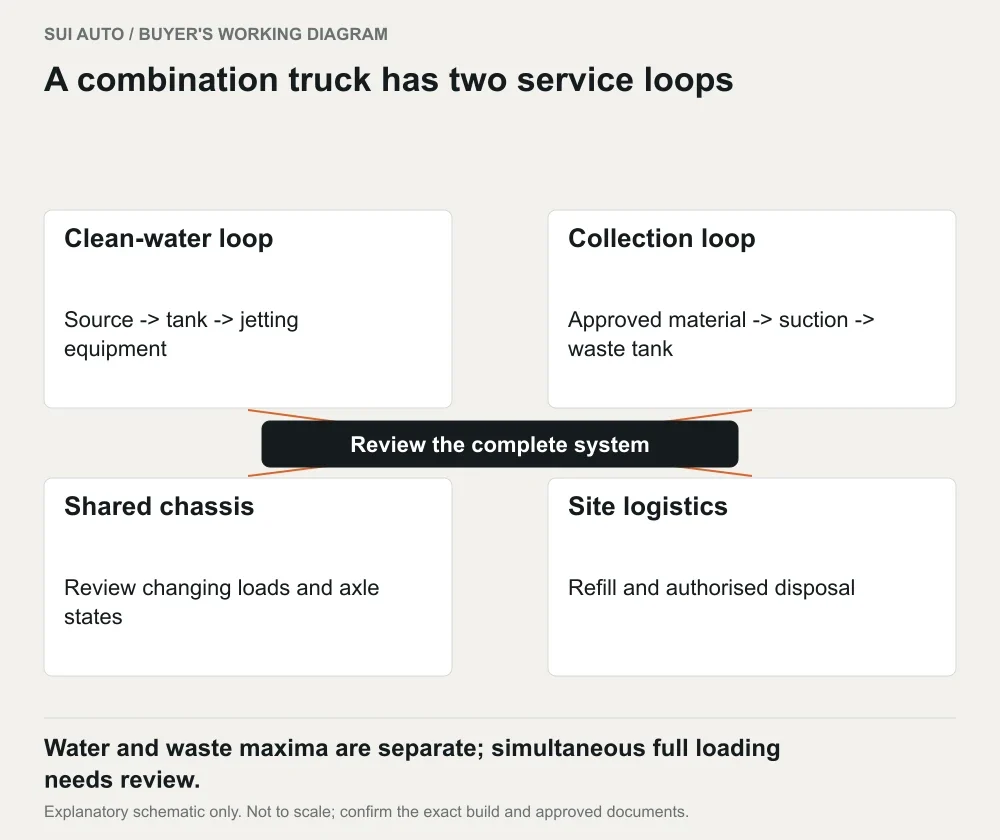
Water and waste maxima are separate; simultaneous full loading needs review. Explanatory schematic.
An assumed maintenance contract
Assume a service company collects from private septic systems most days and occasionally responds to blocked municipal drains. This is a planning example, with no assumed customer outcome. If jetting is infrequent, a dedicated suction truck plus a separately contracted cleaning service may be easier to maintain. If verified drain-cleaning demand is recurring and the company can provide trained crews and water access, a combination truck deserves review. Separate the two work streams in the enquiry so the supplier can identify equipment requirements. Avoid ordering a bigger tank merely to cover uncertainty about blockage frequency; uncertain demand should be measured before committing to a complex body and pump package.
Pump numbers need operating context
A vertical suction range in a listing does not guarantee material recovery at every site with that depth. Hose layout, material properties and the manufacturer's approved operating conditions matter. Similarly, rated jetting flow alone does not define nozzle suitability or pipe cleaning performance. Ask for pump model information, compatible hose and nozzle documentation, protection devices and the operator manual. Request confirmation of the materials allowed and how the system handles limits or faults. The supplier should explain these points without asking crews to test unknown waste or improvise high-pressure work. Any acceptance demonstration must be planned and performed by authorised personnel using the actual manufacturer's safe procedure.
Build a responsible acceptance scope
Submit the service types, known material description, access constraints, intended pipe applications and disposal arrangements. Obtain a tank layout, equipment schedule, weight information, hose and reel specifications, maintenance documents and training scope. Agree what the demonstration will prove and which conditions it will not simulate. Check identification, supplied accessories, level indications, documented pump references and the quotation's loading restrictions. Confined-space entry is a separate safety activity requiring an applicable assessment and programme; a vacuum truck purchase does not make entry safe. OSHA's confined-space standard is a useful United States reference, not a declaration of legal compliance elsewhere. Buyer and local specialists must establish destination requirements before work begins.
Keep the quotation split by function
Ask for the suction and jetting packages to appear as separate equipment groups in the technical schedule. That makes optional reels, hoses, nozzles and training easier to compare, and it identifies what changes if one function is removed from a bid. The chassis and loading review must still cover the complete combination. If a supplier proposes several tank layouts, request a drawing for each instead of one shared photograph. The buyer can then compare a dedicated collection truck with a combination build while seeing precisely which additional duty and support obligations the second proposal includes.
Resolve these questions in writing
Can a vacuum truck clear every blocked sewer? A collection function alone cannot establish a jetting or blockage-removal capability, so the approved job scope must be confirmed. Does a combination truck eliminate disposal trips? It still needs authorised receipt of collected material, and water refilling can introduce additional travel. Should the quoted maximum tank volumes determine the chassis? They are starting information; the exact body mass, permitted loading cases and axle limits must also be reviewed. Ask SUI AUTO to organise a side-by-side comparison of dedicated and combination builds. The resulting decision should state the work covered, the operational assumptions and the equipment excluded, rather than promising universal performance from a product title.
References and related reading
- OSHA 1910.146: Permit-required confined spaces (United States reference)
- CLW Dongfeng 5 m³ Vacuum Sewage Truck: published vehicle reference
- Kaili Dongfeng Combination Sewer Truck: published vehicle reference
- Kaili Dongfeng Tianlong 18 m³ Vacuum Truck: published vehicle reference
- Dongfeng 5 m³ Vacuum Sewage Truck: Specifications and Selection Guide
- Prepare your vehicle requirements
Planning a purchase? Follow the overseas buyer guide for specification, payment, shipping and import preparation.